
Richard Wolff & Michael Hudson: Iran’s Real Strategy Just Broke America’s Grip
YouTube · qM5K8krr4CI
Quick Read
Summary
Takeaways
- ❖US claims of controlling the Strait of Hormuz and ongoing negotiations with Iran are false; Iranian tankers continue to pass.
- ❖The US administration's rhetoric is described as 'four-year-olds playing in a sandbox,' lacking coherent strategy and based on lies.
- ❖Economic indicators, like Kraft-Heinz lowering prices due to consumers 'running out of money,' suggest a deflationary risk in the US, not inflation.
- ❖Iran cannot be isolated; China and Russia provide alternative routes for military supplies (drones, missiles) and oil exports via pipelines and the Caspian Sea.
- ❖The US is exhibiting 'empire overreach,' a classic sign of imperial decline, and will likely be forced to withdraw from the Middle East.
- ❖China has explicitly instructed its oil refiners to ignore US sanctions on Iranian oil, escalating the economic confrontation.
- ❖Israel faces increasing difficulty as US influence in the Middle East wanes, with growing domestic American sentiment shifting away from Israeli support.
Insights
1US Blockade Claims are False and Driven by Propaganda
The US administration, including figures like Scott Besson and Donald Trump, falsely claimed to have opened the Strait of Hormuz and blockaded Iranian ports. In reality, no American ships passed, while an Iranian tanker successfully exited. This rhetoric is dismissed as 'propaganda' and 'fantasies' that the stock market, but not reality, believes.
Scott Besson claimed the US had 'absolute control of the strait' and 'blockaded the ships going into or out of Iranian ports,' which was later revealed to be false regarding American ships. An Iranian tanker, however, did pass through. Trump also referred to US actions as 'pirates.'
2US Economic Vulnerability and Deflationary Risk
Despite talk of inflation, major US food conglomerates like Kraft Heinz are lowering prices because American consumers are 'running out of money.' This indicates a deflationary risk, or at least a complex economic situation, that contradicts the administration's narrative of economic strength.
The CEO of Kraft Heinz stated they are lowering prices because 'the American people… are running out of money and they can't afford our products.'
3China-Russia-Iran Alliance Circumvents US Sanctions
The alliance between China, Russia, and Iran has developed alternative infrastructure, such as pipelines and land routes, to bypass US maritime control and sanctions. This allows Iran to continue exporting oil and importing essential goods like drones and missiles, rendering US blockades ineffective.
New pipelines from China into Eastern Europe are being completed. China can supply Russia with drones and missiles across a long border, which Russia can then transfer to Iran via the Caspian Sea. Iran can also export oil through Russia and China.
4US Empire in Decline and Strategic Overreach
The current US foreign policy reflects a declining empire suffering from 'overreach.' The US cannot sustain its role as 'policeman of the world' and will likely be forced to strategically withdraw from regions, with the Middle East being the most probable first area due to the 'horrible mess' it has created.
Richard Wolff states, 'we are in the declining phase of the American empire' and that the US will recognize 'empire overreach,' leading to a debate on 'where do we retreat first?' He suggests West Asia/Middle East.
5China's Direct Challenge to US Sanctions Authority
China has issued a direct instruction to its oil refiners to disregard US sanctions against Iran. This marks a significant escalation, forcing companies to choose between complying with US demands or facing repercussions from the Chinese government, signaling a shift in global economic power.
The Chinese government issued a 'law within the Chinese system' instructing oil refiners 'they must not abide by sanctions of the United States.'
Bottom Line
The US strategy of using sanctions and maritime blockades is inadvertently driving the development of alternative, non-US-controlled global trade infrastructure (pipelines, railroads) and strengthening alliances among targeted nations, thereby accelerating its own decline.
This means that traditional tools of US foreign policy are becoming counterproductive, creating a more resilient and independent 'Global South' that can operate outside US influence.
Nations and businesses seeking to de-risk from potential US sanctions or geopolitical instability should invest in and align with these emerging alternative trade routes and economic blocs.
The 'piracy' of seizing tankers, while framed as a US tactic, sets a precedent that other nations, particularly those with strategic chokepoints (e.g., Indonesia in the Strait of Malacca, Houthis in the Red Sea), can adopt against US interests, further destabilizing global trade.
The US is eroding the international legal framework it once championed, creating a 'Pandora's box' where its own actions can be mirrored by adversaries, leading to a less predictable and more dangerous global shipping environment.
Logistics and shipping companies should diversify routes and consider geopolitical risk beyond traditional analyses, exploring land-based alternatives or securing passage through non-aligned regions.
Lessons
- Re-evaluate investment strategies to account for a declining US hegemony and the rise of alternative economic blocs, particularly in Asia and the Global South.
- Monitor the development of new pipelines and rail networks, especially those connecting China, Russia, and the Middle East, as they represent future trade arteries independent of Western control.
- Assess supply chain vulnerabilities to potential disruptions in traditional maritime routes, considering the increasing likelihood of 'piracy' or blockades by various actors, not just state powers.
Quotes
"Nobody in their right mind would claim that Iran has for the last 47 years been a global bully. My goodness. You know, United States has been active in every continent, bombing, strafing. It has 700 military bases around the world. We're not the They're the bully."
"Piracy such as the United States is doing by seizing the Iranian tankers is legally an act of war. So of course the war is still on."
"There is something unspeakably tasteless that the one country on earth that ever dropped a nuclear bomb on other people, namely the United States... is telling other people how it is unsafe for them to develop nuclear weap. The arrogance here is is so over-the-top."
"The United States is not going to permit the United States to dictate in the world who does business with China. They're not going to do it."
Q&A
Recent Questions
Related Episodes

Bibi DEMANDS Ground Troops As Marines Rushed to Iran
"Benjamin Netanyahu is pushing for US ground troops in Iran, framing air strikes as insufficient, while the US rushes Marines to the region and struggles to secure the Strait of Hormuz against surprisingly capable Iranian defenses."

Iran Update: Israel’s Newest Bombing Campaign, the Oncoming War With China and How to Avoid It
"Colonel Wilerson reveals how the US and Israel are actively bombing China's strategic infrastructure in Iran, escalating a covert economic war that Beijing intends to win without direct military conflict by dismantling the dollar's global dominance."

Patrick Henningsen: Hezbollah JUST Fired Back at Israel - Iran Vows to “Crush” All Attacks
"Patrick Henningsen argues that the US and Israel initiated an illegal war against Iran, driven by Trump's incompetence and Israeli influence, leading to an inevitable escalation with severe global economic repercussions."
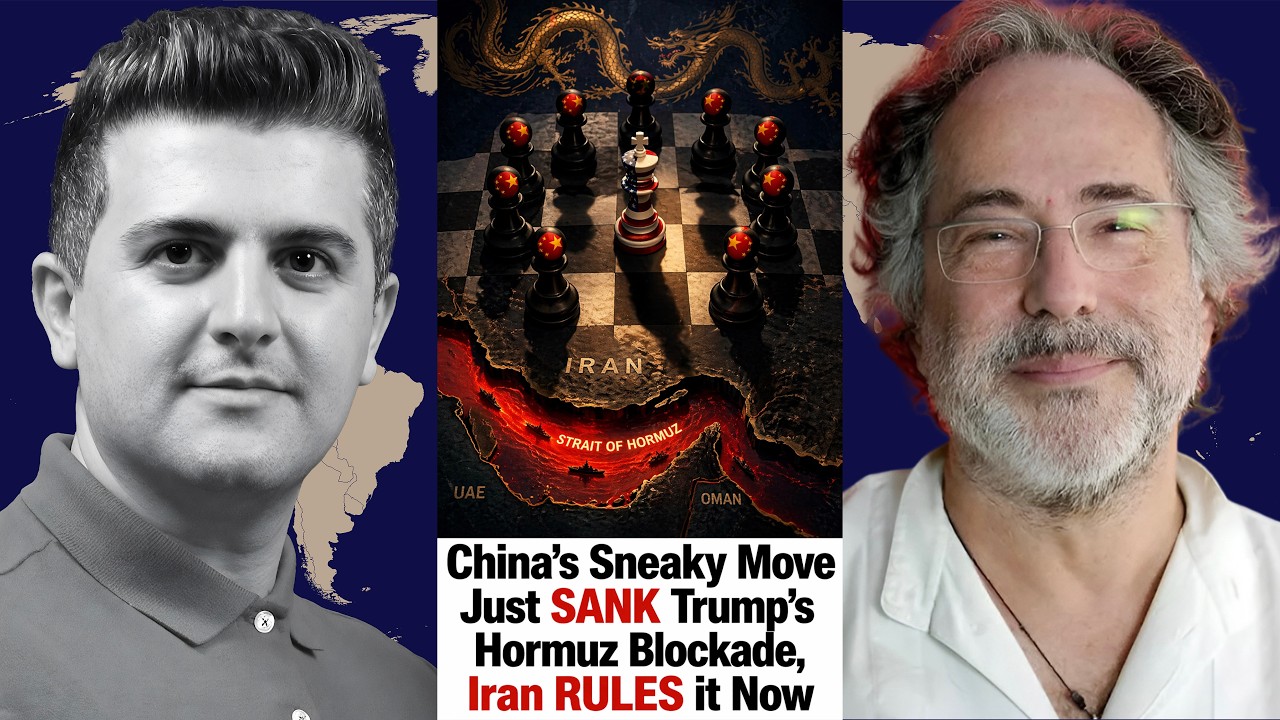
Pepe Escobar: “Total Failure”: Trump’s Blockade Just Backfired Disastrously
"Pepe Escobar argues that the US blockade against Iran, spearheaded by Donald Trump, has utterly failed and backfired, accelerating global economic chaos and challenging US geopolitical dominance."