
Larry Johnson: "ENOUGH!" - Vice President JD Vance SLAMS Netanyahu's Government in Heated Rant
YouTube · sEoIzK51T3U
Quick Read
Summary
Takeaways
- ❖JD Vance issued a strong public statement criticizing Israeli cabinet members for attacking the US President, emphasizing US military and diplomatic support for Israel.
- ❖Larry Johnson described Israel's behavior as 'entitled spoiled child' and indicated that the US is withdrawing air combat command assets from the region.
- ❖The Trump administration's shift is driven by a dire economic forecast, with oil reserves projected to be depleted in four weeks, necessitating the reopening of the Strait of Hormuz.
- ❖Hillary Clinton, a former staunch supporter of Israel, has also begun criticizing Israel's behavior, acknowledging that the US was 'played' by Netanyahu's government.
- ❖The MOU with Iran includes lifting sanctions, unfreezing assets, ending the blockade, acknowledging Iranian authority over the Strait of Hormuz, and ending fighting in Lebanon.
- ❖Despite the MOU, resuming oil flow from the Persian Gulf faces significant logistical challenges, including mine clearance (potentially 6 months) and damaged infrastructure.
- ❖US military presence in the Gulf is severely diminished, with the Fifth Fleet headquarters in Bahrain reportedly destroyed, forcing a re-evaluation of regional security architecture.
- ❖GCC countries, particularly Saudi Arabia and Qatar, are reportedly looking to invest heavily in Iran, seeking to de-escalate regional tensions and protect their economic interests.
- ❖China and Pakistan have reportedly warned Israel against assassinating Iranian diplomats, indicating broader international involvement in regional stability.
Insights
1JD Vance's Public Rebuke of Israel
JD Vance, a key figure in the Trump administration, publicly criticized members of Netanyahu's cabinet for attacking the US President. He reminded them that Donald Trump is the only sympathetic head of state to Israel globally and that two-thirds of Israel's defensive weapons are American-made and funded by US taxpayers. Vance implied that Israel risks losing its most powerful ally by alienating the US.
JD Vance stated, 'Donald J. Trump is the only head of state in the entire world who is sympathetic to the nation of Israel at this moment in time. And he happens to be the head of state of the world's superpower. If I was in the cabinet of the Israeli government, I might not be attacking the only powerful ally that I have anywhere left in the entire world.' He added, '2/3 of the defensive weapons that have protected your homeland have been built by American hands and paid for by American tax dollars.'
2US Policy Shift Driven by Economic Crisis
The Trump administration's decision to pursue a Memorandum of Understanding (MOU) with Iran and distance itself from Israel is primarily driven by an impending economic crisis in the US. The President reportedly received a briefing indicating that US oil reserves would be depleted in four weeks, necessitating the immediate reopening of the Strait of Hormuz to ensure oil flow.
Larry Johnson stated, 'it appears that the info the briefing he got over the weekend about the severe crisis that's going to unfold if they don't get the straight open and get oil flowing that it's going to be a real problem.' The host also mentioned, 'Donald Trump that we are four we are four weeks away from, you know, the oil reserves four weeks away to be totally depleted.'
3Israel's 'Spoiled Child' Behavior and US Withdrawal of Support
Larry Johnson characterized Israel as acting like an 'entitled spoiled child' that believes it can criticize and act against the US without repercussions. In response to this and the broader policy shift, the US is actively withdrawing military assets, including Air Combat Command aircraft, from bases in Jordan, Israel, and the Gulf, signaling a reduction in direct US military backing.
Larry Johnson stated, 'Israel is acting like a, you know, an entitled spoiled child. And that they can say anything they want, do anything they want uh to Donald Trump with no repercussions.' He also noted, 'Air Combat Command for uh, Central Command is working frantically right now to start bringing all of the US aircraft that deployed to Jordan and to Israel... they're pulling them all back.'
4Hillary Clinton's Shift in Stance on Israel
Even traditionally strong pro-Israel figures like Hillary Clinton have begun to criticize Israel's actions. Clinton admitted that during her tenure as Secretary of State, Netanyahu's government 'played' the US by constantly pushing for an attack on Iran, even threatening to launch their own planes.
Hillary Clinton stated, 'He would basically say, um, we need we need to, uh, you need to support us in attacking Iran.' She added, 'I was on the phone for hours with Ehud, with Bibi, with others, you know. And they would say things like, you know, our planes are on the tarmac.' When asked if she was being played, she responded, 'All the time. All the time.'
Bottom Line
The US is being 'shut out of the Gulf' militarily, with the Fifth Fleet headquarters in Bahrain reportedly destroyed and no viable alternative bases, forcing a complete re-evaluation of its regional military posture.
This signifies a dramatic reduction in US power projection and influence in the Persian Gulf, creating a power vacuum that regional actors and other global powers (China, Russia) are likely to fill, fundamentally altering the security architecture of the Middle East.
This creates opportunities for regional powers to forge new security alliances and economic partnerships, potentially leading to a more multipolar and self-reliant Middle East security framework, less dependent on external powers.
GCC countries, notably Saudi Arabia and Qatar, are actively pursuing significant investments in Iran, with JD Vance mentioning a potential $300 billion investment.
This indicates a strategic pivot by Gulf states to de-escalate tensions and integrate economically with Iran, aiming to safeguard their own interests and diminish the risk of regional conflict, especially given Israel's unpredictable behavior and the US's shifting allegiances.
This could foster greater regional economic integration and stability, creating new trade routes and investment opportunities within the Middle East, potentially reducing the likelihood of proxy wars and fostering a more cooperative regional environment.
Lessons
- Monitor US energy policy and global oil markets closely, as the US's reliance on stable oil flow from the Persian Gulf is now a primary driver of its foreign policy decisions.
- Analyze the evolving geopolitical landscape in the Middle East, recognizing the diminished US military presence and the increasing autonomy and cooperation among regional powers, including Iran and GCC states.
- Evaluate the long-term implications of a US foreign policy shift away from unconditional support for Israel, considering how this might impact regional stability, defense industries, and diplomatic efforts.
- Pay attention to the internal political dynamics within the US, as the economic imperative to secure oil flow is clashing with traditional pro-Israel lobbying, indicating a potential realignment of political influence.
- Consider the logistical challenges of resuming global oil supply, such as mine clearance and infrastructure repair in the Persian Gulf, which could delay market stabilization for several months despite diplomatic agreements.
Notable Moments
JD Vance's direct and forceful public criticism of Israeli cabinet members for attacking the US President, reminding them of US support and Israel's diplomatic isolation.
This marks a rare and significant public rebuke from a high-ranking US official, signaling a clear shift in the US-Israel relationship and a willingness to challenge Israel's actions openly.
Hillary Clinton's admission that Netanyahu's government 'played' the US during her time as Secretary of State by constantly pushing for an attack on Iran.
This reveals a bipartisan disillusionment with Israel's past diplomatic tactics and validates the perception of US officials feeling manipulated, further contributing to the current policy shift.
The revelation that the US Fifth Fleet headquarters in Bahrain was 'totally destroyed' and US military assets are being pulled out of the Gulf region.
This is a concrete demonstration of the US's diminished military footprint and vulnerability in the region, directly impacting its ability to project power and influence, and forcing a re-evaluation of regional security.
Quotes
"Donald J. Trump is the only head of state in the entire world who is sympathetic to the nation of Israel at this moment in time. And he happens to be the head of state of the world's superpower. If I was in the cabinet of the Israeli government, I might not be attacking the only powerful ally that I have anywhere left in the entire world."
"2/3 of the defensive weapons that have protected your homeland have been built by American hands and paid for by American tax dollars. The problem for Israel is not Donald J. Trump."
"Israel is acting like a, you know, an entitled spoiled child. And that they can say anything they want, do anything they want uh to Donald Trump with no repercussions."
"We are four weeks away from, you know, the oil reserves four weeks away to be totally depleted."
"His balls are in a vice. And it does And Israel doesn't have have leverage the the fear of the economic collapse of this economy."
"The United States is getting shut out of the Gulf. It is, you know, the talk like what of Iran's demands is that the which US withdraw troops from around from around it. Well, they've already done that actually in part not because they were reacting to that agreement, but because their base got destroyed. They hadn't have any place to left to stay."
Q&A
Recent Questions
Related Episodes
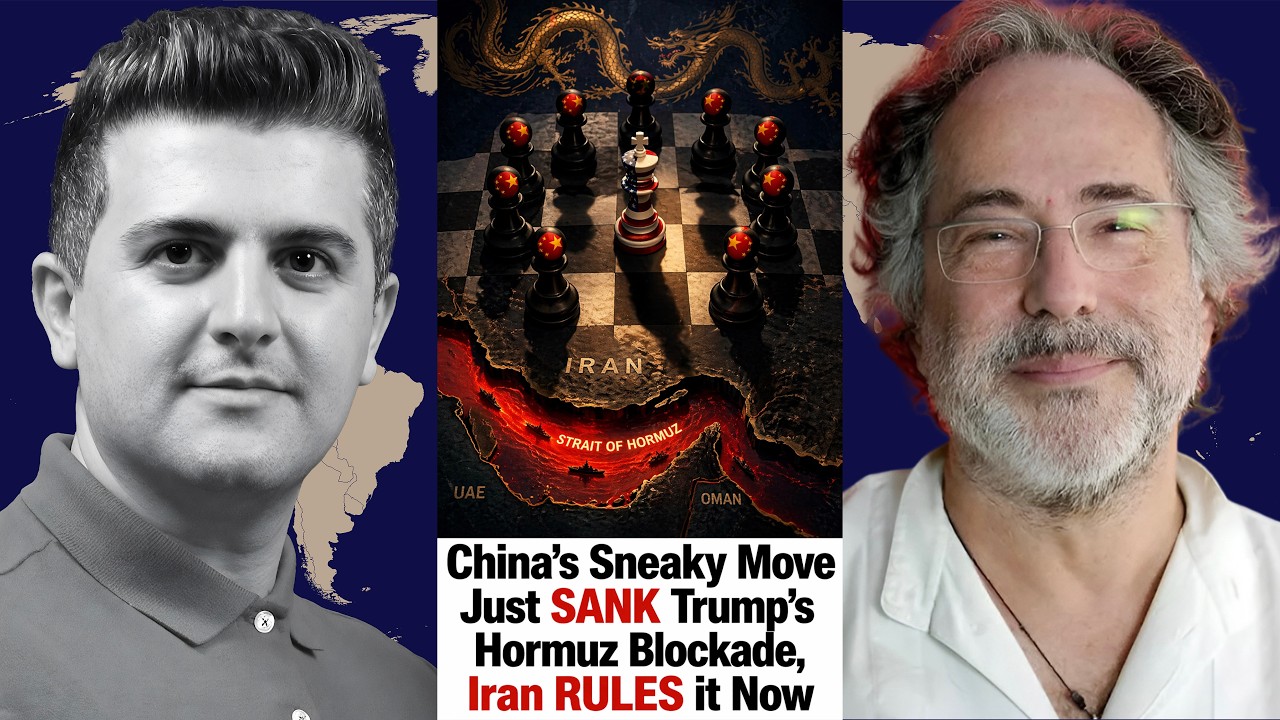
Pepe Escobar: “Total Failure”: Trump’s Blockade Just Backfired Disastrously
"Pepe Escobar argues that the US blockade against Iran, spearheaded by Donald Trump, has utterly failed and backfired, accelerating global economic chaos and challenging US geopolitical dominance."

Iran Deal Skepticism. Whoopi Vs Vance. Potomac Park Invasion. Racist Hurls Slurs At Black Boy.
"This episode dissects multiple instances of alleged anti-Black policies and racial injustice, from the Trump administration's legal challenges to reparations and the Iran deal, to police brutality and the erasure of Black history."
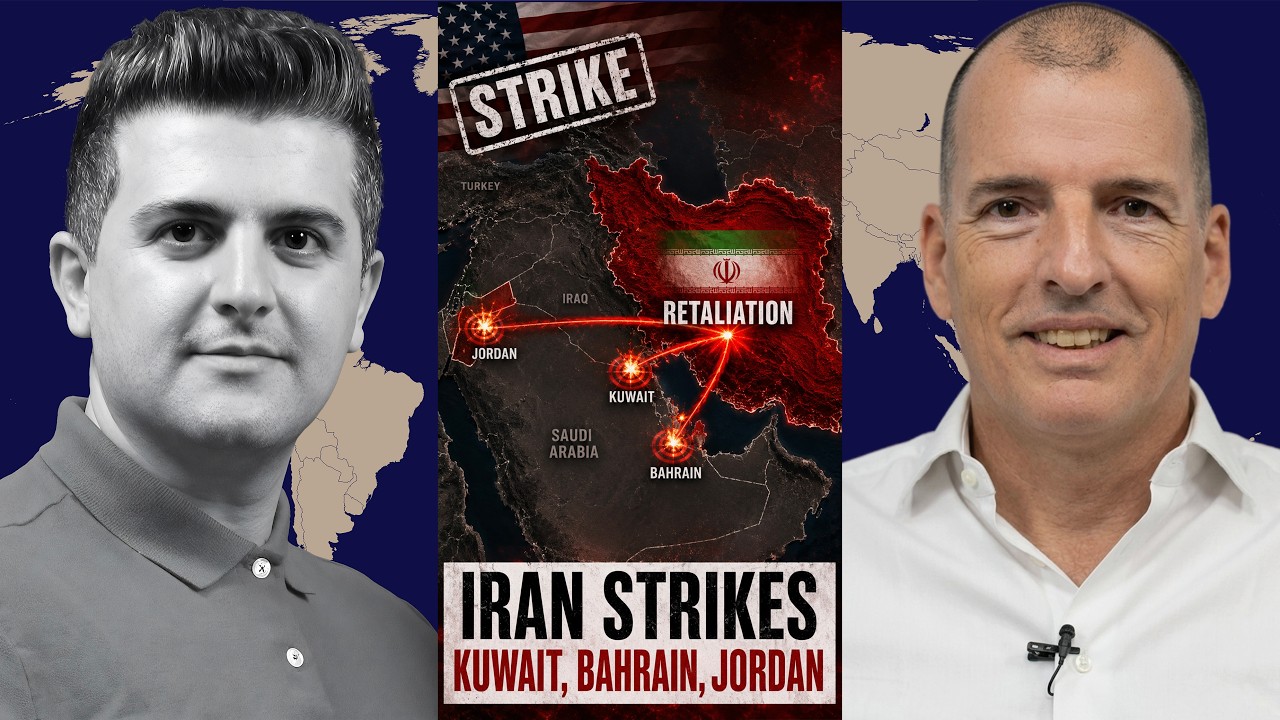
Alex Krainer: US STRIKES Iran – Iran RETALIATES Against Kuwait, Bahrain & Jordan!
"Amidst escalating US-Iran conflict and Iranian retaliation against regional US allies, this episode argues that US foreign policy is deeply controlled by an 'Anglo-Zionist conspiracy' led by the Rothschild banking dynasty, prioritizing Israeli interests over American ones."

Larry Johnson: Iran Missiles Rain Down on Northern Israel – Massive Strikes!
"Geopolitical analyst Larry Johnson details how Israel's recent strike on an 'empty building' in Beirut triggered direct Iranian missile retaliation, escalating regional tensions and jeopardizing a US-Iran peace deal brokered by Pakistan."