Jeffrey Sachs on the Real Origins of the Iran War and the Coming Economic Devastation
YouTube · sFow6dOMfgQ
Quick Read
Summary
Takeaways
- ❖The world is at a 'fork in the road' regarding the Iran war, with two immediate paths: de-escalation or uncontrolled escalation into a regional/world war.
- ❖The closure of the Strait of Hormuz is causing a building global economic crisis, impacting oil, gas, fertilizers, and other key commodities.
- ❖The US and Israeli objectives for the war are not valid and are rooted in a desire for regional control and 'revenge' for Iran's 1979 revolution, not Iran's alleged nuclear program.
- ❖Iran has historically been a peaceful nation, not invading another country for over two centuries, and has sought diplomacy regarding its nuclear program.
- ❖The US involvement in Iran's affairs began with the 1953 CIA-backed coup against its democratic government, leading to 26 years of US control under the Shah.
- ❖Israel's 'Clean Break' strategy, adopted in 1996, aimed to overthrow governments supporting Palestinian militancy, leading to chaos in Libya, Sudan, Somalia, Lebanon, Syria, and Iraq, with Iran as the final target.
- ❖Escalation would lead to the physical destruction of Gulf region infrastructure, causing global stagflation, soaring food prices, and financial instability.
- ❖The US decision-making process for war lacks deliberation, expert intelligence, and congressional oversight, making it dangerously susceptible to individual delusions and external influences.
- ❖Christian Zionism, a 19th-century evangelical movement, contributes to the political support for Israel's expansionist agenda in the US, based on specific biblical interpretations.
Insights
1Imminent Global Economic Crisis from Strait of Hormuz Closure
The closure of the Strait of Hormuz, a narrow waterway crucial for global trade, is already causing a severe and building worldwide economic crisis. This chokepoint handles an enormous strategic flow of oil, gas, fertilizers, petrochemicals, and other key commodities. The instability means the world cannot afford to wait weeks or months for a resolution.
Sachs states, 'The world economy is reeling... the Strait of Hormuz is closed. As long as it's closed, it means that there's a worldwide economic crisis building. So time is not permissive right now.' He mentions oil, gas, fertilizers, petrochemicals, and aluminum as affected commodities.
2US-Iran Conflict Rooted in 1953 Coup and Imperial Control
The fundamental reason for the US's 'war' with Iran, ongoing since 1980, is not Iran's nuclear program or support for militant groups, but its successful escape from the American Empire in 1979. This 'unacceptable' act followed the 1953 CIA-backed overthrow of Iran's democratic government, which sought to nationalize its oil, leading to 26 years of US-backed Shah rule.
Sachs explains, 'They escaped from the American Empire. They escaped from CIA control. That's not allowed.' He traces this back to the 1953 coup against Prime Minister Mossadegh for asserting Iranian ownership of its oil, leading to the installation of the Shah and Savak.
3Israel's 'Clean Break' Strategy as a Driver for Regional Wars
Israel, under Netanyahu's influence, adopted the 'Clean Break' strategy in 1996, rejecting a Palestinian state and aiming for 'Greater Israel' by overthrowing governments that support Palestinian militancy. This strategy designated seven countries for regime change (Libya, Sudan, Somalia, Lebanon, Syria, Iraq, and Iran), with the US military serving as the instrument for six of these wars, costing trillions of dollars and creating chaos.
Sachs details the 'Clean Break' strategy, stating it 'said we will never accept... a state of Palestine.' He lists the seven target countries and notes, 'Six of those wars have led to bloodbaths and disasters... And Iran was the last.' He clarifies, 'This was Israel's plan, but the US military was used. The US has spent 5 to 10 trillion dollars on this Israel venture.'
4Escalation Threatens Unprecedented Global Stagflation and Destruction
Unlike previous oil shocks, further escalation in the Iran conflict would involve the physical destruction of oil, gas, and petrochemical infrastructure in the Gulf region. This would lead to a 'cataclysmic' global economic downturn characterized by stagflation (high inflation and economic contraction), soaring food prices due to fertilizer supply disruptions, and widespread financial instability, potentially cascading into political destabilization worldwide.
Sachs, referencing his PhD work on 1970s oil shocks, warns, 'What will happen in the next few weeks if we don't choose the off-ramp is the physical destruction of a lot of the Gulf region.' He emphasizes that 'these are complex systems they don't get rebuilt so fast,' leading to 'worldwide disruption of food supplies' and 'huge financial effects.'
5Degradation of US Decision-Making and Congressional Abdication
The US government's decision-making process for critical geopolitical issues like the Iran war is severely degraded, lacking systematic deliberation, expert intelligence, and inter-agency review. Instead, decisions are made by the President based on 'gut hunches' and external influences, with Congress largely abdicating its constitutional duty to declare war, making the system dangerously susceptible to catastrophic errors.
Sachs laments, 'I can't see any process' for deliberation, noting 'this was Trump's decision basically yes led by Netanyahu.' He criticizes Congress for voting that it 'should not have any oversight over this war completely contrary to the whole framework of the Constitution.'
Key Concepts
Imperial Overstretch
The concept that an empire can extend itself beyond its ability to maintain or expand its military and economic commitments, leading to its eventual decline. Sachs applies this to the US, arguing its involvement in Israel's 'seven wars' and the Iran conflict is a costly, self-defeating endeavor.
Stagflation
An economic condition characterized by slow economic growth and relatively high unemployment (economic stagnation) accompanied by rising prices (inflation). Sachs warns that escalation in Iran would trigger a more severe form of stagflation than seen in the 1970s, due to physical destruction of energy infrastructure.
Clean Break Strategy
A 1996 Israeli policy paper advocating for a strategic shift from 'land for peace' to asserting dominance and reshaping the Middle East by destabilizing and overthrowing governments perceived as hostile or supporting militant groups. Sachs identifies this as a primary driver for US involvement in multiple regional conflicts.
Q&A
Recent Questions
Related Episodes

Bibi DEMANDS Ground Troops As Marines Rushed to Iran
"Benjamin Netanyahu is pushing for US ground troops in Iran, framing air strikes as insufficient, while the US rushes Marines to the region and struggles to secure the Strait of Hormuz against surprisingly capable Iranian defenses."

Patrick Henningsen: Hezbollah JUST Fired Back at Israel - Iran Vows to “Crush” All Attacks
"Patrick Henningsen argues that the US and Israel initiated an illegal war against Iran, driven by Trump's incompetence and Israeli influence, leading to an inevitable escalation with severe global economic repercussions."

🚨 TOTAL F*CKING CHECKMATE 😂😂😂
"The host argues that Trump's 'ceasefire' with Iran was a calculated '5D chess' move to orchestrate a global energy market reshuffle, while simultaneously lambasting 'woke' domestic policies and the 'freefall' of anti-Trump conservative figures."
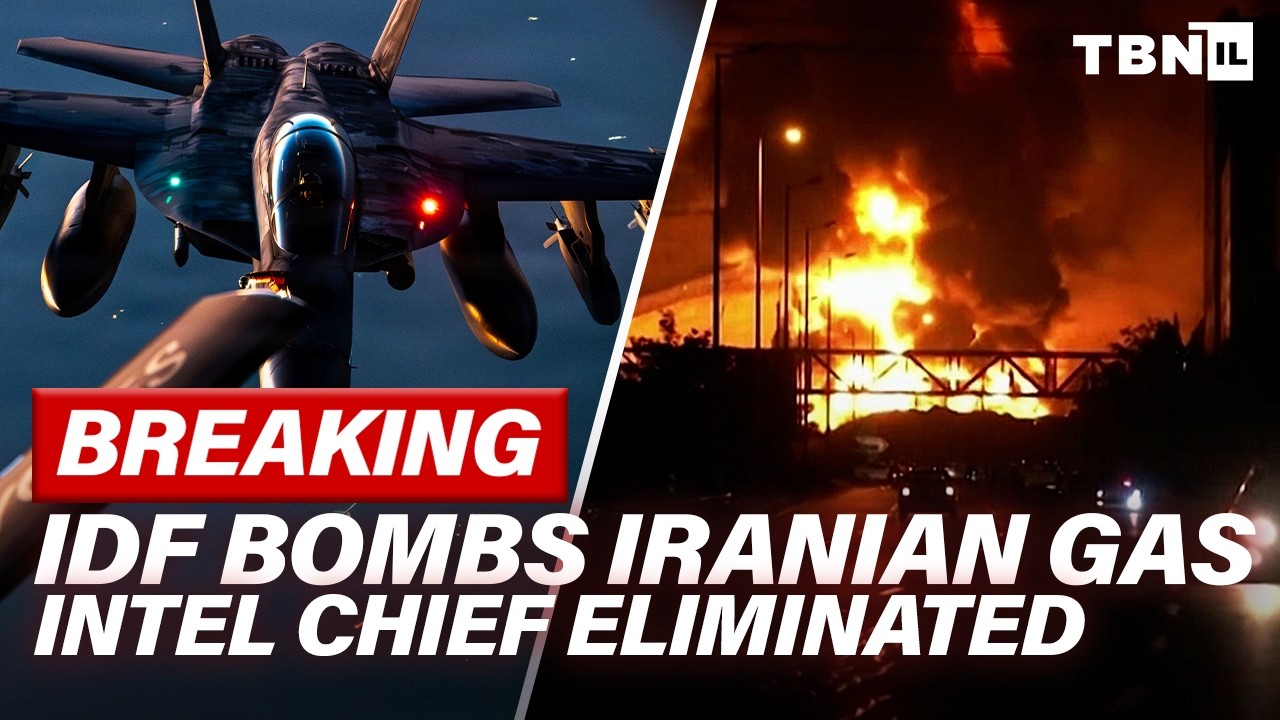
BREAKING: Israel BOMBS Major Iran Gas Site; Top Mullah ELIMINATED; Iran Vows VENGEACE | TBN Israel
"Israel and the United States have escalated their 'Roaring Lion War' against Iran, striking its largest gas facilities, eliminating key intelligence and military figures, and disrupting missile production, while Iran threatens a broader energy war in the Gulf."