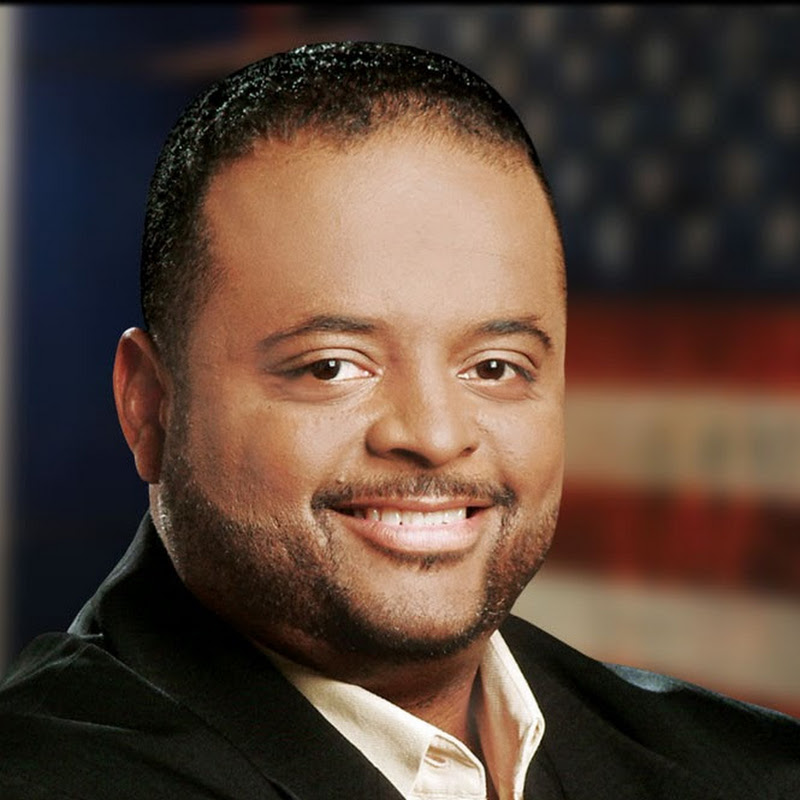
Roland gives Juneteenth speech in Memphis
YouTube · s_GAfYewfHo
Quick Read
Summary
Takeaways
- ❖Memphis's Black political class is criticized for lacking accountability, leading to persistent economic disparity despite significant Black representation.
- ❖The concept of 'defund the police' is reframed as reallocating city budgets from policing to addressing root causes of crime like poverty and homelessness.
- ❖All politics is inherently 'identity politics,' as politicians segment electorates by demographics to craft targeted appeals.
- ❖A systematic, national effort is underway to dismantle Black political and economic power, civil rights, and educational opportunities, termed 'Jim Crow 2.0'.
- ❖Juneteenth celebrations should serve as annual reports on community progress and catalysts for sustained economic and political organizing.
- ❖Dr. Martin Luther King Jr.'s final sermons provided a clear economic and political blueprint for Black empowerment, which remains largely unexecuted.
- ❖The current generation is challenged to commit to being 'change agents' so their names are remembered for tangible contributions in 30 years, not just those of past heroes.
Insights
1Memphis's Economic Disparity Amidst Black Political Power
Despite a high concentration of African Americans and a history of Black mayors and council members, Memphis lacks corresponding economic prosperity. Martin challenges the city's political class to explain why Black residents remain economically disadvantaged, contrasting Memphis with cities like Atlanta, which are recognized as 'New South' economic engines due to strategic Black leadership.
Martin asks, 'How can you have a high concentration of African-Americans in this city and you do not see the corresponding economic aspect?' and notes, 'When the discussion is about the new south, Memphis is never mentioned, only Atlanta.' He also questions the lack of information on the five largest Black-owned businesses and their revenue in Memphis.
2The True Meaning of 'Defund the Police'
Martin clarifies 'defund the police' as a strategy to reallocate significant portions of city budgets (currently 50-70% on police and fire) towards addressing the root causes of crime, such as poverty, homelessness, and lack of opportunity. He cites Baltimore's success in reducing crime to a 100-year low with a reduced police force by shifting resources to community-based solutions.
He states, 'Defund police was never about get rid of all cops. It was you cannot continue as a city to spend 50, 60, and 70% of your budget on police and fire.' He references Baltimore's Mayor Brandon Scott and Governor Wes Moore for achieving a dramatic drop in crime with a reduction in police force by confronting 'the things that cause crime.'
3Systematic Attack on Black America: Jim Crow 2.0
Martin asserts that the United States is currently experiencing 'Jim Crow 2.0,' a systematic and direct attack on Black political, economic, and social infrastructure. This includes efforts to defund Black America through legal challenges to voting rights, affirmative action, scholarships, anti-discrimination efforts, and even birthright citizenship, impacting everything from universities to non-profits and job markets.
He details attacks on 'black political power, black economic power,' citing Supreme Court rulings on affirmative action, challenges to race-based scholarships, the potential wiping out of EEOC anti-discrimination efforts, and FCC scrutiny of programs with 'black, Latino, women, gay' keywords. He notes 800,000 Black men and women lost jobs in the last year, and Black unemployment remains high.
4Dr. King's Unexecuted Economic Blueprint
Martin emphasizes that Dr. Martin Luther King Jr.'s final speeches, particularly his April 3, 1968 sermon at Mason Temple in Memphis, laid out a clear economic and political blueprint for Black empowerment. This blueprint advocated for economic withdrawal, supporting Black-owned businesses, and redistributing economic 'pain' to challenge unjust systems, which Martin argues remains largely unfulfilled.
He states, 'The sanitation worker strike was an economic fight. That was a healthcare fight.' He references King's call to 'redistribute the pain,' his observation that Black people collectively represent a large economy, and his advocacy for 'economic withdrawal' and supporting Black insurance companies.
Bottom Line
The problems of environmental pollution and economic hardship, initially impacting Black inner-city communities, are now extending to rural white communities, creating a potential for new, unexpected coalitions.
This suggests an opportunity to bridge racial divides by highlighting shared economic and environmental interests, potentially uniting diverse groups against common adversaries (e.g., corporations, specific political policies) that affect all marginalized populations.
Activists and organizers can leverage these shared grievances to build broader, multi-racial coalitions, educating white rural voters on how policies they might have previously ignored or even supported are now directly harming their own interests, mirroring the struggles of Black communities.
Opportunities
Local Black Economic Development Index & Fund
Establish a transparent, publicly accessible index that tracks the number, size, and annual revenue of Black-owned businesses in major cities like Memphis. Complement this with a dedicated fund to provide capital, mentorship, and resources specifically for scaling Black-owned enterprises, aiming to create measurable economic impact and address the wealth gap.
Key Concepts
Accountability
The principle that individuals and institutions, especially those in power, must be held responsible for their actions, decisions, and outcomes. Martin applies this to politicians, business leaders, and community organizations, arguing that a lack of accountability prevents problem-solving and progress.
Identity Politics (Reclaimed)
Martin redefines identity politics not as a divisive force, but as the fundamental reality of how all political campaigns and governance operate. Politicians inherently segment the electorate into identity groups (gender, race, class, religion, etc.) to understand their needs and craft specific appeals, making it a universal political strategy rather than a niche concern of minority groups.
Lessons
- Demand accountability from elected officials and community organizations by asking for concrete achievements and material changes in the last 364 days, rather than just promises.
- Mobilize and organize politically beyond just voting; actively participate in voter registration, training, and coalition-building efforts to remove unresponsive leaders from office.
- Support and advocate for Historically Black Colleges and Universities (HBCUs) as vital economic engines and sources of Black talent, recognizing their broader community impact and fighting against systemic underfunding.
The Nehemiah Blueprint for Community Transformation
Acknowledge the Pain: Recognize and be pained by the destruction and challenges in your community, just as Nehemiah was by the broken wall.
Visualize a Solution: Move beyond complaining to envision and plan concrete solutions for repairing the community's 'walls' (e.g., healthcare, economic opportunities, protection).
Mobilize the People: Inspire and unite the community, ensuring everyone is a 'troop' in the effort, not just 'generals,' by fostering a collective commitment to rebuild.
Ignore the Haters, Keep Building: Anticipate and disregard opposition from 'haters' (both internal and external) and maintain focus on the building process.
Defend and Build Simultaneously: Be prepared to defend against attacks while continuing the work, metaphorically 'putting one hand on your weapon and keeping building with your other.'
Ensure Your Legacy: Commit to the hard work today so that your contributions are recognized and remembered by future generations, ensuring your 'name will be called' in the history of progress.
Notable Moments
Roland Martin challenges the audience to consider their legacy, asking if their names will be called in 30 years for their contributions to community change.
This moment serves as a powerful, personal call to action, urging individuals to move beyond passive observation and actively engage in creating a better future, emphasizing that their present actions determine their historical significance.
The speaker's passionate reinterpretation of the biblical story of Nehemiah as a blueprint for modern community organizing, overcoming opposition, and building lasting change.
This analogy provides a structured, inspirational framework for collective action, emphasizing vision, unity, perseverance against 'haters,' and the importance of tangible work for future generations.
Quotes
"If you do good, I'mma talk about you. If you do bad, I'mma talk about you. At the end of the day, I'mma talk about you."
"You never fix a problem if you want to live in denial about what is going on."
"The hardest thing for a lot of people to deal with is accountability."
"Nobody tries this hard to keep you from voting if it doesn't mean anything."
"The sanitation worker strike was an economic fight. That was a healthcare fight."
"Put one hand on your weapon and keep building with your other."
Q&A
Recent Questions
Related Episodes

The Immortal Jim Crow. 'Goon Squad' Defamation Suit. Google Race Discrimination Case. #TheBreakdown
"This episode exposes the enduring grip of systemic racism through a Mississippi defamation suit, Google's racial discrimination settlement, and a deep dive into how Jim Crow's legacy still shapes Black America today."
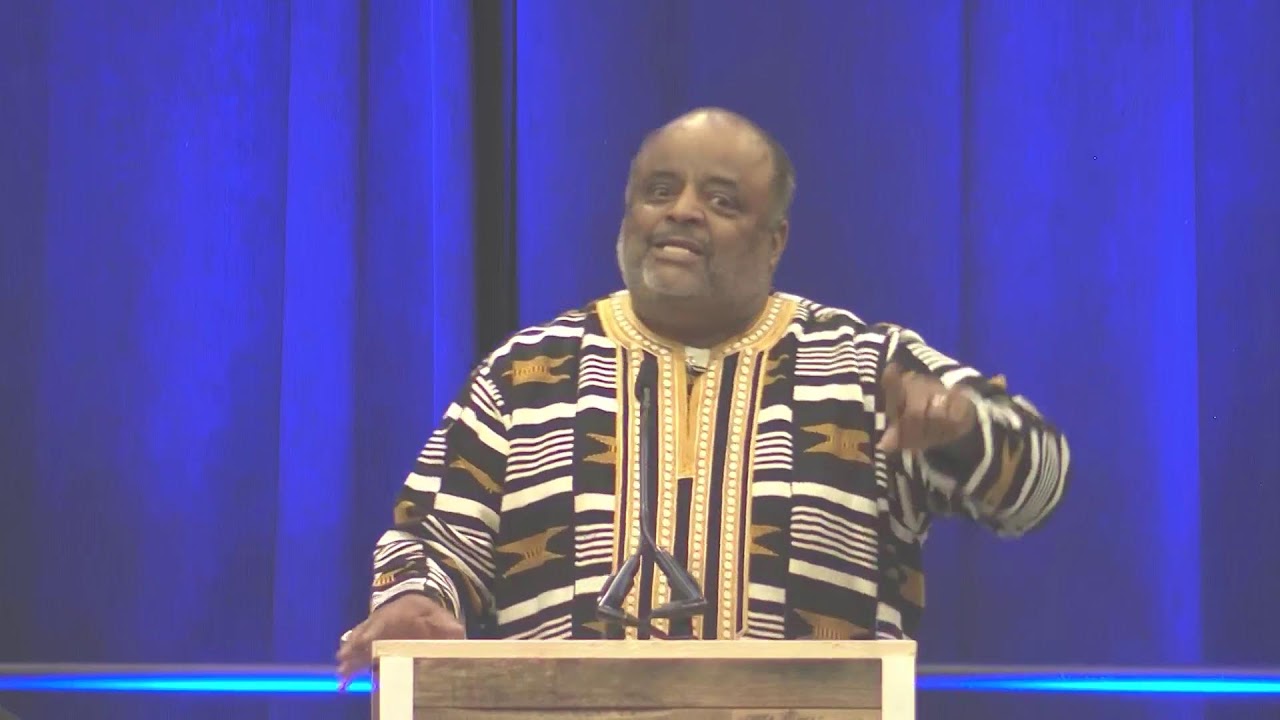
Roland speaks at Columbus Educ. Assoc. MLK Dinner
"Roland Martin challenges the audience at an MLK dinner to move beyond passive celebration and engage in active, sustained political and economic struggle, emphasizing that 'rest time is over' for those seeking real societal change."

Contested Primary Elections. Facebook Marketplace Shooting. Hey Black Girl Affirmations#TheBreakdown
"This episode explores a Georgia lawsuit challenging a new election law, highlights a community-driven real estate project building Black wealth, and features initiatives empowering Black women and girls."
George Floyd 6 Years Later. Redistricting War in The South. Talarico Senate Campaign
"This episode exposes the ongoing legislative battles and strategic resistance against efforts to diminish Black political power, from federal policing reform to state-level gerrymandering and calls for economic boycotts by Black athletes."