
Larry Johnson & Mohammad Marandi: BREAKING: US and Iran Reach Deal – Full Details Inside
YouTube · t1MaItycdFc
Quick Read
Summary
Takeaways
- ❖A 14-point memorandum of understanding between the US and Iran is slated for signing, aiming to end regional conflicts and lift blockades.
- ❖Initial reports from Iran detail an immediate halt to war in Lebanon and Gaza, and the lifting of the naval blockade, with Iran controlling tolls in the Strait of Hormuz.
- ❖Donald Trump's public statements contradict Iranian terms, suggesting no tolls and continued interdiction of Iranian ships carrying military equipment.
- ❖Analysts Larry Johnson and Mohammad Marandi express strong doubts about the deal's stability, citing potential 'mayhem, reversals, and betrayals' before signing.
- ❖Israel, particularly Benjamin Netanyahu, is framed as a primary antagonist, having attempted to derail the deal through military action in Beirut and reportedly refusing to abide by its terms.
- ❖Mohammad Marandi argues that Netanyahu's attack on Beirut forced the US to make 'key concessions' to Iran to prevent a wider economic crisis.
- ❖Iran's recent military successes against US bases in the region, including alleged damage to F-35s, are cited as a factor in US willingness to negotiate.
- ❖The deal's first phase addresses immediate cessation of hostilities and blockade lifting; comprehensive issues like UN sanctions and nuclear program concessions are relegated to a highly uncertain second phase.
- ❖European powers (UK, France, Germany, Italy) are deemed 'irrelevant' by Marandi, who states the deal is solely between the US and Iran.
Insights
1Conflicting Terms and Skepticism Over Deal Implementation
Despite an announced US-Iran deal, significant discrepancies exist between Iranian and US interpretations. Iran's 14-point plan includes immediate war cessation, lifting of sanctions, unfreezing assets, and recognition of its control over the Strait of Hormuz with tolls. Conversely, Donald Trump's statements indicated no tolls and continued interception of Iranian ships. Both Larry Johnson and Mohammad Marandi express deep skepticism, viewing the agreement as a 'promise' rather than a solidified deal, vulnerable to 'mayhem, reversals, and betrayals' before its signing.
Larry Johnson states, 'we've got the promise of an agreement that isn't signed yet... lots of time for mayhem, reversals, betrayals' (). Trump's tweet mentioned 'tollfree opening of the straight of formos' () while Iran's plan implies tolls (, ).
2Israel's Role in Derailing and Forcing Concessions
Israel, led by Benjamin Netanyahu, actively worked to sabotage the deal, including an attack on Dahi in Beirut. This action, however, inadvertently strengthened Iran's negotiating position. Mohammad Marandi asserts that Netanyahu's 'stupid mistake' of bombing Beirut forced Trump to concede 'key demands' to Iran to prevent a larger economic crisis, turning a stalemate into a diplomatic victory for Iran.
Larry Johnson notes, 'Israel took its best shot today to derail it' (). Yair Lapid's post called the deal a 'total disaster for Israel' (). Mohammad Marandi states, 'Netanyahu makes the biggest and most stupid mistake possible. He goes and attacks Beirut... Trump out of deep concern... conceded key demands by Iran' ().
3Iran's Strategic Leverage from Military Actions and Alliances
Iran's recent military responses, including significant damage inflicted on US military assets in Kuwait, Bahrain, and Jordan (e.g., radar systems, F-35s), provided substantial leverage in negotiations. This, combined with enhanced intelligence and anti-aircraft capabilities from Russian and Chinese cooperation, contributed to the US's willingness to make concessions. Iran's threat to close the Strait of Hormuz further amplified its position.
Larry Johnson details 'significant damage that Iran did to the US bases in Kuwait... fifth fleet headquarters... Prince Salad Air Base... Moafak Salti air base in Jordan' () and mentions reports of 'destruction and damage of up to 12 F-35s' (). He also notes 'cooperation between China and Iran and Russia and Iran... led to a significant upgrade in Iranian capabilities' ().
4The Deal's Phased Implementation and Long-Term Uncertainty
The current agreement is a first phase focusing on immediate conflict cessation and blockade lifting. More complex issues, such as UN sanctions and Iran's nuclear program, are deferred to a 'second phase.' Marandi believes a full, comprehensive deal is unlikely without a 'world-shattering change' in the US, suggesting future agreements will likely be partial and provisional, reflecting deep-seated distrust and differing objectives.
Mohammad Marandi states that the 'nuclear issue and the... sanctions and all that will be left for later' () and that 'the first phase... is the easy part. The second phase is the hard part' (). He adds, 'I don't see that happening. Unless there's some enormous world-shattering change in the United States' () for a comprehensive deal.
Bottom Line
The US decision to pursue a deal with Iran, despite Israeli opposition, suggests a potential shift in US foreign policy priorities, possibly driven by internal economic concerns or a reassessment of regional military vulnerabilities.
This indicates that the US might be prioritizing de-escalation and economic stability over unwavering support for Israeli regional objectives, potentially leading to a more independent US foreign policy in the Middle East.
Businesses and nations reliant on Middle Eastern stability or energy transit could anticipate reduced geopolitical risk, but also increased uncertainty regarding the US's long-term commitment to traditional allies.
Iran's successful use of military force and strategic alliances (Russia, China) to gain leverage in diplomatic negotiations challenges the conventional wisdom that economic sanctions and military pressure alone can dictate outcomes.
This demonstrates the diminishing effectiveness of 'maximum pressure' campaigns when confronted with a resilient adversary backed by powerful allies, suggesting a need for more nuanced diplomatic approaches.
Other nations facing similar pressures might seek to replicate Iran's strategy of developing indigenous military capabilities and forging strong alliances to enhance their negotiating power against larger global powers.
Lessons
- Monitor official statements from both US and Iranian sources closely for discrepancies in the announced deal's terms, as these indicate areas of potential conflict or non-compliance.
- Evaluate the immediate actions of Israel in Lebanon and Gaza following the deal's announcement, as their adherence or defiance will be a critical indicator of the agreement's viability and Trump's ability to enforce it.
- Assess the movement of US military assets in the Middle East; any significant withdrawal could signal a genuine commitment to de-escalation, while their continued presence suggests ongoing skepticism or readiness for renewed conflict.
Quotes
"What we have is we've got the the promise of an agreement that isn't signed yet and with still lots of, you know, five days away, lots of time for mayhem, reversals, betrayals."
"If the United States and Iran reach a deal, that's a total disaster for Israel. Israel lost everything."
"Netanyahu makes the biggest and most stupid mistake possible. He goes and attacks Beirut at a time when we were in in in stalemate and Iran had demands and the Americans were not accepting them and Iran was not going to back down."
"So for Netanyahu, it is a lose lose situation. If Netanyahu does not abide by Trump's commitments, Iran will not abide by his commitments. So whatever happens, Trump loses and Netanyahu loses."
"The deal with the Islamic Republic of Iran is now complete. Congratulation to all. I hereby fully authorize the tollfree opening of the straight of formos and simultaneously here with authorized the immediate removal of the United States naval blockade."
"The Americans give the Iranians plenty and get nothing in return. The most absurd thing is that this war ends with sanctions relief for oil sales, something that didn't exist before the war."
Q&A
Recent Questions
Related Episodes

Patrick Henningsen: Hezbollah JUST Fired Back at Israel - Iran Vows to “Crush” All Attacks
"Patrick Henningsen argues that the US and Israel initiated an illegal war against Iran, driven by Trump's incompetence and Israeli influence, leading to an inevitable escalation with severe global economic repercussions."

Bibi DEMANDS Ground Troops As Marines Rushed to Iran
"Benjamin Netanyahu is pushing for US ground troops in Iran, framing air strikes as insufficient, while the US rushes Marines to the region and struggles to secure the Strait of Hormuz against surprisingly capable Iranian defenses."
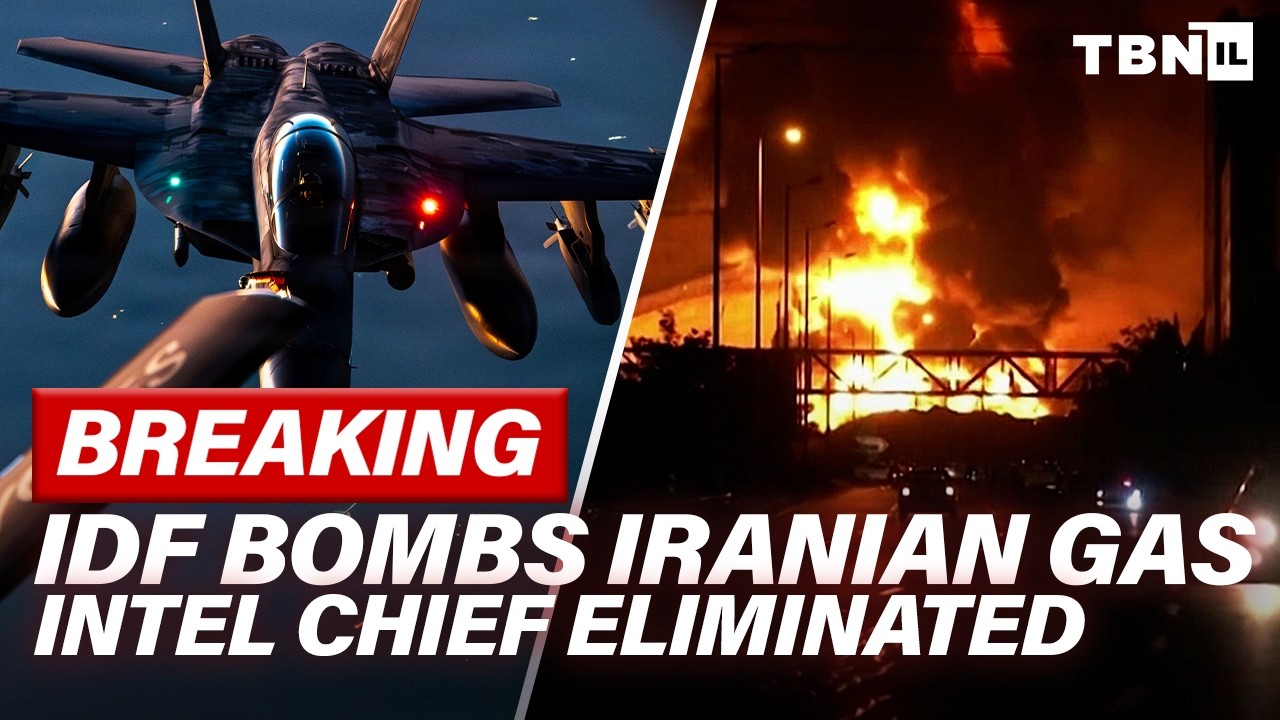
BREAKING: Israel BOMBS Major Iran Gas Site; Top Mullah ELIMINATED; Iran Vows VENGEACE | TBN Israel
"Israel and the United States have escalated their 'Roaring Lion War' against Iran, striking its largest gas facilities, eliminating key intelligence and military figures, and disrupting missile production, while Iran threatens a broader energy war in the Gulf."

Pentagon Prepares For EXTENDED War With Iran
"This episode dissects the geopolitical maneuvers surrounding potential US-Iran conflict, revealing strategic leaks, Netanyahu's diplomatic sabotage playbook, and the true intent behind economic sanctions."