
GENERATIONAL CURSES | ENGLISH MAJORS SEASON 3 | EPISODE 17
YouTube · t9KOTrKV4L0
Quick Read
Summary
Takeaways
- ❖Dwelling on nostalgia can prevent enjoyment of present-day sports and entertainment.
- ❖Early childhood candies like Sour Patch Kids and Pixie Sticks are framed as precursors to drug use due to their addictive nature.
- ❖Modern basketball is characterized by 'horizontal' play (maneuvering, hesitation) rather than the 'vertical' (dunking, power) style of the past.
- ❖Traditional relationships allowed for true separation after a breakup, unlike modern love where social media ensures constant visibility of ex-partners.
- ❖The abundance of streaming content leads to more time spent choosing what to watch than actually watching, often causing good content to go unnoticed.
- ❖The internet fosters an expectation of immediate responses, contrasting with the past where being unreachable was normal.
- ❖The internet is perceived to have an 80% negativity bias, where hate and criticism outweigh support.
- ❖News reporting has shifted from emotionless delivery of facts to emotionally charged narratives that induce fear.
- ❖The ease of modern music production (via phone) has reduced the appreciation for the craft and the 'flow state' required in traditional band settings.
- ❖Corporal punishment in parenting has largely been replaced by allowing 'life to whoop your ass' as a teaching method.
- ❖If someone bails you out of a difficult situation, you are obligated to listen to whatever they have to say, regardless of how long or 'crazy' it sounds.
Insights
1The Nostalgia Trap: Hindering Present Enjoyment
The hosts argue that constantly comparing current experiences to a romanticized past ('generational curses') prevents people from enjoying the present. This applies to sports, where fans struggle to appreciate new playing styles, and to media, where new content is dismissed because 'it ain't how we used to do it.' This fixation on 'how it should have been' blinds individuals to what is happening now and can negatively impact their future.
The hosts state, 'If you start just looking at everything nostalgic and how it could have been and how it should have been, then it's going to allow you to ignore what's going on in the present and it's going to mess up your future.' They apply this to sports, saying, 'Y'all can't enjoy sports no more cuz you don't realize they play different.'
2Evolution of Media Consumption: From Shared Scarcity to Fragmented Abundance
Media consumption has shifted dramatically from a scarcity model, where specific shows and movies were widely shared experiences, to an abundance model with endless, individualized options. In the past, missing a show meant waiting for reruns, and movies stayed in theaters for months. Now, with countless streaming options, people spend more time selecting content than watching it, leading to good content going unnoticed and a lack of shared cultural touchstones.
One host notes, 'If you missed it, your best bet was somebody telling you about it and they No, you would see it when the season was over and they started running reruns.' Another adds, 'This stuff where the stuff be out for two months and then it's out of theaters. Stuff the movie used to be in the movie a year and a half.' They conclude, 'You spend more time selecting than you do watching. Actually watching it, bro. Like it like it's too many options, bro.'
3The Impact of Technology on Communication and Relationships
Modern technology, particularly smartphones and social media, has eliminated the concept of being truly unreachable and fostered an expectation of immediate responses. This contrasts sharply with a time when being away from home meant being out of contact, and voicemails were eagerly checked. Social media also makes true 'breakups' impossible, as ex-partners remain visible online, adding a new layer of stress to relationships.
The hosts discuss, 'You remember when you just not home? It was a time when if you wasn't at the house, you just wasn't there.' They lament, 'Now with this thing where you feel entitled to immediate response.' Regarding relationships, they state, 'Modern love, there is no such thing as breaking up because you are always going to end up running into this person on some kind of media.'
4The Internet's Negativity Bias and Misinformation
The internet, particularly social media, is characterized by a significant negativity bias, where critical and hateful comments often overshadow positive support. This environment, coupled with the rise of AI, makes it difficult to discern truth from fabrication, as 'the AI card' can be used to dismiss any inconvenient information. News reporting has also devolved from objective fact-sharing to emotional narratives designed to elicit fear.
One host asserts, 'the internet like to pretend like it's 80% support and 20% hate. And I think it's flip vice versa. It's 80% hate, 20% support.' They also mention, 'Now we got AI. So that's to cover up anything that may come out. Now we can always pull the AI card.' They criticize news for 'telling the news with tears in their eyes.'
5The 'Flow State' in Creative Work: A Lost Art in Modern Production
The hosts emphasize the importance of achieving a 'flow state' in creative endeavors like music, comedy, and art. This state, characterized by intuitive and unforced creativity, was more prevalent when production was harder and required collective effort (e.g., bands recording live). Modern technology, which allows for easy 'punching in' and individual production, often bypasses this deeper creative immersion, leading to less authentic or 'magical' output.
They discuss how 'it was harder to get and it was harder to make, which discouraged a lot of people that shouldn't make it any harder to make.' They describe the 'flow state' as when 'the shot right where the stuff it need to be when it need to be.' They conclude, 'they took all the magic out of stuff and now we supposed to.'
Bottom Line
Many 'bad' movies from the past are actually better than contemporary films when viewed through a modern lens, suggesting that current standards or audience expectations may be skewed.
This challenges the conventional wisdom of film criticism and highlights how cultural context and evolving tastes influence perceived quality over time.
Re-evaluating and re-marketing older, critically panned films to new audiences who might appreciate them differently today, or creating content that intentionally subverts modern cinematic tropes.
Comedy and horror genres are fundamentally similar in their objective: to elicit an involuntary reaction (laughter or fear) from the audience, often through unexpected or shocking elements.
This perspective, attributed to director Jordan Peele, suggests a shared psychological mechanism behind these seemingly disparate genres, implying that effective storytelling in both relies on similar principles of tension, release, and surprise.
Filmmakers can explore the blurred lines between comedy and horror, creating hybrid genres that leverage both laughter and scares for a more profound or unsettling audience experience, as seen in 'Get Out'.
The rise of AI provides a convenient, universal 'AI card' to dismiss any information or content online, regardless of its authenticity, thus exacerbating the problem of misinformation and trust.
This creates a pervasive skepticism where genuine information can be easily discredited, and fabricated content can be excused, making critical thinking and source verification more challenging for the average consumer.
Develop robust, transparent AI detection and verification tools that are widely accessible and trusted, or create educational initiatives to help the public navigate the complex landscape of digital information and identify manipulative uses of AI.
Key Concepts
Nostalgia Trap
The tendency to romanticize past experiences and compare them unfavorably to present realities, leading to a diminished appreciation for current events, entertainment, and cultural shifts. This model highlights how dwelling on 'how things used to be' can prevent one from engaging with or enjoying 'how things are now'.
Flow State (Creative)
A mental state in which a person performing an activity is fully immersed in a feeling of energized focus, full involvement, and enjoyment in the process of the activity. In creative fields like music or comedy, this state allows for intuitive, unscripted brilliance that cannot be forced or 'punched in,' contrasting with overly structured or commodified production processes.
Internet Negativity Bias
The observation that online platforms, particularly social media, tend to amplify negative comments, criticism, and 'hate' disproportionately compared to positive support. This creates an environment where negative engagement often drives content and interaction, influencing public perception and individual experiences online.
Lessons
- Actively challenge your own 'nostalgia trap' by consciously seeking to appreciate current trends and innovations in sports, entertainment, and technology, rather than constantly comparing them to the past.
- Cultivate a 'flow state' in your creative or professional work by minimizing distractions and allowing for intuitive, unforced execution, recognizing that true 'magic' often comes from deep immersion rather than rigid adherence to plans.
- Practice critical media literacy by questioning emotionally charged news narratives and online content, especially in light of the internet's negativity bias and the ease of using 'the AI card' to dismiss information.
Notable Moments
The hosts humorously discuss how childhood candies like Sour Patch Kids, Pixie Sticks, Smarties, and Big League Chew were 'getting us ready for drugs' due to their addictive nature or method of consumption (e.g., snorting Pixie Sticks).
This lighthearted but pointed observation highlights how seemingly innocent childhood products can have underlying parallels to adult behaviors, reflecting a cynical yet comedic view on consumerism and early influences.
A listener asks if men 'squirt' when they pee, leading to a comedic and detailed comparison of the 'good pee shake' after urination to a woman's orgasm, with the hosts concluding they can't compare the two.
This moment showcases the podcast's raw, conversational, and often explicit humor, directly engaging with a listener's unusual question and turning it into a relatable, albeit crude, discussion about bodily functions and sexual experiences.
The hosts discuss how teachers used to get angry if students read ahead in textbooks, and how they discovered teachers often relied on 'teacher's editions' with answers, implying a lack of genuine knowledge.
This insight provides a humorous but critical look at the education system, suggesting that some teachers prioritized control over genuine learning and that students often perceived their instructors as less knowledgeable than they presented themselves.
The hosts debate the hypothetical scenario of Tupac being alive in Cuba, playing a trumpet in a band, and whether that would be 'lame as hell' if he faked his death.
This reflects a common conspiracy theory in pop culture and allows the hosts to explore the idea of celebrity legacy and authenticity, questioning whether a faked death, even for a good cause, would ultimately diminish an artist's impact.
Quotes
"If you start just looking at everything nostalgic and how it could have been and how it should have been, then it's going to allow you to ignore what's going on in the present and it's going to mess up your future."
"Modern love, there is no such thing as breaking up because you are always going to end up running into this person on some kind of media."
"You spend more time selecting than you do watching. Actually watching it, bro. Like it like it's too many options, bro."
"The internet like to pretend like it's 80% support and 20% hate. And I think it's flip vice versa. It's 80% hate, 20% support."
"Ain't no racist ever reconsidered they racism because of a good speech."
Q&A
Recent Questions
Related Episodes

BROKEN PLAY | NAVV GREENE FT. BHEN, JOJO ALONSO, & REGGIE BALL | S04 | EP 34
"This episode dives into unfiltered takes on NBA playoff drama, Atlanta's unique culture, and contentious debates on hip-hop legends and social norms, all delivered with raw, comedic energy."
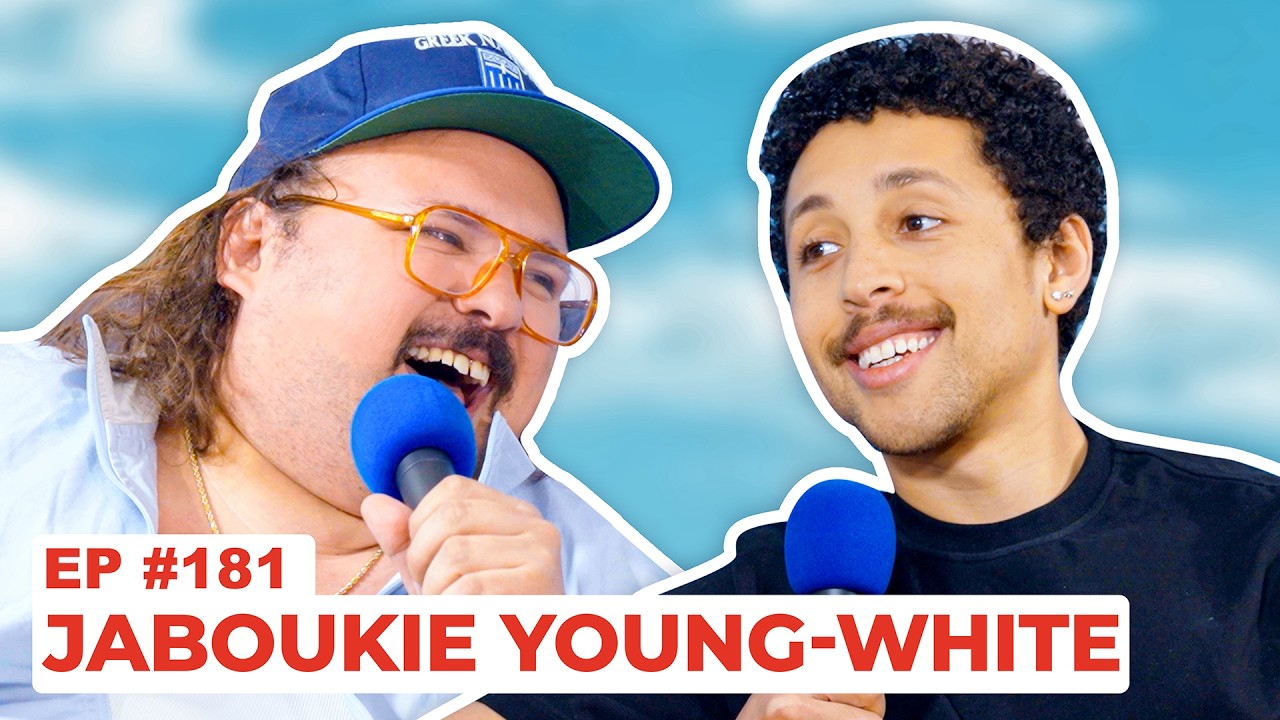
Stavvy's World #181 - Jaboukie Young-White | Full Episode
"Stavros Halkias and Jaboukie Young-White dive into chaotic family histories, modern relationship dilemmas, and the absurdities of celebrity culture, offering unfiltered comedic takes and unconventional advice to callers."

White Sox Dave Owns The WORST Rental Car In The Entire Chicagoland Area | The Yak 5-14-26
"The Yak crew hilariously dissects White Sox Dave's chaotic life, from his beat-up Turo rental car and 'Crockpot Gate' to Malisc's controversial takes and Stephen's social blunders, all while attempting to make new friends and navigating office drama."

GROWN UPS 2 Movie Reaction! | First Time Watch! | Adam Sandler, Kevin James, David Spade, Chris Rock
"The hosts of CinePals react to "Grown Ups 2," dissecting its zany humor, unexpected celebrity cameos, and the film's departure from a clear plot in favor of pure comedic "shenanigans.""