
Avoiding, Treating & Curing Cancer | Dr. Alex Marson
YouTube · u4VTFb4awrQ
Quick Read
Summary
Takeaways
- ❖The immune system is a complex network of white blood cells (innate and adaptive) designed to distinguish 'self' from 'non-self' and eliminate foreign invaders.
- ❖T-cells generate diverse, largely random receptors, which are then 'educated' in the thymus to avoid attacking the body's own cells.
- ❖Cancer is a genetic disease where cells accumulate mutations, lose normal regulation, and divide uncontrollably, often evolving resistance to treatments.
- ❖Major cancer risk factors include smoking, excessive UV exposure, and environmental toxins like pesticides; the impact of other factors like charred meats and airport scanners is less clear but warrants caution.
- ❖Immunotherapy, especially checkpoint inhibitors and CAR T-cells, has revolutionized cancer treatment by unleashing or reprogramming the body's own immune system against cancer.
- ❖CRISPR technology allows for precise editing of DNA sequences, enabling the creation of 'supercharged' T-cells with enhanced cancer-fighting capabilities.
- ❖CRISPR-engineered CAR T-cells are in clinical trials for solid tumors and show promise for treating autoimmune diseases like lupus by eliminating B-cells.
- ❖Delivery methods for gene editing, including electroporation and lipid nanoparticles, are rapidly advancing, allowing for more targeted and less invasive interventions.
- ❖Ethical concerns surrounding germline gene editing (changes passed to future generations) are significant, with Dr. Marson advocating for a 'hard line' against it to preserve human diversity.
- ❖Future advancements include high-throughput CRISPR screens to map the function of every gene, AI-designed proteins for targeted therapies, and the potential for limitless supplies of engineered cells from IPSCs.
Insights
1CAR T-Cell Therapy: Reprogramming Immune Cells to Combat Cancer
CAR T-cells (Chimeric Antigen Receptor T-cells) are a groundbreaking immunotherapy where a patient's own T-cells are genetically engineered in a lab to express a synthetic receptor (CAR) that specifically targets cancer cells. These 'programmed' T-cells are then reinfused into the patient, enabling them to 'search and destroy' malignant cells. This approach has achieved miraculous cures in certain leukemias and lymphomas, exemplified by Emily Whitehead's case.
The initial success story of Emily Whitehead in 2012, who was cured of leukemia with CAR T-cell therapy after exhausting all other options. Dr. Marson's lab focuses on genetically modifying T-cells to enhance their cancer-fighting capabilities.
2CRISPR: A Precise Tool for DNA Editing and Cellular Reprogramming
CRISPR (Clustered Regularly Interspaced Short Palindromic Repeats) is a revolutionary gene-editing technology derived from a bacterial immune system. It uses an enzyme (like Cas9) guided by an RNA molecule to make precise cuts at specific DNA sequences. This capability allows scientists to 'cut out' unwanted genes, 'paste in' new sequences (like CARs), or even epigenetically modify gene expression without cutting, offering unprecedented control over cellular behavior for therapeutic purposes.
Discovered in 2012 by Emanuel Charpentier and Jennifer Doudna (Nobel Prize winners), CRISPR's ability to precisely edit DNA has been adapted to engineer T-cells for cancer and autoimmune treatments. Dr. Marson's lab pioneered its use in primary human T-cells via electroporation.
3The Immune System's Role in Autoimmunity and New Therapeutic Avenues
Autoimmune diseases arise when the immune system's delicate balance fails, causing it to inappropriately recognize and attack the body's own tissues (e.g., rheumatoid arthritis, type 1 diabetes, multiple sclerosis). The same CAR T-cell technology used for cancer, by targeting specific immune cells (like B-cells), is now showing incredible promise in early trials for treating severe autoimmune conditions like lupus, offering a new paradigm for managing these chronic diseases.
Dr. Marson explains that CAR T-cells designed to eliminate B-cell leukemias also eliminate healthy B-cells, which are implicated in autoimmune diseases. Early trials for lupus are showing 'incredible responses' using this approach.
4Unraveling Cancer Risk Factors: From Smoking to Airport Scanners
Cancer is fundamentally a disease of accumulated DNA mutations. Major, well-established risk factors include smoking (causing lung damage), excessive UV exposure (skin damage), and environmental toxins like pesticides. Less understood, but still considered potential mutagens, are factors like charred meats and low-level radiation from airport scanners, prompting some experts to personally minimize exposure even without definitive large-scale human data.
Dr. Marson explicitly states smoking and sun exposure for melanoma as 'big ones.' He acknowledges personal avoidance of airport scanners due to the mechanism of radiation, despite lacking specific data.
5The Ethical Imperative: Somatic vs. Germline Gene Editing
A critical ethical distinction in gene editing is between somatic edits (changes to non-reproductive cells, not passed to offspring) and germline edits (changes to embryos, sperm, or eggs, which are heritable). While somatic edits for treating disease are actively pursued, Dr. Marson advocates for a 'hard line' against germline editing due to concerns about unintended consequences, the potential for 'designer babies,' and the erosion of human genetic diversity.
Discussion of the Chinese scientist who performed CRISPR on human embryos (CCR5 gene for HIV resistance). Dr. Marson states his 'pretty hard line position' against genetic edits passed to the next generation, citing worries about fads and loss of human diversity.
Bottom Line
High-throughput CRISPR screens are enabling the functional mapping of every gene in human immune cells, akin to a 'sequel to the genome project.' This allows simultaneous inactivation of thousands of genes and measurement of their impact on cell state and behavior.
This capability provides an 'instruction manual' or 'cheat sheet' for precisely engineering immune cells. It identifies which genetic modifications (tuning, epigenetic editing, inactivation, or addition) will endow T-cells with specific powers for precision and endurance against various diseases.
Accelerated discovery of novel therapeutic targets and gene edits for next-generation immunotherapies, potentially leading to highly customized and effective cell-based treatments for cancer and autoimmune conditions.
AI is increasingly being used to design synthetic proteins that don't exist in nature, specifically engineered to recognize and bind to targets on cancer cells.
This dramatically expands the toolkit for targeted therapies, moving beyond naturally occurring antibodies or receptors. AI-designed proteins can be modular 'Lego blocks' for multi-faceted cell or drug engagers.
Development of entirely new classes of highly specific and potent immunotherapies, potentially overcoming limitations of current treatments and addressing cancers with previously 'undruggable' targets.
Lipid nanoparticles (LNPs), the technology behind mRNA vaccines, are being engineered with targeting molecules to deliver genetic material (like CRISPR components or mRNA for CARs) directly into specific cell types within the body, without needing to extract and reinfuse cells.
This 'in-body' delivery approach could make advanced gene and cell therapies far less invasive, more scalable, and potentially more cost-effective, moving beyond centralized factory-based cell modification.
Broader accessibility and application of gene editing and cell engineering for a wider range of diseases, including those affecting organs not easily amenable to ex vivo cell manipulation (e.g., liver, potentially brain).
Opportunities
Development of new antibiotics
The field of antibiotic discovery is underfunded, leading to a genuine risk of antibiotic resistance. There's a need for new generation antibiotics to combat evolving bacterial threats.
Companies specializing in targeted in-body gene therapy delivery
Leveraging advancements in engineered viruses, virus-like particles, and targeted lipid nanoparticles to deliver CRISPR components or therapeutic mRNA directly to specific cell types or organs within the body, bypassing the need for ex vivo cell manipulation.
AI-driven synthetic protein design for therapeutics
Utilizing AI models to design novel proteins that can precisely recognize and engage specific targets on cancer cells or other disease-relevant cells, creating new 'Lego blocks' for modular multi-faceted therapies.
Key Concepts
Immune System: Us vs. Non-Us
The core function of the immune system is to differentiate between the body's own cells and foreign invaders (viruses, bacteria, cancer cells). This discrimination is achieved through complex recognition mechanisms, including randomly generated T-cell receptors and B-cell antibodies, which are then 'educated' to avoid self-targets.
Cancer as an Evolutionary Process
Cancer develops through the accumulation of genetic mutations over time. Cells acquire 'beneficial' mutations that allow them to divide uncontrollably and evade normal cellular checks, essentially evolving within the body to prioritize their own growth at the expense of the organism. This evolutionary capacity also allows cancer to develop resistance to targeted therapies.
Gene Editing as Source Code Programming
CRISPR technology is framed as the ability to 'rewrite DNA sequences' or 'go into the source code of DNA.' This allows for precise, targeted changes to a cell's genetic instructions, enabling scientists to program cellular behavior, such as making T-cells more potent against cancer or correcting disease-causing mutations.
Lessons
- Minimize exposure to known mutagens: Avoid smoking and vaping entirely. Protect skin from excessive UV radiation to prevent sunburns. Be mindful of environmental toxins like pesticides and carcinogenic chemicals in workplaces or household products.
- Consider genetic screening for predispositions: If there's a family history of cancer, discuss BRCA gene testing with a healthcare provider, as this can significantly increase individual risk for certain cancers.
- Prioritize general health factors that support immune function: While specific mechanisms are still being explored, maintaining good sleep, a healthy diet (avoiding ultra-processed foods), and metabolic health are intuitively and increasingly scientifically linked to a robust immune system.
- Stay informed about advancements in cancer and immune therapies: New treatments like CAR T-cells and CRISPR-based therapies are rapidly developing, offering hope for previously untreatable conditions. Understanding these advancements can empower patients and their families.
- Engage critically with health information: Recognize that not all studies (especially those in animals at high concentrations) directly translate to human risk. Focus on well-established risks and seek clarity on relative risks from reliable sources, advocating for more rigorous study of environmental factors.
Notable Moments
The 'step function' in biological and medical capabilities
Dr. Marson emphasizes that current advancements in DNA sequencing, computational tools (including AI), and gene editing represent a qualitative leap in understanding and intervening in disease, moving beyond mere observation to direct cellular programming.
The miraculous cure of Emily Whitehead with CAR T-cells
This case, where a young girl with untreatable leukemia was cured by genetically modified T-cells, served as a pivotal moment that 'woke up the world' to the immense potential of cancer immunotherapy, overturning previous scientific dogma.
The serendipitous discovery and repurposing of CRISPR
CRISPR, originally a bacterial defense mechanism against viruses, was unexpectedly repurposed as a precise gene-editing tool. This highlights how fundamental curiosity-driven research can lead to revolutionary technological breakthroughs with unforeseen applications in medicine.
Dr. Marson's 'hard line' stance against germline gene editing
This moment addresses the profound ethical implications of altering the human germline (changes passed to future generations). Dr. Marson's clear position against such edits, citing concerns about unintended consequences, 'designer babies,' and the loss of human diversity, underscores the critical societal debate surrounding these powerful technologies.
The COVID-19 vaccine as a demonstration of lipid nanoparticle technology
The rapid development and widespread deployment of mRNA vaccines, delivered via lipid nanoparticles, showcased the scalability and effectiveness of this technology for delivering genetic material. This breakthrough is now being leveraged for in-body delivery of CRISPR and other gene therapies, accelerating the future of programmable medicine.
The historical context of public health debates and societal trauma during COVID-19
Dr. Marson and Dr. Huberman discuss how the COVID-19 pandemic, mandates, and shutdowns created a period of 'major dislocation' and 'trauma,' fracturing public trust in science. Dr. Marson provides historical parallels, noting that societal tensions have always influenced how epidemics are addressed, emphasizing the complex interplay of science, culture, and ethics.
Quotes
"Something is materially different right now. And there is a convergence of so many different ways of understanding biology, but then not having that stop at understanding, but to actually intervene and at the root causes of disease."
"Our immune system has developed a balance that is when it's working properly, doesn't recognize the cells that are supposed to be in the body, but is finely tuned to recognize signs of things that shouldn't be in the body and to eliminate them."
"The dogma was don't waste time thinking about cancer immunology. Cancer immunology is a field that's going nowhere."
"We can actually genetically make a one of these sensors for T-cells and put it into T-cells. We can put in put a gene that encodes something on the surface of T-cells that will make them programmed to search and destroy for cancer cells."
"I think we should have a line in the sand where we do not introduce genetic edits that will be passed on to the next generation."
"I worry deeply about losing human diversity if we see fads in what genes are popular for our offspring and people can order those in in concert with IVF."
Q&A
Recent Questions
Related Episodes
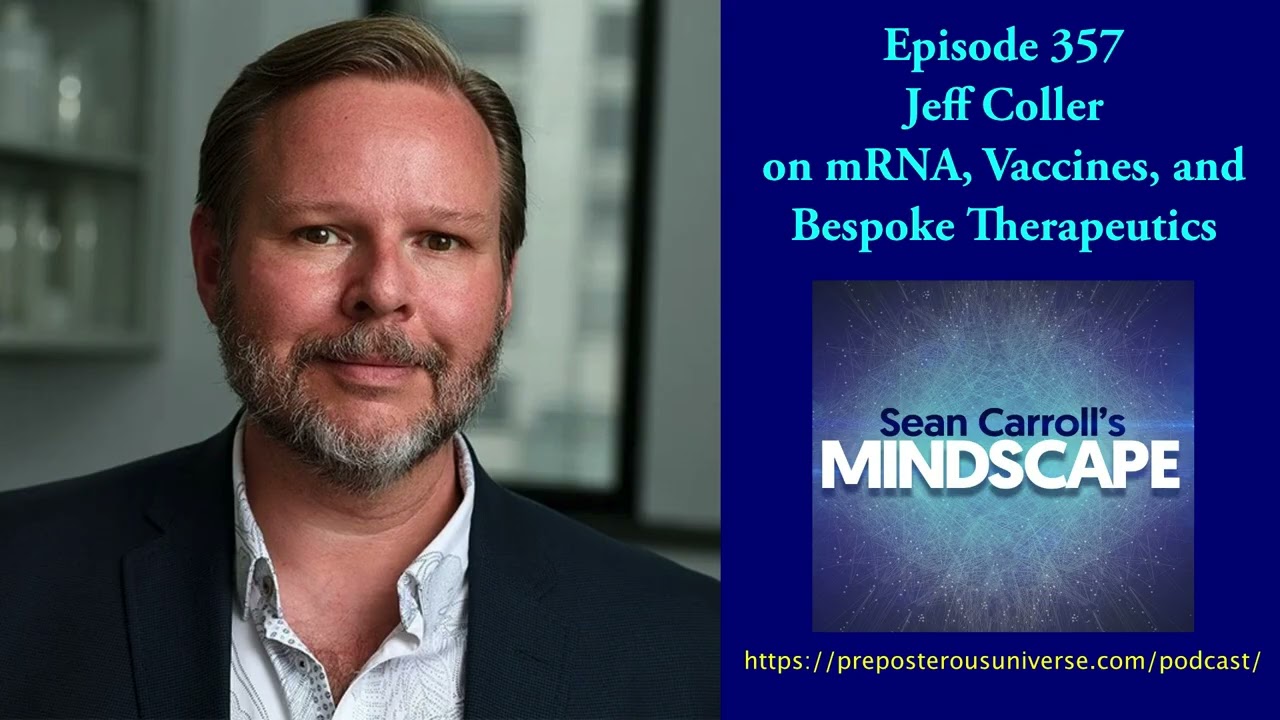
Jeff Coller on mRNA, Vaccines, and Bespoke Therapeutics | Mindscape 357
"mRNA technology, rapidly deployed for COVID-19 vaccines, is poised to revolutionize medicine by enabling rapid, personalized therapies for genetic diseases and cancer, but faces significant delivery and regulatory challenges."

Gene editing and clones | 60 Minutes Full Episodes
"Explore the cutting edge of genetic engineering, from high school students developing CRISPR-based Lyme disease treatments to scientists reversing aging, de-extincting mammoths, and cloning champion polo horses, all while grappling with profound ethical questions."

Cancer, lupus, Long COVID & More! The AMAZING Health Benefits Of Red Light Therapy w/ Jonathan Otto
"Investigative journalist Jonathan Otto details how red light therapy, backed by clinical studies, offers significant therapeutic benefits for a wide range of chronic conditions, including cancer, autoimmune diseases, Long COVID, and even 'vaccine injury,' by enhancing cellular energy and stem cell generation."

Dr. Rhonda Patrick: Fasting, Creatine, Brain Performance & Longevity Breakthroughs | PBD #740
"Dr. Rhonda Patrick, a biomedical scientist, breaks down cutting-edge longevity research, practical health hacks, and the societal implications of future genetic advancements, emphasizing the power of lifestyle over quick fixes."