PRESIDENT TRUMP & SOUTH AMERICA
YouTube · uIqlwssdNHc
Quick Read
Summary
Takeaways
- ❖US special forces executed a covert raid in Caracas to capture Nicolas Maduro, who is now facing narcotics charges in New York.
- ❖The Venezuelan military reportedly 'sold out' Maduro, leading to a clean operation with no US casualties.
- ❖The CIA is allegedly running Venezuela from the American embassy in Caracas, in coordination with the Venezuelan military.
- ❖Media criticism of the Trump administration for not having an 'airtight plan' for post-Maduro Venezuela is dismissed as absurd, given the necessity of operational secrecy.
- ❖Colombian President Gustavo Petro is characterized as a Marxist with alleged ties to drug cartels, facing potential US designation as a narco-terrorist associate.
- ❖Petro's recent attempt to engage President Trump suggests a response to increasing US pressure regarding drug cartels.
Insights
1Covert Capture of Nicolas Maduro
US special forces reportedly descended into Caracas, Venezuela, at 1:00 AM on a Saturday, targeting Nicolas Maduro and his wife in a military compound. A prior deal with the Venezuelan military ensured no protection for Maduro, leading to his capture without US casualties. Maduro was then transferred to the USS Iwo Jima, flown to New York, and incarcerated in Brooklyn on narcotics and other charges.
US special forces descended into Caracus, Venezuela at 100 a.m. Okay. On Saturday morning, 2 a.m. Koracus time... The deal was made before the US Delta Force went in with the CIA that the Venezuelan military would not protect the dictator Maduro... They snatched him, put him on a helicopter. He went to the USS Ewima... took him to New York State where he is incarcerated in Brooklyn.
2CIA's Alleged Control in Venezuela
Following Maduro's capture, the CIA is asserted to be 'essentially running Venezuela' from the American embassy in Caracas, in association with the Venezuelan military. This alleged control is credited with preventing immediate chaos in the country.
Right now, the CIA is essentially running Venezuela from the American embassy in Karacus... CIA is calling the shots in association with the Venezuelan military. That's why you don't have any kind of crazy chaos going on there.
3Critique of Media Reaction to Maduro Raid
The host criticizes 'Trump haters' in the media for questioning the administration's lack of a 'comprehensive, airtight plan' for governing Venezuela post-Maduro. He argues that revealing such plans would compromise operational security and endanger US personnel, citing historical precedents for covert operations.
The Trump haters, the dissenters, which is most of the media, they don't know what to do, okay? Because this the raid was successful. Maduro's out... 'I want a really comprehensive, airtight plan for how we're going to govern Venezuela after we depose Maduro.' Well, he doesn't have an really airtight plan because how would you know that? ... You wouldn't tell the world and your adversaries what you're going to do until you do it.
4Colombian President Petro's Alleged Ties and US Pressure
Colombian President Gustavo Petro, elected in 2022, is accused of being a Marxist, a former M19 guerrilla fighter, and allegedly bribed by Colombian drug cartels, taking a 'light hand' toward them. The US has designated Petro as involved with narco-terrorism, and his recent call to President Trump to 'get together' is interpreted as a response to potential executive action linking him to designated terror operations.
The guy who's running uh Colombia was elected in 2022... His name is Gustavo Petro. However, uh he's been accused of being um bribed by the Colombian drug cartels... everybody in Colombia knows that Petro is a Marxist... Now the United States has designated Petro uh as being involved with the narco terrorism coming out of Colombia... Gustavo calls President Trump yesterday and says, you know, can we get together?
Bottom Line
The alleged immediate transition of power in Venezuela to CIA oversight, rather than a local interim government, suggests a direct and deep level of US intervention and control post-dictator removal.
This implies a highly centralized and covert US strategy for regime change and stabilization, potentially bypassing traditional diplomatic or international frameworks, and raising questions about sovereignty and long-term governance.
For analysts, this highlights a potential shift in US foreign policy tactics towards more direct, intelligence-led interventions in 'troublesome' states, offering a case study for evaluating the effectiveness and implications of such approaches.
Key Concepts
Geopolitical Destabilization
The US, through entities like the CIA, historically engages in destabilizing 'troublesome countries' that are perceived to be 'hurting America,' a pattern observed since World War II in regions like Vietnam, El Salvador, and now Venezuela.
Operational Secrecy Doctrine
Critical military and intelligence operations, such as capturing a dictator or bombing a foreign target, cannot be publicly disclosed or 'airtight plans' revealed beforehand, as this would compromise success and endanger personnel.
Lessons
- Recognize that US foreign policy in South America may involve significant covert operations and intelligence agency influence, often operating outside public view.
- Critically evaluate media narratives surrounding geopolitical events, especially those involving regime change, considering the strategic necessity of operational secrecy.
- Understand that leaders in countries with significant drug trade, like Colombia, may face intense US pressure and scrutiny, influencing their foreign policy decisions and alliances.
Quotes
"The deal was made before the US Delta Force went in with the CIA that the Venezuelan military would not protect the dictator Maduro."
"Right now, the CIA is essentially running Venezuela from the American embassy in Karacus."
"You wouldn't tell the world and your adversaries what you're going to do until you do it."
"We, the United States, CIA goes in to a troublesome country, a country that's hurting America, and they destabilize a country. Been going on since World War II."
Q&A
Recent Questions
Related Episodes

Will Venezuela Be Trump's Vietnam?
"An expert breaks down three perilous pathways for Venezuela under potential US intervention, from a 'Panamanian model' to a 'Libyan-style civil war,' and the broader geopolitical fallout for Latin America."

🚨 TOTAL F*CKING CHECKMATE 😂😂😂
"The host argues that Trump's 'ceasefire' with Iran was a calculated '5D chess' move to orchestrate a global energy market reshuffle, while simultaneously lambasting 'woke' domestic policies and the 'freefall' of anti-Trump conservative figures."
Robby Soave GOES OFF On ANNOYING Liberal Black Woman Making Emotional Trump Deranged Arguments!
"The host dissects a heated foreign policy debate, arguing that 'left-wing' emotionalism and 'Trump derangement' prevent a rational understanding of US sanction strategies against Cuba and Iran."
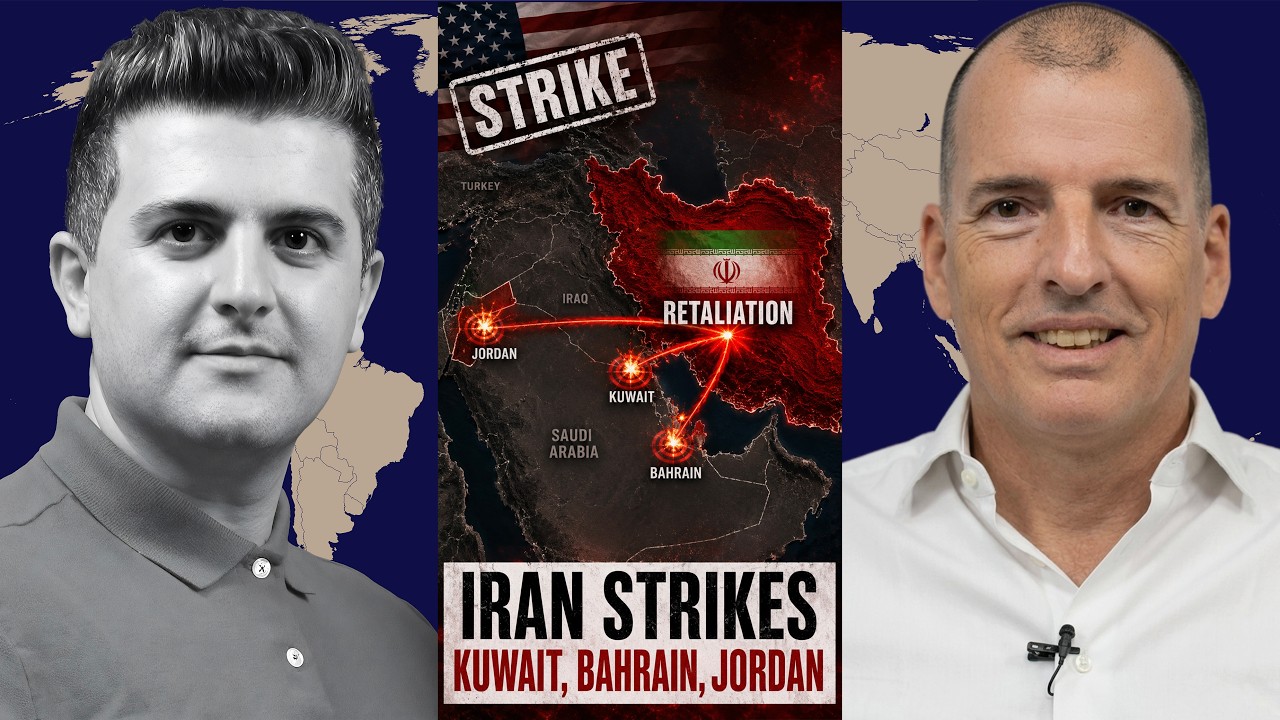
Alex Krainer: US STRIKES Iran – Iran RETALIATES Against Kuwait, Bahrain & Jordan!
"Amidst escalating US-Iran conflict and Iranian retaliation against regional US allies, this episode argues that US foreign policy is deeply controlled by an 'Anglo-Zionist conspiracy' led by the Rothschild banking dynasty, prioritizing Israeli interests over American ones."