Euro Gas $ SURGE 50%, UAE Stocks Close, Oil To 100?
YouTube · uwlrKyoYCa8
Quick Read
Summary
Takeaways
- ❖Qatar Energy's complete shutdown of LNG production (20% global output) caused European gas prices to surge 50%.
- ❖Oil prices are spiking, with analysts predicting a rise to $100 per barrel, impacting global inflation.
- ❖Insurance premiums for ships navigating the Straits of Hormuz have increased by 50%, adding hundreds of thousands to shipment costs.
- ❖A drone attack on Saudi Aramco's 550,000 barrels per day refinery signifies Iran's economic warfare strategy.
- ❖The UAE stock market closed for two days to stem losses, following attacks on critical infrastructure like an Amazon data center.
- ❖Higher global oil prices could push US consumer price inflation above 4% and make the Federal Reserve less likely to cut interest rates.
- ❖The US defense industrial base is not prepared for a sustained, high-intensity conflict lasting more than three months.
- ❖Iran views a ceasefire in the early stages as a strategic disadvantage, aiming to sustain conflict for 60-90 days to inflict maximum damage.
Insights
1Qatar's LNG Production Halt Triggers European Energy Crisis
Qatar Energy, the world's largest LNG producer, ceased all production across its 14 trains, accounting for 20% of global output. This immediate shutdown caused European liquefied natural gas prices to spike by 50%, indicating a potential necessity for European nations to revert to purchasing gas from Russia.
Qatar Energy has now stopped all LG production... 14 trains... 20% of the global output. European markets spiking 50% this morning for liqufied natural gas, indicating that they may have to... buy gas from Russia.
2Oil Prices Surge Towards $100/Barrel, Threatening US Economy
Global oil markets experienced a 10% spike, with analysts predicting prices could reach $100 per barrel. This increase is expected to push US consumer price inflation from 2.4% to above 4%, significantly impacting consumers already facing a cost of living crisis. Such high inflation would also make the US Federal Reserve less likely to cut interest rates.
Oil markets... at least 10% of a spike and it is potentially headed for some $100 per barrel... Oil of $100 a barrel could push consumer price inflation from 2.4% in this year to January to above 4%. In the short term, it would make the US Federal Reserve less likely to cut interest rates.
3Straits of Hormuz Insurance Costs Skyrocket Amid Instability
Insurers have dramatically increased prices for ships in the vicinity of the Straits of Hormuz by as much as 50%, adding several hundred thousand dollars per shipment. This critical choke point for oil, especially for Asian markets, and other goods, faces potential crisis due to the heightened risk.
Insurers have already said that they're going to dramatically raise the insurance price for any ship which is in the vicinity of the straits of Hormuz at least by as much as 50% several hundred,000 per shipment.
4UAE Stock Market Closure and Economic Vulnerability
The UAE closed its entire stock exchange for two days to prevent further losses amid the escalating regional conflict. This move, coupled with an Amazon data center taking a hit in the UAE, undermines the country's economic pitch as a global powerhouse for the rich and a stable hub for data centers, which relied on cheap energy and perceived security.
The UAE literally is closing its entire stock exchange for two dates... You had a Amazon data center take a hit in the middle of the UAE. That is disastrous for them because their whole economic pitch was, 'Hey guys, we got plenty of cheap energy over here... build whatever you want.'
Bottom Line
The US defense industrial base is critically unprepared for a sustained, high-intensity conflict, with current global ammunition and equipment stocks insufficient for a war lasting more than three months.
This unpreparedness creates a significant strategic vulnerability for the US and its allies, potentially limiting their ability to project power or sustain long-term military engagements without severe resource depletion.
Investment in expanding and modernizing the defense industrial base, including ammunition production and advanced drone countermeasures, becomes an urgent national security priority and a potential area for rapid industrial growth.
Iran's strategic calculus involves sustaining high-intensity conflict for 60-90 days, viewing an early ceasefire as a strategic disadvantage and aiming to inflict maximum damage during this period.
This indicates a deliberate, calculated approach to regional conflict, suggesting that Iran is not seeking a quick resolution but rather aims to leverage prolonged engagement to achieve specific geopolitical objectives, regardless of immediate casualties.
Understanding this timeframe and intent allows for more accurate forecasting of market volatility, energy supply disruptions, and regional instability, enabling proactive risk management and strategic planning for businesses and governments operating in or dependent on the region.
Lessons
- Monitor global energy markets closely, particularly LNG and oil prices, as Middle East instability will continue to drive volatility and impact operational costs.
- Assess supply chain vulnerabilities, especially for goods transiting the Straits of Hormuz, and factor in increased shipping insurance costs and potential delays.
- Evaluate the geopolitical risk exposure of investments and operations in the Gulf region, recognizing the shift in perceived stability and the potential for targeted economic warfare.
Quotes
"European markets spiking 50% this morning for liqufied natural gas, indicating that they may have to, wait for it, buy gas from Russia."
"Oil of $100 a barrel could push consumer price inflation from 2.4% in this year to January to above 4%."
"The UAE literally is closing its entire stock exchange for two dates... in order to stop the losses that they're likely to incur."
"Our companies, our defense base is not prepared for the spin-up that is going to be required. If this lasts more than 3 months, we're going to have serious problems."
"From Tehran's perspective, the country possesses the capacity and preparedness to sustain high-intensity conflict for a period of approximately 60 to 90 days within the strategic calculus. Accepting a ceasefire in early stage would not constitute an advantage."
Q&A
Recent Questions
Related Episodes

🚨 THEY F*CKED AROUND FOR THE LAST TIME 😭😭😭
"This episode unleashes a torrent of highly opinionated commentary on the US-Iran deal, Israel's role, and a scathing critique of 'leftist' policies and immigration, particularly highlighting the UK grooming gang report as evidence of Western societal decay."
BREAKING: Protests ERUPT In Iran Over IRGC Surrendering To Trump - Infighting Clashes In Tehran
"Iran is experiencing severe internal infighting and protests as hardline IRGC elements clash with government figures over a perceived 'surrender' to the US, while mainstream Western media misrepresents the situation."
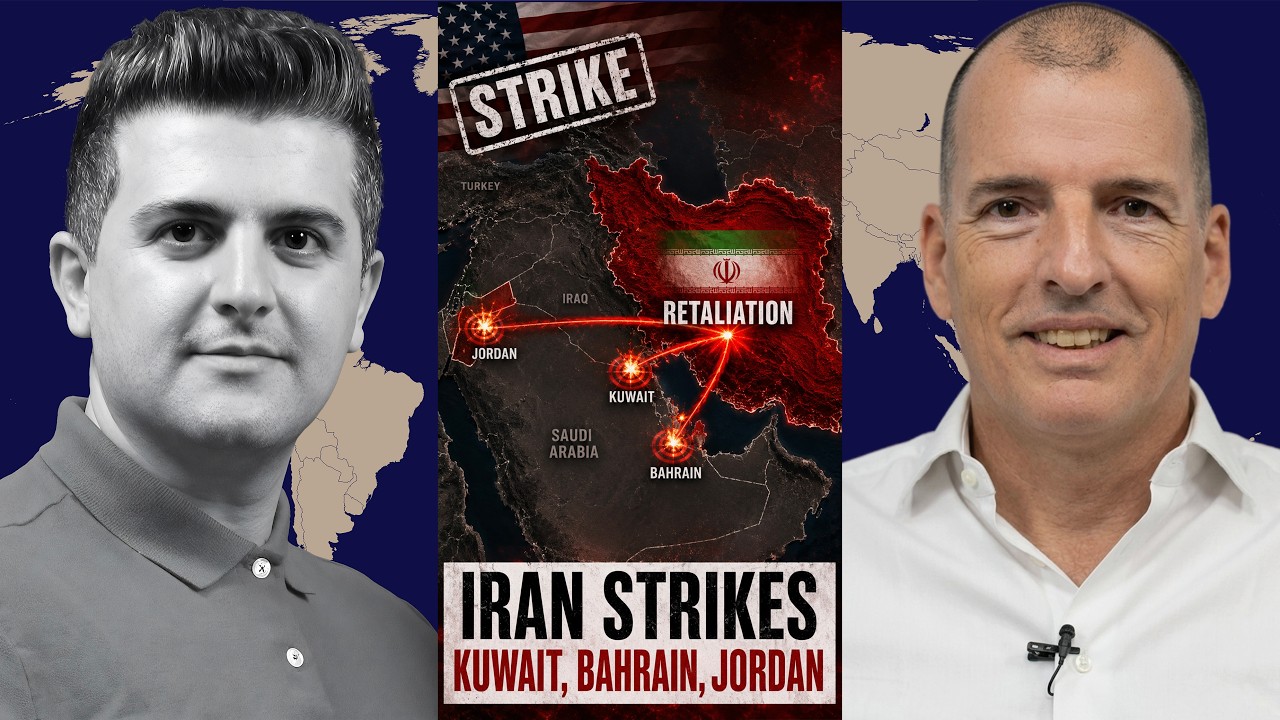
Alex Krainer: US STRIKES Iran – Iran RETALIATES Against Kuwait, Bahrain & Jordan!
"Amidst escalating US-Iran conflict and Iranian retaliation against regional US allies, this episode argues that US foreign policy is deeply controlled by an 'Anglo-Zionist conspiracy' led by the Rothschild banking dynasty, prioritizing Israeli interests over American ones."

Iran Update: Israel’s Newest Bombing Campaign, the Oncoming War With China and How to Avoid It
"Colonel Wilerson reveals how the US and Israel are actively bombing China's strategic infrastructure in Iran, escalating a covert economic war that Beijing intends to win without direct military conflict by dismantling the dollar's global dominance."