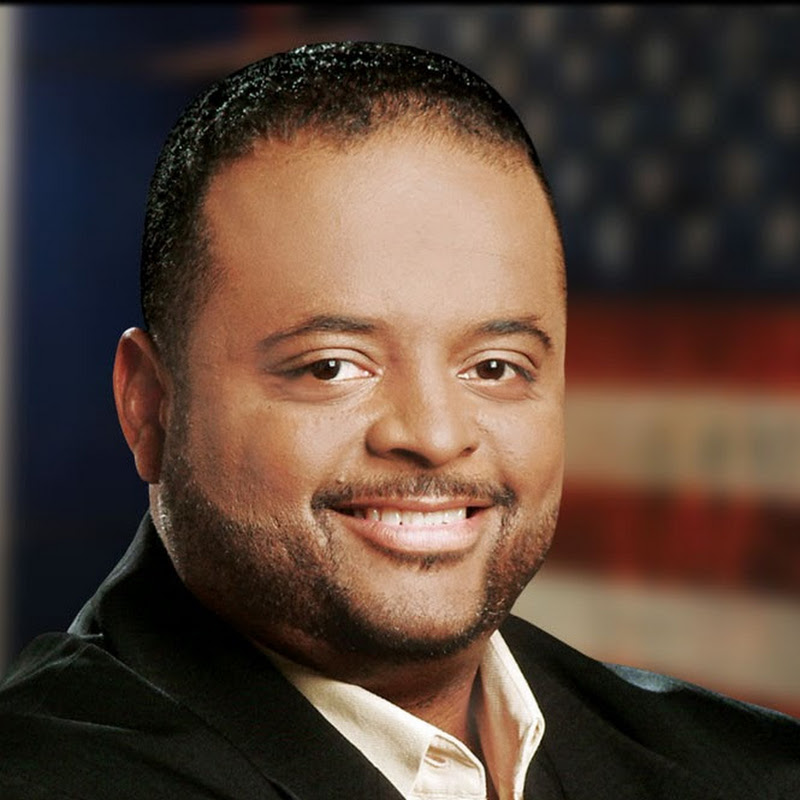
Louisiana Postpones Election. Roland Moderates Black men's Mental Health Forum in Shreveport
YouTube · v4ZSbefMolU
Quick Read
Summary
Takeaways
- ❖The Supreme Court invalidated Louisiana's second majority-Black congressional district, leading to the postponement of congressional primaries and widespread voter confusion.
- ❖This ruling is seen as a significant weakening of Section Two of the Voting Rights Act, with potential for widespread disenfranchisement of minority voters across the South.
- ❖A community forum in Shreveport addressed the critical issue of Black men's mental health and its connection to domestic violence, spurred by a recent local tragedy.
- ❖Panelists stressed the need for culturally competent mental health services that understand the unique experiences of Black men, including the impacts of racism and oppression.
- ❖Effective community solutions require moving beyond individual efforts to organized, data-driven initiatives that leverage existing institutions like churches, schools, and local government.
- ❖The importance of early intervention for behavioral issues in youth and creating safe spaces for dialogue and emotional regulation was highlighted.
- ❖Community leaders are urged to collect data on participants, build databases, and foster sustained engagement to convert 'fans' into 'followers' for long-term impact.
Insights
1Supreme Court Ruling Undermines Voting Rights in Louisiana and Beyond
The Supreme Court's decision to invalidate Louisiana's second majority-Black congressional district led Governor Jeff Landry to postpone the state's congressional primaries. This ruling is viewed as a severe blow to Section Two of the Voting Rights Act, which previously protected minority voters' ability to elect candidates of their choice. The decision creates significant voter confusion, with absentee ballots already cast potentially uncounted, and sets a dangerous precedent for other Southern states like Alabama, Mississippi, and Georgia, where similar districts could be challenged, potentially leading to a reduction in Black political representation.
Louisiana's congressional primaries were postponed due to a Supreme Court ruling that undid a crucial component of the Voting Rights Act, invalidating a majority-black congressional district. Early voting was already supposed to begin, and absentee ballots were in the mail. Gary Chambers stated, 'We don't know what map is going to be existing for the voters of Louisiana.' Ashley Shelton explained that the 'Cala decision which to be clear eviscerates section two of the Voting Rights Act.' Davin Roseboro called it 'the end of the project of the Roberts Court to slowly piece by piece take apart the Voting Rights Act.'
2Mental Health Crisis Among Black Men Fuels Domestic Violence, Demands Culturally Competent Solutions
A tragic murder-suicide in Shreveport highlighted the urgent need to address Black men's mental health, which panelists identified as a significant factor in domestic violence. The discussion emphasized that mental health issues are often dismissed or misunderstood, and that existing therapeutic services frequently lack cultural competence, making Black men hesitant to seek help. The panel argued for a holistic approach that acknowledges the impact of systemic racism, economic disparities, and self-medication on mental well-being, advocating for services tailored to the Black community's unique experiences.
Roland Martin stated, 'If men are committing 96% of domestic violence cases, at some point, we're going to have to talk about what is going on with men.' Dr. Kevin Washington highlighted that 'all mental health is not good mental health if it does not fit the population' and that therapists often 'discounted what I was saying' regarding race, racism, and oppression. He noted that Black men avoid therapy due to concerns about understanding, access, and cultural relevance. Chief Smith mentioned that many people knew about the perpetrator's mental condition 'way before that' but 'didn't hear was any action that had taken place.'
3Community Organizing and Resource Mobilization are Essential for Lasting Change
The panel stressed that addressing complex community issues like voting rights and domestic violence requires sustained, organized action rather than isolated events or reliance on external entities. Key steps include collecting data on engaged individuals, building robust databases, and fostering consistent engagement to convert 'fans' into 'followers' who are actively involved in ongoing initiatives. This involves community resource assessments to identify existing organizations, aligning individuals with specific 'lanes' of work, and exerting collective pressure on elected officials for funding and policy changes.
Roland Martin emphasized, 'We meet and we gather, but we don't organize and mobilize. So, the data is critically important.' He advised collecting names, emails, and areas of interest to build a database and then 'mobilize and organize.' Gary Chambers called for 'investing in turnout strategy' and urged 'members of the CBC, the black entertainers, the black sports folks, everybody who gives a damn to start making your way to the Louisiana legislature.' Roland also stated, 'If we do not present an agenda to the people that represent us, well then we're not going to get back what we think we need.'
Bottom Line
The Supreme Court's 'colorblind constitution' argument is being used to dismantle protections for historically disenfranchised groups, effectively weaponizing amendments designed for racial equality against those they were meant to protect.
This legal philosophy risks reversing decades of civil rights progress, making it harder to address systemic inequalities and potentially leading to a significant rollback of minority representation in government.
Advocates must shift from solely legal battles to broader public education and political mobilization, framing the 'colorblind' argument as a direct threat to democratic representation and historical justice, thereby galvanizing wider public opposition and legislative counter-efforts.
Social media influence, while providing reach, does not equate to organized political or social power; 'fans' must be converted into 'followers' through structured engagement and local action.
Individuals with large online followings risk becoming 'performative activists' if they cannot translate digital engagement into tangible, organized efforts on the ground, leaving critical issues unaddressed at the community level.
Influencers should pivot from solely broadcasting messages to building local chapters, organizing events, and creating clear pathways for their audience to participate in specific, measurable community initiatives, thereby transforming passive support into active, collective power.
Economic pressure, such as boycotts or withdrawal of major events, can be a powerful tool to compel state governments to uphold voting rights and address racial inequities.
Without economic consequences, political actors in states like Louisiana may feel emboldened to enact policies that disenfranchise minority voters, knowing there's no significant cost to their state's economy.
Black leaders, entertainers, and sports organizations should strategically leverage their economic influence by threatening or enacting boycotts of states that undermine voting rights, creating a direct financial incentive for political change and accountability.
Opportunities
Culturally Competent Mental Health Training & Certification
Develop and offer specialized training and certification programs for mental health professionals, law enforcement, and educators to deliver culturally competent services, particularly for Black men. This would address the current gap where many services fail to understand the unique experiences of race, racism, and oppression, which deter Black men from seeking help.
Community-Based Youth Mentoring & Life Skills Programs
Establish or expand youth sports leagues and community centers that integrate structured programs for etiquette, conflict resolution, emotional regulation, and culturally relevant life skills. These programs would target young men in inner cities, leveraging the existing volunteer base of former athletes and providing safe spaces for dialogue and development outside traditional school settings.
Digital-to-Local Organizing Platform
Create a digital platform or app that enables social media influencers and community leaders to convert their online 'fans' into organized, local 'followers.' This platform would facilitate data collection (name, email, location, area of interest), connect individuals to local initiatives, and provide tools for micro-organizing, event planning, and coordinated advocacy around specific issues like voting rights or mental health.
Key Concepts
Micro to Macro Organizing
The concept that effective community change starts with small, localized, and methodical efforts (micro) that are then scaled up (macro). This involves identifying specific needs within a small radius, engaging individuals door-to-door, building local groups, and then expanding those groups through consistent recruitment and clear objectives, rather than attempting large-scale, diffuse initiatives from the outset.
Holistic Community Infrastructure
Addressing complex social issues like domestic violence and mental health requires a comprehensive, interconnected approach that integrates various community institutions (churches, schools, police, DAs, non-profits) and leverages political processes (voting, lobbying) to secure funding and resources. It emphasizes that no single entity can solve these problems alone, and sustained impact depends on building a robust, collaborative ecosystem of support.
Lessons
- Conduct a 'community resource assessment' to identify existing organizations, nonprofits, and services in your local area that address specific needs like anti-violence, mental health, economic development, or housing.
- Align yourself with an existing organization that is actively working on an issue you care about, rather than operating as a sole individual, to amplify collective pressure and impact.
- If you are a community leader or influencer, actively collect contact information (name, email, phone, area of interest) from attendees at events or online followers to build a database for sustained organizing and mobilization efforts.
Building a Community-Driven Movement
**Identify Your Lane:** Determine specific community problems you want to address (e.g., mental health, domestic violence, voting rights) and research existing organizations working in those 'lanes.'
**Gather and Organize Data:** Collect contact information (name, email, phone, area of interest) from all participants at meetings, events, or online. Create a centralized database.
**Micro-Mobilize & Expand:** Start with small, consistent meetings (e.g., bi-weekly) with initial participants. Task each attendee to bring one new person to the next meeting, systematically growing your base from 'micro' to 'macro.'
**Develop a Community-Driven Agenda:** Work with professionals and community members to assess specific needs and formulate concrete demands (e.g., 'We need $X million for Y mental health counselors in schools').
**Exert Political Pressure:** Present your agenda to elected officials (school board, city council, state representatives). Mobilize your organized base to attend meetings, make calls, send emails, and vote strategically to ensure accountability.
**Ignore the Haters, Keep Building:** Anticipate resistance and negativity. Focus on the progress being made by those who are engaged, and do not allow detractors to derail the movement.
Notable Moments
Discussion of the Supreme Court's 'colorblind constitution' argument being used to dismantle voting rights protections.
This highlights a critical legal and philosophical shift that threatens to undo decades of civil rights advancements by ignoring the historical and ongoing impact of race on American society and politics.
The revelation that the perpetrator of a tragic murder-suicide had been in the VA for mental health issues but still committed the crime.
This underscores the systemic failures in mental healthcare, particularly for Black men, where even those who seek help may not receive adequate or culturally competent support, leading to devastating consequences.
Roland Martin's direct challenge to a young social media influencer about converting 'fans' into 'followers' through organized action.
This moment provides a crucial distinction between passive online engagement and active, tangible community organizing, offering a roadmap for how digital reach can be leveraged for real-world impact.
Quotes
"This started out as a case about Louisiana and an additional congressional seat and then what the subsequent ruling that we received yesterday. What it means is that black voters and and all minorities, which include women of every race and ethnicity as well, um have lo, you know, like could lose the ability to elect a candidate of choice at every level of government."
"This is really the end of the project of the Roberts Court to slowly piece by piece take apart the Voting Rights Act, which was key to actually providing black voters in the South um the opportunity to elect candidates of choice."
"If we're saying protect black women, we want them to to live. We don't want the kids impacted. then you're going to have to deal with what's happening between the ears of individuals who either shoot, kill, or beat women. That is a that something is happening between their ears. And so that has to be confronted and dealt with."
"All mental health is not good mental health if it does not fit the population."
"We meet and we gather, but we don't organize and mobilize. So, the data is critically important."
Q&A
Recent Questions
Related Episodes

All Roads Lead To the South: Nat’l Day Of Action For Voting Rights | Mass Rally | Montgomery, AL
"A mass rally in Montgomery, Alabama, ignites 'Freedom Summer 2026' to combat the Supreme Court's decimation of Black political power and demand unprecedented voter mobilization across the South."
Moral Monday at BLM Plaza. Cleo Fields Sounds Alarm on Louisiana & Gary Chambers Pushes Turnout
"Activists and faith leaders gathered at Moral Monday to denounce 'policy violence' in various forms, from war and budget cuts to voter suppression and healthcare denial, urging sustained mobilization against a 'hijacked' democracy."

Mamá me golpeaba, busqué a papá y él me trajo a la cárcel | Yahana #Penitencia 196 #México
"Yahana recounts her harrowing journey from a childhood marred by domestic violence and parental abandonment to drug addiction and eventual incarceration, directly caused by her father's actions."

"Mini" Super Tuesday Primaries. Bodycam Clears Black Teen. Haitian Heritage Month. #TheBreakdown
"This episode breaks down critical political developments, highlights the power of bodycam footage in exonerating a Black teen, celebrates Haitian heritage, showcases innovative arts education, and champions breast cancer awareness for Black women."