
PBS News Hour full episode, Jan. 20, 2026
YouTube · v9bfNtk-utQ
Quick Read
Summary
Takeaways
- ❖President Trump's threats to acquire Greenland are met with strong condemnation and potential retaliatory tariffs from European allies at the World Economic Forum.
- ❖The U.S. has reactivated family detention, with over 1,700 children held in conditions described as unsafe and unsanitary, including moldy food and inadequate medical care.
- ❖The Supreme Court is hearing a case on a Hawaii law requiring explicit permission to carry firearms on private property open to the public, potentially impacting gun laws across the country.
- ❖The T.M. Landry College Preparatory Academy engaged in widespread fraud, forcing Black students to fabricate traumatic life stories to secure elite college admissions, exploiting racial stereotypes.
- ❖Conservative legal scholar Ilya Shapiro discusses the constitutional boundaries of presidential power, noting concerns over executive overreach but also congressional buck-passing.
Insights
1Trump's Greenland Pursuit Strains Transatlantic Alliance and Provokes European Backlash
President Trump intensified threats to acquire Greenland, framing it as a national and world security imperative. This stance led to significant pushback from European leaders at the World Economic Forum in Davos, including Canadian Prime Minister Mark Carney, European Commission President Ursula von der Leyen, and French President Emmanuel Macron, who emphasized Greenland's sovereignty and warned against intimidation tactics. Greenland's Prime Minister Jens-Frederik Nielsen expressed concern about potential U.S. military action and its consequences for NATO. U.S. Treasury Secretary Scott Bessent urged European leaders to 'have an open mind' and avoid retaliation, suggesting a deal could be reached, despite Trump's inflammatory social media posts.
Trump's online messages (, ), statements from Carney (), von der Leyen (), Macron (), Nielsen (), and Bessent (). Robin Niblett notes the 'febrile' atmosphere in Davos and European leaders feeling 'backs to the wall' ().
2Severe Conditions and Psychological Harm in U.S. Family Detention Centers
The Trump administration's expansion of family detention has resulted in over 1,700 children in custody since spring. Becky Wolozin, a senior attorney with the National Center for Youth Law, detailed allegations of profound problems with basic needs, including moldy or worm-infested food, limited access to clean water, and inadequate medical care. Children are experiencing significant psychological deterioration, including behavioral regressions, self-harm, constant sadness, and nightmares, with some held for over 80 days. Wolozin asserts these conditions are not necessary for immigration enforcement and appear designed for cruelty to induce self-deportation.
Becky Wolozin's testimony on 'basic health, basic access to basic needs' (), 'vegetables that were moldy or had worms in them' (), 'children not getting child-friendly food' (), 'prolonged, restrictive settings, they really begin to deteriorate' (), and 'families being held for longer and longer periods of time... more than 80 days' ().
3Supreme Court Weighs Hawaii Gun Law, Testing Second Amendment Limits on Private Property
The Supreme Court heard arguments on a Hawaii gun law that prohibits carrying firearms on private property open to the public unless the owner explicitly permits it. This 'flipped default' contrasts with most U.S. states where guns are generally allowed unless explicitly prohibited. The case stems from the Supreme Court's 2022 Bruen decision, which expanded gun rights. Justices Samuel Alito questioned the law's necessity, while Justice Sonia Sotomayor emphasized property owners' rights to control who enters with a gun. The decision could have broad implications for gun laws nationwide, particularly in states with historically low gun ownership.
Chip Brownlee's explanation of the Hawaii law () and its contrast with other states (), the Bruen decision (), and quotes from Justice Alito () and Justice Sotomayor ().
4T.M. Landry School Scandal Exposes Fraud and Exploitation of Racial Stereotypes in Education
The book 'Miracle Children' by Katie Benner and Erica Green details how the T.M. Landry College Preparatory Academy, a school for underprivileged Black students, achieved its high college admission rates through fraud. Founders Mike and Tracey Landry allegedly forced students to lie on applications, fabricating stories of homelessness, drug-addicted parents, and other negative stereotypes, claiming this is 'what white admissions officers wanted from Black people.' The school also used psychological, emotional, and physical violence to maintain control, threatening students with rescinded applications if they exposed the truth. The authors highlight how the school preyed on the vulnerabilities of working-class Black families and how societal expectations of Black achievement contributed to the viral success of the fraudulent stories.
Katie Benner's description of students forced to 'lie about their lives and to lean into really negative stereotypes about Black America' (), and 'psychological, emotional, and physical violence' (). Erica Green's explanation of Mike Landry preying on 'fears and their vulnerabilities' () and the authors' call for 'self-reflect about their own expectations of Black children' ().
5Presidential Power: Constitutional Limits and Congressional Abdication
Ilya Shapiro, a senior fellow at the Manhattan Institute, discussed the constitutional boundaries of presidential power one year into Trump's second term. He asserts that while presidents have leeway in reorganizing the executive branch, they face trouble when attempting to make or change laws unilaterally, citing Supreme Court pauses on National Guard deployments and potential rulings against tariffs. Shapiro notes a perceived hypocrisy among conservatives who once warned against an 'imperial presidency' but now support Trump's actions, attributing it to 'tribal politics' and a long-standing dynamic of Congress ceding power to the presidency to avoid political accountability. He identifies the continued postponement of TikTok's divestment as Trump's biggest legal violation.
Ilya Shapiro's statements on 'constitutional limits' (), 'president does get a lot of leeway in reorganizing the executive branch' (), 'when the president tries to make his own laws or change the laws in some way, he runs into trouble' (), 'people change where they stand based on where they sit all the time' (), and 'the worst thing he's done legally is the continued postponement of the law requiring divestment of TikTok by ByteDance' ().
Lessons
- Monitor the evolving diplomatic and trade relations between the U.S. and Europe, particularly concerning Greenland, as potential tariff escalations could impact global markets.
- Advocate for improved conditions and oversight in U.S. family detention centers, drawing attention to human rights concerns and the psychological impact on detained children.
- Track Supreme Court decisions on Second Amendment cases, as rulings on private property gun carry laws could significantly alter gun control landscapes across states.
- Scrutinize educational institutions and their claims of success, especially those serving vulnerable populations, to prevent exploitation and ensure ethical practices in college admissions.
- Engage in discussions about the balance of power between the executive and legislative branches, advocating for congressional accountability in policy decisions and military actions.
Quotes
"We must not give in to the law of the strongest or to intimidation tactics. We must move forward. We must not yield to the dictates of the strongest. We must defend our interests, but also our principles."
"Greenland is imperative for national and world security. There can be no going back."
"For most of these European governments, the idea of compromising on Greenland's sovereignty and the sovereignty of the Greenlandic people in return for a sort of 19th, early 20th century return to great power hemispheric politics is nonnegotiable."
"I think it's very evident that none of this is necessary to carry out immigration laws and policies, regardless of what they are... the goal is cruelty and the goal is to make people who came to the United States often seeking safety and security to flee the United States for the countries where they felt so endangered that they had to leave."
"Is there a constitutional right to enter private property with a gun without an owner's express or implicit consent? The answer has to be simply no. You can't own -- enter an owner's property without their consent, correct, express or implicit."
"Black children do not have to be damaged to be valuable."
Q&A
Recent Questions
Related Episodes

Mamdani CELEBRATES NYC Rent Freeze, This Will DESTROY The City | Timcast IRL
"New York City's rent freeze, celebrated by Mandami, is framed as a socialist 'land grab' that will devastate the city's housing market and economy, while a FIFA Pride Match in Seattle sparks outrage from conservative nations."

Larry Johnson: Iran Missiles Rain Down on Northern Israel – Massive Strikes!
"Geopolitical analyst Larry Johnson details how Israel's recent strike on an 'empty building' in Beirut triggered direct Iranian missile retaliation, escalating regional tensions and jeopardizing a US-Iran peace deal brokered by Pakistan."

LIVE: Trump HIDES FROM PUBLIC as US SOLDIER KILLED!!! 6/2/2026
"The host exposes alleged government cover-ups regarding military casualties, Trump's unexplained public absence, and questionable political appointments, arguing these reflect a 'regime of loser babies' and a failing foreign policy."
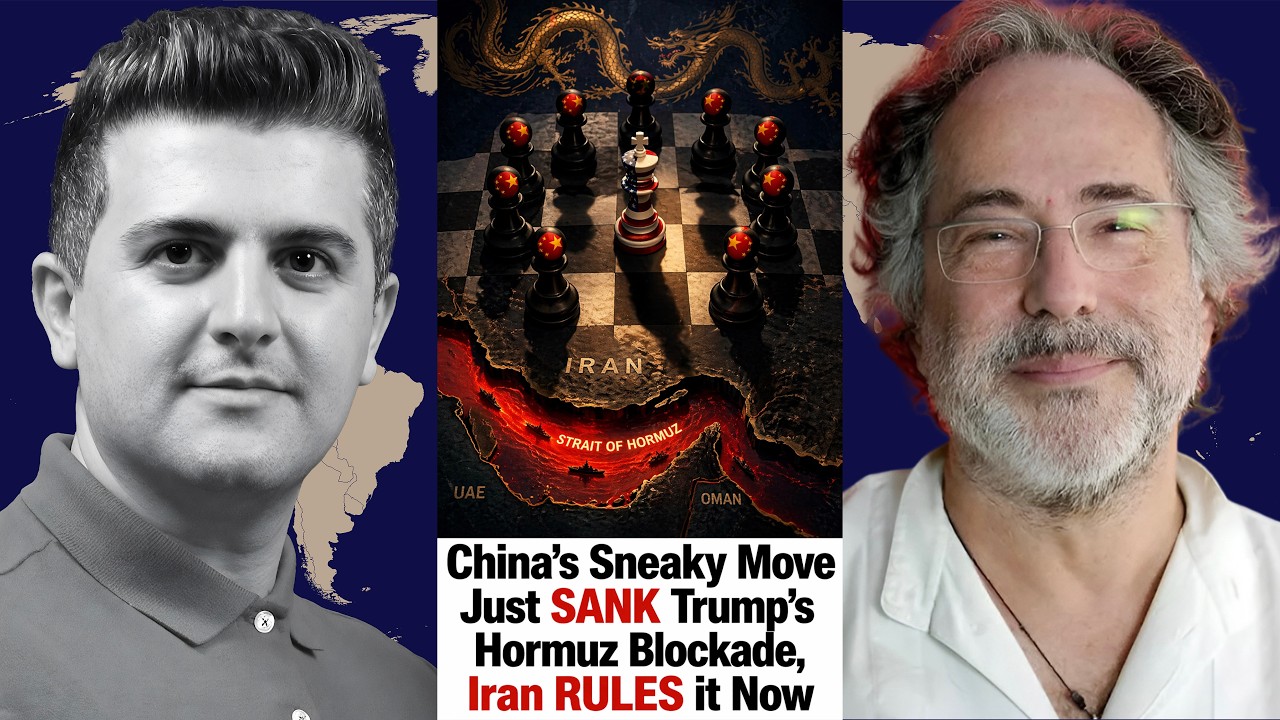
Pepe Escobar: “Total Failure”: Trump’s Blockade Just Backfired Disastrously
"Pepe Escobar argues that the US blockade against Iran, spearheaded by Donald Trump, has utterly failed and backfired, accelerating global economic chaos and challenging US geopolitical dominance."