October 7th Foresight, Netanyahu’s Funding of Hamas, and the Settlers Murdering Palestinians
YouTube · vUFtmvlOANk
Quick Read
Summary
Takeaways
- ❖October 7th was a strategic act by Yahya Sinwar to break an unsustainable post-2014 status quo that was eroding the Palestinian cause.
- ❖Sinwar's long-term vision, articulated as early as 2018, predicted a disastrous 'fourth war' for Netanyahu, forcing Israel into a prolonged, indeterminate occupation of Gaza.
- ❖Israeli intelligence reportedly had warnings (e.g., 'Jericho Wall' document, border guard reports) about an impending serious attack, but these were dismissed by higher-ups.
- ❖The lack of immediate air support (drones, helicopters) on October 7th, despite early warnings, remains a critical unanswered question.
- ❖Netanyahu's government benefits from chaos, using 'musical wars' in Gaza, Lebanon, and Iran to maintain political power and avoid accountability for a clear post-conflict plan.
- ❖Israel's internal divisions, particularly the 'solipsistic' societal mindset and the 'dead' political left, are seen as its greatest long-term vulnerability.
- ❖West Bank settlers, including the 'hilltop youth,' exhibit an 'autoimmune' behavior, paradoxically adopting Palestinian cultural symbols while violently dispossessing Palestinians.
- ❖The Israeli government, with US assistance, may be planning a 'suspension of private property' in Gaza to facilitate urban and demographic reconfiguration, effectively a 'reset' of the territory.
- ❖Many Israelis, especially the younger liberal generation, are questioning their future in the country due to ongoing conflict and government policies.
Bottom Line
Hamas leader Yahya Sinwar's strategic goal for October 7th was not necessarily victory, but to force Israel into a prolonged, indeterminate conflict ('groping around in the gray') that would be worse than defeat for Netanyahu, thereby resetting the Palestinian cause.
This reframes October 7th as a calculated, long-game maneuver rather than a purely irrational act of terror, suggesting a deeper understanding of Israeli political and societal vulnerabilities by Hamas leadership.
Analysts should examine future 'resistance' movements for similar long-term, status-quo-shattering strategies, rather than assuming immediate military victory is the sole objective.
The Israeli government, with US assistance, has explored plans for a 'suspension of private property' in Gaza for up to seven years, aiming to fundamentally alter the urban planning and demography of the region through a 'rotation' rebuilding process.
This suggests a potential for radical, long-term geopolitical engineering in Gaza that could lead to significant displacement and a complete redrawing of land ownership, breaking historical legal precedents.
International legal bodies and human rights organizations should closely monitor any proposals for property suspension or demographic engineering in Gaza, as this could set a dangerous precedent for post-conflict reconstruction.
The 'hilltop youth' settlers in the West Bank are adopting Palestinian cultural symbols (e.g., keffiyeh, shepherding) while simultaneously engaging in violent acts against Palestinians, representing an 'autoimmune position' in a 'struggle for nativity.'
This indicates a deep psychological and identity crisis within a radical segment of the settler movement, where they seek to appropriate the 'native' identity they are simultaneously trying to erase, potentially leading to increased internal instability within Israel.
Sociologists and political psychologists should study this phenomenon to understand the evolving identity politics and radicalization trends within settler communities, and its implications for future conflict dynamics.
Lessons
- Recognize that geopolitical conflicts often involve complex, long-term strategic calculations by all parties, not just immediate reactions or simple motives.
- Critically evaluate official narratives and media portrayals of conflicts, seeking out diverse perspectives and historical context to understand underlying causes and potential future trajectories.
- Understand that internal political dynamics and leadership interests can heavily influence national security decisions and military strategies, potentially leading to prolonged conflict for domestic gain.
Notable Moments
The guest recounts a conversation with a British journalist three weeks before October 7th, where the journalist dismissed the guest's 'apocalyptic' warnings about impending conflict, highlighting a widespread underestimation of the brewing tensions.
This illustrates the pervasive denial and misjudgment of the situation by external observers and even some within the region, underscoring the difficulty of predicting major geopolitical shifts.
The guest describes an encounter with a young Israeli soldier after October 7th, who expressed fear of visiting Arab towns within Israel (like Kfar Kasim or Jaffa) where his family used to shop, indicating a profound shift in internal trust and freedom of movement.
This personal anecdote vividly demonstrates the immediate and deeply personal impact of October 7th on Israeli society, leading to increased segregation and fear even within the country's recognized borders.
The guest mentions that many parks in Israel are built on the physical sites of former Palestinian villages destroyed in 1948, a fact unknown to many, and that Ben-Gurion explicitly called for 'cleaning up the mess' to avoid 'superfluous thoughts.'
Quotes
"The next war or in the next war, victory for Netanyahu will be worse than defeat."
"By God, I see it with the sight of my eyes. A regional, religious war that will burn with it the green and the dry."
"I think Sinuad understood that the status quo that fell into place after 2014, this long silence, that it was poison for the Palestinian cause."
"What matters to Israel, what's useful for Bibi Netanyahu specifically is simply chaos. And the more definition that is given to the chaos, the more he has to account for the shape that it's taken."
"If anything brings Israel to its knees... it will be internal."
"The problem in Israel is that I used to have some Israeli sort of religious friends who would come to my dorm when I'd have my Arab friends with me and we'd have some really nice conversations. They even befriended each other. But at some point, my Israeli friends stopped speaking to them. Because there's a point in any Israeli dialog, there's point at which an Israeli has to make a decision, left or right. Am I going, if I go down this path and really try to understand the other side, I risk exposing certain things with the grounds of my own identity here, but the foundations of the country that risk my identity. And the other option is I'm just going to stop it here, turn around and forget this happened."
"The logic of the resistance in the West Bank is completely backwards, which means I don't think there's to be like an October 7th in the West Bank. But when I was in these villages that were getting attacked by the settlers, there's one line that kept coming up... 'There will come a day when we are pushed a little too far.'"
"To Israelis, what's their view of American Jews specifically? ...They're mixed feelings, I have issues with American Jews, but they're also my people. And this is, I think, the overarching sentiment. At the end of the day, there are many disagreements between the two peoples, but there are also a single people."
Q&A
Recent Questions
Related Episodes

BREAKING: Iran Threatens To END Talks; U.S. Vows Retaliation; Hezbollah Collapsing? | TBN Israel
"Iran is leveraging Hezbollah and the Strait of Hormuz to manipulate US negotiations, while Israel asserts its right to dismantle Hezbollah's eroding but still dangerous infrastructure in Lebanon, independent of international talks."

🚨 THEY F*CKED AROUND FOR THE LAST TIME 😭😭😭
"This episode unleashes a torrent of highly opinionated commentary on the US-Iran deal, Israel's role, and a scathing critique of 'leftist' policies and immigration, particularly highlighting the UK grooming gang report as evidence of Western societal decay."
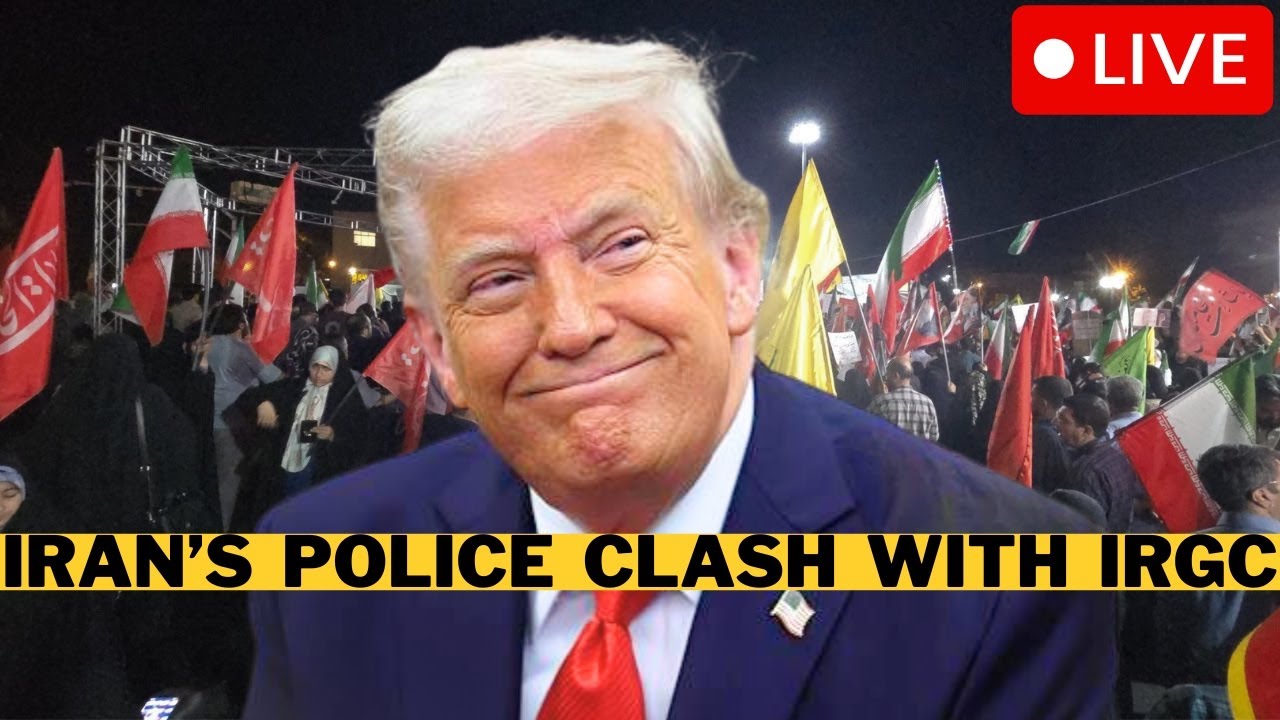
BREAKING: Protests ERUPT In Iran Over IRGC Surrendering To Trump - Infighting Clashes In Tehran
"Iran is experiencing severe internal infighting and protests as hardline IRGC elements clash with government figures over a perceived 'surrender' to the US, while mainstream Western media misrepresents the situation."
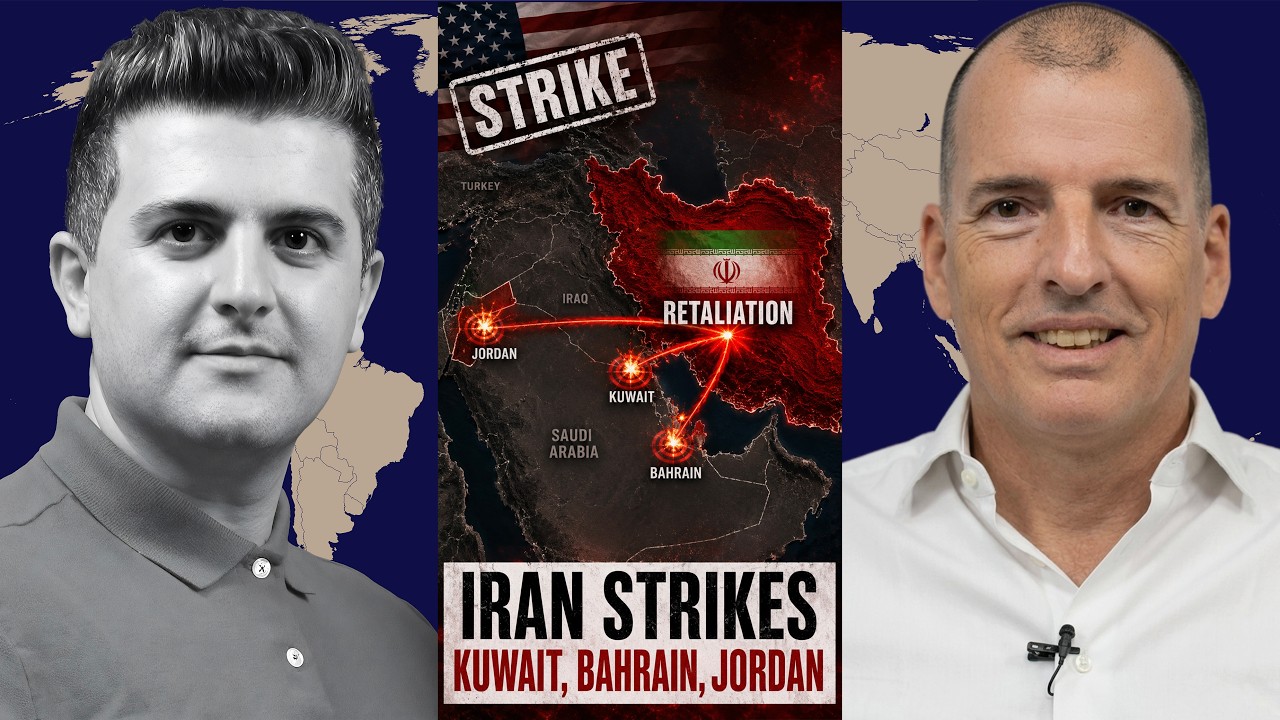
Alex Krainer: US STRIKES Iran – Iran RETALIATES Against Kuwait, Bahrain & Jordan!
"Amidst escalating US-Iran conflict and Iranian retaliation against regional US allies, this episode argues that US foreign policy is deeply controlled by an 'Anglo-Zionist conspiracy' led by the Rothschild banking dynasty, prioritizing Israeli interests over American ones."