
Madison Beer Eats Her Last Meal
YouTube · vWdEfGsgMjQ
Quick Read
Summary
Takeaways
- ❖Madison Beer experienced severe death anxiety from a young age, which therapy helped her manage.
- ❖Early fame led to a dehumanizing experience, where she and other young artists were seen as 'more than human.'
- ❖She struggles with the paradox of valuing privacy while having a public career, leading to internal conflict.
- ❖Genuine human connections, like intimate moments with fans, are infinitely more fulfilling than career achievements.
- ❖Beer actively works to not tether her happiness or self-worth to career milestones, finding contentment regardless of external success.
- ❖The entertainment industry often sets unrealistic expectations, like being the 'female Justin Bieber,' which can be damaging for young artists.
Insights
1Fame's Dehumanizing Effect on Young Artists
Madison Beer reflects on how early exposure to fame, like being discovered by Justin Bieber at 12, led her to view successful artists as 'not human.' This perspective was later mirrored when she realized Bieber himself was only 16 at the time, highlighting the immense pressure and unrealistic expectations placed on young individuals in the pop world, effectively stripping them of their humanity in the public eye.
Beer states, 'I remember just thinking like him and so many other people that I looked up to weren't human. It's a weird thing when you get older and you realize like, yeah, I was 12, but you were also a teenager. Literally a teenager figuring out life for the first time under so much public scrutiny.'
2The Internal Conflict of Public vs. Private Self
Beer describes a constant 'tug-of-war' between her desire for privacy and security and the demands of her public life. Her therapist helped her identify contradictory values between 'Madison Beer' (the public figure) and 'Madison' (the person), revealing a core source of her anxiety and depression.
She explains, 'a lot of my anxiety and depression I think was coming from this constant tug-of-war in my head of like I value privacy and security and all these things that like is the complete opposite of what you get when you put your life out there the way that I have.'
3Happiness Untethered from Achievement
Despite achieving significant career milestones like a top 10 album debut and selling out Madison Square Garden, Beer expresses a detachment from these successes. She emphasizes that her happiness and self-worth are no longer tied to such achievements, a perspective gained after years in the industry and numerous disappointments. This allows her to appreciate her work and fans independently of chart performance.
Beer notes, 'I don't want to say that it's the time I've cared the least but it is the time where I'm the least impressed by like these things which maybe is why it's happening is because it feels like it's all happening naturally.' She adds, 'I still would love this album. I still would be really thankful for all the fans.'
4The Profound Value of Authentic Human Connection
Beer highlights that moments of deep, vulnerable connection with strangers or fans are infinitely more meaningful and fulfilling than any career metric. She recounts specific instances, like crying with a student about depression or singing a song directly to a sobbing fan, as 'cosmic' and spiritual experiences that make 'the noise of everything else goes away.'
She states, 'those moments are really what like honestly to circle it all back back to like the death anxiety and the overwhelming... I think that those are the moments where I'm like there has to be more.' She describes a moment with a fan as 'super intimate, super special... it's literally like cosmic and spiritual.'
Bottom Line
The host points out that Justin Bieber was only 16 when he discovered Madison Beer and became a 'second-generation kingmaker' in pop music, highlighting the extreme youth and power dynamics at play in the industry's early digital era.
This reveals how rapidly the music industry evolved with social media, allowing teenagers to wield immense influence and shape careers, often without the maturity or support systems typically associated with such power.
Understanding these historical power shifts can inform strategies for artist development and mentorship programs, focusing on safeguarding young talent and fostering sustainable careers rather than just viral success.
Joe's Stone Crab, a restaurant now grossing $45 million annually, became famous because an ichthyologist (crab scientist) informed the owner that stone crab claws were edible and regrowable, leading to a sustainable and lucrative business model.
This demonstrates how specialized knowledge, even from an unexpected source, can unlock entirely new markets and create massive economic value by identifying previously unrecognized resources or sustainable practices.
Businesses should actively seek interdisciplinary insights and engage with experts from seemingly unrelated fields to discover novel applications or sustainable methods for existing products or untapped resources.
Key Concepts
Paradox of Fame
The concept that while fame is often desired, its reality can be dehumanizing and isolating, creating a disconnect between an artist's public persona and their private self. It highlights the difficulty of maintaining personal values and mental well-being under intense public scrutiny.
Values Over Identity
A therapeutic approach suggesting that prioritizing one's core personal values (e.g., connection, privacy) over a constructed or perceived identity (e.g., 'Madison Beer the celebrity') can lead to greater mental clarity and happiness, especially when those identities are contradictory.
The Moving Goalpost
The idea that external achievements (like selling out Madison Square Garden or having a number one song) often serve as temporary goalposts. Once achieved, new, larger goals emerge, preventing sustained satisfaction and potentially leading to disappointment if self-worth is tied to them.
Lessons
- Prioritize self-awareness: Engage in practices like therapy or journaling to identify and separate your public persona from your core personal values, especially if you experience internal conflict.
- Cultivate presence: Actively practice being present in significant moments, whether personal or professional, by consciously observing and soaking in the experience rather than immediately anticipating the next step or outcome.
- Seek genuine connection: Prioritize and create opportunities for vulnerable, authentic human connections, as these moments can provide deeper fulfillment and purpose than external achievements.
Notable Moments
Madison Beer's father drove Joe's Stone Crab from Miami to Orlando for her show, demonstrating a deep family tradition and support for her comfort food.
This illustrates the personal significance of certain foods and traditions, and how family support can manifest in unique ways to provide comfort amidst the demands of a touring artist's life.
Beer recounts a 'cosmic' moment with a student struggling with depression, where they cried together, and a similar experience singing 'Dangerous' directly to a sobbing fan in Las Vegas.
These moments underscore her core value of human connection and highlight how shared vulnerability and empathy can transcend the typical performer-audience dynamic, providing profound mutual fulfillment.
Quotes
"I've never thought about that. That doesn't that that honestly falls in the realm of like fantasy for me where I'm just like that is so out of my I can't conceive a life where I'm not unfortunately consumed by these like scary thoughts."
"It's a weird thing when you get older and you realize like, yeah, I was 12, but you were also a teenager. Literally a teenager figuring out life for the first time under so much public scrutiny, dealing with so many things. And it's Yeah, it's it's a bit sad to look back at."
"I think that like your brain can comprehend, you know, how many people perceive you, have opinions of you, blah blah blah. It's a really tricky thing."
"I haven't achieved what a lot of my peers have achieved and I'm totally happy."
"I think that if I were to have like this huge giant moment all of a sudden and have like these number ones and then it go down, I think I'd be so it'd be hard to come back from that for me mentally."
"I will stare you down if you're in my audience. I will flirt with you if you're in my audience. Like we will have a moment. So be prepared for that if you come to my show."
"I don't feel like this is all for nothing and I don't feel like we have these beautiful experiences for no reason. And I think the idea that we just like are born and then we die, I don't subscribe to that."
"Not enjoying and being more present for more moments than I should have been. I think that I was looking forward to other things. Not really enjoying things when I should have."
Q&A
Recent Questions
Related Episodes

Mike Epps' Coc*ine Stories I CLUB SHAY SHAY
"Mike Epps details the unexpected isolation and drug use that followed his early fame, and how his second wife's firm stance helped him achieve sobriety and personal maturity."
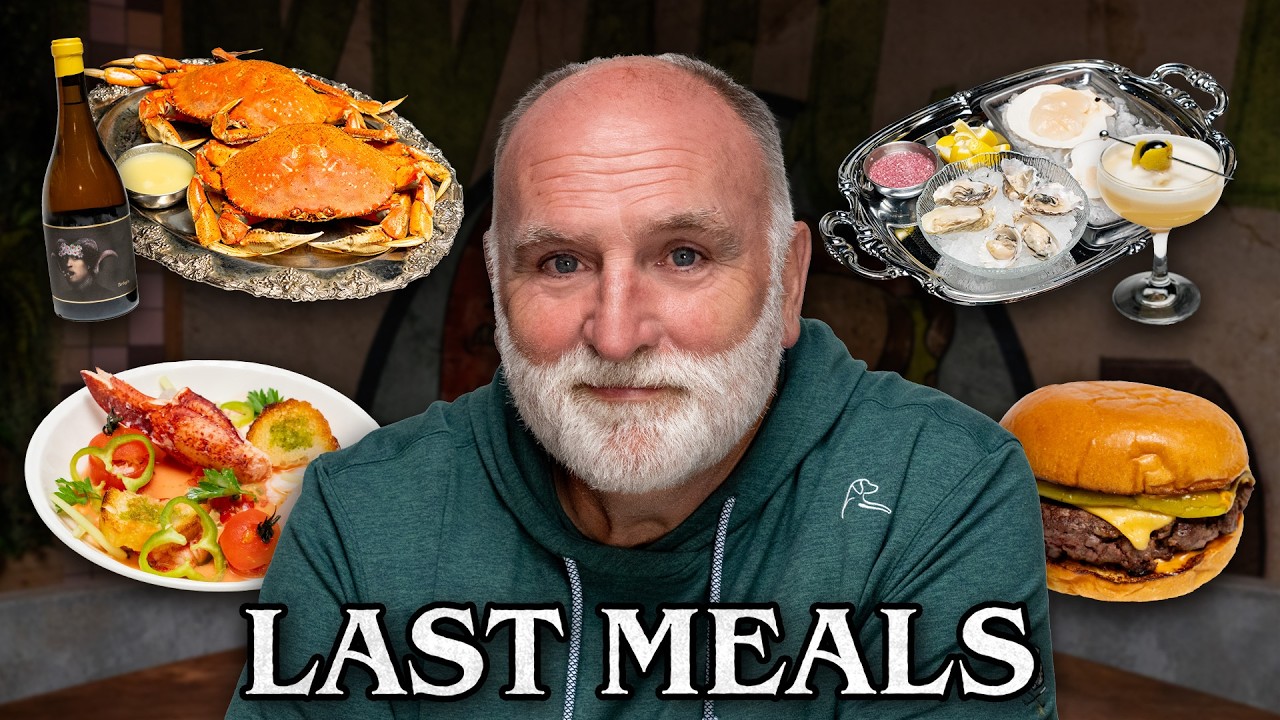
José Andrés Eats His Last Meal
"Chef José Andrés shares his culinary philosophy, personal anecdotes, and the profound origins of World Central Kitchen, emphasizing the joy of food, the importance of pure ingredients, and a life dedicated to service."
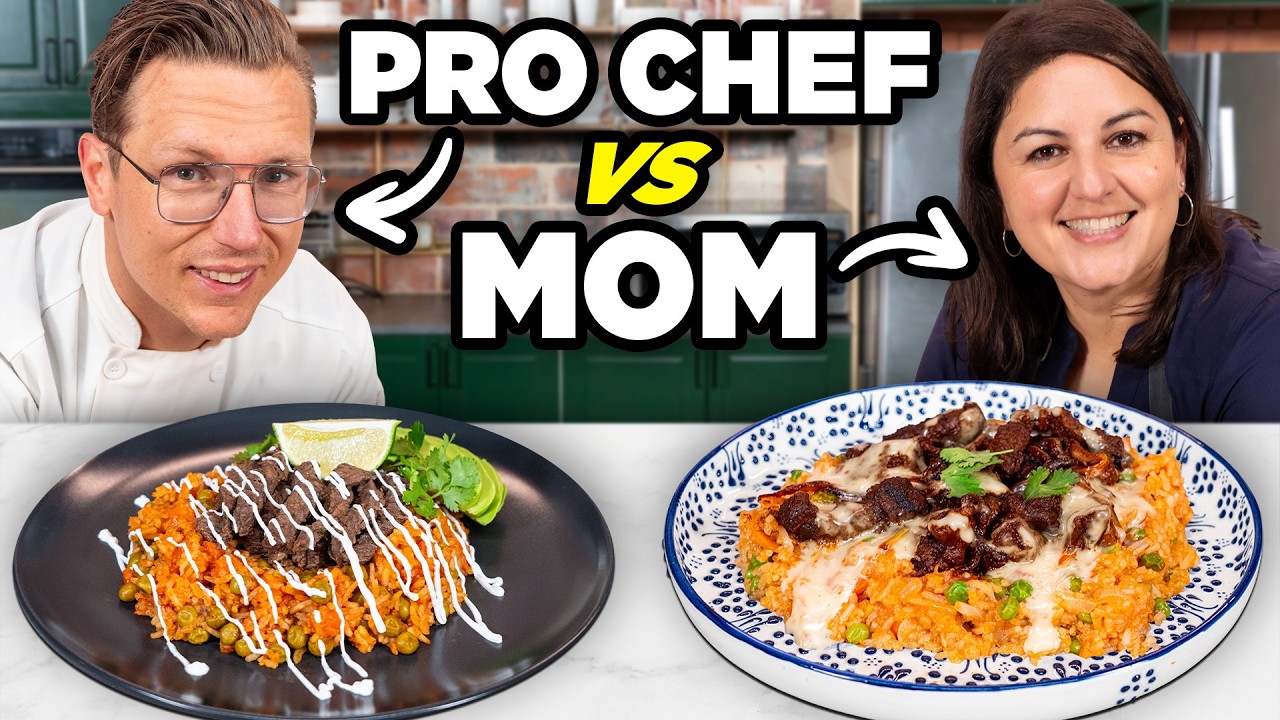
Pro Chef vs. Mom: Who Makes Better Comfort Food?
"A professional chef challenges a mother to a comfort food cook-off, revealing how love and convenience shape beloved recipes."
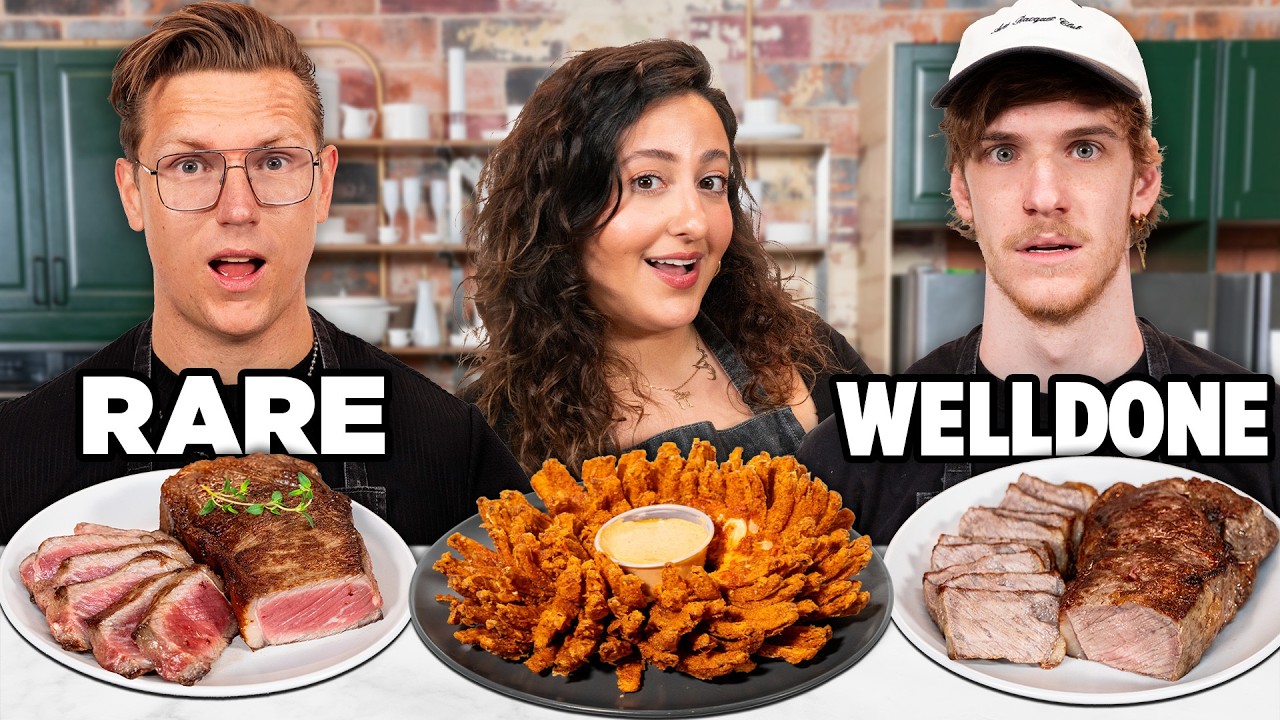
Busting Steakhouse Myths
"This episode rigorously tests four common steakhouse myths, revealing how cooking temperature impacts weight loss, the optimal seasoning for searing, the true value of bone-in cuts, and if medium-rare is truly best for all steaks."