
Mike Waltz - Special Forces Green Beret Turned UN Ambassador Warns About China | SRS #268
YouTube · vbjZ9_QxLsU
Quick Read
Summary
Takeaways
- ❖Mike Waltz's childhood in poverty, raised by a single mother, instilled self-motivation and a drive for service.
- ❖His experience writing policy in the Pentagon and then deploying as a Green Beret revealed the disconnect between strategic planning and ground truth.
- ❖Waltz champions veterans entering politics, arguing their mission focus and ability to overcome differences are vital for national progress.
- ❖He actively works to reform the UN by cutting bureaucracy, enforcing burden-sharing, and countering regulations that harm American economic interests.
- ❖The Trump administration's Middle East peace strategy, including the Abraham Accords, prioritizes commercial diplomacy and economic ties.
- ❖Waltz identifies the Chinese Communist Party as the most significant threat to the US, citing its economic, technological, and military rivalry.
- ❖The US must rebuild its domestic supply chains and industrial base to counter China's growing global dominance.
Insights
1The Policy-to-Combat Feedback Loop
Mike Waltz uniquely experienced both writing national security policy in the Pentagon and then deploying as a Green Beret to execute it. This direct feedback loop allowed him to observe critical disconnects between high-level strategy and ground realities, enabling him to speak 'truth to power' to presidents and vice presidents about the efficacy of policies in Afghanistan.
Waltz describes his role in crafting counter-narcotics policy for Afghanistan and then being mobilized to implement it. He recounts returning to the White House to inform leadership that policies were not being executed as intended on the ground, citing examples like European allies' restrictive Rules of Engagement (ROE) hindering operations.
2Reforming the United Nations for American Interests
As a UN Ambassador, Waltz's mission involves aggressively reforming the institution by cutting bureaucratic bloat, demanding greater financial contributions (burden-sharing) from other nations, and actively engaging in international bodies to block regulations detrimental to American economic interests. He argues for the UN's necessity as a global forum, but only if it serves US strategic goals.
Waltz details securing commitments to cut 2,600 UN bureaucrats, achieving an 18% budget cut, and reducing global peacekeepers by 25%. He cites the successful effort to defeat a proposed carbon tax on international shipping, which would have cost consumers billions and benefited Chinese shipyards, as an example of active 'block and tackle' diplomacy.
3Business-Oriented Diplomacy for Middle East Peace
The Trump administration's approach to Middle East peace, particularly through the Abraham Accords, emphasizes commercial diplomacy and economic ties as a means to overcome long-standing animosities. This strategy, driven by business-minded leaders, focuses on tangible outputs like infrastructure and trade to foster shared prosperity and stability.
Waltz highlights the brilliance of the Abraham Accords in bringing Arab countries and Israel together through discussions of 'rail and ports and data centers,' shifting focus from '2,000-year-old animosities.' He mentions the president's 20-point peace plan for Gaza, which includes a World Bank-run funding mechanism, a technocratic Palestinian committee, and an international stabilization force.
4China as an Unprecedented National Security Threat
The Chinese Communist Party (CCP) represents the most formidable adversary the United States has ever faced, uniquely challenging the US across economic, technological, and military domains. Its rival economic might, rapid shipbuilding capabilities, space ambitions, and aggressive influence operations demand a robust American response, particularly in securing critical supply chains.
Waltz states no previous adversary has rivaled US economic might or openly declared intentions to surpass the US technologically. He notes China's shipbuilding rate of 3-5 to 1 compared to the US, its goal to put a station on the moon by decade's end, and its aggressive influence in academia. He highlights the critical vulnerability of US supply chains, such as antimony for ammunition, which is controlled by China, Russia, and Tajikistan.
Bottom Line
The US must actively engage in international regulatory bodies (e.g., International Maritime Organization, those governing AI, space, and telecommunications) to prevent other nations from setting standards that disadvantage American industries and consumers.
Walking away from these forums allows rivals like China and the EU to dictate global commerce rules, leading to economic penalties (like carbon taxes on shipping) and stifling American innovation and competitiveness.
By strategically participating and leveraging influence, the US can shape international regulations to favor American businesses, promote free markets, and ensure technological leadership in emerging sectors like AI and space.
The vulnerability of critical mineral supply chains, exemplified by antimony for ammunition, poses a direct national security risk, as reliance on adversarial nations can cripple defense capabilities.
A lack of domestic mining and refining capacity for essential materials means the US is dependent on countries like China and Russia for vital defense components, creating a strategic weakness.
Revitalizing domestic mining and refining industries, or establishing secure allied supply chains, is crucial. This creates economic opportunities at home and strengthens national resilience against geopolitical leverage.
Key Concepts
Bottoms-Up Leadership
Leaders empower their teams by asking what decisions they are waiting on, what resources they need, and how they can be supported, fostering independence and mission accomplishment. This approach, rooted in Green Beret philosophy, is applicable across military, business, and political spheres.
Officers Eat Last
A principle of servant leadership where leaders prioritize the well-being and needs of their subordinates, even at personal cost. This was exemplified by Waltz's Ranger school experience, where the lesson was to share resources and pay forward discipline when others lack it.
Lessons
- Veterans should actively seek political office at all levels (city council, state, federal) to inject discipline, mission focus, and a spirit of bipartisan cooperation into governance.
- Cultivate self-motivation and actively seek out positive role models, especially in the absence of traditional support structures, to overcome adversity and achieve personal and professional growth.
- Leaders should adopt a 'bottoms-up' approach, empowering their teams by understanding their needs and removing obstacles, rather than micromanaging, to foster initiative and mission accomplishment.
Empowering Teams Through Bottoms-Up Leadership
Regularly ask team members: 'What decisions are you waiting on from me?' to identify bottlenecks and unblock progress.
Proactively inquire: 'What resources do you need from me?' to ensure teams have the necessary tools and support to succeed.
Focus on empowering subordinates and frontline operators, providing broad mission sets and trusting them to 'figure it out' rather than micromanaging the 'how'.
Notable Moments
Waltz's childhood, raised by a single mother on the 'poor side' of Jacksonville, instilled profound self-reliance and a drive to serve, with his mother actively seeking positive male role models for him.
This personal narrative underscores the transformative power of military service as a pathway out of poverty and highlights the critical role of strong parental guidance and mentorship in shaping future leaders.
During Ranger school, Waltz disciplined himself to save Skittles from MREs, only to be chastised by a Master Sergeant for not sharing them, teaching him the 'officers eat last' principle of servant leadership.
This anecdote powerfully illustrates the difference between personal discipline and the higher ethical standard of servant leadership, where a leader's responsibility extends to sharing resources and supporting their team, even when they 'don't deserve it.'
Waltz recounted a combat scenario where he chose to fire a warning shot at a 10-year-old Taliban spotter, rather than kill him, prompting reflection on strategic restraint in warfare and the moral complexities faced by soldiers.
This moment highlights the difficult ethical dilemmas in combat and the long-term psychological impact of such decisions, contrasting immediate tactical advantage with broader strategic and moral considerations of restraint.
President Trump spent an entire evening with 13 Gold Star families from Abbey Gate, personally hearing their stories and offering comfort, a stark contrast to their inability to secure an audience with the previous administration.
This reveals a rarely seen, empathetic side of President Trump, demonstrating a deep personal commitment to military families and highlighting the importance of leadership that directly engages with and supports those who bear the heaviest burdens of service.
Quotes
"Earning it was the easy part. Living it is the hard part. And as an officer, officers always eat last. And if you have the discipline to do the right thing, you pay that forward when your men don't."
"If I miss something or we miss something, I wanted to get just me, not my four or five brothers in the car behind me."
"We didn't have another 9/11 for 20 years, and they had every intention of hitting us again... We kept an entire generation safe. We've got to find a better way to do it now. But I don't want people to think their sacrifice was in vain. It was not. It absolutely was not."
"The big stick isn't our military. The big stick is the strength of our economy and our supply chains and our resilience."
Q&A
Recent Questions
Related Episodes

PBS News Hour full episode, June 12, 2026
"The U.S. and Iran inch closer to a contentious peace deal amidst conflicting terms, while President Trump hosts a UFC cage fight on the White House lawn, and Gaza's children struggle for education in war-torn conditions."
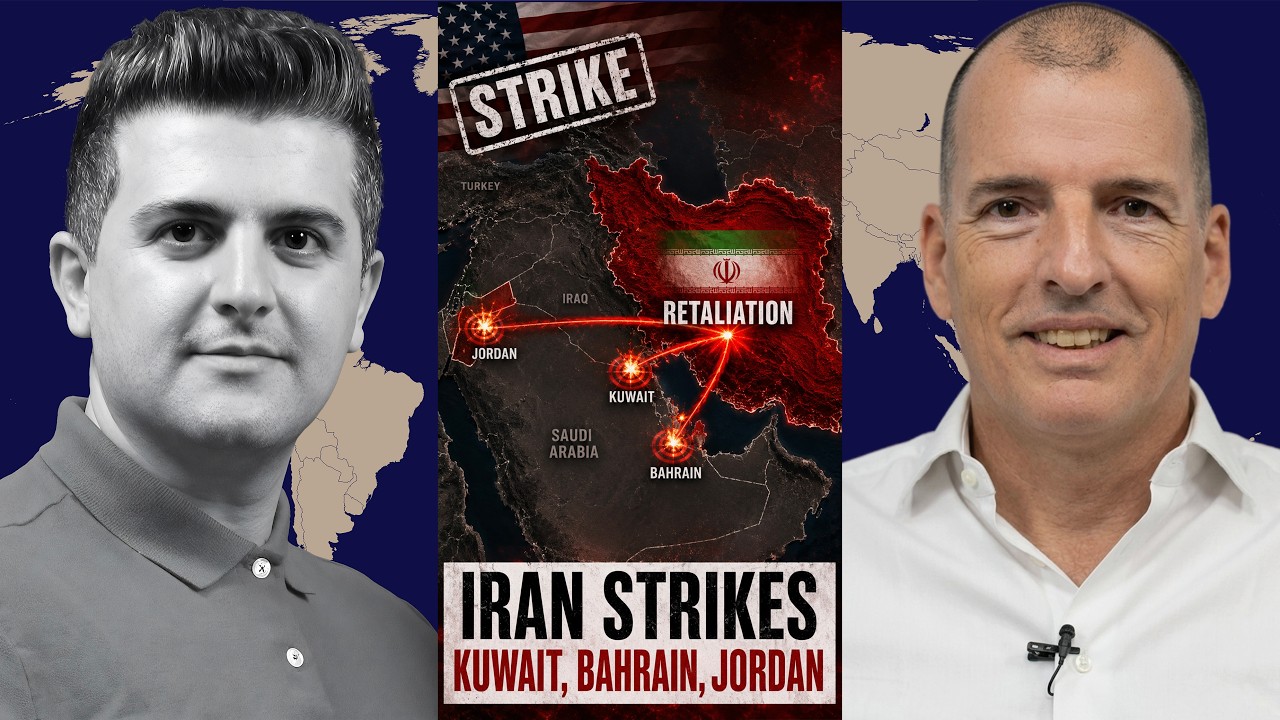
Alex Krainer: US STRIKES Iran – Iran RETALIATES Against Kuwait, Bahrain & Jordan!
"Amidst escalating US-Iran conflict and Iranian retaliation against regional US allies, this episode argues that US foreign policy is deeply controlled by an 'Anglo-Zionist conspiracy' led by the Rothschild banking dynasty, prioritizing Israeli interests over American ones."

Larry Johnson: Iran Missiles Rain Down on Northern Israel – Massive Strikes!
"Geopolitical analyst Larry Johnson details how Israel's recent strike on an 'empty building' in Beirut triggered direct Iranian missile retaliation, escalating regional tensions and jeopardizing a US-Iran peace deal brokered by Pakistan."

The Fat Electrician Vs Tactically Acquired | Unsubscribe Podcast 267
"This episode features military content creators discussing current geopolitical hotspots, advanced weaponry, and the surprising psychological warfare tactics of modern conflict, alongside their personal journeys building online communities."