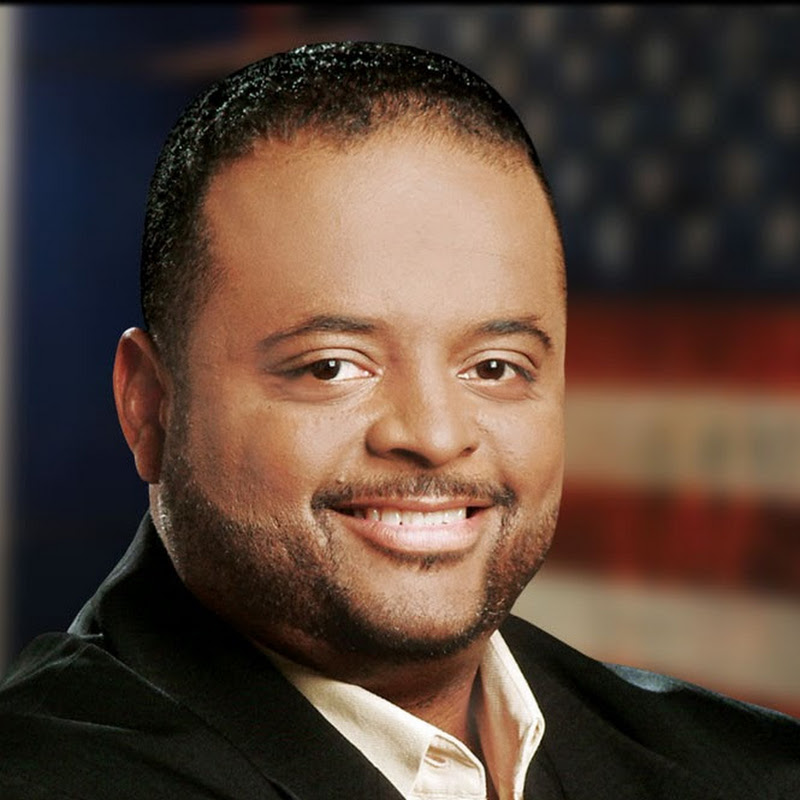
Target boycott organizers news conference live coverage
YouTube · vwv6DJsYha4
Quick Read
Summary
Takeaways
- ❖The 'Target Fast' boycott, lasting over 400 days, is credited with Target losing over $12.4 billion in market value.
- ❖Target completed 97% of its $2 billion commitment to Black-owned businesses and added $100 million in grants/scholarships.
- ❖Target invested $10 million in Pencil Lewis College of Business and Design (an HBCU) and $26 million in the United Negro College Fund.
- ❖Minority representation on Target's board increased to 13%, demonstrating progress in internal DEI efforts.
- ❖The demand for Target to establish a relationship with a Black bank remains unfulfilled.
- ❖Organizers stress that while the 'Target Fast' is concluding, the broader fight for corporate accountability continues, with some personally refusing to shop at Target without a public apology.
- ❖The movement emphasized 'collective economics' and the moral weight of consumer dollars as a continuation of civil rights struggles.
Insights
1Significant Financial Impact on Target
The boycott organizers claim that the 'Target Fast' directly contributed to Target's market valuation dropping by over $12.4 billion and the company experiencing three consecutive quarters without profit. This data, attributed to Bloomberg and the Wall Street Journal, served as primary evidence for the boycott's effectiveness.
The host states Target lost 'more than 12.4 billion dollars' (). Reverend Dr. Jamal Bryant cites Bloomberg for a '$12 billion' drop in valuation and the Wall Street Journal for 'three consecutive cycles quarters where they have not seen a profit' ().
2Progress on Black Business and Community Investment
Target completed 97% of its $2 billion commitment to Black-owned businesses, media, and suppliers, with the remainder expected by Easter. Additionally, Target exceeded this by providing an extra $100 million in grants and scholarships to Black community organizations.
Reverend Dr. Jamal Bryant states, 'Target in their commitment for $2 billion has completed 97% of it... by Easter' and 'exceeded not just the two billion... but with a $100 million in grants and scholarships to black community organizations surpassing the original commitment' ().
3Increased Support for Historically Black Colleges and Universities (HBCUs)
Target provided $10 million to save the Pencil Lewis College of Business and Design in Detroit, the only HBCU design school, from closure. They also contributed $18 million to the United Negro College Fund and $8 million to their own Target scholars program, identifying a flagship HBCU for business program partnerships.
Reverend Dr. Jamal Bryant details Target's contributions: '$10 million to the Pencil Lewis College of Business and Design in Detroit' (), '$18 million towards the United Negro College Fund' (), and '$8 million toward their target scholars' ().
4Internal DEI Shifts but No Public Apology
Target's new CEO, Michael Fiddelke, acknowledged an internal 'breakdown of trust' with Black customers and employees. Target also piloted a 'belonging program' and increased minority representation on its board to 13%. However, organizers noted the absence of a public apology or clear statement regarding the initial rollback of DEI initiatives.
Tama D. Mallerie reports the new CEO 'acknowledged that the company bears responsibility for the breakdown of trust... particularly with black customers and even with the employees' (). Reverend Dr. Jamal Bryant mentions '13% of the board of target is now minorities' (). Senator Nina Turner states, 'we are owed a public apology' ().
5Unmet Demand: Relationship with Black Banks
Despite significant progress in other areas, Target has not yet established a relationship with any Black-owned bank. Organizers view this as crucial for fostering Black homeownership, entrepreneurship, and generational wealth by providing access to capital within the community.
Reverend Dr. Jamal Bryant states, 'Target does not have a relationship with not one black bank' () and explains its importance for 'home ownership' and 'black entrepreneurship' ().
Key Concepts
Collective Economics
The principle that a community's combined purchasing power can be strategically leveraged to achieve social and economic goals, compelling corporations to align with community values or face significant financial consequences.
Economic Justice as Civil Rights
The framing of economic development, corporate responsibility, and fair access to capital as a direct extension and necessary component of the civil rights movement, moving beyond social integration to financial empowerment.
Lessons
- Support Black-owned businesses directly by seeking out their websites or local markets, rather than relying on large retailers, to ensure dollars flow within the community.
- Demand public accountability from corporations that make public commitments to diversity, equity, and inclusion, especially if those commitments are later retracted or weakened.
- Leverage collective economic power by aligning purchasing decisions with community values and principles to influence corporate behavior and drive social change.
- Educate yourself and your community on the importance of economic literacy and the impact of consumer spending on local and national economic justice initiatives.
Leveraging Economic Boycotts for Corporate Accountability
Identify a clear corporate transgression or betrayal of community commitments (e.g., rollback of DEI initiatives).
Form a unified coalition of influential leaders and community organizations to amplify the message and coordinate efforts (e.g., 'mothership three').
Articulate specific, measurable demands for corporate change (e.g., investment in Black businesses, HBCUs, Black banks).
Mobilize a broad base of consumers for sustained economic action (e.g., 'Target Fast' boycott, weekly protests).
Publicize the boycott's financial impact using credible external reports to demonstrate effectiveness.
Engage in direct dialogue with corporate leadership to negotiate demands and track progress.
Provide regular updates to the community, acknowledging both victories and unmet demands, to maintain transparency and trust.
Transition from direct boycott to ongoing advocacy and support for alternative economic ecosystems (e.g., Black business directories, local markets).
Notable Moments
Reverend Haggler's unwavering commitment despite illness
Reverend Patricia Hails Fears recounts Reverend Grayland Haggler's dedication to the boycott, even in late-stage throat cancer, highlighting the deep personal sacrifice and commitment of early organizers to the movement's cause.
Target's CEO acknowledging a 'breakdown of trust' internally
Tama D. Mallerie highlights that Target's new CEO, Michael Fiddelke, acknowledged internally that the company bore responsibility for a 'breakdown of trust' with Black customers and employees. This internal admission, though not public, signifies that the boycott's impact was recognized at the highest levels of the corporation.
The 'Target Fast' claiming victory and concluding its chapter
Reverend Dr. Jamal Bryant officially declares the 'Target Fast' (the faith-based component of the boycott) a victory and announces its conclusion, stating that the generation needs to see victories, not just settlements. This marks a significant milestone for the specific initiative, while acknowledging other aspects of the broader boycott may continue.
Quotes
"Our dollars carry moral weight. Calling the nation to account when a corporation walks away from its public commitment to diversity, equity, and inclusion."
"Companies cannot build their brand on the loyalty of communities and then abandon those communities when political pressure rises."
"As a billion-dollar company, you cannot harm people in public and then apologize in private. If the harm was public, then the acknowledgement must be public as well."
"Black consumers generate more than $1 trillion in economic activity in this country every single year. Our dollars have influence and we have choices."
"What's the point of black people being able to sit at the lunch counter if they don't have access to a hamburger?"
"Target is the only one we invited to the cookout. They were the only ones we felt were kissing cousins. They are the only Fortune 500 company that got a hood nickname. We called them 'Tar' because we had let them into the house and so it was not just an abandonment of DEI but we felt as if it was a betrayal to it."
"We are collectively the 12th wealthiest nation in the world. And if we in fact bring our resources together, we'll be able to make an impact and able to make a change."
"If you want to go fast, go alone, but if you want to go far, go together."
"Diversity, equity, inclusion is a worker's rights issue. Diversity, equity, inclusion is a moral rights issue. Diversity, equity, inclusion is a justice issue and a progress issue as a nation."
Q&A
Recent Questions
Related Episodes

Trump Impact On Black America. SCOTUS Birthright Citizenship Case. Alabama College DEI probe
"This episode dissects the multifaceted impacts of Trump-era policies on Black America, from economic destabilization and civil rights rollbacks to an inspiring narrative of an entrepreneur rebuilding her life and community."

Georgia Fort Pleads Not Guilty. Paralyzed Man Case Charges Dropped. Roy Cooper Senate Bid
"This episode delivers a powerful, multi-faceted tribute to Reverend Jesse Jackson Sr., highlighting his unparalleled impact on civil rights, economic empowerment, political strategy, and global diplomacy, emphasizing his role as an irreplaceable force for justice."

Government Shuts Down. Chicago Mayor Puts Ice On Notice. Democrats Gain in Texas.
"This episode breaks down a federal government shutdown, Chicago's challenge to ICE, a New York Times report on disproportionate job losses for Black women, the termination of TPS for Haitians, and key moments from the Grammy Awards."
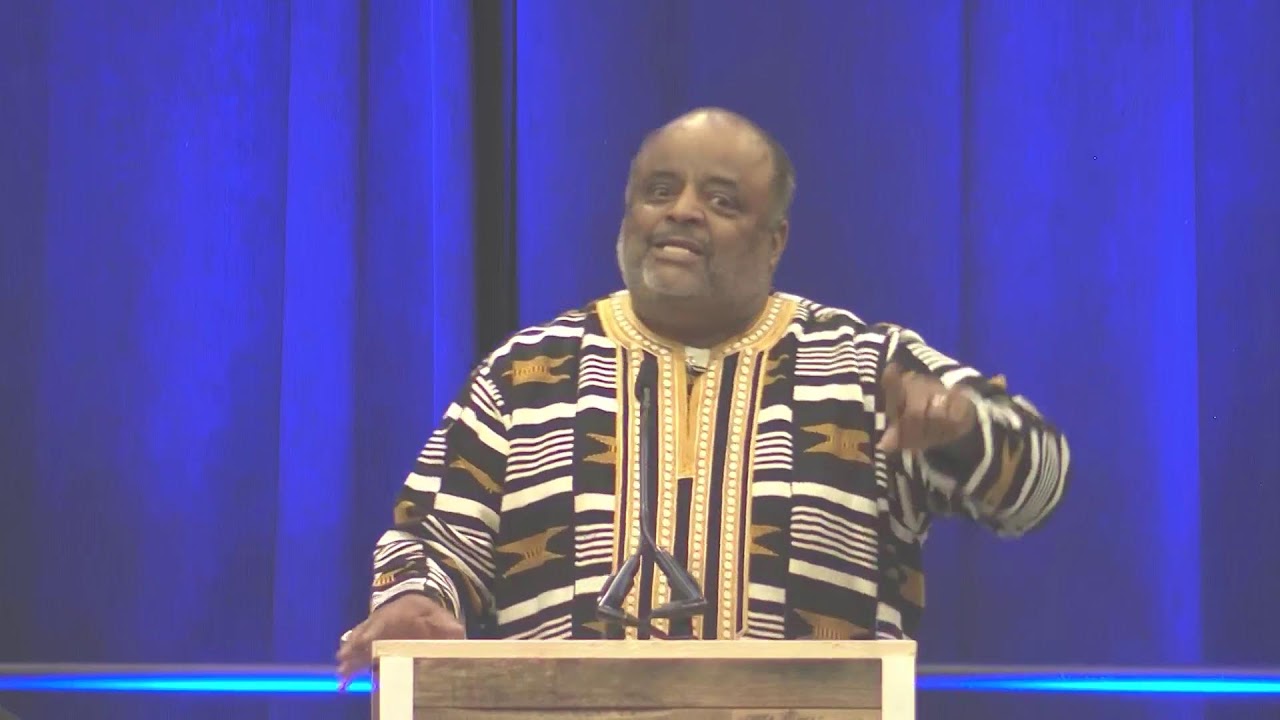
Roland speaks at Columbus Educ. Assoc. MLK Dinner
"Roland Martin challenges the audience at an MLK dinner to move beyond passive celebration and engage in active, sustained political and economic struggle, emphasizing that 'rest time is over' for those seeking real societal change."