“Shut The F*CK Up!” Joe Kent Quits Over Israel & Trump Attacks ‘Weak’ NATO | With Glenn Beck
YouTube · wC1KQGEV9a0
Quick Read
Summary
Takeaways
- ❖Joe Kent, a former counterterrorism official, dramatically resigned, claiming the war in Iran was initiated due to pressure from Israel and its powerful American lobby.
- ❖President Trump criticized Kent as 'not smart' and 'weak on security' and threatened NATO withdrawal over its perceived inaction in the Strait of Hormuz.
- ❖Military experts debate whether the US and Israeli strikes have achieved strategic objectives, noting Iran's effective use of asymmetric and economic warfare.
- ❖Critics argue that the US administration was either naive or dishonest about the predictability of Iran's responses, such as closing the Strait of Hormuz and attacking Gulf States.
- ❖The role of the Israeli lobby in influencing US foreign policy, particularly regarding Iran, is a highly contentious point of discussion among guests.
- ❖The UK's military capabilities are described as 'pathetic,' raising questions about its ability to be a meaningful ally in major conflicts.
- ❖Iranian activists explain that the lack of street protests is due to the regime's brutal suppression, mass killings, digital blackouts, and hostage-taking tactics against families, not public support for the regime.
Insights
1Joe Kent's Resignation and Allegations of Israeli Lobby Influence
Joe Kent, a decorated Green Beret and former counterterrorism official appointed by Trump, dramatically resigned, stating he could not 'in good conscience support the ongoing war in Iran.' He explicitly blamed the war's initiation on 'pressure from Israel and his powerful American lobby,' asserting Iran posed no imminent threat. This statement led to widespread condemnation from conservative figures and a public disavowal from President Trump, who called Kent 'not a smart person' and 'weak on security.'
Joe Kent's resignation statement (), Trump's reaction (), Ben Shapiro/Lindsey Graham criticism (), Cenk Uygur's defense of Kent's claim ().
2Trump's NATO Threat and Perceived Weakness of Allies
President Trump threatened to leave NATO entirely, citing its failure to help police the Strait of Hormuz. He questioned whether NATO would 'ever be there for us,' framing the Iran conflict as a 'great test.' This stance aligns with his broader criticism of European allies for not contributing sufficiently to defense. The host and guests discuss the UK's 'pathetic' military capabilities, arguing that its contribution would be 'symbolic at best,' reinforcing Trump's view that the US doesn't 'really need' such allies.
Trump's NATO threat (), Piers Morgan's commentary on UK military (), Ben Ferguson's agreement on UK vulnerability ().
3Strategic Ambiguity and Mission Creep in the Iran Conflict
Retired US Army General Ben Hodges noted a lack of a clearly defined end-state for the US in the Iran conflict, leading to 'mission creep.' Initial objectives like preventing nuclear weapons and ballistic missiles shifted to regime change, then protecting protesters, and finally deterring oil flow disruption in the Strait of Hormuz. This strategic ambiguity made it difficult for allies to understand or support the US approach.
General Ben Hodges on undefined end-state and mission creep ().
4Predictability of Iran's Asymmetric Response
Several guests, including former UK Ambassador Richard Dalton and Cenk Uygur, argued that Iran's retaliatory actions—closing the Strait of Hormuz and attacking Gulf States—were entirely predictable and had been 'war gamed' for years. They criticized the Trump administration for appearing surprised by these responses, suggesting a superficial understanding of the conflict's dynamics. Iran's strategy involved meeting US/Israeli military might with economic tactics.
Richard Dalton on war games (), Cenk Uygur on predictable attacks (), Piers Morgan on Trump's surprise ().
5The 'Massive Gamble' of the Iran War and Economic Consequences
Glenn Beck described the war as an 'unbelievably big gamble' and a 'legacy defining gamble' for Donald Trump, especially with midterms approaching. He warned that a sustained closure of the Strait of Hormuz could lead to oil prices exceeding $130 a barrel, potentially collapsing the economies of the US and the West, similar to the 2008 financial crisis. Trump's perceived motivation was to 'fix the big fundamentals first' and get the US out of the Middle East permanently.
Glenn Beck on 'massive gamble' (), economic collapse risk (), Trump's mindset ().
6Iranian Regime's Brutality and Digital Blackout as Deterrents to Protest
Iranian activists Massie Linad and Shiva Amini explained that the absence of widespread street protests is not due to public support for the regime but rather extreme repression. They cited the January massacre of over 32,000 protesters, hospital stormings, gang rapes, and the regime's current 'total digital blackout' as reasons why people cannot safely organize or protest. The regime also uses hostage-taking tactics against families to control dissidents abroad, as exemplified by the Iranian women's football team.
Massie Linad on trauma, killings, digital blackout (), Shiva Amini on hostage tactics ().
Bottom Line
The UK's military capabilities are so diminished that its contribution to a major conflict like the Iran war is 'pathetic' and 'symbolic at best,' rendering it largely irrelevant to US strategic needs.
This highlights a critical vulnerability for the UK's geopolitical standing and its 'special relationship' with the US, suggesting that its ability to project power or influence global events independently is severely compromised. It also validates Trump's 'America First' skepticism regarding allied contributions.
For the UK, this presents an urgent need for significant defense investment and strategic re-evaluation to restore its credibility as a military partner. For other nations, it serves as a warning about the consequences of sustained underinvestment in defense.
The Iranian regime actively uses the families of dissidents and athletes abroad as hostages to coerce their return or silence their criticism, as seen with the Iranian women's football team in Australia.
This reveals a brutal and sophisticated tactic of transnational repression, extending the regime's control beyond its borders. It means that public figures from authoritarian states living in exile are never truly free from the regime's reach, and their actions can have severe consequences for their loved ones back home.
International bodies and host countries need to develop more robust protections and asylum policies for dissidents and their families, recognizing these specific forms of coercion. Media and human rights organizations should highlight these tactics to expose the regime's true nature and build support for those affected.
Key Concepts
Mission Creep
The concept where a military operation's objectives expand beyond its initial goals, often due to a lack of clearly defined end-states. General Ben Hodges applies this to the Iran conflict, noting shifting US objectives from nuclear deterrence to regime change, then protecting protesters, and finally deterring oil flow disruption.
Asymmetric Warfare
A conflict between belligerents whose relative military power differs significantly. Iran is described as fighting an 'asymmetric war' against superior US/Israeli firepower by using economic tactics (throttling the Strait of Hormuz) and horizontal escalation (attacking Gulf States) rather than direct military confrontation.
American Exceptionalism
The belief that the United States is unique and holds a special place among nations, often implying it is exempt from the historical forces that have affected other countries. Richard Dalton suggests this mindset contributed to US military chiefs yielding to the Commander-in-Chief's 'superficial and ignorant analysis' regarding the Iran conflict, believing US power would overcome all challenges.
Lessons
- Critically evaluate official narratives during international conflicts, especially when claims of 'imminent threat' or 'surprise' are made, as historical context and expert analysis often reveal predictable outcomes.
- Recognize the potential for 'mission creep' in military interventions without clearly defined end-states, and advocate for transparent strategic objectives to prevent prolonged and costly engagements.
- Investigate the influence of lobbying groups on foreign policy decisions, as their financial contributions and advocacy can significantly shape a nation's involvement in international conflicts.
- Support and amplify the voices of dissidents and activists from authoritarian regimes, understanding that a lack of visible protest may be due to extreme repression and digital blackouts, not public apathy.
- Assess the true military capabilities of allied nations beyond rhetoric, as underinvestment can render traditional alliances less meaningful in practice, impacting global power dynamics.
Notable Moments
Cenk Uygur's heated argument with Ben Ferguson, culminating in shouting and accusations of 'Israel first' loyalty, highlighting deep ideological divides.
This exchange vividly illustrates the intense polarization and emotional charge surrounding US foreign policy debates, particularly concerning Israel and Iran, and the difficulty of rational discourse on these topics.
Glenn Beck's presentation of an AI-generated George Washington discussing the importance of preparing for war to preserve peace.
This moment uses modern technology to invoke historical wisdom, framing the current conflict within a long-standing debate about deterrence versus appeasement, and offering a philosophical justification for preemptive action.
Quotes
"I cannot in good conscience support the ongoing war in Iran. Iran posed no imminent threat to our nation. It's clear that we started this war due to pressure from Israel and his powerful American lobby."
"This is the problem when there's not a clearly defined instate. This is how you get mission creep. And and that's what really worries me the most."
"The idea that Donald Trump didn't think of it, that is one of the biggest narrative lies I've seen in a long time."
"Israel has given Congress h 100 million. They've given Donald Trump $337 million. So this is all a fake conversation."
"It could be fabulous. Could be World War III. I think that's a much more logical place to be than arguing whether we should be in it or not because that's not going to change anything."
"We never forget that more than 32,000 people have been killed in January and they stormed into hospital finishing off the wounded one, gang raped the nurses who were helping the wounded ones. This is the reality and how come we expect people to take back to the street there is still mourning for their children bombs are falling and I think the next wave will be much heavier."
Q&A
Recent Questions
Related Episodes

Patrick Henningsen: Hezbollah JUST Fired Back at Israel - Iran Vows to “Crush” All Attacks
"Patrick Henningsen argues that the US and Israel initiated an illegal war against Iran, driven by Trump's incompetence and Israeli influence, leading to an inevitable escalation with severe global economic repercussions."
BREAKING: Protests ERUPT In Iran Over IRGC Surrendering To Trump - Infighting Clashes In Tehran
"Iran is experiencing severe internal infighting and protests as hardline IRGC elements clash with government figures over a perceived 'surrender' to the US, while mainstream Western media misrepresents the situation."
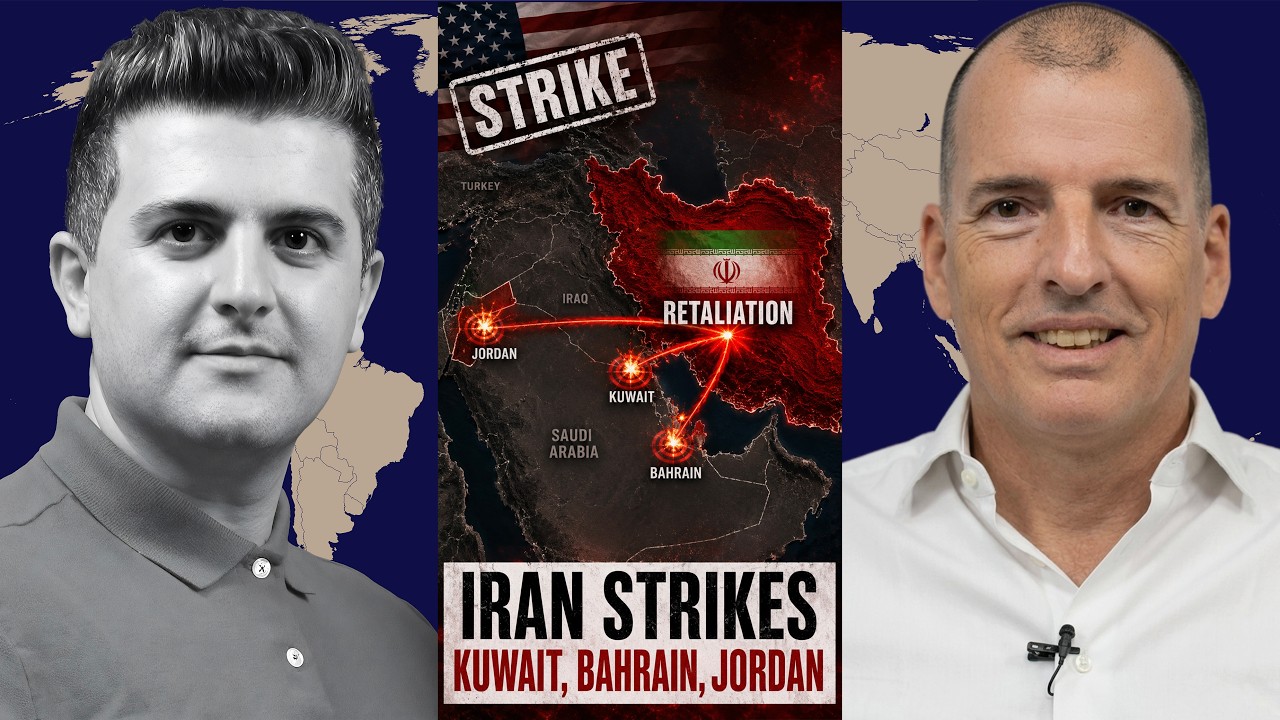
Alex Krainer: US STRIKES Iran – Iran RETALIATES Against Kuwait, Bahrain & Jordan!
"Amidst escalating US-Iran conflict and Iranian retaliation against regional US allies, this episode argues that US foreign policy is deeply controlled by an 'Anglo-Zionist conspiracy' led by the Rothschild banking dynasty, prioritizing Israeli interests over American ones."
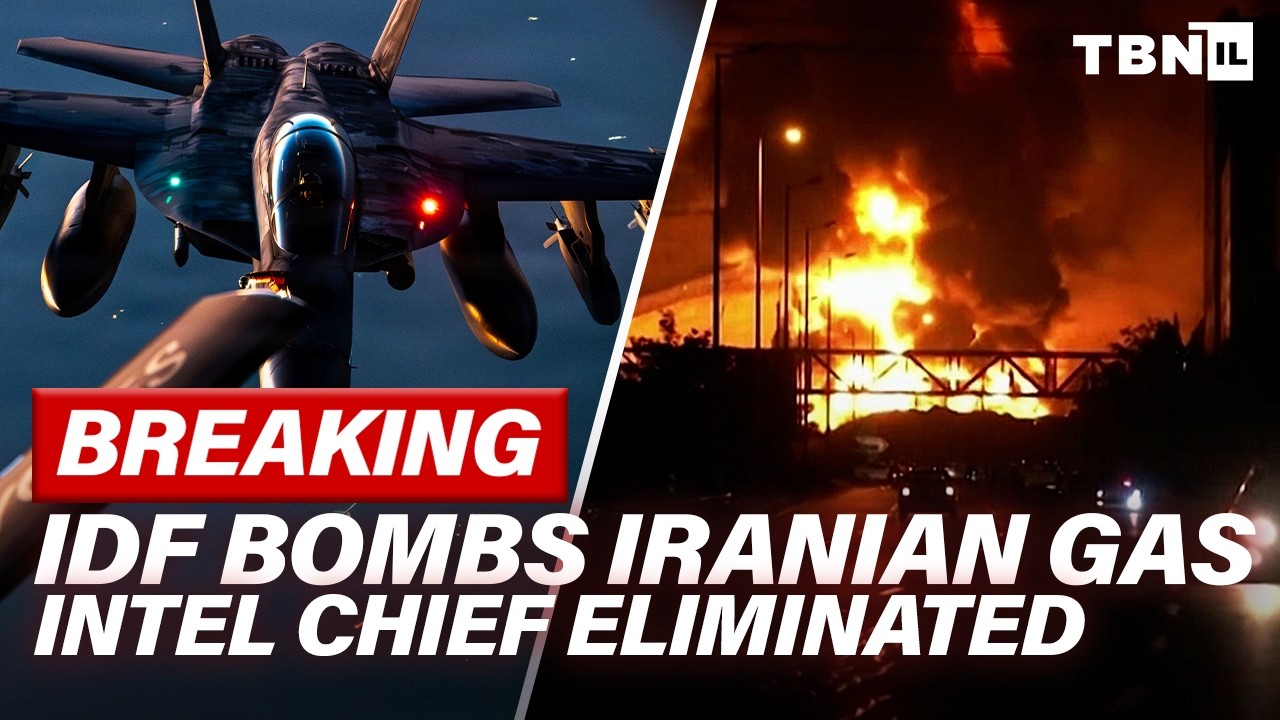
BREAKING: Israel BOMBS Major Iran Gas Site; Top Mullah ELIMINATED; Iran Vows VENGEACE | TBN Israel
"Israel and the United States have escalated their 'Roaring Lion War' against Iran, striking its largest gas facilities, eliminating key intelligence and military figures, and disrupting missile production, while Iran threatens a broader energy war in the Gulf."