BREAKING: U.S. READY To Strike Iran; Seizes Hezbollah Stronghold | TBN Israel
YouTube · wHpEgW_vpoI
Quick Read
Summary
Takeaways
- ❖The US has disabled vessels and redirected others to enforce a blockade on Iran's ports in the Gulf of Oman, using a Hellfire missile on a defiant ship.
- ❖The Strait of Hormuz is gradually reopening through a US-cleared, mine-free corridor, but Iran is attempting to legislate control over the passage.
- ❖Trump demands Iran give up nuclear weapons, open the Strait of Hormuz, and destroy enriched materials, threatening military consequences if Tehran refuses.
- ❖Israel's IDF recaptured the strategic Beaufort outpost in Southern Lebanon after 26 years, aiming to dismantle Hezbollah infrastructure and push threats from its border.
- ❖Hezbollah is employing advanced, low-flying, fiber-optic controlled drones to strike IDF forces, causing casualties even during supposed ceasefires.
- ❖Internal power struggles between Iran's Revolutionary Guards and the civilian government, coupled with the delayed public appearance of Mojtaba Khamenei, indicate regime instability.
- ❖China is allegedly supporting Iran with shoulder-fired missiles and advanced radar systems, contributing to a 'shadow war' against the US.
- ❖Qatar is reportedly paying Iran for safe passage through the Strait of Hormuz, demonstrating a 'double game' despite US warnings.
- ❖Ceasefires in Gaza and Lebanon are framed by Israel as opportunities to expand territorial control and weaken proxies, rather than a cessation of hostilities.
Insights
1US Intensifies Pressure on Iran and Secures Hormuz Passage
The United States Central Command (CENTCOM) has actively enforced a blockade on Iran's ports, disabling vessels that violated warnings and redirecting others. The US Navy also cleared a mine-free maritime corridor in the Strait of Hormuz using underwater robots, despite previous Iranian attacks and Saudi Arabia limiting US access to its bases. President Trump is pushing for a significantly hardened framework agreement with Iran, demanding the destruction of nuclear materials and free movement through Hormuz, threatening severe military consequences if Tehran refuses.
CENTCOM disabled a ship with a Hellfire missile after 20 warnings (-). US Navy cleared a corridor with underwater robots (-, -). Trump announced a decisive meeting, demanding Iran give up nuclear weapons and open Hormuz (-).
2Israel Recaptures Strategic Beaufort Outpost and Expands Control in Lebanon/Gaza
The IDF recaptured the Beaufort outpost in Southern Lebanon after 26 years, a move intended to destroy Hezbollah infrastructure and push threats away from Israel's border. This operation is part of a broader strategy to take strategic high ground and dismantle Hezbollah's capabilities. Concurrently, Israel has expanded its control in the Gaza Strip from 50% to almost 70% following a ceasefire agreement, responding to ongoing Hamas attacks by holding onto captured positions.
IDF recaptured Beaufort outpost in Southern Lebanon (-, -). Operation aimed to destroy Hezbollah infrastructure and push threat away (-). Israel expanded control in Gaza from 50% to 60-70% after ceasefire (-).
3Iran's Internal Instability and External Alliances Complicate Negotiations
The Iranian regime faces deep power struggles between the Revolutionary Guards and the president, evidenced by partial internet restoration and lack of uniformity among providers. The planned funeral for Supreme Leader Ali Khamenei is intended to project stability but carries the risk of becoming a protest center. Mojtaba Khamenei, the new leader, has not appeared publicly, raising suspicions about the regime's stability and its decision-making on the agreement. Furthermore, American officials are investigating China's alleged supply of shoulder-fired missiles and advanced radar systems to Iran, indicating a 'shadow war' waged by China against the US through Iranian proxies.
Deep power struggle between Revolutionary Guards and president (-, -). Internet returned partially (-). Planned funeral for Ali Khamenei to project loyalty/stability (-, -). Mojtaba Khamenei's delayed public appearance (-). China allegedly supplied shoulder-fired missiles and advanced radar to Iran (-, -).
4Hezbollah's Evolving Drone Warfare and Israel's Counter-Strategy
Hezbollah has intensified its use of advanced, difficult-to-detect drones, including those with fiber optic control, to strike IDF forces. These drones fly extremely low and are designed to create continuous costs for the IDF without activating large, exposed launch networks. In response, Israel is not merely retaliating but actively advancing its ground operations in Southern Lebanon to dismantle Hezbollah's capabilities and strategic assets, viewing these actions as setting facts on the ground during a diplomatic window.
Hezbollah's drone threat is a main IDF challenge (-). Drones fly low, difficult to detect, some fiber optic controlled (-). Hezbollah tries to strike forces underground without exposed launch network (-). Israel is advancing, not just responding (-).
Bottom Line
Qatar is engaging in a 'double game' by secretly coordinating and making payments to Iran for oil and gas tankers to pass through the Strait of Hormuz, despite US warnings against negotiating with Iran.
This reveals a pragmatic, self-interested approach by regional actors, undermining US efforts to isolate Iran and enforce sanctions. It suggests that economic necessity and regional political maneuvering can override stated alliances.
Companies and governments need to be aware of the complex, often contradictory, allegiances in the Middle East when developing supply chain strategies or engaging in regional diplomacy. There's an opportunity for alternative, secure maritime routes or diplomatic solutions that address the economic pressures driving such 'double games'.
China is waging a 'shadow war' against the United States by allegedly supplying advanced military technology, such as shoulder-fired missiles and stealth-detecting radar, to Iran.
This indicates a deeper, indirect geopolitical rivalry playing out through proxies, potentially escalating conflicts without direct confrontation between major powers. It complicates US military operations and intelligence gathering in the region.
The US and its allies need to enhance counter-intelligence and counter-proliferation efforts to track and disrupt such transfers. There's also an opportunity to expose and leverage this 'shadow war' in broader diplomatic and economic negotiations with China, highlighting its role in regional instability.
Key Concepts
Two Parallel Realities
The concept that two distinct situations exist simultaneously: an ongoing low-intensity conflict (military actions, blockades, proxy wars) and behind-the-scenes diplomatic negotiations, where progress in one often influences the other.
The Bully Principle
Giving in to a bully (like Iran demanding payment for passage) only leads to higher long-term costs and perpetual dependence, making a firm stand the only justifiable course of action.
Ceasefire as a Strategic Window
A ceasefire is not necessarily the end of conflict but often a tactical period used by military forces (e.g., IDF) to set facts on the ground, advance positions, and dismantle enemy infrastructure before diplomatic agreements potentially limit future actions.
Lessons
- Stay informed about the daily developments in the Middle East, as the situation is highly fluid and can shift rapidly between diplomatic agreements and military escalation.
- Recognize that 'ceasefires' and diplomatic negotiations often mask ongoing military and economic 'shadow wars,' requiring a deeper analysis of actions on the ground rather than just official statements.
- Support organizations providing humanitarian aid in conflict zones, as civilian infrastructure is directly targeted and communities are displaced amidst the ongoing conflicts.
Notable Moments
The IDF recaptured the Beaufort outpost in Southern Lebanon after 26 years, a highly symbolic and strategic move.
This act not only provides a dominant terrain advantage for observation and fire control against Hezbollah but also shatters a symbol of Hezbollah's arrogance, sending a clear message about Israel's intent to dismantle strategic assets.
The hosts discuss the 'two parallel realities' of ongoing low-intensity conflict and behind-the-scenes negotiations in the Middle East.
This framework helps explain the seemingly contradictory events in the region, where military actions occur simultaneously with diplomatic efforts, and each influences the other in a complex, non-linear fashion.
Quotes
"If we do not get from Iran what we want, we will finish this in another way."
"As close as we are to an agreement, we are close to an escalation."
"When you give in to a bully, you always pay a high price. The only thing you can do, the only justifiable choice of course of action is to stand up to that evil."
"Whoever threatens the citizens of Israel will lose his strategic assets one after the other."
"If the agreement only postpones the difficult issues... this is not necessarily a decision. It could be a long ceasefire that gives Iran time to breathe and then rebuild."
Q&A
Recent Questions
Related Episodes
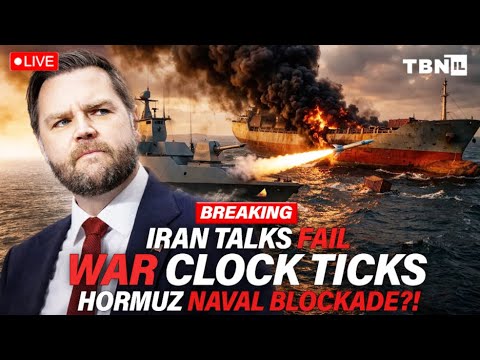
BREAKING: U.S.-Iran Talks COLLAPSE; Hormuz Standoff Deepens; Hezbollah Fire | TBN Israel
"US-Iran negotiations in Islamabad collapsed over the nuclear issue and control of the Strait of Hormuz, leading to heightened tensions and a potential US naval blockade strategy."

BREAKING: U.S. SINKS Iranian Boats; Iran Talks Stall; Israel Hits Beirut | TBN Israel
"The U.S. and Israel escalate military actions against Iran and its proxies, while diplomatic talks stall over Iran's nuclear program, Strait of Hormuz fees, and the future of Hezbollah."

Patrick Henningsen: Hezbollah JUST Fired Back at Israel - Iran Vows to “Crush” All Attacks
"Patrick Henningsen argues that the US and Israel initiated an illegal war against Iran, driven by Trump's incompetence and Israeli influence, leading to an inevitable escalation with severe global economic repercussions."
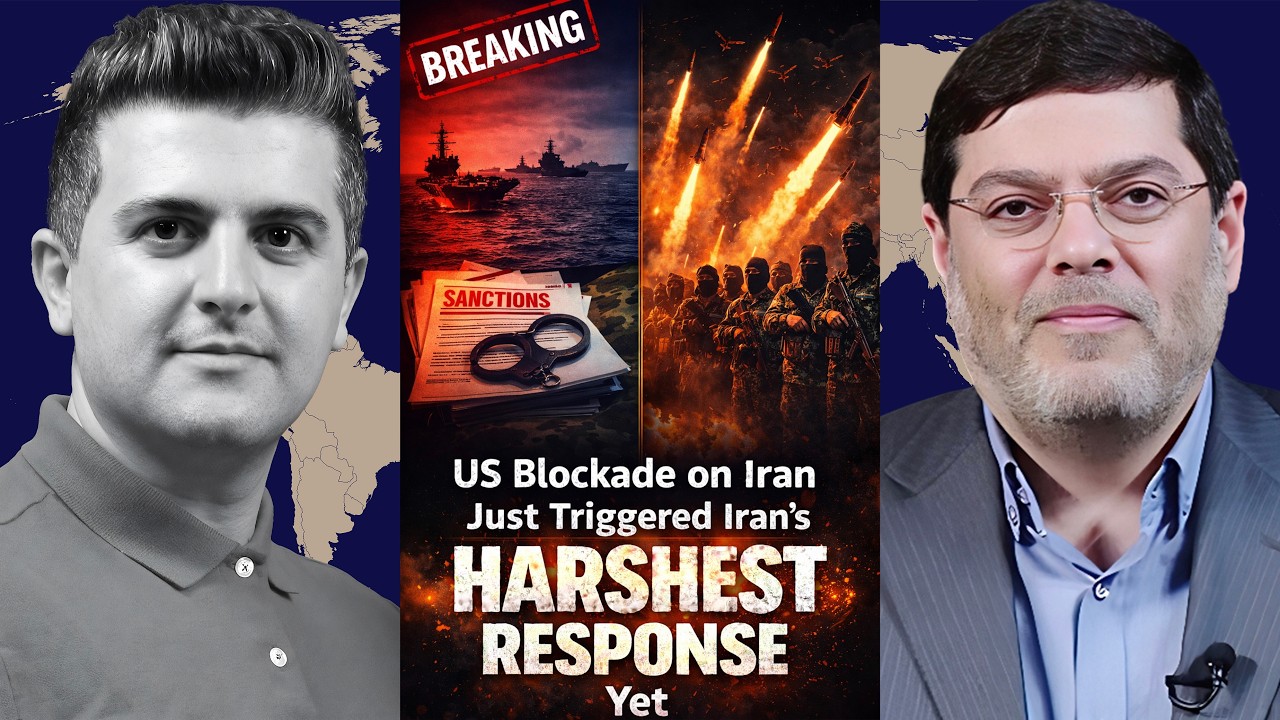
Seyed M. Marandi: US Blockade on Iran Just Triggered Iran’s HARSHEST Response Yet
"An Iranian professor details how US demands and an imposed blockade triggered Iran's harshest response, exposing American strategic missteps and the vulnerability of Gulf Arab states."