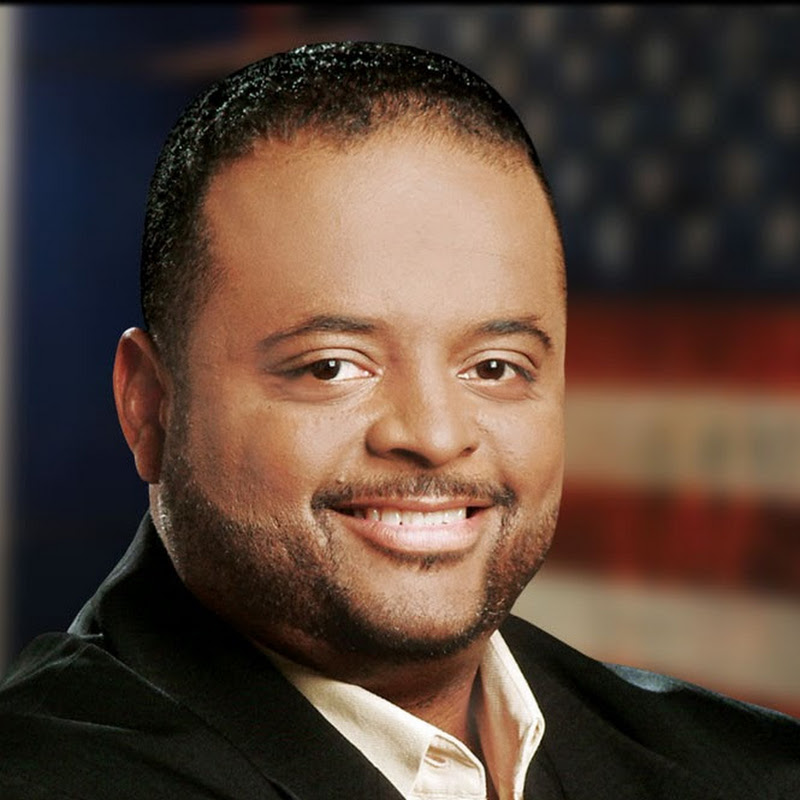
Tamika Mallory talks Target boycott and next phase of corporate DEI fight
YouTube · wRyBcC1_7vM
Quick Read
Summary
Takeaways
- ❖The Target boycott, launched February 1st, 2025, lasted over 400 days, driven by multiple groups including Nina Turner's organization, Until Freedom, and Pastor Jamal Bryant's 'Target Fast'.
- ❖Four key demands were made: honor $2B pledge to Black businesses, deposit $250M in Black banks, fully restore DEI commitments, and pipeline community centers at HBCUs.
- ❖Target has met 97% of the $2 billion Black business spending pledge and initiated an HBCU pilot program.
- ❖Target rebranded its DEI initiatives under a 'belonging' program, citing the 'weaponization' of the DEI term, a move criticized by organizers as cowering.
- ❖The demand for depositing $250 million in Black banks remains an ongoing negotiation.
- ❖Organizers like Tamika Mallory and Nina Turner personally continue their boycott, emphasizing the lack of a public apology from Target's CEO for harming the Black community.
- ❖The host distinguishes between an emotional 'economic withdrawal' and a strategic 'boycott' with clear demands and monitoring.
- ❖The boycott collectively forced Target to drop from Forbes' 'best businesses' list and resulted in a $12 billion loss in market share value.
- ❖Mallory advocates for evolving the movement beyond Target to hold other corporations accountable using the collective economic power of Black consumers.
Insights
1Target's DEI Rebranding and Lack of Public Apology
Target rebranded its Diversity, Equity, and Inclusion (DEI) initiatives under a new 'belonging' program, claiming the term 'DEI' had been 'weaponized.' While Target stated the underlying work continues, organizers view this as cowering to external pressure. A major point of contention for activists like Tamika Mallory and Nina Turner is the Target CEO's unwillingness to issue a public apology to the Black community for the harm caused, despite acknowledging broken trust internally to staff.
Target said 'DEI letters have been weaponized' (). CEO acknowledged 'broken trust with the black community' to staff but not publicly (). Organizers 'do not believe they should have changed the words' () and 'think that they cowered' (). Nina Turner demands a 'public apology' (). Tamika Mallory states, 'there is nothing that will make me return to Target' without a public apology ().
2Partial Fulfillment of Boycott Demands
Of the four key demands, Target has largely fulfilled its commitment to spend $2 billion with Black businesses, reaching approximately 97% completion with an additional $100 million in grants. They have also started a pilot program for an HBCU pipeline, aligning with the demand for community centers. However, the demand to deposit $250 million in Black banks remains an outstanding issue, though Target has engaged in initial conversations.
Target has '2 billion plus a hundred million dollars in additional grants' and is '97% there with their investment in communities' (). HBCU commitment has started with a 'pilot program' (). 'The black banks piece is still an outstanding issue' (), though Target is having 'conversations with folks' ().
3Boycott's Impact and Future Strategy
The boycott successfully inflicted significant financial and reputational damage on Target, including a $12 billion loss in market share value and removal from Forbes' 'best businesses' list. While the 'Target Fast' campaign has concluded, individual leaders like Tamika Mallory and Nina Turner continue their personal economic withdrawal. The movement's next phase involves expanding strategic boycotts to other corporations that are 'hiding' from accountability, leveraging the collective $1.4 trillion spending power of Black consumers.
Boycott caused '12 billion loss in market share value' () and forced Target to drop from Forbes' list (). 'Target fast... has ended' (), but Mallory is 'still 100% locked down in this boycott' (). 'Which companies are next who else do we want to hold accountable' (). 'Black folks also have to look at how we use the $1.4 trillion of our spending' ().
Bottom Line
Corporations are increasingly sensitive to the 'weaponization' of terms like DEI, leading to rebranding efforts to mitigate legal and public relations risks, even if core initiatives continue.
This trend suggests that companies may prioritize language and perception management over direct engagement with controversial terms, potentially diluting the impact or clarity of their social responsibility efforts. Activists need to monitor substance over semantics.
Develop auditing frameworks that assess the actual implementation and impact of corporate 'belonging' or similar programs, rather than relying solely on their stated intentions or name. This creates an opportunity for third-party verification services focused on social impact.
The success of a long-term boycott depends not just on initial outrage but on a structured plan with measurable demands, consistent communication, and internal organizational cohesion, despite external and internal pressures.
Many boycotts fail due to lack of clear objectives or internal divisions. The Target boycott's longevity and partial successes highlight the importance of strategic leadership, demand-setting, and sustained engagement, even amidst disagreements among organizers.
Offer consulting services or educational resources for grassroots organizations on how to structure, manage, and sustain strategic boycotts, including demand formulation, negotiation tactics, and internal conflict resolution.
Key Concepts
Strategic Boycott vs. Emotional Withdrawal
A strategic boycott is a planned, multi-stage process with clear demands, negotiations, and monitoring, aiming for specific corporate changes. An emotional withdrawal is an individual or collective decision to stop patronizing a business due to perceived disrespect, often lacking formal demands or a structured plan for resolution. The host emphasizes that effective boycotts require strategic planning beyond mere emotional outrage.
The Power of Collective Economic Leverage
This model highlights how a unified consumer base, particularly the Black community with its significant spending power ($1.4 trillion), can exert immense pressure on corporations. By collectively withholding patronage, consumers can force companies to address social and ethical concerns, impacting market share, reputation, and policy.
Lessons
- When initiating a boycott, establish clear, measurable demands from the outset to provide a roadmap for negotiations and to gauge success.
- Distinguish between emotional economic withdrawal and a strategic boycott; ensure your movement has a plan of action, including information gathering, negotiation, and monitoring.
- Monitor corporate commitments beyond initial announcements; verify that pledges (e.g., spending with minority businesses, DEI programs) are actually implemented and sustained.
- Leverage collective economic power by coordinating with other organizations and individuals to amplify impact, focusing on specific, shared goals.
- Demand public accountability from corporate leadership, especially a public apology for perceived harm, as internal acknowledgements may not satisfy affected communities.
Six Steps for a Strategic Boycott (Inspired by Martin Deppy's Operation Bread Basket)
Information Gathering: Thoroughly research the target corporation and the issues at hand.
Committee Evaluation: Form a committee to analyze the gathered information and formulate specific demands.
Negotiation and Education: Engage in direct negotiations with the corporation while simultaneously educating the public about the demands and the boycott's purpose.
Economic Withdrawal: Implement the boycott, encouraging consumers to withhold their spending from the target company.
Agreement Covenant: Secure a formal agreement or covenant from the corporation addressing the demands.
Monitoring: Continuously monitor the corporation's adherence to the agreement and ensure sustained accountability.
Quotes
"I am not encouraging people to go back and shop at Target. I personally, and as leader Mallerie laid out her mother even saying she not going back. I'm telling you I am not going back. And particularly because we are owed a public apology."
"Most people who are who have participated in this boycott did so because they themselves felt disrespected and harmed by Target. And I don't think that any announcement that our group or any other group makes will have people return to Target, especially without there being some real work within the community."
"They said that those letters DEI have been weaponized and therefore they put all of their inclusion efforts in their belonging program because they still believe that diversity is important and they showed us where they are continuing to do that work."
"We let them know that we think that they cowered and it is not right and that they should have stood 10 toes down on their original name and commitments."
"There's a difference between a boycott and an economic withdrawal. An individual or a series of individuals can say we're not shopping at the store... But when we talk about a boycott, a boycott has a plan of action in place. These are things that we want."
"The one thing you cannot do is force us to spend our money with companies where we feel disrespected. And so we will use we will use our voices. We will use the work that we are doing of the money, excuse me, that we have to be our voice and to scream out loud for us even though we may feel that some of us are being suppressed in other ways."
Q&A
Recent Questions
Related Episodes

Target Fast Ends. Justin J. Pearson Slams Musk xAI Gas Turbines. Florida Anti-DEI Bill
"Roland Martin Unfiltered dissects the complex conclusion of the Target boycott, exposes environmental threats from XAI's gas turbines, and critiques Florida's anti-DEI legislation, alongside deep dives into Southern political races and misleading campaign tactics."
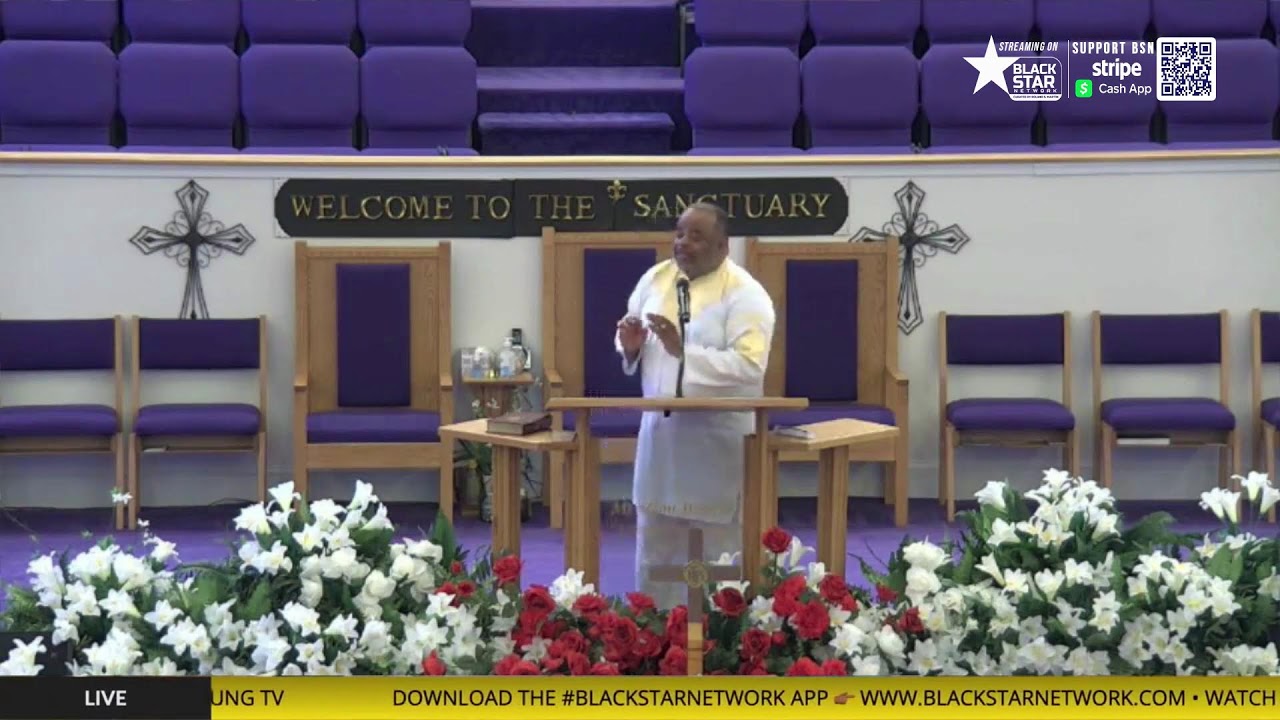
Roland speaks to Northern Va. Baptist Town Hall
"Roland Martin delivers a fiery address to a Northern Virginia Baptist Town Hall, asserting that Black America is under a coordinated attack and demanding a strategic, data-driven, and micro-focused response from Black institutions, particularly the church and media."

Black Liberals LOSE IT THEN TURN AGAINST WOKE Black Pastor For FOLDING ON Target DEI Boycott!
"Pastor Jamal Bryant's unilateral decision to end a Target boycott, claiming victory, sparked intense backlash from black liberal women and original organizers who accused him of co-opting their movement and selling out."
SCOTUS Opens Haitian Deportation Door. Hakeem Jeffries Talks Black Voters. Trump Voting EO Blocked
"The Supreme Court's decision to allow deportation of Haitian and Syrian immigrants sparks outrage and economic concern, while House Democratic Leader Hakeem Jeffries addresses critical issues around Black voter mobilization and Republican voter suppression tactics."