Supergirl's Milly Alcock Eats Her Last Meal
YouTube · wZwQiHPhKj8
Quick Read
Summary
Takeaways
- ❖Milly Alcock's 'last meal' preferences are fluid, changing with her life's seasons and experiences.
- ❖She embraces tattoos as a way to personalize her body, which is often in service of characters as an actor.
- ❖A 'death anxiety' developed after her success with 'House of the Dragon', linking overwhelming positive events to an expectation of negative ones.
- ❖The Gilda, a Spanish pincho, has a subversive history tied to the banned film 'Gilda' and weak men fearing powerful women.
- ❖Alcock sees a direct character through-line from her role as Meg in 'Upgrade' to Kara in 'Supergirl', both being 'at war with themselves'.
- ❖She feels a deep responsibility playing Supergirl, not just for the audience but for the dedicated film crew.
- ❖Alcock trusts that 'everything is going to happen the way it's meant to happen,' advocating for surrendering to outcomes rather than manipulating them.
- ❖The intense flavors in her chosen 'last meal' reflect an 'adrenaline rush' she seeks, similar to the feeling of performing.
- ❖She finds 'safety in sadness,' as it allows for wallowing without the anxiety of waiting for 'the other shoe to drop'.
- ❖Milly believes true happiness lies in 'mundanity' and simple moments, not necessarily in fame or grand achievements.
- ❖Her biggest fear is realizing she's 'wasted her life climbing up the wrong mountain'.
Insights
1The Evolving 'Last Meal' and Identity
Milly Alcock's concept of a 'last meal' is not static but changes with her life's seasons. Her current choice reflects her present self, a more 'elevated' version shaped by travel and global experiences, contrasting with a simpler, childhood-rooted preference from five years prior. This fluidity highlights her belief that identity is constantly in flux, a 'collage' of experiences.
Alcock states, 'This is the present last meal. This is like what I would have right now in my life. But I think if you ask me what my last meal would be like 5 years from now, it would be different.' She contrasts her current choice with a past preference for tiramisu and tarama toast, noting 'I hadn't traveled until I [got out of] Sydney.'
2Emotional Dysregulation as a Net Positive in Acting
Alcock views acting as the first domain where her emotional dysregulation is treated as a positive asset. She believes artists need a medium to 'purge' or extract deep feelings, and her roles, particularly Supergirl, allow her to channel complex, contradictory emotions inherent to the human experience.
She states, 'acting was the first time that your emotional dysregulation seemed to be treated as a net positive.' Alcock elaborates, 'any sort of artist has that distance and that like disconnect. You need the medium of whatever art you're doing to to purge or to get something out of something deep within yourself.'
3The Camaraderie of Chaos in Film and Kitchens
Alcock finds immense satisfaction and happiness in the chaotic, high-pressure environments of film sets and professional kitchens. She describes the progression from initial fear to a 'beautiful place' of community, where a diverse crew becomes a 'dysfunctional family' or 'misfit pirates' working collectively towards a demanding goal. This shared intensity and camaraderie are what she truly values.
She details the set experience: 'Week one is scary, terrifying... Week three, you get into a groove. Week four, you're kind of in this beautiful place where you become this community, become this family... Everyone's from somewhere, everyone has a story.' She connects this to kitchens, stating, 'I love that camaraderie that like kitchens have and sets have.'
4Supergirl as a Personal Journey of Self-Trust
Playing Supergirl became a surprisingly meta experience for Alcock, where the character of Kara served as her 'Ruthie' (a character Kara helps in the film). Alcock, who struggles with impostor syndrome, found that embodying Kara, a character with similar self-doubt and emotional damage, gave her the gift of self-trust as an actor and helped her step outside her own insecurities.
Alcock explains, 'I surprisingly had this kind of very meta experience while playing Kara... I was someone who was unsure of myself... and Kara was my Ruthie in this weird very interesting way. Like I needed her to have this trust in myself as an actor cuz I kind of didn't.' She adds, 'me and Kara felt very similar as people.'
5The Beauty and Value of Fleeting Existence
Alcock believes that the inherent value and beauty of life stem from its inevitable disappearance. This perspective suggests that impermanence makes experiences more precious, akin to how a rare treat like ice cream is more appreciated when not consumed daily. This acceptance of transience helps mitigate the fear of death.
She states, 'I think the beauty of life is the value of its inevitable disappearance, basically... There's beauty in things being fleeting. Cuz if something was forever, you got to eat ice cream every day, you'd hate it. But if you got to eat it one day, so much better in a weird way.'
Bottom Line
The historical context of the Gilda pincho as a subversive political statement against fascism and censorship.
This seemingly simple food item carries a rich narrative of resistance, celebrating a powerful female figure (Rita Hayworth's Gilda) in defiance of an autocratic regime that banned her film for being 'salacious.' It highlights how food can become a symbol of cultural and political defiance.
Explore how culinary creations can be embedded with historical or political narratives to create deeper cultural experiences or marketing stories for restaurants and food brands.
The observation that a love for bitter, intense flavors that aren't 'traditionally good' is associated with psychopathy.
This provocative (and likely humorous) link, brought up by the host, suggests a deeper psychological connection between taste preferences and personality traits, even if exaggerated. Alcock's preference for intense, salty, and smoky flavors aligns with this idea, hinting at her 'devil-may-care' and 'mischievous' on-screen persona.
Investigate the psychological underpinnings of taste preferences and personality, potentially informing product development in food/beverage or character development in creative fields.
Opportunities
Elevated Immigrant Cuisine Restaurant
A restaurant concept like 'Baba's Place' in Sydney, which focuses on elevating traditional immigrant foods (e.g., Lebanese fusion) into a fine dining experience. This approach celebrates cultural heritage while innovating culinary techniques and presentation.
Independent Film Funding & Distribution Model
Leveraging the success of recent films like 'Obsession' and 'Backrooms' that achieved significant impact with budgets under a million dollars. This model emphasizes trust in young talent and left-of-center content, suggesting a viable path for independent filmmakers to disrupt the traditional market.
Key Concepts
The Happiness Ceiling
The concept that humans' capacity for intense happiness and joy might have a lower ceiling than commonly believed, suggesting that ultimate happiness is often closer and found in mundane moments, rather than being exclusive to aspirational figures like movie stars or athletes.
Life Extension Through Strong Memories
A psychological idea that to 'prolong' one's life in terms of how long it feels, one should actively create more tremendously strong memories. These memories are not exclusively 'good' but can also include moments of profound sadness, as both contribute to feeling truly alive and extending the perceived duration of life.
Chaos as a Creative Catalyst
The perspective that chaos can be a 'wonderful place' and even 'the best' for certain individuals, particularly artists or those in high-pressure, communal environments like film sets or kitchens. This constant intensity and collective effort to push a 'boulder up a hill' can be deeply rewarding and fulfilling, regulating emotional dysregulation.
Lessons
- Embrace the fluidity of your identity; recognize that your preferences and 'ideal' self will evolve with new experiences and stages of life.
- Seek out environments, whether professional or personal, where your unique emotional landscape and 'dysregulations' can be channeled into productive or creative outlets.
- Cultivate strong, memorable experiences—both joyful and sad—to enrich your perception of time and 'prolong' your life's felt duration, rather than solely focusing on chronological years.
Notable Moments
Milly Alcock performs an Australian 'shoey' (drinking beer from a shoe) at the start of the podcast.
This act immediately establishes her Australian identity and 'devil-may-care' persona, setting a playful and authentic tone for the interview and demonstrating her willingness to embrace cultural traditions, even in a formal setting.
Quotes
"My body is my tool, but also my body is in service of other people and a character and whoever I need to be. And there's something very grounding about at the end of the day taking it all off and it's my skin. You know? And it's like it's personalized to me."
"I think if you berate yourself for thinking a certain way that you could have quite shouldn't be thinking then you're by proxy doing the same thing as thinking the bad thing."
"The tighter you grip something, the more likely it is to slip through your fingers."
"There's also a safety in sadness. There's there's a permission to wallow. There's a permission to not feel good. Cuz you're not waiting for the other shoe to drop."
"I think there's so much joy in mundanity. And I don't think that people really not appreciate cuz that's the wrong word, but I see people like sitting and laughing in a park with their newborn, and I'm like, 'Oh my god, they're the luckiest people on the planet.'"
"I think the beauty of life is the value of its inevitable disappearance, basically. So, I don't know. It's scary to be a person. But there's also beauty There's beauty in things being fleeting."
Q&A
Recent Questions
Related Episodes

The Artemis II Crew Share with Oprah the Wisdom of Leaving Earth
"The Artemis II crew reflects on their historic journey to the moon, sharing profound insights on humanity, Earth's fragility, and the unifying power of shared experience."
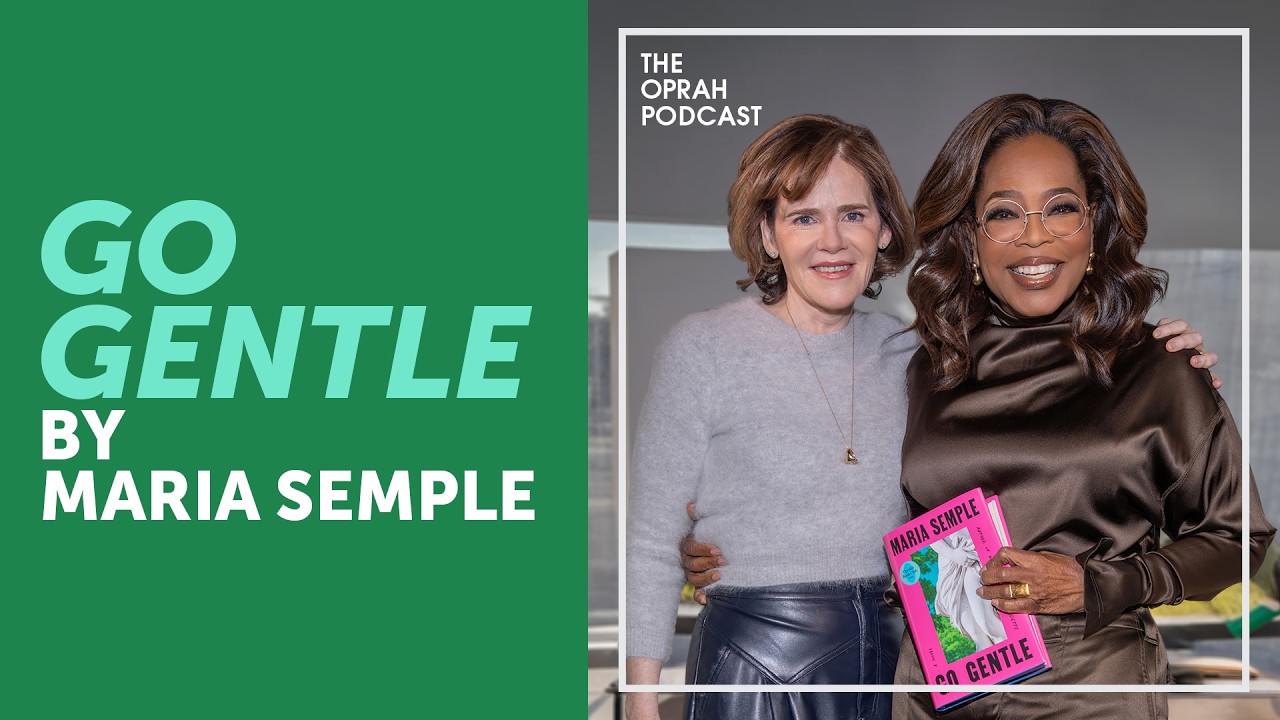
Maria Semple: “Go Gentle” | Oprah’s Book Club
"Author Maria Semple discusses her novel "Go Gentle," exploring how she wove Stoic philosophy, personal experiences with misogyny, and the concept of a women's 'coven' into a page-turning story."
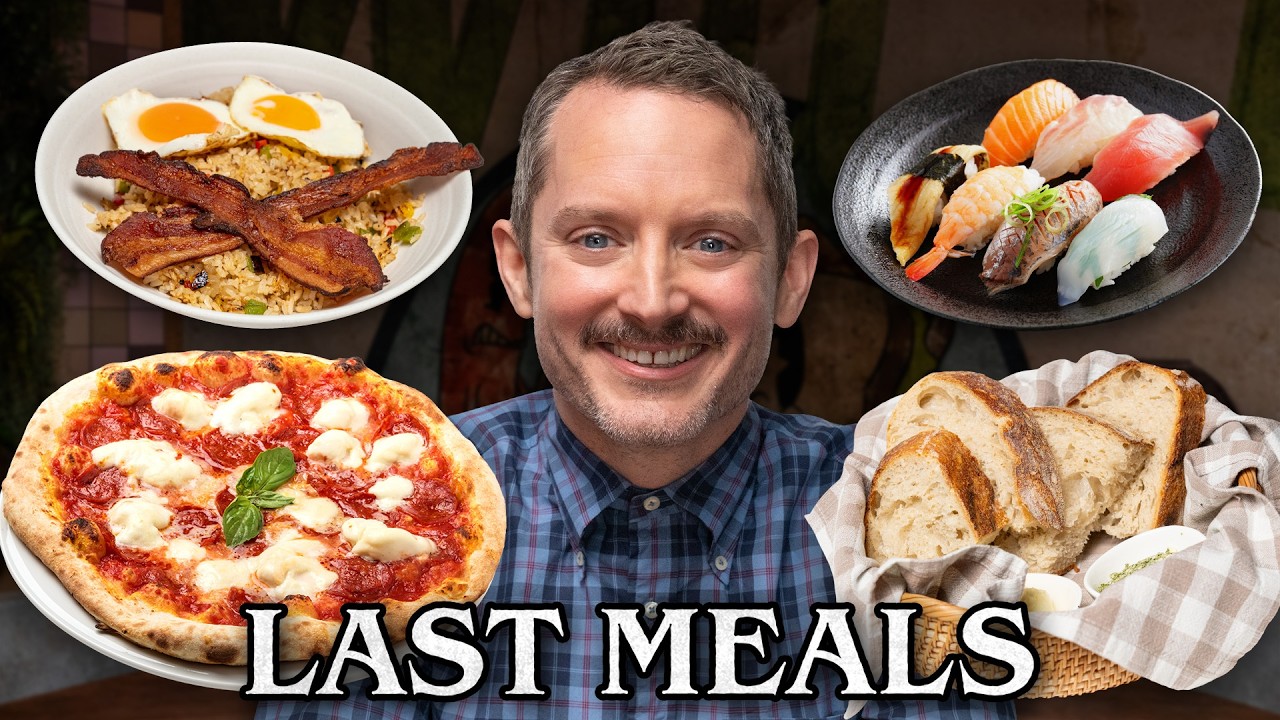
Elijah Wood Eats His Last Meal
"Elijah Wood reflects on his unconventional career path, the philosophy behind his genre film production company, and the profound influence of his mother's humility lessons, all while sharing his ultimate last meal."

Living in Full Bloom. Growth Boundaries and Choosing Who You Become #ABalancedLife S4 E5
"Discover how to cultivate healthy friendships and achieve personal flourishing by embracing individual growth, setting boundaries, and understanding your unique 'bloom' cycle."