
Living in Full Bloom. Growth Boundaries and Choosing Who You Become #ABalancedLife S4 E5
YouTube · 59RVsrtVBUc
Quick Read
Summary
Takeaways
- ❖Friendship longevity without maturity can become toxic.
- ❖Individual healing from trauma and triggers is crucial for healthy relationships.
- ❖Give friends permission to grow and evolve, even if it means temporary separation.
- ❖Growth is often painful and requires letting go of comfortable but limiting people, places, or habits.
- ❖True flourishing is an internal state of contentment and peace, not external success.
- ❖Understand your personal 'bloom cycle' (annual vs. perennial) to avoid guilt over needing introspection.
- ❖Wisdom dictates how much of your multifaceted self you reveal to different people.
Insights
1Maturity and Intentionality Drive Healthy Friendships
True friendship thrives on both longevity and maturity. While time builds a foundation, intentional effort to value the relationship, communicate, and allow for individual growth prevents stagnation. Friends don't need daily interaction, but they require mutual respect for each other's evolving lives.
Charlotte Avery states that intentionality is key, noting that not seeing each other daily doesn't negate the value of their connection. Dr. Tierney emphasizes maturity, explaining that without it, longevity can lead to toxic relationships where parties aren't growing together.
2Personal Growth Requires Addressing Internal Traumas and Triggers
Before forming healthy relationships, individuals must address their own traumas, triggers, and unhealthy relationship patterns. Failure to do so leads to trauma bonds, codependency, or anxious attachment, rather than genuine, healthy connections. This self-work is critical regardless of age.
Dr. Tierney asserts that if 'I haven't done my work, if I haven't worked on my trauma, my triggers, my relationship patterns,' I will show up in ways 'guided and governed by whatever traumas and triggers I haven't dealt with.' This can lead to 'trauma bond[s]' or 'codependent interaction[s]'.
3Give Permission for Others (and Yourself) to Evolve
Healthy relationships require giving friends, spouses, and even children the 'permission to grow and evolve.' This means accepting that someone's evolutionary process might not always include you directly, and that stepping back can be an act of maturity and love, preventing codependency.
Charlotte Avery explains, 'we need to be able to give our people... the permission to grow and evolve because if you're not a person that's growing and evolving, then you're going to be stagnant yourself.' She adds that sometimes evolution 'may be in a season where they don't actually include you'.
4Growth is Painful but Necessary for Flourishing
Personal growth is not always comfortable or feel-good; it often involves painful processes like outgrowing people, places, things, and habits. This discomfort is a vital part of the process, enabling individuals to become the person they aspire to be. It can 'hurt and also be helpful at the same time.'
Dr. Tierney states, 'growth is can be painful, sugar. It's not always a feel-good process. It means that you might have to outgrow some people, some places, some things, and some habits.' She concludes, 'It can hurt and also be helpful at the same time.'
5Flourishing is an Internal, Soul-Level Prosperity
True flourishing is an internal state of overflowing joy, peace, and contentment, independent of external achievements like wealth, job titles, or marital status. Focusing solely on external markers can lead to burnout and misery, even with apparent success. It is 'soul prosperity,' not 'external things prosperity.'
Dr. Tierney clarifies, 'when we say flourishing, sugar, we're not talking about external stuff.' She notes, 'There are people that have all of that stuff and are miserable.' She emphasizes 'internal flourishing where your joy is overflowing, where your peace is overflowing... that internal state of contentment is overflowing. Regardless of what's happening out here, that's how you thrive.'
6Wisdom Guides the Revelation of Your Multifaceted Self
Being your authentic self doesn't mean revealing every facet of your personality to everyone. Wisdom dictates how much of yourself you share, depending on the other person's capacity and emotional intelligence. This allows you to maintain boundaries and protect your growth without being ingenuine.
Charlotte Avery acknowledges, 'not everybody in my friend group space can handle that.' Dr. Tierney adds, 'it dictates how much of me you're going to get... that access that you have to me, it kind of depends on you.' She concludes, 'everybody don't need to know everything. So, you're right, Charlotte, that that is a mark of wisdom, but it's also that person's capacity.'
Key Concepts
Maturity as the Fertilizer for Longevity
Longevity in friendships is valuable, but maturity acts as the essential 'fertilizer' that makes these relationships rich and prevents them from becoming toxic. Without individual growth and self-awareness, long-standing connections can stagnate or become unhealthy, as people may cling to old versions of each other.
The Annual vs. Perennial Growth Cycle
Individuals can be likened to 'annual' or 'perennial' flowers in their growth. An 'annual' person may need periods of intense internal work and 'hibernation' before emerging, while a 'perennial' person blooms consistently across seasons. Understanding whether you are an 'annual' or 'perennial' in a given season helps you embrace your natural rhythm of introspection and public engagement without guilt or FOMO.
Pruning Weeds from Your Friendship Garden
Just as a garden needs 'weeds' removed to allow flowers to thrive, unhealthy or negative influences (naysayers, judgmental people, those who question your growth) must be 'pruned' from your friendship circle. These 'weeds' can choke out your personal growth and prevent you from flourishing.
Lessons
- Conduct an honest self-assessment to identify your personal traumas, triggers, and unhealthy relationship patterns, and commit to addressing them through therapy or self-reflection.
- Communicate your personal growth seasons and needs for space to your friends and loved ones, fostering an environment of mutual respect for individual evolution.
- Evaluate your friendships for 'weeds' – individuals who are consistently negative, judgmental, or resistant to your growth – and consider setting boundaries or pruning those relationships to protect your well-being.
Quotes
"Without the maturity piece, that longevity can become toxic. Sometimes you've been friends with somebody too long."
"Growth is can be painful, sugar. It's not always a feel-good process. It means that you might have to outgrow some people, some places, some things, and some habits."
"If my growing and evolving is painful for somebody else, then that means that they're not they are not the people who are supposed to be in my life right now."
"We prosper as our soul prospers. So when we say thrive, when we say flourish, we're talking about a soul prosperity, not a external things prosperity."
"You're not everybody's cup of tea. And I'm okay with that."
"If you don't know that I'm a rose bush, if I don't know that I'm a sunflower... if I don't embrace that... then I'm going to be trying to bloom according to what I see everybody else doing and then get mad when I get burnt up or get mad when I get my petals get frosted and fall off."
Q&A
Recent Questions
Related Episodes

7 Things You Need to Hear Right Now (That Make a Surprisingly Huge Difference)
"Mel Robbins delivers seven potent reminders designed to jolt listeners out of overwhelm and back into control, emphasizing self-compassion, boundaries, and intentional living."
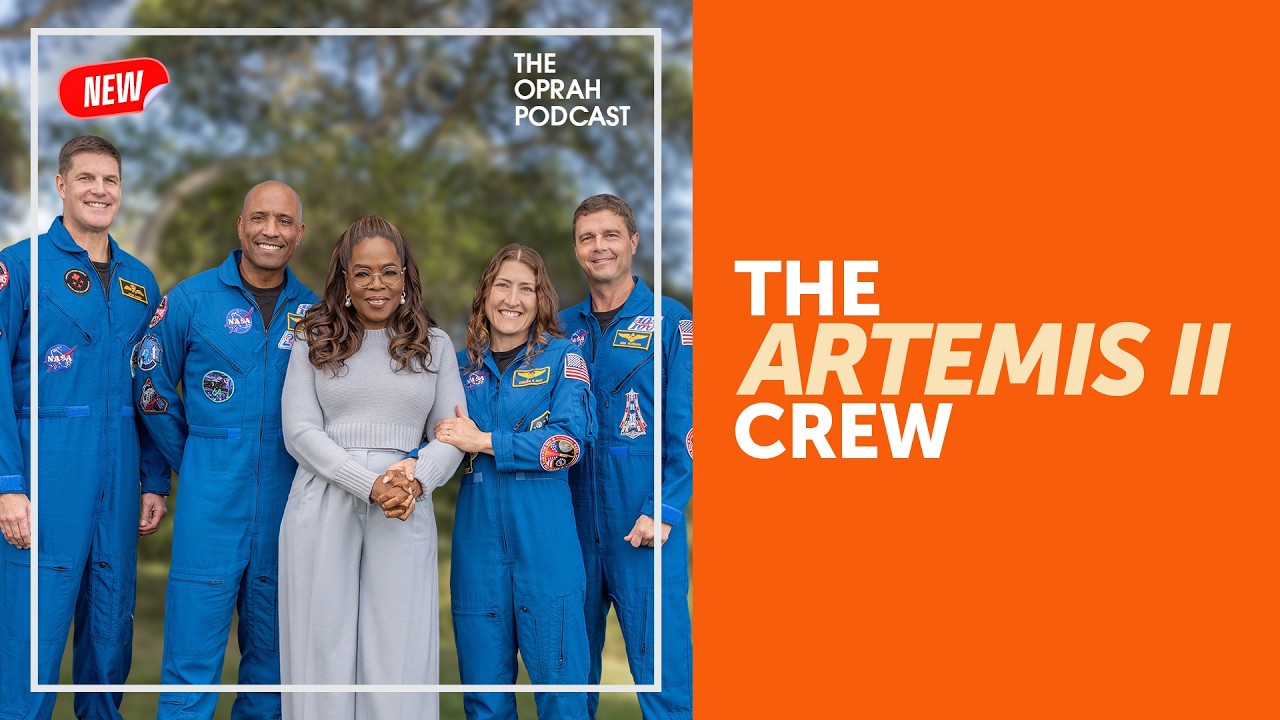
The Artemis II Crew Share with Oprah the Wisdom of Leaving Earth
"The Artemis II crew reflects on their historic journey to the moon, sharing profound insights on humanity, Earth's fragility, and the unifying power of shared experience."

Coffee In the Pool w/ the Island Girls | Ep 327 | Bad Friends
"Bobby Lee and Andrew Santino navigate personal anecdotes, an 'isms' challenge, and a friend's no-show, all while welcoming back their 'island girls' guests."

HaHa Davis on Druski, Katt Williams, Kevin Hart, Jay-Z, Relationships, Fame & Social Media Comedy
"Comedian Haha Davis offers a candid look into the unpredictable world of social media fame, the complexities of modern relationships, and the personal journey of finding success while staying true to his Detroit roots."