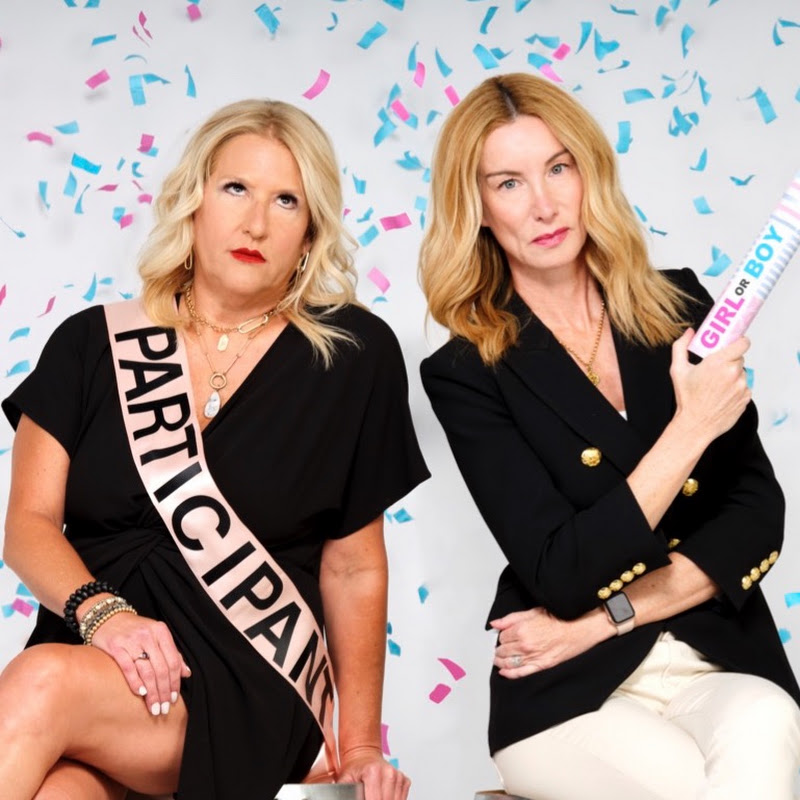
Scissor Point USA
YouTube · wx8OU_BNuIk
Quick Read
Summary
Takeaways
- ❖Political campaigns' reliance on small-dollar donations creates a 'permanent campaign' cycle and overwhelming text spam, leading to voter fatigue.
- ❖JD Vance's book attempts to control the narrative around his wife Usha's career and life choices, which the hosts view as disingenuous.
- ❖Usha Vance's children's podcast is perceived as forced and hypocritical, given her husband's political stance on education and book banning.
- ❖The market is saturated with 'man-branded' products (e.g., Man Cereal, Dude Wipes) that rebrand normal items to appeal to insecure male consumers.
- ❖Performative virtue signaling, such as ostentatious healthy eating, is critiqued as annoying and self-aggrandizing.
- ❖A listener devised a tactic to send back prepaid envelopes to conservative organizations with 'zero dollar' donations and make Planned Parenthood donations in their opponents' names.
- ❖Oklahoma's 'race to the bottom' policies, particularly in education and minimum wage, are attributed to Republican supermajorities and mega-church culture.
- ❖The hosts predict a 'midlife lesbianism boom' among women in conservative movements who eventually 'have had it' with the patriarchy.
Insights
1Critique of US Campaign Finance and Campaign Length
The hosts argue that the current US campaign finance system, heavily reliant on private donations, forces politicians to constantly solicit funds, leading to a 'permanent campaign' cycle and overwhelming voter outreach (e.g., 40 texts a day). They advocate for publicly funded campaigns of limited duration (e.g., one month or six weeks, similar to the UK's 90-day model) to reduce corporate influence and voter burnout.
Host Jennifer describes receiving 40 texts a day from political campaigns despite unsubscribing. Host Angie suggests publicly funded campaigns where each candidate gets the same money and only a month or six weeks of campaigning, citing Europe's shorter, publicly funded models.
2JD Vance's Book and Usha Vance's Public Persona
JD Vance's new book, 'Communion,' is critically reviewed as an attempt to convince readers that his wife, Usha Vance, is content with her life choices, including quitting her high-powered law job for his political career. The hosts and cited reviews suggest Vance is trying to preempt rumors that he 'ruined Usha's life' by portraying her as having low ambition and being happy with his conservative transformation. Usha's own children's podcast is mocked as a 'hostage situation,' highlighting the perceived hypocrisy of promoting reading while her husband's administration bans books.
Reviews from The Daily Beast and other sources are quoted, stating Vance's book aims to 'get ahead of the rumors that he ruined Usha's life' and that he portrays her as having 'the biggest mismatch between ambition and ability.' Usha Vance's podcast clips are played, with hosts describing her demeanor as 'mad or in a hostage situation' and noting the irony of her promoting reading amidst book bans.
3The 'Man-Branded' Product Phenomenon
The podcast highlights a trend of 'man-branded' products that re-package everyday items (like cereal, wet wipes, candles, tissues, rosé wine) with hyper-masculine branding to give men 'permission' to use them without feeling 'girly.' This is framed as capitalism exploiting fragile masculinity and insecurity.
Examples include 'Man Cereal' (high protein, creatine, keto, zero sugar, advertised with 'Cereal got its balls back'), 'Dude Wipes,' 'Man Candles' (scents like pizza, sawdust), 'Mansize Kleenex,' 'Man Crates' (opened with a crowbar), and 'Bro Rosé.'
4Critique of Oklahoma's Political and Social Landscape
The hosts vehemently criticize Oklahoma's political and social environment, labeling it a 'race to the bottom' due to Republican supermajorities and mega-church culture. They cite low rankings in education and women's rights, the defeat of a minimum wage increase, and the perceived 'recreational cruelty' of privileged residents towards minimum wage workers. They argue that the state's policies are 'by design' to create an 'uneducated electorate' that votes against its own self-interest.
Oklahoma is described as '50th in education, 50th for women.' The hosts mention the defeat of a state question to raise the minimum wage, despite it being one of the poorest states. They recount witnessing 'privileged white people treat people that make minimum wage' with demeaning behavior. The hosts also criticize mega-churches for accumulating wealth while not advocating for social good.
Bottom Line
The hosts predict a 'midlife lesbianism boom' in about a decade, specifically among women involved in conservative movements like MAGA and Turning Point USA.
This prediction suggests that women who 'carry water for the patriarchy' will eventually reach a breaking point, realizing their alignment with conservative values is detrimental to their own well-being and autonomy, leading them to seek alternative relationships and identities.
This could imply a future demographic shift or a cultural reckoning within conservative female demographics, potentially leading to new social support networks or even niche media/community platforms catering to this specific transition.
The 'Oklahoma Standard' is sarcastically redefined by the hosts as a 'race to the bottom' in education, women's rights, and social welfare, driven by Republican policies and mega-church influence.
This challenges the often-positive self-perception of conservative states, highlighting a disconnect between official narratives and lived realities, particularly for marginalized populations. It suggests that economic and social decline can be a deliberate outcome of certain political ideologies.
This insight could inform progressive political strategies in red states by directly confronting and reframing local narratives, using data to expose the negative impacts of current policies, and mobilizing voters around issues of social welfare and education.
Opportunities
Hyper-masculine branded everyday products
Develop and market everyday consumer goods (e.g., cereal, wet wipes, candles, tissues, beverages) with exaggerated masculine branding and messaging to appeal to men who feel insecure about using 'gender-neutral' or 'feminine' versions of these products. Focus on 'science-backed' or 'performance' claims, even for basic items.
IV Drip Bars for Wellness and Supplements
Establish 'IV bars' that offer a range of intravenous drips beyond hangover relief, focusing on delivering various supplements directly into the bloodstream for general wellness, energy boosts, or specific health goals. This capitalizes on the desire for 'quick fixes' in health and wellness.
Key Concepts
Permanent Campaign
The concept that political campaigns in the US are never-ending, driven by continuous fundraising needs and leading to voter fatigue and excessive outreach, rather than focused periods of campaigning.
Performative Virtue Signaling
Engaging in actions or displays primarily to signal one's moral superiority or adherence to certain values, rather than for the intrinsic value of the action itself (e.g., performative healthy eating, performative hydration).
Recreational Cruelty
The idea that some individuals, particularly those with privilege, engage in or support cruel policies and behaviors simply because it doesn't affect them, and they derive a perverse satisfaction from it, often rationalizing it through self-serving beliefs.
Lessons
- Support publicly funded political campaigns and advocate for shorter campaign cycles to reduce political spam and corporate influence.
- Critically evaluate 'man-branded' products and other gendered marketing, recognizing how capitalism exploits perceived insecurities.
- Consider 'petty' acts of resistance: return prepaid envelopes to conservative organizations with zero-dollar donations, and donate to progressive causes like Planned Parenthood in the names of political opponents.
Creative Political Resistance via Donations
Identify conservative organizations that send unsolicited mail with prepaid return envelopes (e.g., Turning Point USA).
Stuff all received mail back into the prepaid envelope, check the box for a 'generous donation' of zero dollars, and return it. This forces the organization to pay for postage without receiving funds.
Make a donation to a progressive organization (e.g., Planned Parenthood) in honor of a political opponent (e.g., Erica Kirk), ensuring the opponent receives a notification of the donation in their name.
Notable Moments
The hosts' exasperation with political text message spam, leading to unsubscribing from even favored candidates like AOC.
Highlights a significant point of voter fatigue and frustration with modern campaign tactics, underscoring the need for systemic change in political outreach.
The detailed mockery of JD Vance's book and Usha Vance's podcast, portraying her as a 'hostage' and highlighting the perceived hypocrisy.
Illustrates the hosts' strong critical stance against perceived political opportunism and gender roles within conservative circles, using personal attacks to make their point.
The extensive list and ridicule of 'man-branded' products, from 'Man Cereal' to 'Bro Rosé.'
Provides a humorous yet pointed critique of consumerism's exploitation of gender stereotypes and male insecurity, reflecting broader societal anxieties about masculinity.
A listener's voice memo detailing a creative method of political resistance: returning zero-dollar donations to conservative groups and donating to Planned Parenthood in opponents' names.
Showcases a practical, 'grassroots' form of activism that is both financially impactful (on the opponent) and symbolically powerful, resonating strongly with the hosts' political leanings.
The hosts' prediction of a 'midlife lesbianism boom' among women in conservative movements.
A highly provocative and memorable statement that encapsulates their belief in the eventual rejection of patriarchal structures by women who initially supported them, reflecting a deep-seated cynicism about conservative female figures.
Quotes
"They're like they're walking while texting or walking while scrolling which creates a walking drunk effect."
"If the book has one goal, it's to get ahead of the rumors that he ruined Usha's life."
"She has quote, 'the biggest mismatch between ambition and ability of any person I've ever met.'"
"She looks like a hostage. She looks like like um terrorists are standing on the other side of the camera saying, 'Okay.' And they have qards saying, 'Say this. Say this.'"
"If you could bottle up what exercise does for your body and put it on a shelf, it would fly off."
"If you have to go buy something that affirms your masculinity, your masculinity is not on strong footing in my opinion."
"I think that the turning point situation, much like the Moms of Liberty, is going to produce a huge midlife lesbianism boom in about a decade."
Q&A
Recent Questions
Related Episodes
🚨 WTF!! they're 100% f*CKED NOW 😭😭
"The host argues that Japan's rising crime in specific areas is directly linked to mass immigration, challenging 'woke' narratives and supporting Japan's right-wing government's deportation policies."

🚨 THEY F*CKED AROUND FOR THE LAST TIME 😭😭😭
"This episode unleashes a torrent of highly opinionated commentary on the US-Iran deal, Israel's role, and a scathing critique of 'leftist' policies and immigration, particularly highlighting the UK grooming gang report as evidence of Western societal decay."

Iran Deal Skepticism. Whoopi Vs Vance. Potomac Park Invasion. Racist Hurls Slurs At Black Boy.
"This episode dissects multiple instances of alleged anti-Black policies and racial injustice, from the Trump administration's legal challenges to reparations and the Iran deal, to police brutality and the erasure of Black history."

PBS News Hour full episode, June 12, 2026
"The U.S. and Iran inch closer to a contentious peace deal amidst conflicting terms, while President Trump hosts a UFC cage fight on the White House lawn, and Gaza's children struggle for education in war-torn conditions."