BREAKING: Iran REJECTS Peace Talks, DEMANDS Hormuz; U.S. ESCALATES Military Response | TBN Israel
YouTube · wzcWmEQy9eI
Quick Read
Summary
Takeaways
- ❖Iran rejected the US 15-point peace plan, demanding control of the Strait of Hormuz, removal of all sanctions, and war compensation.
- ❖Israel's Air Force conducted over 600 strike sorties, targeting Iranian ballistic missile sites, naval cruise missile production, and submarine development facilities.
- ❖The US deployed the 82nd Airborne Division and reinforced marine forces, examining options like seizing Kharg Island, Iran's central oil export hub.
- ❖Iran's regime is reportedly hiding forces in tunnels and shelters, despite publicly claiming victory and mocking US peace efforts.
- ❖Hezbollah in Lebanon faces growing pressure and is reportedly planning to kidnap IDF soldiers to gain leverage against Israel.
- ❖The US maintains unused 'levers of power,' such as striking Iran's shadow tanker fleet and blocking smuggling routes, indicating a strategic pause for negotiation.
Insights
1Iran Rejects US Peace Plan with Extreme Demands
Iran explicitly rejected the US 15-point proposal to end the war, presenting 'ridiculous and unrealistic' counter-demands. These included official control over the Strait of Hormuz (including collecting payments from ships), guarantees against renewed war, an end to Israeli strikes against Hezbollah, full removal of all sanctions, compensation for war damages, and refusal to limit its ballistic missile program. This stance is seen as an attempt to harden their position, buy time, and project strength internally.
Iran's demands were reported by the Lebanese Mayadin network and confirmed by an American official who called them 'ridiculous and unrealistic.' (, , , )
2Israel Intensifies Strategic Strikes Deep Within Iran
The Israeli Air Force has conducted over 600 strike sorties, dropping over 15,000 munitions in Iran since the start of 'Operation Roaring Lion.' Targets included more than 50 ballistic missile launch and storage sites, Revolutionary Guard intelligence headquarters, strategic weapon depots, air defense arrays, and a nuclear facility in Isfahan. Crucially, Israel also struck two central naval cruise missile production sites in Tehran and the sole submarine development site in Isfahan, aiming to deny Iran maritime attack capabilities and aid in reopening the Strait of Hormuz.
Reports detail strikes on ballistic missile sites (, ), the nuclear facility in Isfahan (, ), explosives production plants (, ), Revolutionary Guard intelligence headquarters (, ), naval cruise missile production in Tehran (, ), and the submarine development site in Isfahan (, ).
3US Escalates Military Deployment, Considers Seizing Kharg Island
The US is accelerating military deployments to the Middle East, including thousands of paratroopers from the 82nd Airborne Division, trained for rapid deployment, airborne raids, and seizing strategic targets. Alongside reinforced Marine and naval forces, the American administration is examining the possibility of taking control of Kharg Island, Iran's central hub for oil exports. This move would 'touch the regime's oxygen pipeline' and represents a significant military option for President Trump, despite ongoing diplomatic talks.
Deployment of the 82nd Airborne Division (, , ) and consideration of seizing Kharg Island (, ) are explicitly mentioned.
4Iran's Regime Exhibits Fear Despite Public Victory Narrative
Footage from Iran indicates that Revolutionary Guard forces and their enforcers (Bastige) are operating from tunnels, shelters, and under bridges, moving checkpoints from open streets. This suggests a regime that feels insecure and understands 'the skies are no longer their own.' Simultaneously, Tehran is constructing a narrative of victory, framing the postponement of American strikes as Washington's defeat and warning against any attempt to present it as an agreement.
Footage showing forces operating under bridges and in tunnels (, ) and Iran's narrative of victory (, ) are detailed.
5US Maintains Strategic 'Levers of Power' for Future Pressure
The United States has intentionally not utilized several significant military and economic levers against Iran, such as blowing up the 'shadow fleet' of tankers selling oil to China, completely blocking northern smuggling routes, or destroying all oil production means. This strategic restraint is framed as leaving a 'window open for the next step,' indicating that military destruction is not the sole route and provides room for continued negotiation.
The host explicitly states the US has not used these levers 'at the request of President Trump' () and that 'military destruction is not the only route on the table' ().
Bottom Line
Hezbollah is reportedly considering kidnapping IDF soldiers to create a bargaining chip against Israel, strengthen internal support, and complicate an Israeli ground maneuver in southern Lebanon.
This highlights a desperate and dangerous tactic by Hezbollah to gain leverage if Iran chooses to prioritize its own survival in negotiations, potentially escalating the conflict on Israel's northern front.
Intelligence agencies need to prioritize preventing such kidnapping attempts to deny Hezbollah this critical bargaining chip and avoid further destabilization.
The war is characterized as a 'war over time, over nerves, over energy, and over the question of who will blink first,' rather than just a conventional military conflict.
This framing suggests that psychological warfare, economic pressure (like blocking Hormuz), and endurance are as critical as direct military engagements, indicating a prolonged, multi-dimensional conflict.
Analysts should focus on indicators of internal morale, economic stress, and political cohesion within the Iranian regime and its proxies, as these may be key determinants of the conflict's trajectory.
Lessons
- Share content from TBN Israel and similar sources to 'spread the truth' about the conflict, as encouraged by the host.
- Follow Mati Shosani and Yo Pinto on social media to gain a 'without filters' perspective on life in Israel during the war.
- Engage in daily prayer for Israel, its soldiers, American forces in the region, and for a 'supernatural protection' and a 'quick and efficient way to remove the regime in Iran,' as advocated by the host.
Notable Moments
The host, Mati Shosani, reports from his home outside Jerusalem, emphasizing the personal impact of the war.
This personalizes the conflict, reinforcing the 'boots on the ground' perspective and adding a layer of authenticity and urgency to the report.
A ballistic missile loaded with explosives fell in a patch of dirt near a building complex in Aad, narrowly avoiding dozens of casualties.
This anecdote is used by the host to underscore the immediate danger faced by Israeli civilians and to reinforce his belief in divine protection and the power of prayer.
Quotes
"President Trump can't walk away without the straits of Hummus being open up."
"This is no longer just a war of planes and missiles. This is a war over time, over nerves, over energy, and over the question of who will blink first."
"A regime that feels secure in itself, doesn't go under bridges. A regime that does not that does that understands that the skies are no longer their own."
Q&A
Recent Questions
Related Episodes
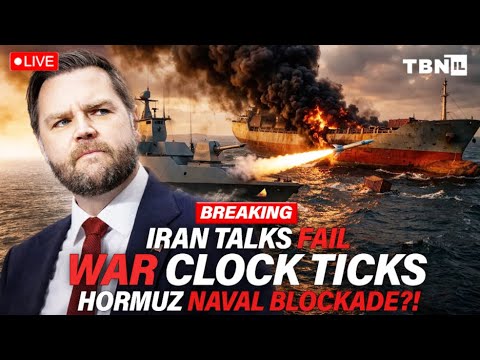
BREAKING: U.S.-Iran Talks COLLAPSE; Hormuz Standoff Deepens; Hezbollah Fire | TBN Israel
"US-Iran negotiations in Islamabad collapsed over the nuclear issue and control of the Strait of Hormuz, leading to heightened tensions and a potential US naval blockade strategy."

BREAKING: Iran Threatens To END Talks; U.S. Vows Retaliation; Hezbollah Collapsing? | TBN Israel
"Iran is leveraging Hezbollah and the Strait of Hormuz to manipulate US negotiations, while Israel asserts its right to dismantle Hezbollah's eroding but still dangerous infrastructure in Lebanon, independent of international talks."
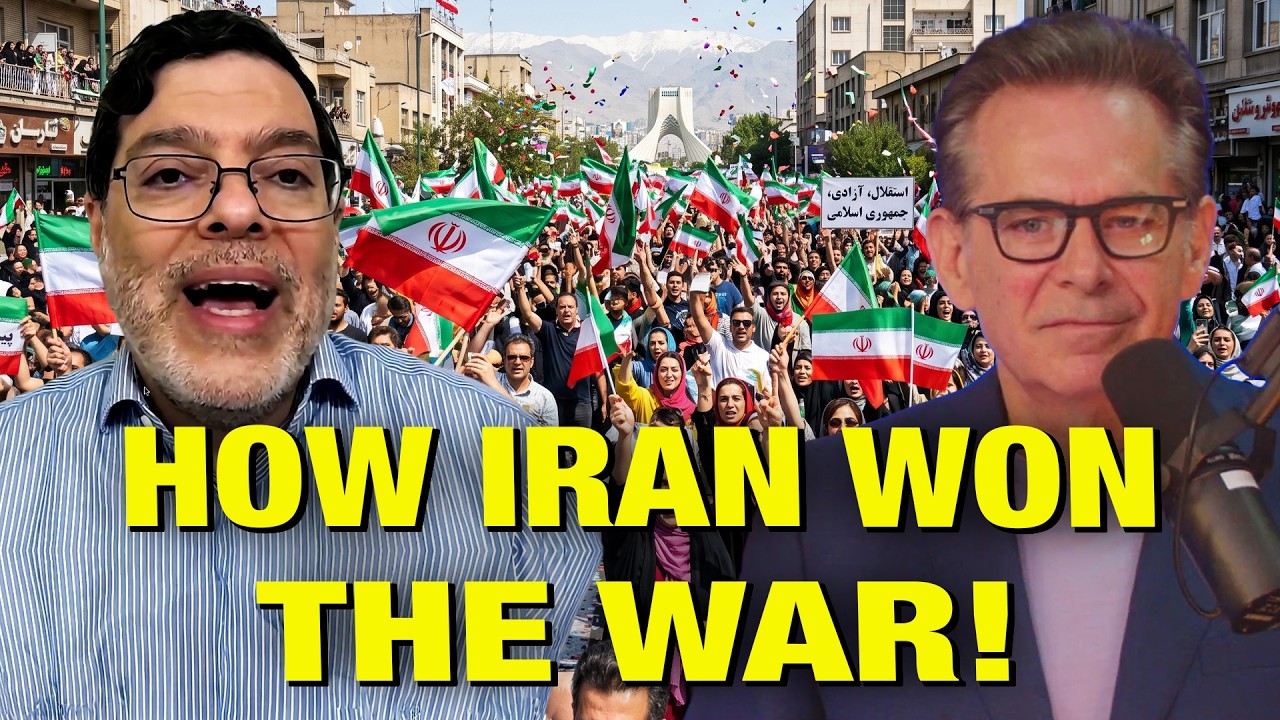
The REAL Story About The War From INSIDE IRAN! – Jimmy Interviews Prof. Marandi
"Professor Marandi, an Iranian academic, details how Iran emerged stronger from recent conflicts, now controlling the Strait of Hormuz and possessing a credible deterrent against its adversaries, despite facing economic siege and Western-backed regional proxies."

BREAKING: U.S. SINKS Iranian Boats; Iran Talks Stall; Israel Hits Beirut | TBN Israel
"The U.S. and Israel escalate military actions against Iran and its proxies, while diplomatic talks stall over Iran's nuclear program, Strait of Hormuz fees, and the future of Hezbollah."