BREAKING: Trump’s Ultimatum Nears; IDF Kills IRGC Financier; U.S. Sends FORD | TBN Israel
YouTube · x44ocuurM3M
Quick Read
Summary
Takeaways
- ❖President Trump issued an ultimatum to Iran, threatening to target power stations and bridges if the Strait of Hormuz is not opened.
- ❖The Israeli Air Force executed over 120 strikes on Iranian air defense systems, missile launchers, and UAV sites across central and western Iran.
- ❖Muhammad Razaf Kai, a key IRGC financier responsible for billions in oil deals, was eliminated in Tehran by Israeli forces.
- ❖The USS Gerald R. Ford aircraft carrier, a 100,000-ton vessel with two nuclear reactors and 75+ aircraft, deployed to the Middle East.
- ❖Reports indicate powerful explosions in Tehran, with heavy smoke over Revolutionary Square and blasts near Mehrabad airport.
- ❖Behind-the-scenes negotiations for a 45-day ceasefire between the US and Iran are ongoing, but chances of a deal are considered very low.
- ❖Iran's economy, despite high oil revenues, is reportedly collapsing internally, with industries shutting down and forecasts of millions unemployed.
- ❖A secret CIA-led operation, supported by Israeli intelligence, successfully rescued an American F-15E crew member from deep inside Iranian territory.
- ❖Iran has declared a new underground nuclear facility in Isfahan, denying IAEA access, and maintains a large stockpile of highly enriched uranium.
- ❖The Iranian regime is reportedly mass recruiting children as young as 12 and elderly men into the Basij, indicating internal stress and fear of invasion.
Insights
1Trump's Ultimatum and Infrastructure Threats
President Trump issued a direct and explicit threat to Iran, stating that 'Tuesday will be power stations and bridges day all in one package in Iran. There will be nothing like it.' This ultimatum, delivered via social media and public statements, makes it clear that if the Strait of Hormuz is not opened, the US is prepared to 'blow everything up there,' targeting energy and transportation infrastructure to paralyze Iran's nuclear project.
President Donald Trump is intensifying his tone towards Thran and issuing a direct threat against the country's energy and transportation infrastructure. In his remarks, he made it clear that if the straight of Hmuz is not opened, Iran will face the gates of hell. And at the same time, reports revealed that senior advisers, including defense secretary Pete Hgsac, have marked power stations and bridges as legitimate targets for paralyzing the nuclear project.
2IDF/IAF Strikes and Elimination of IRGC Financier
The Israeli Air Force significantly escalated its operations, striking over 120 air defensive systems, missile launchers, ballistic missile arrays, and UAV sites across central and western Iran. A critical blow was the elimination of Muhammad Razaf Kai in Tehran, identified as the terrorist responsible for billions of dollars in oil deals that funded Iran's missile and UAV programs. This 'precise elimination' is framed as a 'fatal hit to the economic oxygen pipeline' of the Revolutionary Guard's oil network.
Over the past 24 hours, the Israeli Air Force has stepped up its pace and struck more than 120 air defensive systems and also missile launchers in Iran. In an unprecedented wave of strikes across central and western Iran, the air force is pounding the revolutionary guard's ballistic missile array and UAV sites. Our air forces eliminated in Tehran the terrorist Muhammad Razaf Kai who was responsible for oil deals worth billions of dollars that founded Iran's missile and UAV array, their suicide drone.
3US Military Deployment and Strategic Messaging
The United States deployed the aircraft carrier Gerald R. Ford, leading a second strike group to the region. This 100,000-ton vessel, powered by two nuclear reactors and carrying over 75 aircraft, is described as a 'floating city with teeth.' Its arrival is intended to send two clear messages: the US threat is not theoretical, and Washington wants all its tools on the table for potential regional expansion or escalation.
Meanwhile, the aircraft carrier Gerald R. Ford will lead the second strike group to this region. And this comes after the carrier took part in the operation to capture former Venezuelan President Nicolas Manduro. So what is on this aircraft carrier? 100,000 tons, two nuclear reactors, and advanced defensive systems alongside a hospital and enough food to sustain the entire crew for months. Its arrival in the theater is meant to send two messages. First, the threat is not theoretical. Second, if regional expansion is required, Washington wants all its tools on the table.
4CIA/Israeli Intelligence Rescue Operation
A secret CIA-led task force, with extensive intelligence support from Israel, conducted a dramatic rescue operation for an American F-15E crew member who ejected over the Strait of Hormuz and landed deep inside Iranian territory. Israeli intelligence provided a 'broad intelligence envelope' to locate the pilot and prevent contact with Iranian forces. The operation involved close to 100 special operations troops, MC-130 aircraft, and helicopters, engaging in a real confrontation with Iranian air defenses and requiring the destruction of sensitive equipment to prevent capture.
New and exciting details are being revealed about the secret rescue operation that was run by the CIA to recover the crew member of the F15E that fell inside Iranian territory... Israel provided and supplied a very broad intelligence envelope that helped locate the pilot's exact position. Israeli intelligence narrowed the search zone, prevented contact with Iranian forces closing in on the area... The American force included close to 100 special operations troops, two MC 130 aircraft that suffered mechanical failure inside the territory, and the Americans were forced to conduct the extraction in waves.
5Iran's Internal Vulnerabilities and Proxy Dependence
Despite projecting strength, Iran's regime is facing severe internal stress, including mass recruitment of children as young as 12 and elderly men into the Basij, and widespread fear among the populace of an American invasion. Economically, while enjoying high oil revenues, its industries are collapsing, and unemployment is projected to reach millions. The regime's survival is increasingly tied to its proxies, particularly Hezbollah, which provides ideological and economic protection, while Hezbollah's leader, Muchapa, uses this relationship to prove his legitimacy against rivals within Iran.
Human rights organizations confirmed that the authorities in Iran, have begun recruiting children as young as 12 into the besiege. Citizens in Iran, including those who oppose the regime, are terrified by the possibility of an American invasion and the destruction of infrastructure... needs Thran's ideological and also economical protection. Muchapa on the other hand needs to prove to the rivals inside Iran that he is not just somebody's son that he can hold the axis of resistance together...
Bottom Line
The Gulf States (Saudi Arabia, UAE, Bahrain, Kuwait, Qatar) are actively waging a 'covert war' against Iran, dismantling terror and espionage cells linked to Iran and Hezbollah within their territories. This includes operations against fundraising, intelligence gathering, money laundering, and drone training networks.
This reveals a significant, underreported dimension of regional conflict, where traditional allies of the US are taking direct action against Iranian influence. It suggests a potential for these states to openly join or deepen support for strikes against Iran, further complicating the geopolitical landscape.
For intelligence agencies, understanding and leveraging these existing covert operations could enhance broader regional counter-terrorism and counter-proliferation efforts. For businesses, this highlights the increasing instability and risk in the Gulf region, necessitating robust risk assessment and security protocols.
The US and Israel are deploying advanced, low-cost military technologies, including laser defensive systems ('light beam'), swarms of autonomous drones against roadblocks, and reverse-engineered Iranian drones used against Iranian targets.
This demonstrates a shift towards highly efficient, cost-effective warfare, where adversaries' own technologies are repurposed. It challenges the traditional model of expensive military solutions for every problem, showing a strategic advantage in innovation and adaptability.
Defense contractors and technology firms should focus on developing dual-use technologies, rapid reverse-engineering capabilities, and AI-driven autonomous systems that offer high impact at low operational cost. This also suggests a future where cyber warfare and drone swarms play an even more central role in conflict.
Key Concepts
Negotiating Under Fire
The US strategy involves simultaneously engaging in diplomatic negotiations while applying maximum military pressure. This approach aims to force the adversary's hand in talks by demonstrating overwhelming force and the willingness to use it, thereby creating leverage for desired outcomes.
Dismantling Mechanisms
To destabilize an adversary's regime, focus on dismantling the core mechanisms that enable its rule: communication, control of the populace, economic lifelines (e.g., oil exports), and its ability to pay its forces. This systemic attack aims to create instability and potentially lead to regime change.
Lessons
- Monitor the Strait of Hormuz situation closely, as its closure or reopening will significantly impact global oil markets and shipping routes.
- Assess geopolitical risk in the Middle East, particularly regarding potential US strikes on Iranian energy and transportation infrastructure, which could trigger broader regional instability.
- Understand the dual strategy of 'negotiating under fire' employed by the US; recognize that diplomatic talks can occur concurrently with escalating military pressure, and neither precludes the other.
Notable Moments
The hosts emphasize the current period as a 'decisive 24 hours' and 'day 38 of the Roaring Lion War,' highlighting the immediate urgency and high stakes of the unfolding events.
This framing sets a tone of extreme urgency and importance, signaling to the audience that critical, potentially irreversible events are transpiring in real-time.
The detailed account of the CIA-led rescue operation for the American F-15E crew member from inside Iran, supported by Israeli intelligence, showcases advanced technological capabilities and cross-agency cooperation under hostile conditions.
This moment illustrates the practical application of cutting-edge intelligence and military technology, demonstrating the ability to project force and conduct complex operations deep within enemy territory, even under fire.
Quotes
"Tuesday will be power stations and bridges day all in one package in Iran. There will be nothing like it."
"If the goal here is dramatically weaken them to the point that they dare not keep the straight of closed, this is one way to go about it. If the goal is to weaken here the Iranian economy, the Iranian regime to the degree where they're no longer able to control and make payroll in the country and lead them into an age of instability that will ultimately hopefully at least uh bring to regime change. This too is a path to get to that."
"The whole thesis here, the idea behind this operation is that the United States works in a way where they're both negotiating and both fighting at the same time."
Q&A
Recent Questions
Related Episodes
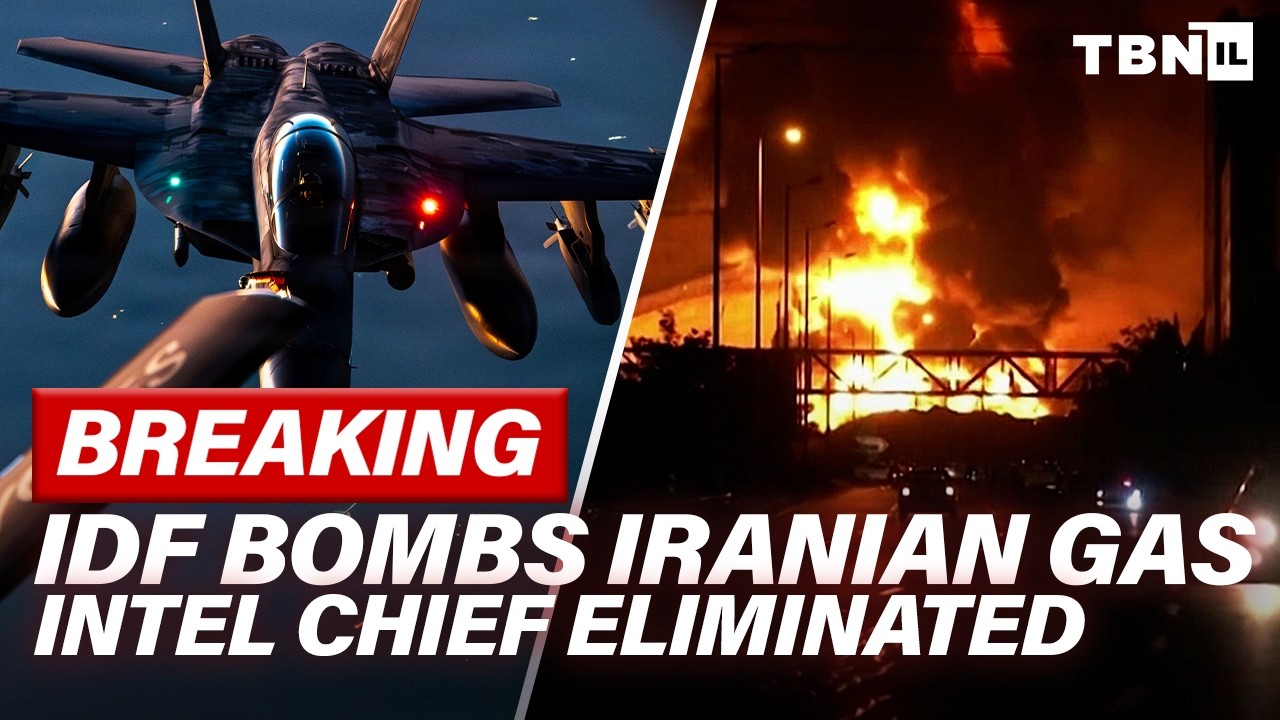
BREAKING: Israel BOMBS Major Iran Gas Site; Top Mullah ELIMINATED; Iran Vows VENGEACE | TBN Israel
"Israel and the United States have escalated their 'Roaring Lion War' against Iran, striking its largest gas facilities, eliminating key intelligence and military figures, and disrupting missile production, while Iran threatens a broader energy war in the Gulf."

BREAKING: Iran Threatens To END Talks; U.S. Vows Retaliation; Hezbollah Collapsing? | TBN Israel
"Iran is leveraging Hezbollah and the Strait of Hormuz to manipulate US negotiations, while Israel asserts its right to dismantle Hezbollah's eroding but still dangerous infrastructure in Lebanon, independent of international talks."
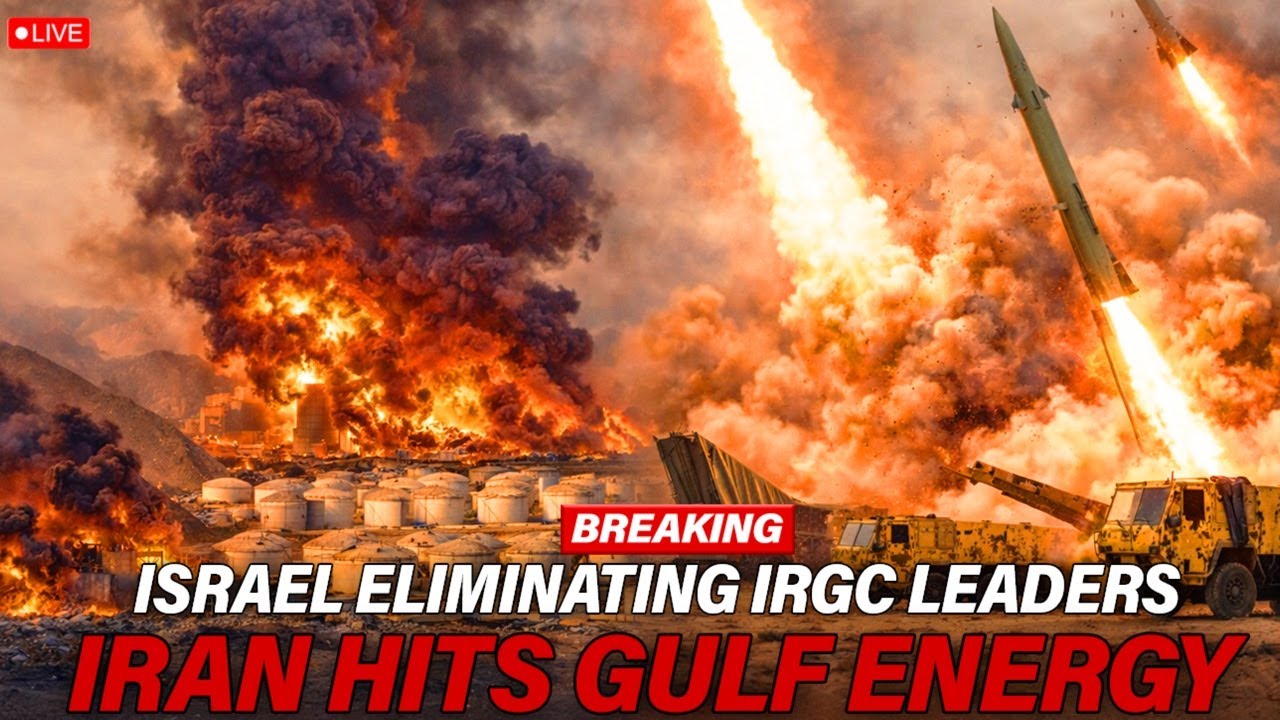
BREAKING: U.S. Weighs INVADING Iran Oil Island; Gulf Energy Crisis Grows | TBN Israel
"As the US and Israel systematically dismantle Iran's military and leadership, the conflict escalates into an energy war, with the US considering ground invasion of Iran's critical Karag oil island to secure global oil routes."

The Fat Electrician Vs Tactically Acquired | Unsubscribe Podcast 267
"This episode features military content creators discussing current geopolitical hotspots, advanced weaponry, and the surprising psychological warfare tactics of modern conflict, alongside their personal journeys building online communities."