
The Girl from Wahoo | Full Episode + Post Mortem
YouTube · x84BH522Xq8
Quick Read
Summary
Takeaways
- ❖Mary Kay Hessie, 17, was brutally murdered in Wahoo, Nebraska, in 1969, an event that shattered the town's innocence.
- ❖Early investigations were hindered by inexperienced law enforcement, scattered evidence across multiple agencies, and reliance on polygraph tests, which are now considered unreliable.
- ❖Decades later, investigator Ted Green meticulously recompiled the case, uncovering new witness statements and re-examining old evidence.
- ❖A second autopsy of Mary Kay's exhumed body revealed stab wound patterns consistent with slaughterhouse techniques, linking to suspect Joseph Ambrose's past job.
- ❖Joseph Ambrose, an early person of interest, was indicted for first-degree murder in 2024, largely based on circumstantial evidence including shoe prints and his suspicious admission about car blood.
- ❖A plea deal for conspiracy to commit first-degree murder, bound by 1969 sentencing laws, resulted in Ambrose serving only one year, sparking outrage from the victim's family and lead investigator.
Insights
1Initial Investigation Failures and Limitations
The initial 1969 investigation into Mary Kay Hessie's murder was hampered by several factors: inexperienced state patrol officers new to criminal investigations, evidence scattered across multiple law enforcement agencies (local police, sheriff's office, state patrol, FBI), and an over-reliance on polygraph tests, which are now deemed unreliable and inadmissible in court. Crucial steps like examining the suspect's car for blood or comparing shoe prints were not adequately performed.
Investigators in 1969 polygraphed 'virtually the entire male population' of local schools (). Prosecutors noted the Nebraska State Patrol was 'just started to broaden the scope of things that they got involved with, like criminal investigations' (). Evidence was 'scattered all over the place across these different agencies' (). Ambrose's car was never examined () and shoe prints were not compared to suspects ().
2Challenges of Cold Case Revival and Forensic Advances
Efforts to solve the cold case in 1999 by Sergeant Bob Frank's unit utilized new DNA technology, but the 30-year-old evidence yielded no usable fingerprints or DNA. The passage of time meant stories changed, and direct witnesses were hard to find, leading to reliance on hearsay. Despite innovative interrogation tactics like creating a 'task force' facade and making interview rooms uncomfortable, no new usable information emerged.
By 1999, 'advances had been made in forensic science that were not available in 1969' (), but 'no' fingerprints came forward () and forensic testing 'led nowhere' (). Frank noted 'stories grow, stories change, and so, you know, trying to separate truth from fiction is sometimes difficult' (). Investigators waxed tables and chairs to keep interviewees 'on edge' ().
3Exhumation and Forensic Reconstruction of the Crime
In 2024, Mary Kay's body was exhumed for a second autopsy, 55 years after her death. Remarkably, her body was well-preserved, allowing pathologists to gain new insights. The manner of her 14 stab wounds was found to be consistent with how slaughterhouse workers are trained to kill animals, a significant detail given suspect Joseph Ambrose's employment on a 'kill floor'. This, combined with a size 9.5 shoe print matching a prison-issued shoe Ambrose could have worn, and his suspicious admission about blood on his car, formed the core of the renewed case.
Her body was 'well preserved' (). The manner of stabbing was 'consistent with how slaughterhouse workers are taught to kill animals' (), and Ambrose worked on a 'kill floor' (, ). The shoe print was a 'size 9 and a half' () and matched a 'prison-issued shoe' () Ambrose could have worn. Ambrose admitted blood was on his 'left rear fender' () from hitting a deer or rabbit, which Green found suspicious ().
4Controversial Plea Deal and Sentencing Constraints
Despite a grand jury indictment for first-degree murder, prosecutors accepted a plea deal for conspiracy to commit first-degree murder. This decision was driven by the case's age, potential chain of custody issues, dead witnesses, and the inadmissibility of hearsay evidence. Crucially, sentencing was bound by 1969 laws, where conspiracy to murder carried a maximum of two years. Joseph Ambrose, 77 and in poor health, pleaded no contest and was released after serving only one year, without having to disclose details of the murder. This outcome deeply frustrated the victim's family and the lead investigator.
Ambrose was indicted for first-degree murder (). A plea deal was reached for 'conspiracy to commit first-degree murder' (). Prosecutors cited 'chain of custody issues' and 'some witnesses dead, testimony could be deemed inadmissible' (). The 1969 sentencing guidelines for this charge were 'only 2 years of prison time' (). Ambrose 'maintains his innocence' and took the plea due to 'health issues' ().
Lessons
- Prioritize meticulous evidence collection and chain of custody documentation from the outset, as these become critical vulnerabilities in cold cases decades later.
- Investigative units should proactively consolidate all case files and evidence from various agencies to prevent scattering and loss of critical information over time.
- When pursuing cold cases, be prepared for the legal and emotional complexities of applying outdated laws and managing family expectations for justice in the face of practical limitations.
Quotes
"The Mary Kay Hessie case is unique because of how many people have tried to solve it and they just hit brick walls right and left."
"It was one that I really wanted to solve for the community, but it just didn't turn out that way."
"I look at this as the case where the community lost its innocence, where people were told, 'We're not going into Wahoo. You're not going out alone.'"
"She just wanted to get a boy to go to the dance with her. And unfortunately the dance she went to was her death."
"We have a wonderful thing called DNA, right? And we're going to be able to show who she struggled with."
"There's no justice for Mary Kay. There's no justice for the family."
"His thing was he didn't want to die in jail. He didn't want to die in prison. Mary Kay didn't want to die that day either."
"The thing that was just frightening as all is her goosebumps formed on her legs during the autopsy."
Q&A
Recent Questions
Related Episodes

The Root Beer Float Murder | Full Episode + Post Mortem
"A seemingly natural death of a husband is unmasked as a calculated poisoning plot by his wife and stepdaughter, revealed only after an unrelated burglary exposes a trail of incriminating text messages."
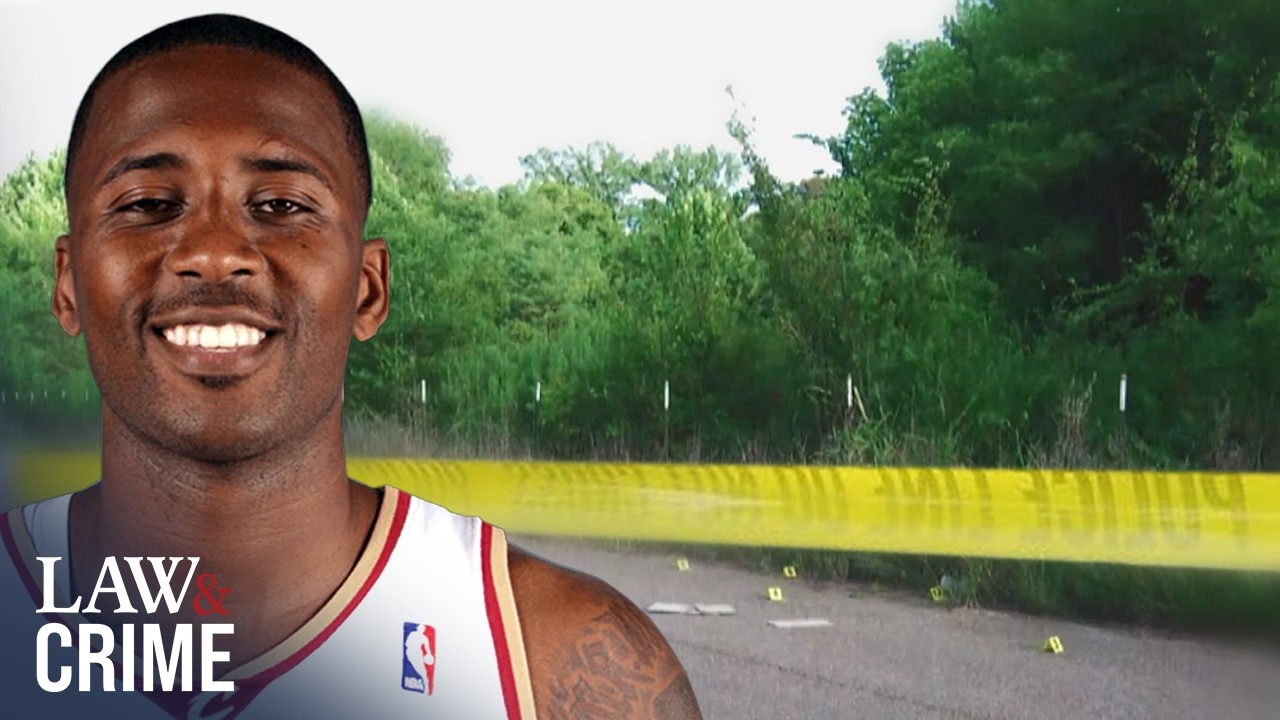
Killer Cases: NBA Star Lured to Execution In Rural Tennessee
"The decade-long cold case of NBA star Lorenzen Wright's murder was cracked through a persistent mother, a jailed informant, and a covert police operation that recovered the murder weapon from a lake and exposed a conspiracy driven by greed."

Amanda Knox and John Ramsey - Megyn Kelly's "Double Feature" of Fascinating Interviews
"This episode features two individuals, Amanda Knox and John Ramsey, whose lives were irrevocably altered by tragic crimes and subsequent wrongful accusations, revealing systemic failures in justice and media manipulation."

TEEN'S DNA REVEALED IN ANNA KEPNER'S R*** KIT
"The investigation into Anna Keaptainner's death on a cruise ship reveals shocking DNA evidence, a previously unknown male minor, and critical questions about evidence handling and family dynamics."