
Their Spin Is NOT WORKING
YouTube · xVDJZOrGwK8
Quick Read
Summary
Takeaways
- ❖The Trump administration's changing language (from 'major combat operation' to 'mini war') and the creation of 'Project Freedom' were tactics to circumvent the 60-day Congressional war authorization deadline.
- ❖Iran has consistently offered to end its nuclear enrichment program, including a 'zero stockpile' pledge and limiting enrichment to non-weapons grade levels, but these offers were allegedly dismissed by the US and ignored by mainstream media.
- ❖The hosts argue that Israel's primary objective is not to prevent Iranian nuclear weapons but to achieve regime change or a failed state in Iran, and to expand its territory into Lebanon, influencing US policy.
- ❖Mainstream media is accused of manufacturing consent by consistently portraying Iran as the aggressor, downplaying US actions, and ignoring Iran's peace offers, often at the behest of Israeli interests.
- ❖The ongoing conflict has led to skyrocketing oil and gas prices, a global fertilizer shortage (one-third of which passes through the Strait of Hormuz), and significant damage to US military sites, indicating a crumbling global economy.
Insights
1Semantic Loopholes to Avoid Congressional War Authorization
The Trump administration employed shifting terminology, rebranding 'Operation Epic Fury' as 'Project Freedom' and downplaying the conflict as a 'mini war' or 'skirmish.' This was allegedly a deliberate strategy to reset the 60-day clock for Congressional authorization, allowing the executive branch to continue military operations against Iran without a formal vote.
Secretary of Defense Pete Hexith's statements on 'Project Freedom' being temporary and defensive; Trump's evolving descriptions of the conflict from 'major combat operation' to 'little skirmish' over several months.
2Iran's Repeated Peace Offers and Media Omission
The hosts assert that Iran has made multiple, definitive offers to end its nuclear enrichment program, including a 'zero stockpile' pledge and limiting enrichment to non-weapons-grade levels (3-3.6%). These offers were allegedly either rejected by the US (despite meeting stated US objectives) or systematically ignored and misrepresented by mainstream American media, which continued to frame the conflict around the threat of Iranian nukes.
Jenk's double-check of Iran's peace offer details (zero stockpile, 3-3.6% enrichment); the Omani mediator's statements about Iran's willingness to give up enrichment before the war; the Obama-era deal where Iran ended its weapons program.
3Israel's Influence and Objectives in the Conflict
The hosts argue that Israel is the primary driver of US foreign policy in the region, with objectives distinct from stated US interests. Israel's goals are identified as regime change or a failed state in Iran to eliminate a regional challenger, and territorial expansion into Lebanon. This alleged influence explains why peace deals with Iran are sabotaged and the conflict is prolonged.
The hosts' assertion that 'Israel's in control of the American foreign policy'; Israel's 'plan A' (regime change) and 'plan B' (devastating civil war) for Iran; Israel's continued military actions in Lebanon and stated intent to take southern Lebanon.
4Economic Devastation and US Military Damage
The conflict, particularly the blockade of the Strait of Hormuz, is causing severe global economic consequences, including skyrocketing oil/gas prices and a critical shortage of fertilizer. Simultaneously, Iranian strategic strikes have inflicted extensive damage on US military sites across the Middle East, crippling radar systems and depleting missile defenses, far beyond what the White House acknowledges.
One-third of the world's fertilizer transported through the Strait of Hormuz; Washington Post report detailing damage to 228 structures/equipment at US military sites, including radar, communications, and air defense equipment; experts noting Iran's precise targeting abilities.
Bottom Line
The stock market's resilience, despite the war, inadvertently encourages Trump to continue military action, as he interprets it as a sign that 'everything's fine,' ignoring the broader economic impact on working-class Americans.
This creates a dangerous feedback loop where financial market performance, disconnected from real-world economic hardship, can fuel prolonged military engagements by leaders prioritizing donor interests over public welfare.
Develop alternative economic indicators that capture the impact of geopolitical conflicts on everyday citizens, not just the wealthy, to inform policy decisions and public discourse more comprehensively.
Iran's military strategy involves precise targeting of US military infrastructure, particularly radar and air defense systems, which has been more effective than indiscriminate bombings and has forced US personnel to relocate from vulnerable bases.
This suggests a sophisticated and adaptive adversary that has exposed vulnerabilities in US military preparedness against modern drone warfare, challenging the narrative of Iran as an unsophisticated threat.
Re-evaluate US defense strategies and investments to better counter precise drone and missile attacks, focusing on hardening critical infrastructure and adapting to evolving asymmetric warfare tactics.
Key Concepts
Manufacturing Consent
The hosts explicitly refer to Noam Chomsky's concept, arguing that mainstream media actively shapes public opinion to support government and allied (e.g., Israeli) foreign policy objectives, even through 'flat out lying' and 'collective amnesia' about key facts like Iran's peace offers.
Lessons
- Critically evaluate mainstream media narratives on foreign policy, especially regarding conflicts, by cross-referencing information and seeking out alternative perspectives to identify potential propaganda or omissions.
- Recognize how political rhetoric and semantic shifts can be used to circumvent democratic processes like Congressional war authorizations, and advocate for greater transparency and accountability in military engagements.
- Understand the complex, often hidden, motivations of geopolitical actors, including the potential influence of allied nations on US foreign policy, to form a more informed opinion on international conflicts.
Notable Moments
Trump's shifting language on the war with Iran, from 'major combat operation' to 'mini war' and 'little skirmish,' is presented as a tactic to avoid Congressional authorization.
This highlights how executive power can be exercised to bypass democratic checks and balances on military action, potentially prolonging conflicts without public or legislative consent.
The hosts detail Iran's repeated offers to end its nuclear enrichment program, which they claim were ignored by the US and mainstream media.
This challenges the core justification for the conflict (preventing Iranian nukes) and suggests a deliberate suppression of diplomatic opportunities, pointing to alternative, unstated motives for the war.
The hosts accuse mainstream media of 'manufacturing consent' and 'flat out lying' about the conflict, particularly regarding Iran's peace offers and Israel's role.
This raises serious questions about media integrity and its role in shaping public perception to support specific geopolitical agendas, potentially leading to misinformed public opinion and prolonged conflicts.
The discussion of Israel's objectives in Iran (regime change/failed state) and Lebanon (territorial expansion) as the driving force behind US policy.
This offers a controversial but critical perspective on the true beneficiaries and motivations behind US military involvement in the Middle East, suggesting that US interests may be secondary to those of an ally.
Quotes
"Our country is booming now despite the fact that we're in a I call it a mini war cuz that's all they are. They don't have a navy anymore. You know, we hit an all-time high stock market today. Despite that, we're in a little skirmish, military. I call it a skirmish because Iran has no chance."
"We have found illegal loopholes so that Congress doesn't have to authorize this war."
"Israel doesn't want it to end because they want regime change or a failed state. The United States, in my opinion, doesn't even care about the enriched uranium, but is pretending to care about the enriched uranium uh in order to, I don't know, keep us in this war that doesn't benefit the American people at all in any way, shape, or form."
"Iran definitively already offered to end their enrichment program that could be turned into a weapon. No question, no doubt. Okay, I get Trump is lying about it. I get Israel is lying about it because they have always wanted that as an excuse to go into the war and to stay in the war. Why is all of American media lying about it? It's insane, guys."
"This war was never about nuclear weapons. It was never about nuclear weapons. Considering the fact that there was a nuclear deal in place with checks and balances to ensure that Iran is not building a nuke, is not enriching uranium to the point where they have the materials to build a nuke."
"The easiest move for the United States to make right now would be to just blow up Car Island. Car Island, you can do an amphibious operation there. It's it's a lot riskier. Or you could just blow it up. And that means that Iran has no refinery capacity. And that means their economy is basically sunk for the foreseeable future, which means the regime has no money to pay its own people."
"We would literally have a global depression on our hands, which, you know, wouldn't be so easy on the United States or the world's perception of Israel, would it been?"
"Iranian air strikes have damaged or at least destroyed at least 228 structures or pieces of equipment at US military sites across the Middle East since the war began, hitting hangers, barracks, fuel depots, aircraft, and key radar, communications, and air defense equipment."
Q&A
Recent Questions
Related Episodes

Bibi DEMANDS Ground Troops As Marines Rushed to Iran
"Benjamin Netanyahu is pushing for US ground troops in Iran, framing air strikes as insufficient, while the US rushes Marines to the region and struggles to secure the Strait of Hormuz against surprisingly capable Iranian defenses."

Patrick Henningsen: Hezbollah JUST Fired Back at Israel - Iran Vows to “Crush” All Attacks
"Patrick Henningsen argues that the US and Israel initiated an illegal war against Iran, driven by Trump's incompetence and Israeli influence, leading to an inevitable escalation with severe global economic repercussions."
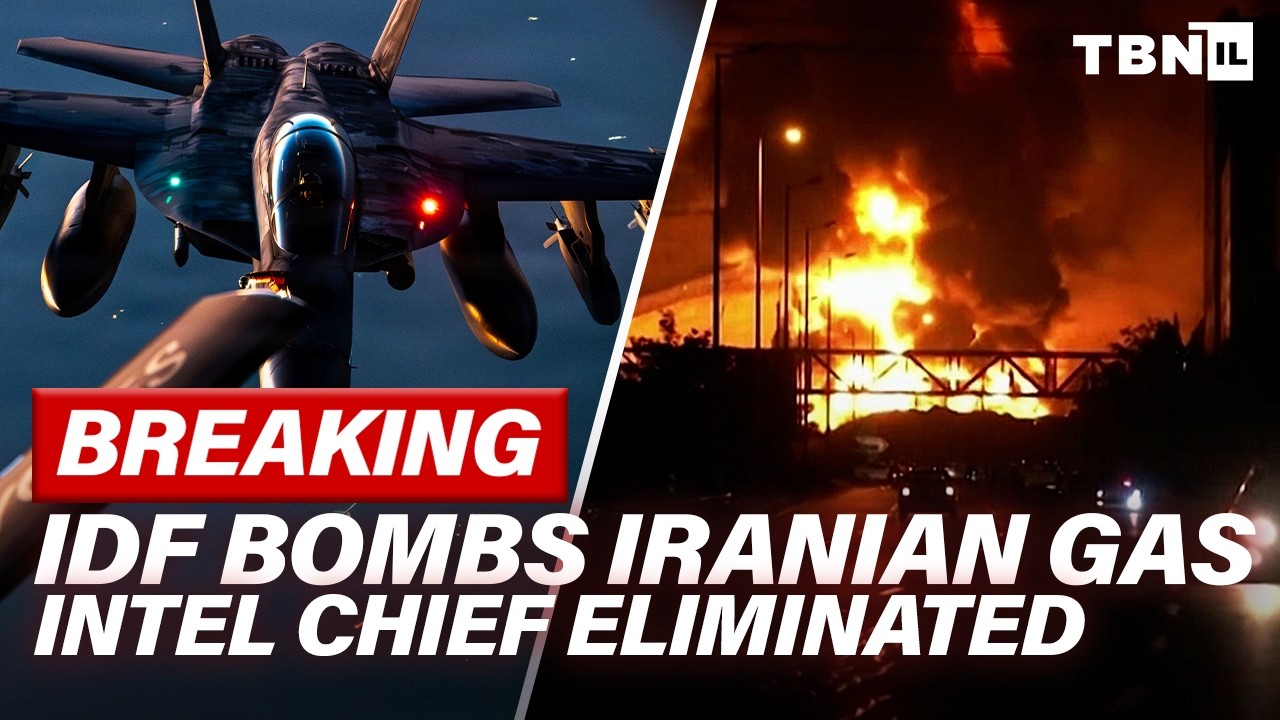
BREAKING: Israel BOMBS Major Iran Gas Site; Top Mullah ELIMINATED; Iran Vows VENGEACE | TBN Israel
"Israel and the United States have escalated their 'Roaring Lion War' against Iran, striking its largest gas facilities, eliminating key intelligence and military figures, and disrupting missile production, while Iran threatens a broader energy war in the Gulf."

Iran Update: Israel’s Newest Bombing Campaign, the Oncoming War With China and How to Avoid It
"Colonel Wilerson reveals how the US and Israel are actively bombing China's strategic infrastructure in Iran, escalating a covert economic war that Beijing intends to win without direct military conflict by dismantling the dollar's global dominance."