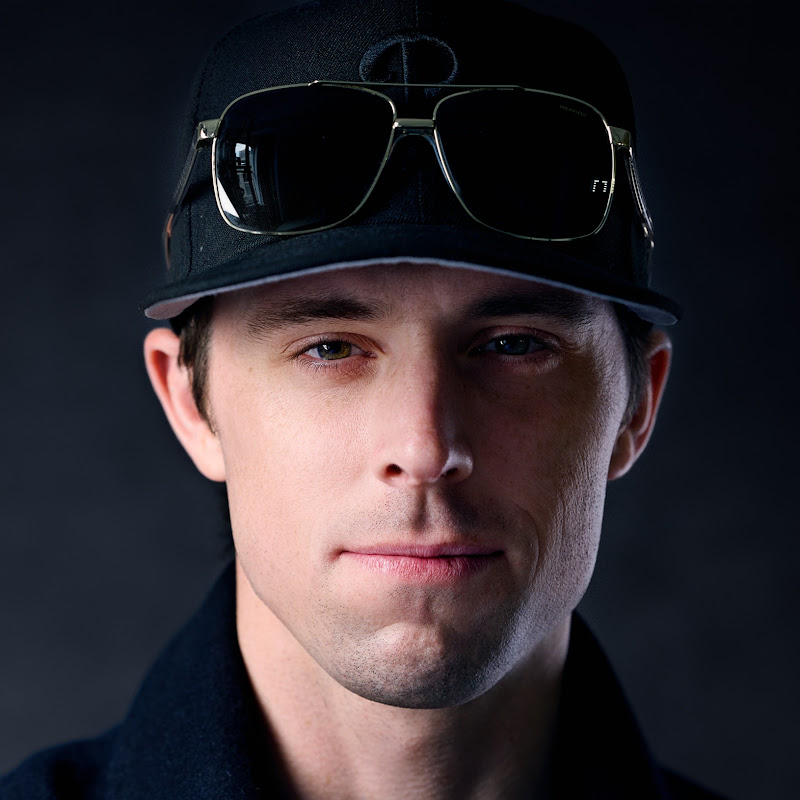
“Haunts Me!” - NYPD Terror Detective on 9/11, Epstein & Interrogation Mastery | Tom Smith • 401
YouTube · xXTo0B95_Sw
Quick Read
Summary
Takeaways
- ❖The crack epidemic in the 1980s and early 90s fueled an unprecedented crime wave in NYC, with Washington Heights becoming the drug capital of the Northeast.
- ❖Successful interrogations often involve building rapport through casual conversation before subtly transitioning to the case, catching suspects off guard.
- ❖The 9/11 attacks spurred a critical shift in U.S. law enforcement towards enhanced inter-agency information sharing and a global preventative counter-terrorism mandate for the NYPD JTTF.
- ❖Maintaining mental health in high-stress police work requires strong personal outlets like family and hobbies, as well as the ability to compartmentalize traumatic experiences.
Insights
1Evolution of Policing and Public Perception
Tom Smith notes a significant shift in policing from his start in 1990 to today. Historically, police were respected due to family upbringing emphasizing law and order. Today, media villainizes police, and social media amplifies incidents, making it harder for officers to act decisively, even in self-defense. In the 90s, officers were trained to 'never lose a fight' and were allowed to use necessary force.
Smith states, 'It's very different. The mindset's different, policies are different, laws are different, you know, and the way the public looks upon the police are different. And that's because of the media, you know, you get villainized.' He also mentions academy training: 'You're not allowed to lose a fight under any circumstances. You cannot lose a fight.'
2The Art of Interrogation: Communication and Rapport
Smith emphasizes that effective communication is the most crucial skill for a detective. He advocates for treating all individuals with respect, regardless of their background, and building rapport before delving into the case. His technique involved engaging suspects in casual conversation (e.g., sports) for 15-20 minutes to relax them and catch them off guard, making them more receptive to sharing information.
Smith advises, 'If there's one thing that you have to do and have to learn is your communication skills. If you can't talk to people, you're not going to be successful.' He describes his method: 'I would never walk in there talking about the case. My thing, I would walk in talk about sports for 20 minutes... it catches them off guard and it gets them like very relaxed.'
39/11's Impact on Law Enforcement and Information Sharing
Smith's experience on 9/11, from hearing the news in his car to arriving at Ground Zero, underscored a fundamental shift. The immediate aftermath involved chaos and a realization that 'the world changed.' Post-9/11, the Joint Terrorism Task Force (JTTF) expanded significantly, becoming the largest in the country. A critical improvement was enhanced inter-agency information sharing, a stark contrast to pre-9/11 failures where agencies withheld crucial intelligence.
Smith recalls, 'watching military planes fly around New York City was looking up and watching these things bank around New York going, 'All right, this is not the same. The world's not the same anymore.'' He highlights the JTTF's growth and the improvement in information sharing: 'The information sharing got much better and agencies started to work together and share information.'
4The Psychological Toll and Coping Mechanisms
Despite the intense and often traumatic nature of his work, Smith did not experience PTSD in his waking life but suffered from vivid nightmares where his gun often malfunctioned. His primary coping mechanisms included a long commute home to decompress, talking with his wife (a guidance counselor), and actively coaching youth sports. He stresses the importance of having an 'outlet' or 'release from this madness' for police officers.
Smith describes, 'My thing in my life was nightmares. I would have horrific nightmares... my gun never worked.' He credits his commute and wife: 'That hour plus ride home in the beginning of my career kind of set it in motion of getting it out of my head before I got home.' He advises young cops: 'You need an outlet. You need a release from this madness.'
5Societal Issues: Education and Generational Cycles
Smith argues that addressing generational cycles of crime requires significant investment in education and community programs, particularly for youth and adults. He criticizes politicians for ignoring these issues because 'kids get ignored because why? They don't speak up. So they're easy to get pushed to the side.' He advocates for diverse programs beyond sports to tap into varied interests and provide alternative paths.
Smith states, 'Schools, education, absolutely. That's where it starts.' He criticizes the lack of change: 'The New York City educational system has been the same since God knows when. Nothing's changed.' He suggests, 'You have to just have a network of different things that kids can tap into in a community. Don't just focus on sports.'
Bottom Line
The perception of 'power' drives both criminal masterminds like Nikki Barnes and successful business leaders, suggesting a common human desire for influence, manifested through different means (criminality vs. legitimate enterprise).
Understanding this underlying motivation can inform strategies for rehabilitation or redirection, by offering alternative avenues for achieving influence and recognition within legal frameworks.
Develop mentorship programs or community initiatives that identify individuals with strong leadership potential in at-risk communities and guide them towards legitimate paths where their drive for power can be channeled productively.
The 'coldness' or 'blindness' of New Yorkers, where they 'walk past' extraordinary or horrific events without being phased, contributes to the city's mystique but also allows systemic issues like Jeffrey Epstein's operations to persist unnoticed for extended periods.
This societal characteristic, while enabling a unique urban experience, can inadvertently create an environment where high-level criminality thrives due to a lack of collective scrutiny.
Implement public awareness campaigns or community engagement initiatives that encourage citizens to report unusual activities, even if seemingly minor, fostering a culture of collective vigilance without sacrificing the city's unique 'controlled chaos' dynamic.
Opportunities
Impact Self-Defense Spray
A non-lethal self-defense spray that acts as an extreme eye irritant, causing temporary blindness and burning without respiratory impact or cross-contamination. It features a targeted stream, nitrogen propulsion for long range (12-14 feet), and an invisible UV dye marker for suspect identification. It's designed for both law enforcement and public use.
Key Concepts
Compartmentalization
The ability to mentally separate traumatic or stressful work experiences from personal life, preventing them from 'avalanching' and causing broader psychological issues. Smith used sports coaching and family as outlets to process and release the day's events.
Controlled Chaos
A description of New York City's unique environment, where a constant, high level of activity and diverse human experiences are managed within an underlying, often unacknowledged, order. This allows residents to 'walk past' extraordinary events without being phased.
Lessons
- Prioritize and develop strong communication skills, as they are fundamental for success in any field, particularly in high-stakes interactions.
- Cultivate robust personal outlets and hobbies outside of demanding professional roles to effectively compartmentalize stress and maintain mental well-being.
- Approach complex problems and individuals with an open mind, avoiding predetermined conclusions to ensure thorough and unbiased investigation or analysis.
- Advocate for systemic changes in education and community programs, focusing on early intervention and diverse opportunities to break generational cycles of disadvantage.
Notable Moments
A 1993 shootout on 145th Street and Broadway where Smith, then a young patrol officer, engaged in a gun battle with armed robbers, resulting in an officer being shot and Smith tackling a suspect in the subway.
This event highlights the sudden, unpredictable danger of street policing and Smith's early experience in high-stress, life-or-death situations, shaping his resilience and reliance on training.
Smith's personal experience of 9/11, from hearing the news in his car with his daughter to driving into Ground Zero and witnessing the devastation, followed by his work at the Staten Island landfill.
This provides a visceral, firsthand account of a pivotal national tragedy and illustrates the immediate and long-term psychological and operational impact on first responders, leading to his transition into counter-terrorism.
Smith's deployment to Afghanistan as an NYPD detective in 2009 for a kidnapping case, highlighting the unique and challenging nature of international counter-terrorism work for local law enforcement.
This demonstrates the expanded global reach of the NYPD post-9/11 and the mental fortitude required to operate in war zones as a detective, underscoring the respect accorded to NYPD detectives internationally.
Quotes
"If there's one thing that you have to do and have to learn is your communication skills. If you can't talk to people, you're not going to be successful."
"Detective Smith, it ain't about the drugs. It ain't about the money. It's about the power. I can get and do anything I want in this city."
"Knowing a problem when you're a politician, knowing the problem is easy. Understanding the problem is what's important."
"The world changed... Everything just changed. What? Seeing no commercial airlines and seeing military jets flying all over Manhattan. That was a holy crap."
"When you have organizations, entities, agencies, whatever that just don't tell you the damn truth... when secrets are are told and non-truths are told is when conspiracies lose their mind and just take on a life of their own instead of just telling the truth."
Q&A
Recent Questions
Related Episodes

Nicky Smokes And Mintzy Have Just Asserted Dominance Over Brandon | The Yak 6-25-26
"Barstool's internal drama escalates as Mintzy and Nikki Smokes form a 'New World Order' faction, while Ron Deutsch delivers an astounding 11-second, five-beer chug."
Elena Moore’s husband “not doing well” — planned on spending rest of his life with her, friend says
"Private Investigator Henry Dukes provides an update on the Alina Moore case, detailing the ongoing forensic investigation and defending Alina's husband against public speculation and claims of marital trouble."

Unc & Iso Joe COOK De'Aaron Fox PRETENDING he doesn't hear the CHOKING noise after GM4! | Nightcap
"The hosts dissect NBA player De'Aaron Fox's mental state after a critical Game 4 loss, sparking a broader discussion on how professional athletes truly handle public criticism and the impact of old-school coaching methods."

Lemon LIVE at 5 | Did Donald Trump Really Jinx the Knicks? We Asked New Yorkers
"Don Lemon reports live from a chaotic Madison Square Garden, navigating intense security and interviewing Knicks fans about their team's chances, the impact of Donald Trump's recent presence, and the challenges of attending a high-stakes game in NYC."