
The Iran War Expert: I Simulated The Iran War for 20 Years. Here’s What Happens Next
YouTube · xcXfcXJvMXg
Quick Read
Summary
Takeaways
- ❖US bombing of Iranian nuclear sites, while tactically successful, failed strategically by dispersing nuclear material for 16 bombs, whose location is now unknown.
- ❖The US strike eliminated a Supreme Leader who issued religious edicts against nuclear weapons, replaced by a more aggressive son without such a fatwa.
- ❖Iran is engaging in 'horizontal escalation,' using drones to target economic nodes in allied countries (e.g., Saudi Arabia, UAE) to break the US-led coalition.
- ❖Professor Pape predicts a 75% chance of US ground forces deploying to Iran to search for dispersed nuclear material, leading to Stage 3 of the conflict.
- ❖Russia is providing targeting intelligence to Iran, mirroring US support for Ukraine, and potentially seeking a deal to halt US intelligence to Ukraine in exchange for stopping aid to Iran.
- ❖China views US entanglement in a prolonged Middle East war as 'mana from heaven,' allowing it to advance its global economic and technological leadership unchallenged.
- ❖The 'myth of 100% security' drives big powers into 'wars of choice' that often lead to strategic failure and prolonged conflicts, as seen in Vietnam and Afghanistan.
- ❖Pape argues that the normalization of political violence within the United States is a greater long-term danger than external conflicts like the Iran war.
Insights
1US Actions Triggered Escalation Trap in Iran
The US's initial bombing of Iranian nuclear facilities, while achieving tactical success in destroying targets, led to strategic failure. This action prompted Iran to disperse its nuclear material, making it untraceable, and inadvertently replaced a Supreme Leader who opposed nuclear weapons with a more aggressive successor. This sequence initiated an 'escalation trap' where each US action worsens the overall strategic situation.
Professor Pape's 20 years of war simulations on Iran, and the current unfolding events. 'We are losing control of the situation. Like we don't know where that nuclear material is, but they have the material for 16 nuclear bombs and we've given them every incentive to develop them.'
2Loss of Control Over Nuclear Material and Empowered Leadership
After the US bombing, Iran dispersed its enriched uranium, making its location unknown. Satellite imagery showed trucks moving material two days before a strike on Fordo. Furthermore, the US killed the previous Supreme Leader who had issued two fatwas against nuclear weapons, paving the way for his son, a more aggressive figure known for leading violent crackdowns, to take power without such religious constraints.
Pape's simulations showed 90%+ destruction of targets but no knowledge of nuclear material location. 'Last May, it was very clear they had the material for 16 bombs... we didn't know where a single ounce was.' () 'The guy we killed was one of the guard rails against nuclear weapons.' () 'His son who took over the new supreme leader no fatwa yet... he's known to be way more aggressive than his father.'
3Iran's Horizontal Escalation Strategy
Iran is responding to US pressure with 'horizontal escalation,' using precision drones to attack economic targets (hotels, airports) in US-allied Gulf states like Saudi Arabia and the UAE. This strategy aims to drive wedges between these countries and the US, forcing allies to expel American forces and embassies, thereby removing US platforms for future attacks.
Pape's Foreign Affairs article details this strategy. 'What they're trying to do is break this coalition... they want these countries to kick the Americans out of their country.' () 'They're basically trying to drive wedges between these countries and America.'
4High Probability of US Ground Deployment
Pape predicts a 75% chance that the US will eventually deploy ground forces to Iran in a 'limited ground deployment' (Stage 3) to search for the dispersed nuclear material. This is because airpower alone cannot locate or secure the material, and the US will become increasingly concerned about Iran developing nuclear weapons and potentially transferring them to proxy groups.
Pape states, 'I think it's at least 50/50 if not immediately.' () Later, 'I'll go 75/25... That we will put we will send in some ground forces to get that dispersed material.' () 'The problem is we've now put in place a much more aggressive leadership... and we've given them every incentive to develop the nuclear bomb.'
5Geopolitical Advantage for China and Russia
US entanglement in a prolonged Middle East conflict is a strategic boon for China and Russia. Russia is already providing targeting intelligence to Iran, potentially leveraging this to negotiate a halt to US intelligence support for Ukraine. China, meanwhile, is 'thrilled' to see the US bogged down, allowing it to accelerate its economic and technological growth and expand its influence in Asia without US competition.
Pape notes Russia providing intel to Iran () and discusses a potential deal (). He states China is 'probably thrilled that we're on the verge of getting into another quagmire in the Middle East' () and that this is 'mana from heaven for China.'
Bottom Line
The US inadvertently eliminated internal 'guard rails' against nuclear proliferation within Iran by killing the former Supreme Leader who had issued fatwas against nuclear weapons, making the current regime more likely to pursue them.
This highlights a critical flaw in targeted strikes: they can remove individuals but fail to understand or predict the complex adaptive responses of non-brittle, matrix-like regimes, potentially worsening the original problem.
Future strategic planning must incorporate deeper understanding of enemy regime structures and internal dynamics beyond simple 'node removal' to avoid counterproductive outcomes.
Iran's 'horizontal escalation' strategy, targeting tourism and economic hubs in US-allied Gulf states, exploits the 'soft underbelly' of these nations, which face public pressure against supporting US/Israeli expansionist policies.
This demonstrates that military power alone cannot sustain coalitions if economic and public opinion costs become too high for allies, forcing them to reconsider their alignment with the US.
US foreign policy needs to account for the domestic political and economic vulnerabilities of its allies when planning military actions, offering robust support or alternative strategies to maintain coalition cohesion.
The US's pursuit of '100% security' in 'wars of choice' like Iran is a self-defeating strategy that historically leads to prolonged conflicts and strategic failures, eroding US primacy.
This suggests that the US often overestimates its ability to control outcomes through military force and underestimates the adaptive capacity of adversaries, leading to 'forever wars' that drain resources and attention from more critical long-term challenges.
A shift towards pragmatic, long-term 'freezing' of problems, rather than seeking absolute solutions, could be a more effective strategy for managing complex geopolitical challenges and preserving national strength.
Key Concepts
Escalation Trap
A cycle where initial tactical military success leads to strategic failure, prompting further escalation that deepens the conflict and produces unintended, negative consequences. This includes stages like initial bombing, regime change attempts, horizontal escalation, and eventually ground deployment, each step worsening the political and strategic situation.
Jenga vs. Matrix Regime Structure
The misconception that a regime (like Iran's) is a brittle 'Jenga' tower where removing a key piece causes collapse. In reality, revolutionary regimes are more like an adaptive 'matrix,' filling in holes and becoming more resilient and aggressive when leaders are removed, rather than collapsing.
Myth of 100% Security
The dangerous belief that perfect security can be achieved through military action, leading powers to undertake 'wars of choice' that often result in prolonged conflicts, strategic failures, and self-inflicted harm, rather than accepting a more pragmatic, albeit imperfect, solution like freezing a problem for decades.
Lessons
- Immediately cease the bombing campaign and pull back military forces from the region to de-escalate the conflict.
- Re-engage with Iran to negotiate a deal, even if it's 'worse' than previous offers, to secure and remove enriched uranium from the country.
- Prioritize domestic issues and address the normalization of political violence within the United States, recognizing it as a greater long-term threat to national primacy than external conflicts.
Avoiding the Escalation Trap in Foreign Policy
**Understand Regime Structure:** Recognize that adversaries' regimes are often adaptive 'matrices' rather than brittle 'Jenga' towers; removing leaders may strengthen or radicalize the remaining structure.
**Prioritize Strategic Outcomes over Tactical Success:** Do not confuse successful bombing of targets with achieving long-term political objectives; tactical wins can lead to strategic losses.
**Assess Full Costs of 'Wars of Choice':** Understand that initiating conflicts without being directly attacked puts the political advantage with the adversary, leading to prolonged wars and domestic political costs.
**Seek Pragmatic, Imperfect Deals:** Abandon the pursuit of '100% security' and instead aim for solutions that 'freeze' problems for extended periods, allowing for future opportunities or unforeseen changes.
**Consider Geopolitical Repercussions:** Evaluate how military actions in one region can strategically benefit global rivals, diverting resources and attention from core national interests.
Notable Moments
Pape reveals that simulations for 20 years consistently showed the US losing control in an Iran conflict, a scenario now unfolding.
This establishes the credibility and foresight of Pape's analysis, demonstrating that the current situation was predictable and avoidable.
The host points out that the public believed the conflict was 'over' after initial bombings, while the US was still in negotiations, highlighting a disconnect between public perception and reality.
This underscores how public perception, often based on incomplete information, can be easily misled, impacting political will and support for prolonged conflicts.
Pape recounts the assassination of Egyptian President Sadat by his own security guards after making a peace deal with Israel, illustrating the extreme dangers for leaders in the region who align with US/Israeli interests.
This provides a stark historical example of the 'bottom-up pressure' that US allies face, explaining why they might be compelled to distance themselves from the US to ensure their own survival.
Pape highlights that the US is running low on 'standoff PGMs' (precision-guided munitions) due to current conflicts, which would be crucial for defending Taiwan.
This reveals a critical strategic vulnerability for the US, suggesting that its current engagements are depleting resources needed for potential future conflicts with major powers like China.
Quotes
"We're stuck in a trap of our own making. The key consequence of the trap is we're losing control."
"The guy we killed was one of the guard rails against nuclear weapons."
"If you don't lash back, how does the new leader get his credibility with everybody else? If he's a wimp, why doesn't he get a bullet in the back of the head?"
"China is probably thrilled that we're on the verge of getting into another quagmire in the Middle East... this is mana from heaven for China."
"The biggest danger that we face, even bigger than Iran and all the problems we've just talked about, is the normalization of political violence in our own country."
Q&A
Recent Questions
Related Episodes

Alex Krainer: US STRIKES Iran – Iran RETALIATES Against Kuwait, Bahrain & Jordan!
"Amidst escalating US-Iran conflict and Iranian retaliation against regional US allies, this episode argues that US foreign policy is deeply controlled by an 'Anglo-Zionist conspiracy' led by the Rothschild banking dynasty, prioritizing Israeli interests over American ones."

Patrick Henningsen: Hezbollah JUST Fired Back at Israel - Iran Vows to “Crush” All Attacks
"Patrick Henningsen argues that the US and Israel initiated an illegal war against Iran, driven by Trump's incompetence and Israeli influence, leading to an inevitable escalation with severe global economic repercussions."
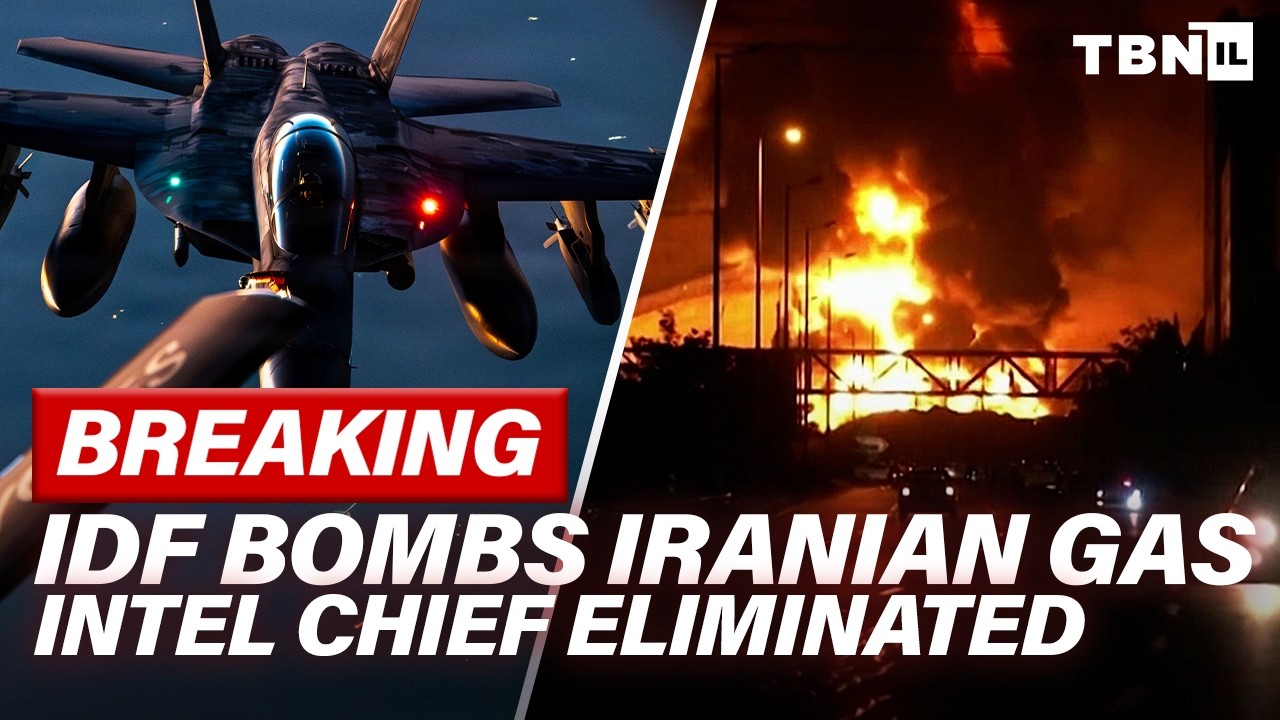
BREAKING: Israel BOMBS Major Iran Gas Site; Top Mullah ELIMINATED; Iran Vows VENGEACE | TBN Israel
"Israel and the United States have escalated their 'Roaring Lion War' against Iran, striking its largest gas facilities, eliminating key intelligence and military figures, and disrupting missile production, while Iran threatens a broader energy war in the Gulf."

LIVE: Trump HIDES FROM PUBLIC as US SOLDIER KILLED!!! 6/2/2026
"The host exposes alleged government cover-ups regarding military casualties, Trump's unexplained public absence, and questionable political appointments, arguing these reflect a 'regime of loser babies' and a failing foreign policy."