BREAKING: Iran Claims VICTORY; Trump Delays Strikes; Hezbollah, Houthis Ready | TBN Israel
YouTube · xfBRLp1blaM
Quick Read
Summary
Takeaways
- ❖Iran's Revolutionary Guards held a victory parade, claiming to have defeated the US and Israel and threatening attacks beyond imagination.
- ❖Donald Trump extended the ceasefire for 3-5 days, seeking a unified Iranian response, while maintaining economic pressure and a naval blockade.
- ❖Iran views the ceasefire extension as US weakness, hardening its negotiating position and attempting to repair damaged infrastructure.
- ❖Iranian Revolutionary Guards attacked and seized three cargo ships (Liberian, Panamanian, Greek-owned) in the Strait of Hormuz, claiming navigation system manipulation and lack of permits.
- ❖Hezbollah increased attacks against IDF forces in southern Lebanon, testing the ceasefire boundaries and prompting an IDF deep-strike operation.
- ❖The Houthis in Yemen threatened to turn the Red Sea, Arabian Sea, and Indian Ocean into war zones, rejecting neutrality.
- ❖The US deployed Ukrainian interception systems to Saudi Arabia and Israel maintained high readiness, preparing for a multi-front regional battle.
- ❖Iran's regime faces internal economic collapse and widespread destruction from strikes, yet projects resilience to its public.
Insights
1Iran's Defiance and Escalation in the Strait of Hormuz
Despite a US-extended ceasefire and ongoing economic pressure, Iran's Revolutionary Guards publicly declared victory over the US and Israel, holding military parades and threatening further attacks. Concurrently, they attacked and seized three cargo ships in the Strait of Hormuz, asserting control over the vital maritime route and explicitly adopting a 'tanker for tanker' doctrine in response to US blockades.
The Revolutionary Guards held a victory parade, boasted of missile and drone attacks, and attacked three cargo ships (Liberian, Panamanian, Greek-owned) in the Strait of Hormuz. Iranian parliament spokesman Ibrahimi stated 'an eye for an eye, a tanker for a tanker'.
2US Ceasefire Extension Interpreted as Weakness by Iran
President Trump extended the ceasefire to allow Iran more time for negotiations, citing a divided Iranian government. However, Iran's leadership, particularly the Revolutionary Guards, interpreted this extension as a sign of US hesitation and weakness, leading them to harden their positions, increase threats, and test boundaries rather than de-escalate.
Trump extended the ceasefire at Pakistan's request due to Iran's divided government. Iran's state television openly stated it might not recognize the ceasefire, and an adviser called it a 'deception ahead of a surprise attack'.
3Proxies Signal Broader Regional Conflict Readiness
Iran's proxies, Hezbollah in Lebanon and the Houthis in Yemen, are actively signaling readiness for renewed and expanded conflict. Hezbollah increased attacks against IDF forces and tested ceasefire limits, while the Houthis explicitly declared they would not remain neutral and threatened to expand their attacks on shipping to the Indian Ocean, indicating a coordinated regional strategy.
Hezbollah stepped up attacks against IDF forces in southern Lebanon, launching drones and rockets. The Houthis stated Yemen would not remain neutral and threatened attacks on US carriers in the Red Sea, Arabian Sea, and Indian Ocean.
4Economic Warfare and Global Impact Limits US Pressure
The US maintains a naval blockade and economic sanctions on Iran, causing significant financial losses and internal destruction within Iran. However, the US Treasury extended sanctions relief on Iranian and Russian oil for 30 days due to requests from ten countries severely impacted by global oil shortages, highlighting the limits of US economic pressure without destabilizing the global economy.
US Treasury Secretary Scott Bassend extended sanctions relief on Iranian and Russian oil for 30 days due to requests from 10 countries hurt by shortages.
Notable Moments
Iran's Revolutionary Guards held a victory parade, declaring triumph over the United States and Israel, showcasing missiles on trucks.
This public display of defiance and claim of victory signals Iran's hardened stance and intent to escalate, rather than negotiate, despite US pressure.
IDF conducted a deep-strike operation 12 kilometers inside Lebanon against Hezbollah, eliminating over 20 terrorists just before the ceasefire.
This demonstrates Israel's capability and willingness to conduct precise, deep operations against proxies, even during a ceasefire, and reminds Hezbollah of its vulnerability.
A wounded Hezbollah terrorist surrendered to IDF forces in the village of Dabel.
This small detail offers a rare glimpse into the tactical pressure on the ground and potential internal cracks within Hezbollah, contrasting with their public declarations of steadfastness.
French President Emmanuel Macron announced another French soldier was killed in a Hezbollah attack in southern Lebanon.
This incident increases international pressure on Lebanon and provides Israel with additional legitimacy to argue against the stability of southern Lebanon, highlighting the region's extreme volatility.
Quotes
"A million people are making decisions in Iran and that's why they are so confident in themselves."
"The Iranians have been slowly escalating their attacks on ships and also trying to break the break free from the blockade repeatedly."
"Iran is effectively telling the world, if you close the sea on us, we will close your calm at sea."
"An I for an I, a tanker for a tanker."
"When Iran smells hesitation, it usually does not calm down. It tests the boundaries."
Q&A
Recent Questions
Related Episodes

Patrick Henningsen: Hezbollah JUST Fired Back at Israel - Iran Vows to “Crush” All Attacks
"Patrick Henningsen argues that the US and Israel initiated an illegal war against Iran, driven by Trump's incompetence and Israeli influence, leading to an inevitable escalation with severe global economic repercussions."

BREAKING: Iran Threatens To END Talks; U.S. Vows Retaliation; Hezbollah Collapsing? | TBN Israel
"Iran is leveraging Hezbollah and the Strait of Hormuz to manipulate US negotiations, while Israel asserts its right to dismantle Hezbollah's eroding but still dangerous infrastructure in Lebanon, independent of international talks."
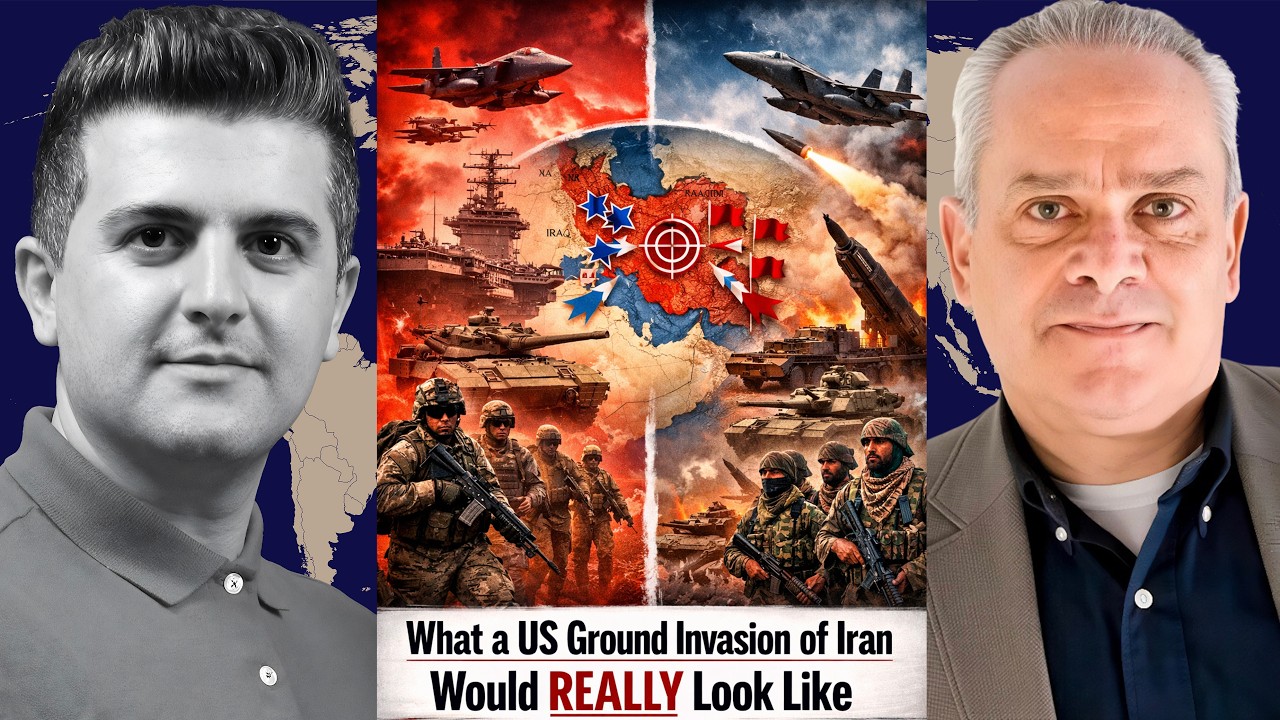
Col. Jacques Baud: What a US Ground Invasion of Iran Would REALLY Look Like
"Colonel Jacques Baud dissects the strategic futility of a US ground invasion of Iran, arguing that current troop levels are insufficient and such an action would backfire, exposing US allies and potentially leading to Iran's nuclearization."
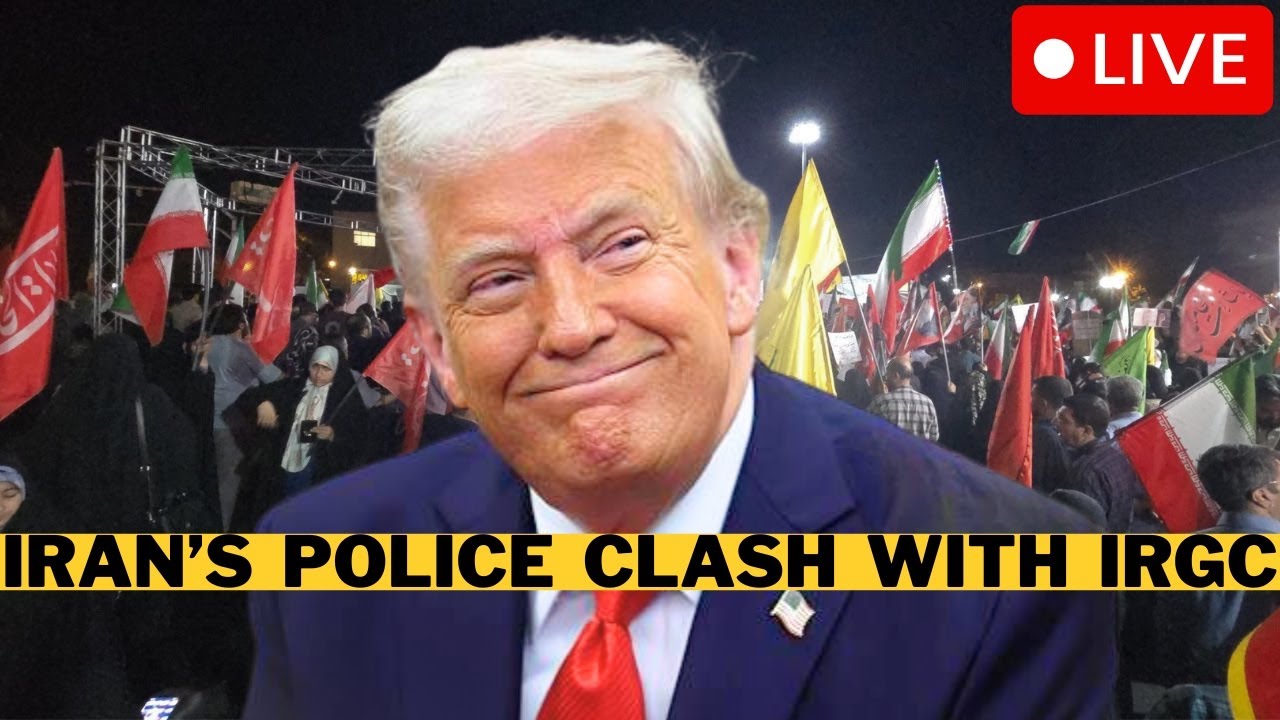
BREAKING: Protests ERUPT In Iran Over IRGC Surrendering To Trump - Infighting Clashes In Tehran
"Iran is experiencing severe internal infighting and protests as hardline IRGC elements clash with government figures over a perceived 'surrender' to the US, while mainstream Western media misrepresents the situation."