
Nima R. Alkhorshid: URGENT: Iran & Israel Trade Blows – Yemen Launches, Iran Hits Saudi
YouTube · xj8ocoG-nDw
Quick Read
Summary
Takeaways
- ❖Israel's strike on Dahiya (Beirut) prompted Iran to fire approximately 20 missiles at northern Israel, with at least four confirmed hits.
- ❖Israel retaliated by striking Iranian targets in Isfahan and Kermanshah, reportedly launching missiles from Iraqi and Saudi airspace, implying US involvement.
- ❖Yemen has officially joined the conflict, launching missiles towards Israel and attacking US bases in Saudi Arabia, including the Prince Sultan airbase.
- ❖The host alleges that the Trump administration, despite public statements, effectively green-lighted Israeli attacks and is now seen as 'incompetent' and lacking credibility.
- ❖Iran's 'Axis of Resistance' (including Hezbollah, Yemen, and potentially Kata'ib Hezbollah in Iraq) is coordinating responses, with a perceived unified front against Israel and the US.
- ❖The host predicts the conflict will escalate to a full-scale regional war, likely resulting in the closure of the Strait of Hormuz and Bab el-Mandeb, causing significant global economic disruption and rising oil prices.
- ❖Israel announced a halt to humanitarian aid to Gaza immediately after the Iranian attack, which the host questions as an irrational escalation tactic.
Insights
1Escalation of Direct Hostilities Between Iran and Israel
Following an Israeli attack on Dahiya in Beirut, Iran launched five waves of missile attacks, firing approximately 20 missiles at northern Israel, with the host claiming at least four hit targets. Israel subsequently responded by striking Iranian cities like Isfahan and Kermanshah, reportedly from outside Iranian airspace, using locations in Iraq and Saudi Arabia.
Host details Israeli attack on Dahiya, Beirut; Iranian government's declaration to respond; five waves of attacks on Israel with ~20 missiles fired; Israel's counter-attack on Isfahan and Kermanshah.
2Yemen's Entry into the Conflict and Targeting of Saudi Arabia
Yemen has actively joined the conflict, launching at least one missile towards Israel (which was reportedly intercepted) and directly attacking American bases in Saudi Arabia, including the Prince Sultan airbase. The host interprets these actions as a response to perceived US involvement in the Israeli attacks, using Saudi territory.
Yemen joining the fight and targeting Israel; new reports confirming Yemen attacked Prince Sultan airbase in Saudi Arabia.
3Host's Critique of Trump Administration's Role and Credibility
The host vehemently criticizes Donald Trump, labeling him 'useless,' 'incompetent,' and a 'showman' who is being humiliated by Benjamin Netanyahu. The host claims that despite Trump's public statements about not wanting Israel to attack Iran or coordinating with his administration, he practically green-lighted these attacks, undermining any diplomatic efforts.
Trump's phone call to Netanyahu asking him not to respond to Iran; host calling Trump's claims of ongoing negotiations a 'big lie'; host stating Trump 'practically said, 'Go ahead and do it'' regarding attacking Iran.
4Axis of Resistance Coordination and Unified Front
The host emphasizes the interconnectedness and coordinated strategy of the 'Axis of Resistance,' comprising Iran, Hezbollah, Yemen, and potentially Kata'ib Hezbollah in Iraq. This axis is depicted as a unified front, dividing duties and prepared for a broader conflict, with Iran's strategic calculation seeing no difference between its own security and that of its allies like Lebanon and Yemen.
Yemen joining the fight due to perceived US involvement; lines of communication among the Axis of Resistance dividing duties; Kata'ib Hezbollah in Iraq stating intent to join and hit American bases.
5Prediction of Full-Scale Regional War and Global Economic Impact
The host predicts that the current escalation will inevitably lead to a full-scale regional war, not just a tit-for-tat exchange. This conflict is expected to result in the closure of critical maritime choke points like the Strait of Hormuz and Bab el-Mandeb, causing severe repercussions for the global economy, particularly through rising oil prices.
Host stating 'this conflict is escalating toward a full-scale war'; Iranian general's advisor stating escalation will involve fighting US in the Mediterranean; prediction of Strait of Hormuz and Bab el-Mandeb closure, leading to huge repercussions on global economy and rising oil prices.
Bottom Line
The host claims Israel's air defense system is failing, despite official denials, with multiple Iranian missiles reportedly hitting targets.
If true, this suggests a significant vulnerability in Israel's defense capabilities against advanced missile attacks, potentially emboldening adversaries and altering regional military calculations.
This could drive demand for more robust and diversified air defense technologies, or prompt a re-evaluation of current defense strategies by nations relying on similar systems.
The host asserts that GCC countries, particularly Saudi Arabia, are not sovereign actors in this conflict, being 'under the thumb of the United States' and unable to refuse their territories being used for attacks against Iran.
This perspective implies that regional alliances are not based on mutual sovereign interests but on US coercion, complicating diplomatic solutions and making these nations indirect targets in conflicts involving the US and its adversaries.
Understanding this dynamic is crucial for geopolitical strategists and investors, as it highlights the fragility of regional stability and the potential for unexpected escalation or shifts in allegiance if US influence wanes or becomes too costly for local partners.
Lessons
- Recognize the host's perspective that direct military responses are the only effective deterrent against Israel, as negotiation is perceived as weakness.
- Understand the host's argument that the 'Axis of Resistance' operates as a unified, coordinated entity, making regional conflicts highly interconnected and prone to rapid, multi-front escalation.
- Consider the potential for critical maritime chokepoints like the Strait of Hormuz and Bab el-Mandeb to be closed, and the significant global economic impact this would have on energy markets and trade routes.
Notable Moments
The host highlights Israel's decision to halt humanitarian aid to Gaza immediately after the Iranian attack, questioning its relevance and rationality.
This action, framed by the host as irrational, demonstrates how the broader Iran-Israel conflict directly impacts the humanitarian situation in Gaza, potentially using civilian suffering as a pressure tactic.
The host contrasts Israeli media reports of Netanyahu agreeing not to attack Iran after a call with Trump, with Iranian media's immediate preparedness for an attack.
This contrast underscores the host's argument about the lack of credibility in US and Israeli official statements, suggesting a deliberate deception or a profound disconnect in communication and intent.
Quotes
"To my understanding was that Iran is not going to respond to Israel. Maybe Yemen would respond to Israel. Then we had Iranian government coming out saying there is no point of this sort of, you know, behavior on the part of Israelis. We have to respond. We have to do something about it."
"The guy is just It's unbelievable what is happening with the Trump administration again and again. I'm going to repeat this sentence because it's amazing. It's just amazing what's going on."
"Israel is nothing without the United States. They know that."
"The Iranian regime made a mistake by firing, you know, into our territory. We will continue our attacks in Lebanon despite the equation in Iran is trying to impose."
"If you try to negotiate, that's a sign of weakness. Not only Israel, the United States is the same."
Q&A
Recent Questions
Related Episodes
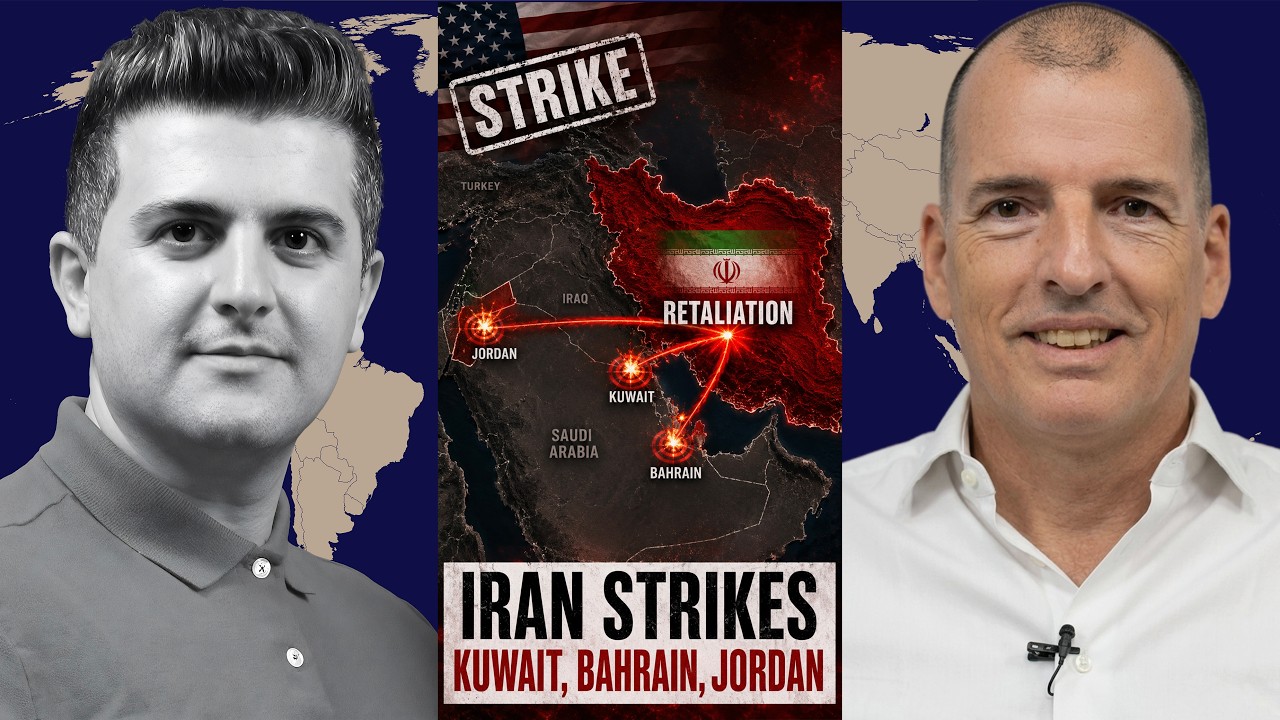
Alex Krainer: US STRIKES Iran – Iran RETALIATES Against Kuwait, Bahrain & Jordan!
"Amidst escalating US-Iran conflict and Iranian retaliation against regional US allies, this episode argues that US foreign policy is deeply controlled by an 'Anglo-Zionist conspiracy' led by the Rothschild banking dynasty, prioritizing Israeli interests over American ones."

Patrick Henningsen: Hezbollah JUST Fired Back at Israel - Iran Vows to “Crush” All Attacks
"Patrick Henningsen argues that the US and Israel initiated an illegal war against Iran, driven by Trump's incompetence and Israeli influence, leading to an inevitable escalation with severe global economic repercussions."
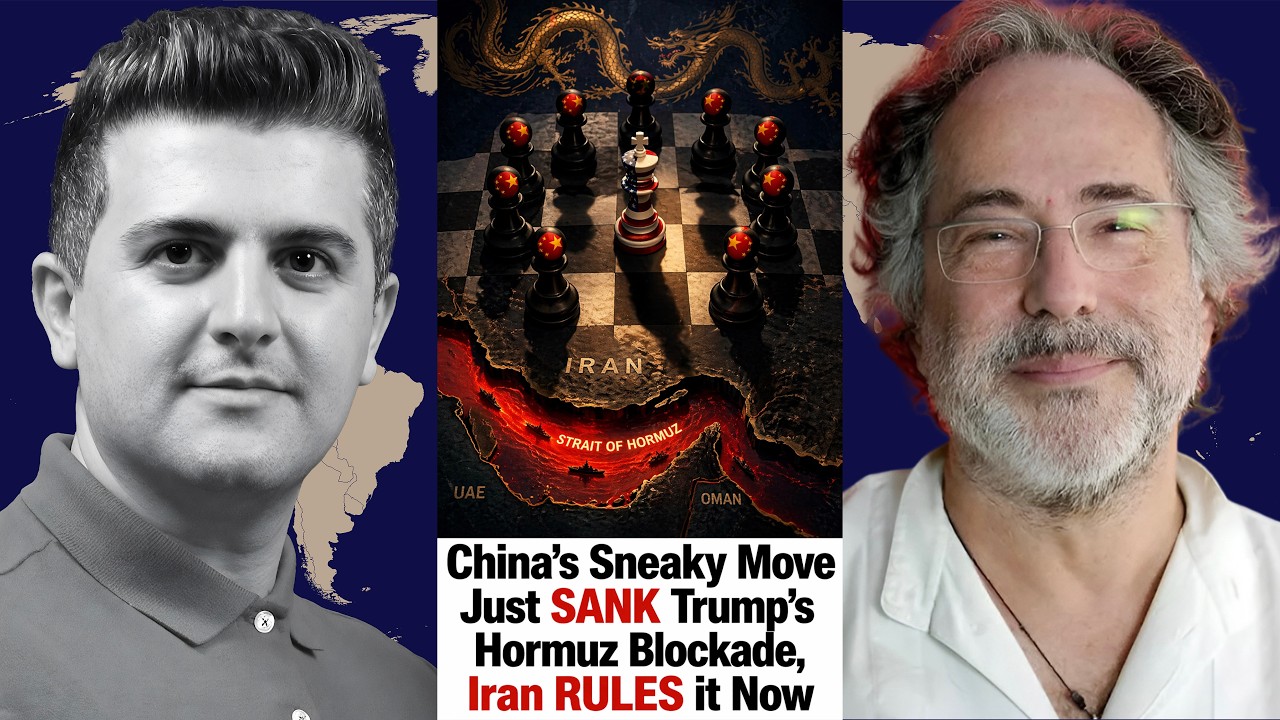
Pepe Escobar: “Total Failure”: Trump’s Blockade Just Backfired Disastrously
"Pepe Escobar argues that the US blockade against Iran, spearheaded by Donald Trump, has utterly failed and backfired, accelerating global economic chaos and challenging US geopolitical dominance."
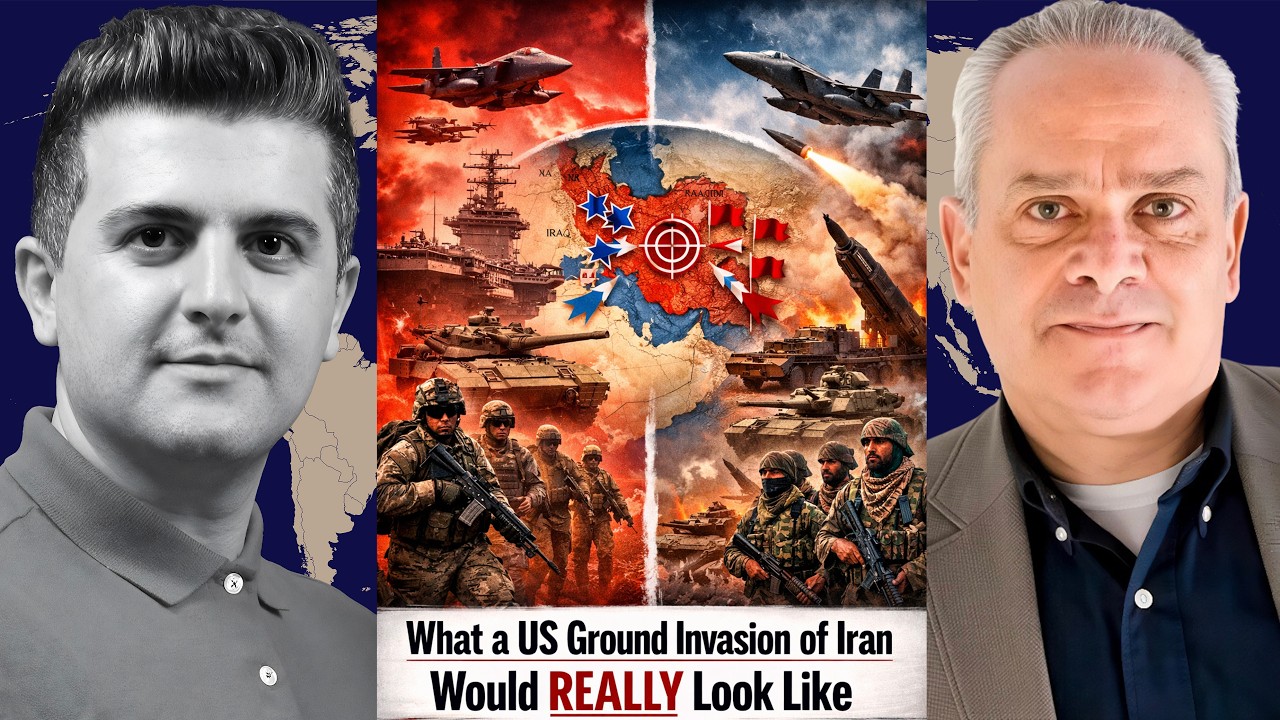
Col. Jacques Baud: What a US Ground Invasion of Iran Would REALLY Look Like
"Colonel Jacques Baud dissects the strategic futility of a US ground invasion of Iran, arguing that current troop levels are insufficient and such an action would backfire, exposing US allies and potentially leading to Iran's nuclearization."