
Seyed M. Marandi: Iran Steps In as Israel Digs In - Hezbollah Crushes the Buffer Zone Plan
YouTube · yp3OODeMXKA
Quick Read
Summary
Takeaways
- ❖Iran's delegation to Qatar is solely for discussing frozen assets with Qataris, not for talks with US officials.
- ❖Iran warns France against sending mine-sweeping ships to the Strait of Hormuz, asserting exclusive Iranian responsibility for its security.
- ❖The US has violated multiple aspects of the MOU, including withholding Iranian assets and threatening Iran, prompting Iran to restrict Strait of Hormuz traffic.
- ❖The Lebanon-Israel MOU is seen as an illegal, US-imposed deal designed to benefit Netanyahu and undermine the Lebanese resistance.
- ❖Hezbollah's continued armament is a direct response to the Lebanese government's inability or unwillingness to defend the country against Israel.
- ❖Iran's military capabilities and tactics have significantly improved post-war, increasing national confidence and reducing public fear of conflict.
- ❖The 'Zionist lobby' is identified as the primary force preventing the US from implementing the MOU with Iran, despite it being beneficial for the US and the world.
Insights
1Iran's Conditional Engagement and Strait of Hormuz Leverage
Iran's delegation to Qatar is strictly for bilateral discussions with Qatar regarding frozen assets, not for negotiations with US officials. Iran views US claims of Iranian requests for talks as dishonest. Iran asserts exclusive control over the Strait of Hormuz, warning against French mine-sweeping operations and imposing restrictions on shipping due to perceived US violations of the MOU, including withholding assets and military threats. This control is Iran's primary leverage.
Iranian foreign ministry statements; Iran's refusal to meet US delegation in Qatar; Iran's warnings to France regarding Hormuz; decreased shipping traffic in the Strait.
2US Violations and Iran's Response
The US is accused of violating the MOU on multiple fronts: refusing to release Iran's stolen assets, issuing threats against Iran, and forcing Oman to declare a shipping corridor in the Strait of Hormuz without Iranian consent. Iran views these actions as a consistent pattern of dishonesty and cheating by the US, and responds by refraining from its own obligations, particularly regarding the Strait of Hormuz's full opening.
Trump's threats; refusal to hand over assets; US forcing Oman to declare a corridor; Iran's reciprocal actions in the Strait.
3Lebanon-Israel MOU: A US-Zionist Counter-Maneuver
The US-brokered MOU between Lebanon and Israel is characterized as an illegal, imposed agreement designed to serve Israeli interests and undermine the broader Iran-US MOU. It's seen as legitimizing the Israeli regime and gifting southern Lebanon to Israel, while aiming to financially strangle and disarm Hezbollah. The Lebanese government, installed by US and Saudi influence, is accused of betraying its country and constitution.
Lebanese parliament head Nabih Berry's argument against executive implementation; claims of US/Saudi installation of Lebanese government; specific provisions of the Lebanon-Israel MOU.
4Hezbollah's Role as Lebanon's Sole Defender
Hezbollah remains armed because the Lebanese government and its military lack the capability or political will to defend the country against Israeli aggression. Western military aid to Lebanon is framed as intended to create a militia to fight Hezbollah and other resistance groups, rather than to protect national sovereignty. The 'greater Israeli project' is openly discussed, reinforcing Hezbollah's rationale for existence.
Tom Barrack's statement on arming Lebanese government; Hezbollah's stated willingness to disarm if a capable national army exists; discussion of Israeli expansionist policies.
5Iran's Enhanced Military Confidence and Psychological Shift
Following recent conflicts, Iran's armed forces (IRGC and army) are collectively stronger, having upgraded missiles and drones, improved tactics, strategy, and air defenses. This has led to increased national confidence and a significant reduction in public fear of war with the US. The Iranian populace, having witnessed the military's capabilities, is less intimidated by US threats.
Observation of decreased public fear on university campuses; military upgrades and tactical improvements; comparison of public mood before and after recent conflicts.
Bottom Line
The US strategy of using regional proxies (like the installed Lebanese government) and economic pressure (frozen assets, sanctions) to undermine Iran's influence and disarm resistance groups is a consistent pattern.
This pattern suggests that any future US-Iran agreements will likely face similar challenges of non-compliance and proxy conflicts, making genuine de-escalation difficult without a fundamental shift in US policy or a significant change in regional power dynamics.
For analysts, understanding this 'proxy warfare' and 'economic leverage' framework is key to predicting regional flashpoints and the effectiveness of diplomatic efforts. For regional actors, it highlights the necessity of internal resilience and diversified alliances.
The 'war' experience has not only strengthened Iran's military but also psychologically inoculated its population against US intimidation tactics, transforming fear into confidence.
This psychological shift means that traditional 'shock and awe' or threat-based diplomacy from the US is likely to be less effective against Iran, potentially leading to more direct and assertive Iranian responses in future confrontations.
Policymakers dealing with Iran must recognize this altered psychological landscape and adapt their diplomatic and coercive strategies, as past methods may now be counterproductive or ineffective.
Lessons
- Monitor shipping traffic and Iranian naval activity in the Strait of Hormuz as a key indicator of US-Iran tensions and the status of MOU implementation.
- Analyze statements from Lebanese political factions and military aid flows to Lebanon to gauge the effectiveness of efforts to disarm Hezbollah and counter Iranian influence.
- Assess the 'Zionist lobby's' influence on US foreign policy decisions regarding Iran and Israel, as identified by the guest, to understand potential obstacles to diplomatic resolutions.
Notable Moments
The host notes that the date of the podcast is June 30th, 2026, setting a future context for the discussion of ongoing events.
This establishes a specific temporal setting for the geopolitical analysis, implying that the 'recent' events discussed have already transpired within that future timeline, offering a unique 'future-looking-back' perspective.
Marandi describes how the US and its allies (Saudi Arabia, Qatar, Turkey) funded ISIS with the objective of destroying regional resistance movements.
This statement frames the conflict in Syria and the broader regional struggle as a deliberate, externally funded effort to dismantle anti-Israeli and anti-US forces, rather than an internal civil conflict.
Marandi recounts an anecdote about women volunteers cooking for checkpoint guards being bombed by the US/Israel, calling these regimes 'vicious, barbaric monsters'.
This personalizes the conflict and illustrates the depth of animosity and perceived brutality, reinforcing the narrative of external aggression against the Iranian people and resistance.
Quotes
"Americans want to meet the Iranians and the Iranians are not going. No delegation is going today."
"The Americans as they always do, they are violating the agreement."
"The only actors that do not benefit from normalization between Iran and the United States is the Zionist regime."
"The only reason why Hezbollah is armed is because they know that if they disarm, Israel will take Lebanon."
"The United States is a vicious, barbaric regime. The Israelis are vicious and barbaric. They're I mean, they're monsters."
Q&A
Recent Questions
Related Episodes

BREAKING: Iran Threatens To END Talks; U.S. Vows Retaliation; Hezbollah Collapsing? | TBN Israel
"Iran is leveraging Hezbollah and the Strait of Hormuz to manipulate US negotiations, while Israel asserts its right to dismantle Hezbollah's eroding but still dangerous infrastructure in Lebanon, independent of international talks."

Patrick Henningsen: Hezbollah JUST Fired Back at Israel - Iran Vows to “Crush” All Attacks
"Patrick Henningsen argues that the US and Israel initiated an illegal war against Iran, driven by Trump's incompetence and Israeli influence, leading to an inevitable escalation with severe global economic repercussions."
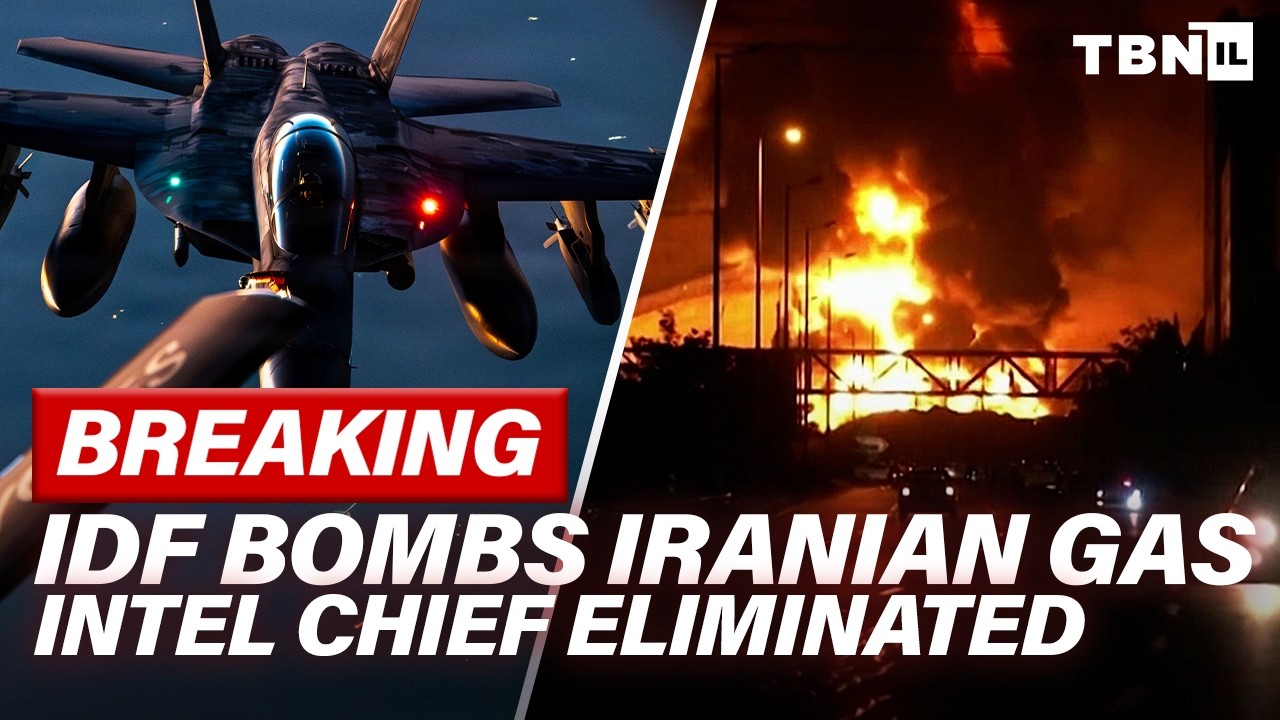
BREAKING: Israel BOMBS Major Iran Gas Site; Top Mullah ELIMINATED; Iran Vows VENGEACE | TBN Israel
"Israel and the United States have escalated their 'Roaring Lion War' against Iran, striking its largest gas facilities, eliminating key intelligence and military figures, and disrupting missile production, while Iran threatens a broader energy war in the Gulf."

Bibi DEMANDS Ground Troops As Marines Rushed to Iran
"Benjamin Netanyahu is pushing for US ground troops in Iran, framing air strikes as insufficient, while the US rushes Marines to the region and struggles to secure the Strait of Hormuz against surprisingly capable Iranian defenses."