
Patrick Henningsen: It's Over: Trump's Plan Just BLEW UP
YouTube · yzP-Vc4Qqw0
Quick Read
Summary
Takeaways
- ❖European political elites are 'brainwashed' and 'propagandized' by a US-led agenda, contrasting sharply with the public's zero desire for war with Russia.
- ❖Davos has pivoted from 'green' initiatives to a 'wartime economy' focused on AI, weapons, and war, driven by profit and rent-seeking without consistent principles.
- ❖NATO is a US-led 'protection racket' forcing European countries to spend 5% of GDP on defense, even as their economies face 0% growth, creating an unsustainable burden.
- ❖Mark Carney's statement at Davos, acknowledging the 'rules-based international order' is 'null and void,' signals a fundamental shift in global power dynamics.
- ❖Trump's 'America First' policies, including threats to withdraw NATO support and tariffs over Greenland, are intentionally or unintentionally fracturing the Western alliance.
- ❖Germany, France, and Italy are seeking to re-establish diplomatic dialogue with Moscow, indicating a potential softening of hawkish rhetoric in Europe.
- ❖US foreign policy in the Middle East is dictated by Israel, with the White House under the control of a foreign government, limiting Trump's independence on Iran.
- ❖The US and its allies are primarily focused on 'disrupting, wrecking, and sabotaging' rather than building, a strategy Henningsen views as a 'death spiral' for Western civilization.
- ❖Europe's historical 'genetic defect' of internal conflict, combined with 'mediocre' leadership, leaves it vulnerable to US manipulation and prevents a unified, independent path forward.
Insights
1Europe's Economic Burden from US-Led Defense Demands
European countries are being pushed to spend 5% of their GDP on NATO defense, while simultaneously experiencing 0% economic growth. This translates to a real relative spending burden of 7-8% of GDP, which is unsustainable for nations already facing austerity and high debt-to-GDP ratios like France. This demand is framed as a 'protection racket' by the US, benefiting its defense industry.
Mark Rutte's clip on 40% state budget on defense, 200 billion a year (). Henningsen's calculation of 7-8% real relative spending ().
2Davos's Ideological Pivot to War Economy
The World Economic Forum (Davos), which previously focused on 'green' and 'climate' initiatives for 20 years, has completely shifted its agenda to a 'wartime economy' centered on AI, weapons, war, and Russia. This pivot demonstrates a lack of consistent principles, driven instead by profit, rent-seeking, and economic activity at the public's expense.
Henningsen states Davos 'spent the last 20 years making it all about green... and then they've completely shifted and pivoted to war' ().
3Fracturing of the US-European Alliance and NATO
The 'rules-based international order' is now 'null and void,' as acknowledged by figures like Mark Carney. The US, particularly under Trump, is taking a 'wrecking ball' to the trust and agreement among NATO partners by threatening to withdraw support and imposing tariffs. This exposes NATO as a US-led institution that provides derived clout to smaller European nations, which are otherwise 'small weak countries that can't agree on anything.'
Mark Carney's statement about the rules-based international order (). Henningsen's description of Trump taking a 'wrecking ball' to the G7 powers ().
4Europe's Potential Diplomatic Shift Towards Russia
Significant clues suggest a shift in European foreign policy, with Italy, Germany, and France approaching Brussels to appoint a special envoy to Moscow to reopen diplomatic channels. This comes amidst a visible split with the US over Ukraine negotiations and Trump's aggressive 'Greenland issue' to gain leverage over Europe.
Prime Ministers/Presidents of Italy, Germany, and France asking Brussels to appoint a special envoy to Moscow ().
5US Foreign Policy in West Asia Dictated by Israel
The United States does not have an independent foreign policy in the Middle East; it is controlled by Israel through the Israeli lobby and billionaire class. This means decisions regarding countries like Iran are primarily driven by Israeli interests, leading to a strategy of 'disrupting, wrecking, and sabotaging' rather than building.
Henningsen states, 'The US does not have an independent foreign policy... The White House is under the control of a foreign government' ().
6Trump as an Accelerator of Globalist Agenda
Despite the MAGA movement's rhetoric against 'globalists,' Trump is identified as an accelerator of the globalist agenda. His support comes from technocrats, corporate monopolists, and oligarchs (e.g., Peter Thiel, Jeff Bezos, Elon Musk) who seek to dismantle individual rights and establish a global surveillance state, aligning with the interests of entities like BlackRock and Davos.
Henningsen states, 'Trump is the globalists... accelerating the globalist agenda' and lists supporters like Peter Thiel, Jeff Bezos, Elon Musk ().
Bottom Line
The US is inadvertently delegitimizing its own tools of economic warfare by recklessly deploying sanctions as collective punishment against populations, rather than as a means to change government behavior.
This short-term tactic undermines the long-term effectiveness of sanctions as a foreign policy instrument, potentially leading to a global shift away from the dollar and US financial dominance.
Nations targeted by US sanctions, or those seeking greater economic autonomy, can accelerate de-dollarization efforts and build alternative financial systems, leveraging the US's self-inflicted damage to its economic leverage.
Europe's 'mental defect' of overcompensating for past sins (e.g., Nazi Germany) leads it to embrace authoritarian positions in the present, such as suppressing pro-Palestinian protests while supporting 'down to the last Ukrainian' policies.
This psychological vulnerability makes Europe susceptible to propaganda and manipulation, preventing it from developing a coherent, principled foreign policy and risking a return to the very authoritarianism it seeks to atone for.
External powers seeking to challenge Western hegemony can exploit these internal contradictions and historical anxieties within Europe, highlighting the hypocrisy and authoritarian tendencies to further fracture alliances and build alternative partnerships.
Key Concepts
Military Keynesianism
The economic strategy where governments predicate economic growth on increased defense spending, often at the expense of other sectors and public welfare. Henningsen applies this to Europe's current economic policies.
Rules-Based International Order (RBIO)
The post-WWII system of international laws, norms, and institutions largely shaped and enforced by the United States. Henningsen argues this order is collapsing due to US unilateralism and selective application of international law.
Vassalization
The state of being subservient or dependent on a more powerful entity. Henningsen uses this to describe Europe's relationship with the United States, particularly regarding foreign policy and defense.
Civilizational Decline
The idea that a civilization is undergoing a period of decay or loss of influence. Henningsen argues that the West's shift from 'building' to 'disrupting and destroying' indicates its rapid decline.
Lessons
- Recognize that Europe's current economic stagnation and foreign policy decisions are heavily influenced by US geopolitical agendas, rather than purely European interests.
- Understand that the 'rules-based international order' is experiencing significant strain and potential collapse, driven by US unilateralism and a shift in global power dynamics.
- Be aware that US foreign policy in regions like West Asia is often dictated by external interests, particularly Israel, rather than an independent American strategy.
- Question the narratives presented by institutions like the World Economic Forum, as their agendas can pivot rapidly from 'green' to 'war economy' based on profit motives.
- Consider the long-term implications of economic warfare and sanctions, as their reckless deployment by the US may inadvertently accelerate de-dollarization and undermine Western economic power globally.
Notable Moments
Mark Carney's statement at Davos that the 'rules-based international order is now null and void.'
This public acknowledgment by a prominent figure at a major global forum signals a significant shift in the perceived legitimacy and stability of the existing global governance framework, indicating a move towards a more multipolar or chaotic world order.
The petition launched by a French MP for France to withdraw from NATO central command.
This indicates a resurgence of Gaullist, independent foreign policy thinking in France, challenging the long-standing integration of European nations into US-led military structures and potentially signaling a broader European re-evaluation of NATO membership.
Quotes
"Russia is on a war economy footing. They spend 40% of the state budget on defense, 200 billion a year with a spending power... much higher than we can do in Europe."
"The World Economic Forum... spent the last 20 years making it all about green this, green that, climate this, climate that, and then they've completely shifted and pivoted to war, a wartime economy basically. So, it's AI, it's weapons, it's war, it's Russia."
"Mark Carney... dropped this bomb basically saying that the rules-based international order is now null and void and that the major powers are taking advantage of this and only applying international law when it suits them."
"If the US isn't behind Europe and behind the European partners, then they're just a collection of small weak countries that can't agree on anything traditionally."
"If the US is demanding that European countries spend 5% of GDP on NATO defense, okay, then if there's if there if they would normally have 3 to 5% economic growth... 0% economic growth on aggregate is much higher than 5% GDP. Relative GDP spending compared to previous economic performance. Now you're talking about 7-8% in real relative terms."
"The United States does not have as far as the Middle East goes, the United States does not have an independent foreign policy. Okay? There the White House is under the control of a foreign government."
"The problem is they're not building, they're not able to build. The system they've constructed, colonial and neocolonial, it's it's it's antithesis of being able to build anything. Who's building? China's building."
"Trump is the globalists. He is the catalyst for a globalist corporate takeover of the planet. And I'm I'm not I'm not exaggerating."
Q&A
Recent Questions
Related Episodes

LIVE: Trump HIDES FROM PUBLIC as US SOLDIER KILLED!!! 6/2/2026
"The host exposes alleged government cover-ups regarding military casualties, Trump's unexplained public absence, and questionable political appointments, arguing these reflect a 'regime of loser babies' and a failing foreign policy."

Patrick Henningsen: Hezbollah JUST Fired Back at Israel - Iran Vows to “Crush” All Attacks
"Patrick Henningsen argues that the US and Israel initiated an illegal war against Iran, driven by Trump's incompetence and Israeli influence, leading to an inevitable escalation with severe global economic repercussions."
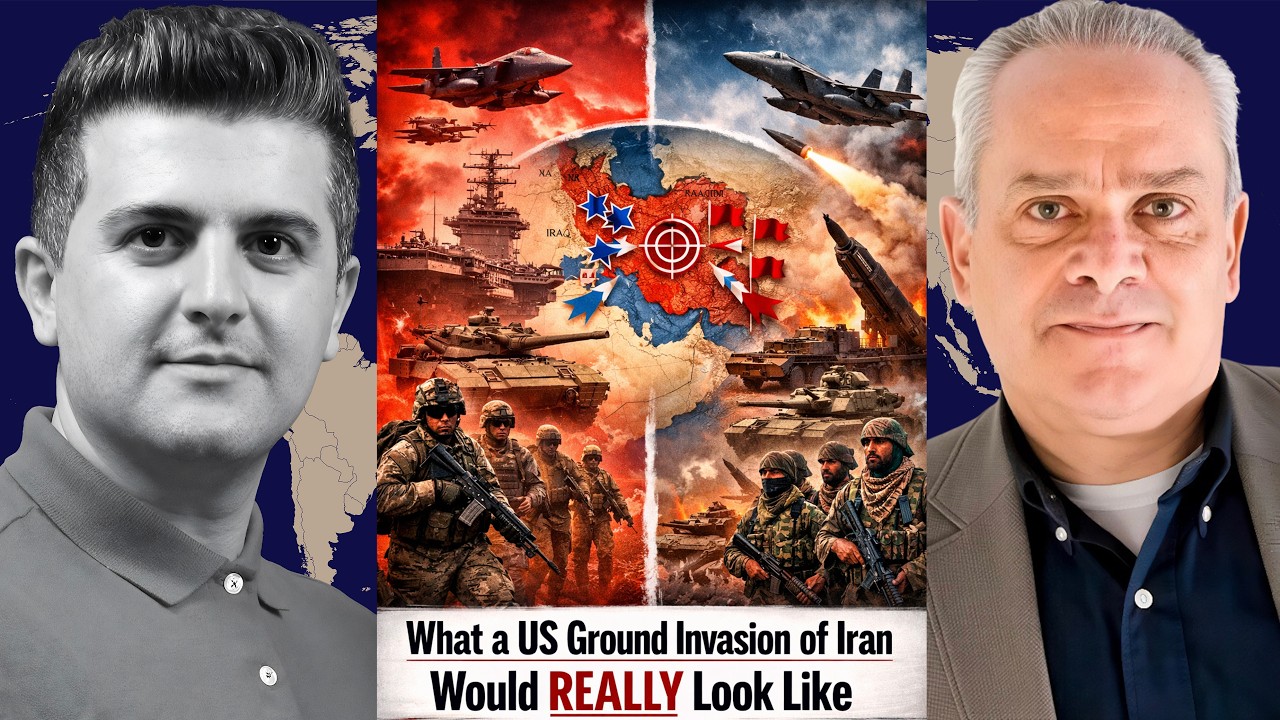
Col. Jacques Baud: What a US Ground Invasion of Iran Would REALLY Look Like
"Colonel Jacques Baud dissects the strategic futility of a US ground invasion of Iran, arguing that current troop levels are insufficient and such an action would backfire, exposing US allies and potentially leading to Iran's nuclearization."
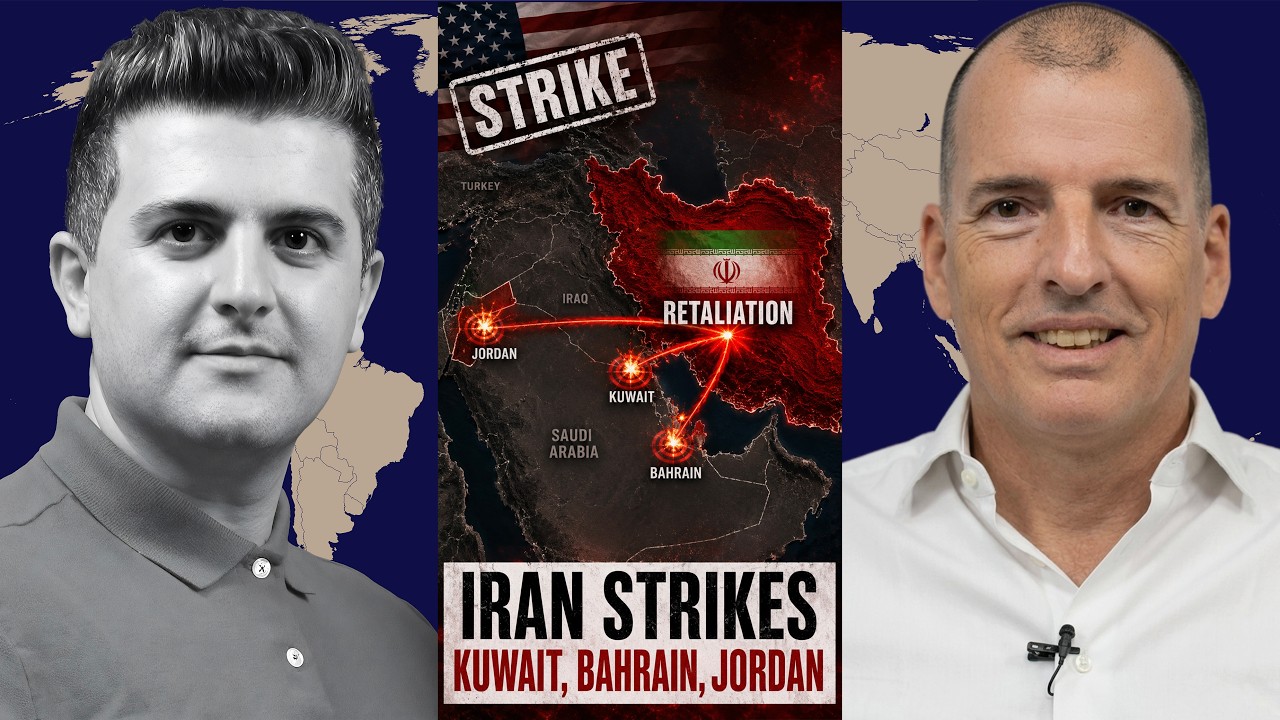
Alex Krainer: US STRIKES Iran – Iran RETALIATES Against Kuwait, Bahrain & Jordan!
"Amidst escalating US-Iran conflict and Iranian retaliation against regional US allies, this episode argues that US foreign policy is deeply controlled by an 'Anglo-Zionist conspiracy' led by the Rothschild banking dynasty, prioritizing Israeli interests over American ones."