
Nima R. Alkhorshid & Patrick Henningsen: If US-Iran Talks FAIL, China READY to Do THIS (Huge Shift)
YouTube · yzaMmOeTAVo
Quick Read
Summary
Takeaways
- ❖The Trump administration's diplomatic style, characterized by unpredictability and a disregard for established frameworks, guarantees negotiation failures.
- ❖Israel actively sabotages US-led peace negotiations in West Asia, using ceasefires as opportunities for attack and undermining bilateral frameworks.
- ❖The US is perceived as sacrificing its long-term imperial interests, including military presence, to serve Israel's objectives of regional destabilization and energy control.
- ❖China is not under illusions about US-Iran talks and is already making contingencies for their failure, including potential weapons shipments to Iran.
- ❖The current geopolitical chaos, particularly in energy markets, disproportionately benefits US oil, gas, and financial sectors.
- ❖Both Donald Trump and Volodymyr Zelensky are framed as 'reality TV actors' controlled by oligarchs and Israel, leading to significant geopolitical disasters.
Insights
1US-Iran Negotiations Predestined to Fail
The speaker predicts a 0% chance of success for US-Iran talks, citing the Trump administration's 'Polepot mentality' of discarding past agreements, its unpredictable and aggressive negotiation style, and its reliance on unqualified, unofficial envoys like Jared Kushner and Steve Witkoff. These envoys are accused of acting primarily in Israel's interest, not the US's.
Guest Patrick Henningsen states, 'I predicted 0% chance of success before this started.' He describes Trump's approach as 'year zero' and criticizes the US for sending 'unofficial figures, shadowy figures, friends or family members of the president' instead of top diplomats (, , ).
2Israel's Role in Sabotaging Regional Peace
Israel is identified as a primary structural problem guaranteeing negotiation failure. It reserves the right to undermine and sabotage any talks, often using ceasefires as opportunities for attack. This creates a 'good cop bad cop' dynamic with the US, where both entities work in concert to prevent genuine diplomatic progress.
Henningsen asserts, 'Israel reserves the right to undermine and to sabotage any negotiations at any point at any moment.' He cites Israel attacking Lebanon immediately after a ceasefire announcement (, ).
3US Foreign Policy Driven by Israeli Interests, Not US Imperial Interests
The speakers argue that Israel's influence has led the US to make decisions detrimental to its own long-term imperial interests, such as sacrificing military bases in the Persian Gulf. This is framed as the 'tail wagging the dog,' where Israel effectively commandeers the US military as its 'private mercenary force.'
Henningsen states, 'The US has arguably had joint planning operations with Israel. But we have to we have to go by the the front of house narrative because at the end of the day that's the legal definition of this war and any agreements are going to be based on that legal definition which is uh Israel started the war and the United States joined them in a preemptive war of choice.' He also mentions the US 'gave up all of their bases in the region for Israel' (, ).
4Economic Benefits of Instability for US Elites
The ongoing regional instability and energy shortages are portrayed as intentionally created or exploited to benefit specific US factions: Wall Street, big oil, big fracking, LNG, big AI, and big defense. This strategy aims to consolidate and monopolize energy markets, leading to higher prices and increased profits for these groups.
Henningsen details, 'what do all those players that I just mentioned want? They want war. They want instability. They want a choked supply of energy on the global market so they can take advantage of higher prices' (). He connects the Nordstream pipeline sabotage and Gulf war to this objective (, ).
5China's Pragmatic Contingency Planning
China is depicted as having no illusions about the success of US-Iran negotiations and is actively preparing for their failure. This includes potential weapons shipments to Iran and leveraging its strong alliances (e.g., with Pakistan) to secure its interests in a shifting global landscape.
The host mentions a CNN report about 'US intelligence indicates China is preparing weapons shipment to Iran' (). Henningsen confirms, 'China's already making contingencies. Russia's already made contingencies and I think a lot of other countries are as well' ().
6Trump Administration's Military Failures and Cover-ups
The Trump administration is accused of military incompetence, exemplified by a 'Jimmy Carter moment' – a botched special forces operation in Isvahan to 'snatch and grab enriched uranium' that resulted in significant US asset losses and a media cover-up. The Defense Secretary, Pete Hegseth, is described as unqualified and installed due to Israeli lobby influence.
Henningsen describes the Isvahan operation as a 'failed special forces operation' and a 'total failure' resulting in 'record number of aircraft and military assets' lost, which was covered up by the media (, ). He also criticizes Pete Hegseth's qualifications and confirmation (, ).
Bottom Line
The US is sacrificing decades of strategic investment and military presence in the Persian Gulf (17 bases lost in a month) for Israel's short-term objectives, a move framed as a 'historic defeat' for the American Empire.
This suggests a profound shift in US foreign policy priorities, where the interests of a key ally (Israel) override traditional US imperial strategy, potentially leading to a faster decline of US influence in the region.
Non-Western powers, particularly China and Russia, can exploit this perceived US weakness and strategic miscalculation to expand their own influence and secure resources in West Asia, accelerating a multipolar world order.
Donald Trump is compared to Volodymyr Zelensky as a 'reality TV actor' president, controlled by oligarchs and Israel, leading to 'abysmal disasters' for their respective countries.
This comparison highlights a perceived pattern of leadership where image and external control supersede competence and national interest, contributing to global instability.
This narrative could fuel anti-establishment sentiment and calls for more independent, experienced leadership, potentially opening doors for alternative political movements or figures less beholden to perceived external influences.
The Gulf monarchies, established by the British and maintained by the US for the petrodollar system, are now on 'borrowed time' due to shifting geopolitical dynamics, with Qatar already showing pragmatic shifts away from exclusive US alignment.
The stability of these regimes, crucial for global energy supply and the petrodollar, is increasingly precarious, signaling potential future upheavals in the region and challenges to the dollar's reserve status.
This creates an opportunity for non-Western powers to forge new alliances and economic relationships with Gulf states seeking to diversify their security and economic partnerships, further decentralizing global power.
Key Concepts
Year Zero Mentality
A diplomatic approach where a new administration disregards all previous agreements, traditions, and frameworks, believing it can start fresh and dictate terms without historical precedent or established trust.
Normative Power
A state's ability to shape international norms and values, fostering trust and cooperation, which is essential for successful international agreements and treaties. The US is framed as lacking this, unlike Russia and China.
Tail Wagging the Dog
A situation where a smaller or less powerful entity (Israel) dictates the actions and policies of a larger, more powerful one (the United States), often against the larger entity's own strategic interests.
Cui Bono (Who Benefits?)
A principle used to identify the true beneficiaries of a conflict or situation, often revealing underlying motives or actors not immediately apparent. Applied to the US oil/gas industry and Wall Street profiting from regional instability.
Lessons
- Recognize that official diplomatic narratives, especially from the US, may serve as cover for other strategic objectives, such as military provocations or economic manipulation.
- Analyze geopolitical events by asking 'cui bono?' (who benefits?) to identify the underlying economic and political interests driving conflicts and diplomatic stalemates.
- Monitor the actions of non-Western powers like China and Russia in West Asia, as their contingency planning for US diplomatic failures indicates a proactive approach to a changing global order.
- Be aware of the potential for 'false flag' operations or media narratives designed to blame one party for sabotaging peace talks, as seen with US naval movements in the Strait of Hormuz.
Notable Moments
The host details the specific demands from the Iranian side in negotiations: trade of oil remaining Iranian, war reparations, sanctions relief, unblocking frozen assets, and a permanent ceasefire on all fronts.
These demands highlight Iran's core grievances and objectives, providing a concrete understanding of their negotiation stance and the significant hurdles to any agreement.
Discussion of a botched US special forces operation in Isvahan, Iran, described as a 'Jimmy Carter moment' and a 'total failure' involving significant US military asset losses, which was allegedly covered up by the US media.
This event, if true, represents a major military and intelligence failure for the US, indicating a lack of operational competence and a willingness by the media to suppress embarrassing national security news, impacting public perception and accountability.
Quotes
"Israel reserves the right to undermine and to sabotage any negotiations at any point at any moment."
"Donald Trump is a terrible dealmaker. He has a string of failures longer than any president."
"The overall degradation of the Gulf benefits America, that's a zero sum policy benefits America, weakens the Gulf, weakens overall energy and that can be rebuilt later by the United States and Israel. This is what they believe and they will run future energy through Israel as the energy hub."
"The US has arguably had joint planning operations with Israel. But we have to we have to go by the the front of house narrative because at the end of the day that's the legal definition of this war and any agreements are going to be based on that legal definition which is uh Israel started the war and the United States joined them in a preemptive war of choice."
"Donald Trump is a reality TV actor that was put into the presidency controlled by oligarchs and controlled by Israel."
Q&A
Recent Questions
Related Episodes

Alex Krainer: US STRIKES Iran – Iran RETALIATES Against Kuwait, Bahrain & Jordan!
"Amidst escalating US-Iran conflict and Iranian retaliation against regional US allies, this episode argues that US foreign policy is deeply controlled by an 'Anglo-Zionist conspiracy' led by the Rothschild banking dynasty, prioritizing Israeli interests over American ones."

Patrick Henningsen: Hezbollah JUST Fired Back at Israel - Iran Vows to “Crush” All Attacks
"Patrick Henningsen argues that the US and Israel initiated an illegal war against Iran, driven by Trump's incompetence and Israeli influence, leading to an inevitable escalation with severe global economic repercussions."
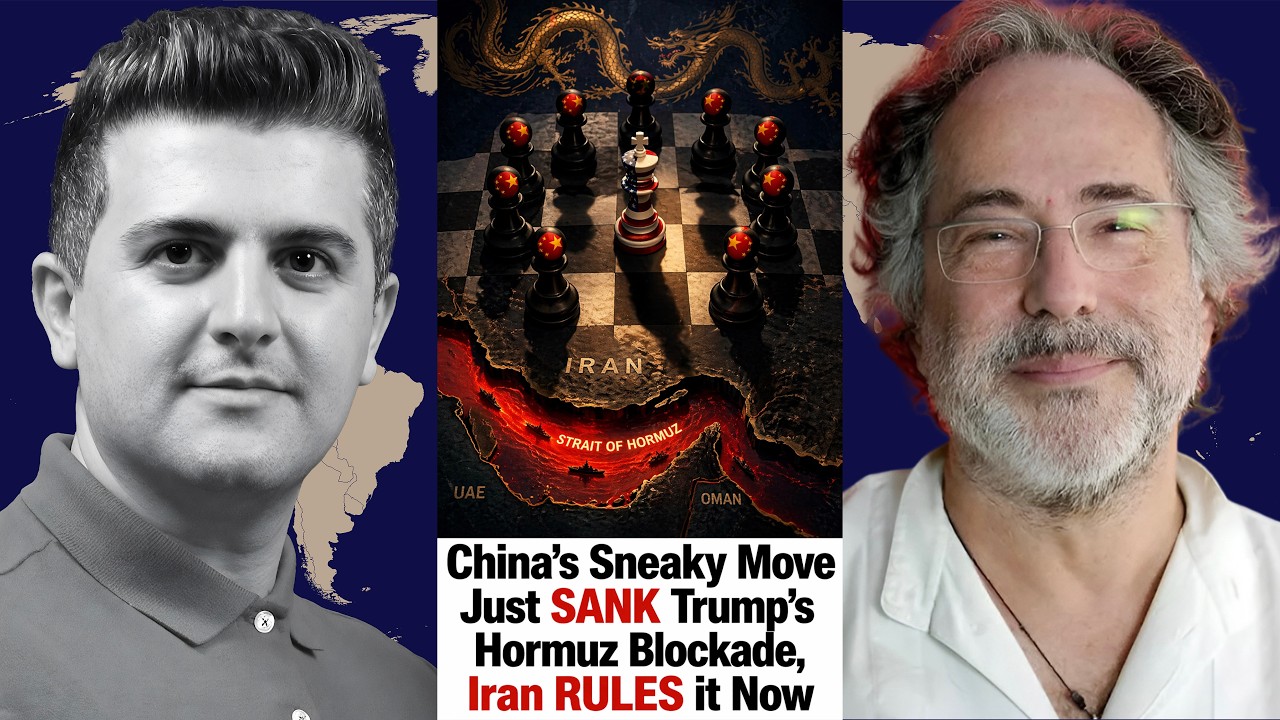
Pepe Escobar: “Total Failure”: Trump’s Blockade Just Backfired Disastrously
"Pepe Escobar argues that the US blockade against Iran, spearheaded by Donald Trump, has utterly failed and backfired, accelerating global economic chaos and challenging US geopolitical dominance."

🚨 TOTAL F*CKING CHECKMATE 😂😂😂
"The host argues that Trump's 'ceasefire' with Iran was a calculated '5D chess' move to orchestrate a global energy market reshuffle, while simultaneously lambasting 'woke' domestic policies and the 'freefall' of anti-Trump conservative figures."