
Tim Miller and Ta-Nehisi Coates Clash Over Obama’s Speech | Bulwark Podcast
YouTube · z11IP4ze7bM
Quick Read
Summary
Takeaways
- ❖Obama's unique upbringing fostered an optimism that made him underestimate the vulnerability of his achievements to destructive forces.
- ❖The Democratic Party's historical pattern involves celebrating past civil rights heroes while often marginalizing contemporary activists with similar radical stances.
- ❖Kamala Harris's campaign reportedly failed to publicly align with her private empathy on Gaza, missing a chance to build trust and potentially inspire voters.
- ❖The 'harm reduction' argument for voting, while pragmatic, can demand unacceptable moral compromises from communities directly affected by policy failures.
- ❖US foreign policy, despite its stated ideals, has a long history of 'worst impulses' that Trump merely extended, challenging the narrative of American exceptionalism.
- ❖Politicians and writers have a responsibility for clear communication; complex 'woke' language that requires extensive explanation can be counterproductive.
Insights
1Obama's Optimism and Blind Spot to Destructive Forces
Ta-Nehisi Coates argues that Barack Obama's unique background, including his white parentage and upbringing in Hawaii, allowed him to see the best in the American populace, which was crucial for him to become the first Black president. However, this optimism also created a blind spot, making it difficult for him to imagine the destructive political forces that would lead to Trump's presidency and the subsequent rollback of progress. This lack of foresight meant he didn't fully appreciate the vulnerability of the institutions and policies he built.
Coates states, 'only like Barack Obama could have been the first black president... someone who had the kind of historical background wherein they had been in intimate spaces with a white parent, white grandparents who had treated him as equal... raised in Hawaii.' He adds, 'the downside of that was I don't think he could have imagined the past 10 years.' ( - )
2Democratic Party's Historical Pattern of Co-opting and Marginalizing Activists
Coates critiques the Democratic Party's tendency to praise historical figures like Fannie Lou Hamer as heroes while simultaneously marginalizing contemporary activists who embody similar radical stances. He notes that Hamer, a champion of human rights and an early opponent of the Vietnam War, was pushed out of the Democratic frame in 1964. This pattern, Coates suggests, was repeated when the party failed to give a platform to Palestinian-American advocates at a recent convention, despite their concerns.
Coates recounts being at the 2024 convention where Fannie Lou Hamer was praised, but 'the Democratic party did not ultimately seated a segregated delegation and did not allow her integrated delegation to to be seated.' He then contrasts this with 'this group of of of Palestinian Democrats... who were not asking... for delegates to be seated... but were asking for a speaker' and hadn't had one since 1988. ( - )
3The Peril of Alienating 'Woke' Language in Politics
Both Coates and Miller agree that certain 'woke' language, while often well-intentioned, can be counterproductive in political discourse. Miller cites a politician's tweet comparing white skin to immunity from a 'racism virus' that is then spread, arguing such metaphors alienate potential allies. Coates, while defending the politician's intent to 'figure it out,' criticizes the specific phrasing of calling human beings 'diseases' and the notion that white people are 'immune' to racism's damaging effects, emphasizing that it hurts everyone. He concludes that language requiring five minutes to understand is problematic for effective communication, especially for politicians and writers.
Miller quotes a politician: 'White skin gives me and every white American immunity from the virus, but we spread it wherever we go through our words, our actions, and our systems.' Coates responds, 'Don't talk about human beings as diseases.' He later adds, 'when we use language that... takes five minutes to figure out what it's actually trying to say, we probably have a problem.' ( - , - )
4US Foreign Policy: Benevolent Hegemony vs. 'Worst Impulses'
Obama's speech frames American foreign policy as championing human rights and democracy, leading to global prosperity. Coates challenges this 'benevolent globalism' narrative, arguing that US history reveals a consistent pattern of 'worst impulses' that Trump merely extended rather than originated. He references Ben Rhodes' work, which suggests the US's self-mythology of good intentions often ignores how other nations remember its interventions and actions.
After playing Obama's clip on US foreign policy ideals, Coates states, 'the complication for that is... Trump is actually an extension of some of our worst impulses. That that actually might be the area where he's most American.' He cites Ben Rhodes' review of McNamara's biography, noting 'around the world they they remember other things' than US good intentions. ( - )
Key Concepts
The Obama Paradox
The idea that Barack Obama's unique personal history (biracial, raised in Hawaii) was essential for him to become the first Black president, as it allowed him to connect with and see the best in a broad American electorate. However, this same background also made him less able to anticipate or fully grasp the depth of racial resentment and destructive political forces that would lead to phenomena like Trump's presidency, thus limiting his strategic foresight regarding the fragility of his achievements.
Harm Reduction vs. Moral Imperative in Electoral Politics
This model describes the tension faced by voters and politicians, particularly those from marginalized communities, between choosing the 'lesser of two evils' (harm reduction) to prevent worse outcomes, and adhering to a moral imperative to stand for deeply held values, even if it means risking electoral defeat or alienating a political base. The debate questions at what point the continuous demand for harm reduction voting becomes an unsustainable burden on certain communities.
Lessons
- Challenge the 'most important election of our lifetime' narrative by questioning at what point it demands unsustainable moral compromises from marginalized communities.
- Evaluate political candidates not just on their public statements, but also on how their private convictions align with their public actions, particularly on sensitive issues.
- Prioritize clear and accessible communication in political and social discourse, avoiding jargon or metaphors that alienate potential allies and require extensive explanation.
- Recognize that while 'harm reduction' voting is a pragmatic strategy, it should not overshadow the need for a long-term vision that addresses systemic injustices and inspires genuine belief in a better political future.
- Critically examine national narratives of benevolence, especially in foreign policy, by acknowledging historical 'worst impulses' and understanding how these actions are perceived globally.
Quotes
"I don't think he could have imagined the past 10 years. I don't think that that was really possible for him."
"I just don't think there was an appreciation of how easily things can be rolled back."
"Did the past 10 years of the Republican party not happen? Is that not what Republican values are? Like, I mean, was was J6 not not that?"
"Trump is actually an extension of some of our worst impulses. That that actually might be the area where he's most American."
"There are some things worth losing for and there are some things that people will remember you differently when you lose for them."
"At what point do we stop saying to people, this is the most important election of your lifetime? And you must accept things that... you must accept the murder of your family members, the killing of your family members for the greater good."
"If you're a writer, if you're a politician, I'm sorry, it is part of your job... to explain people things to white people. It's not my total job, but that is part of my job and it's actually honorable work."
Q&A
Recent Questions
Related Episodes

Iran Deal Skepticism. Whoopi Vs Vance. Potomac Park Invasion. Racist Hurls Slurs At Black Boy.
"This episode dissects multiple instances of alleged anti-Black policies and racial injustice, from the Trump administration's legal challenges to reparations and the Iran deal, to police brutality and the erasure of Black history."
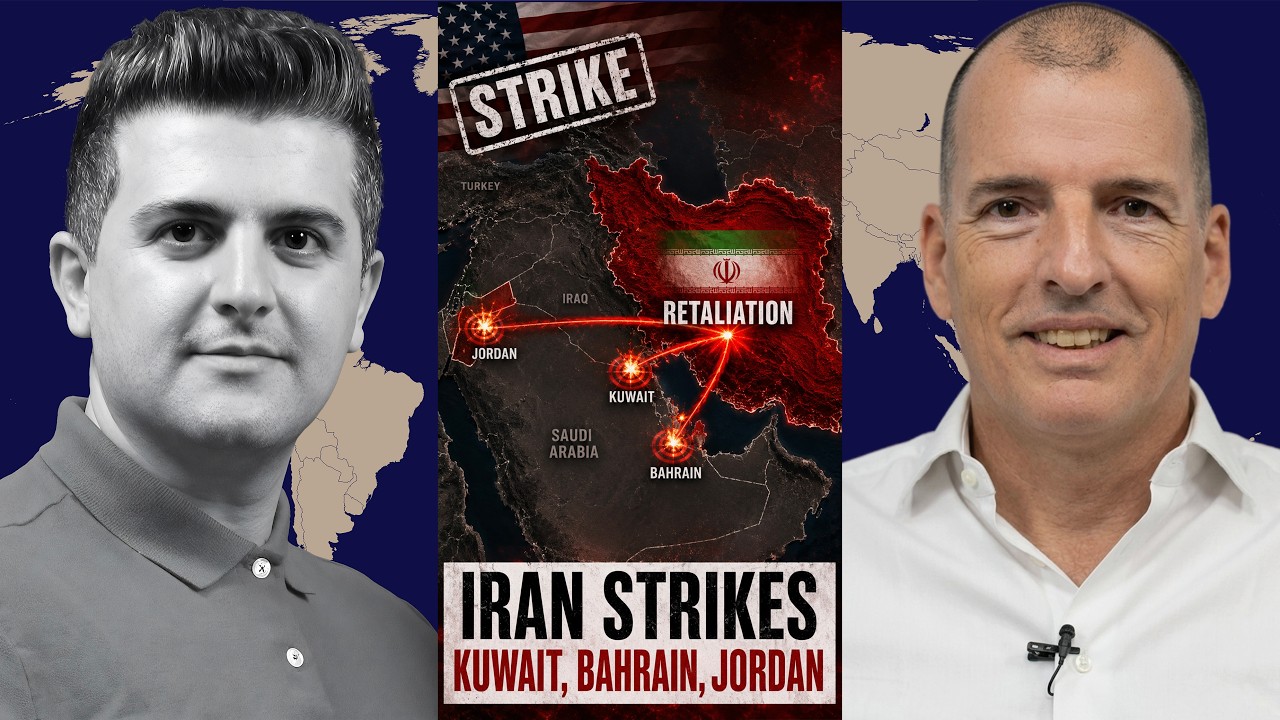
Alex Krainer: US STRIKES Iran – Iran RETALIATES Against Kuwait, Bahrain & Jordan!
"Amidst escalating US-Iran conflict and Iranian retaliation against regional US allies, this episode argues that US foreign policy is deeply controlled by an 'Anglo-Zionist conspiracy' led by the Rothschild banking dynasty, prioritizing Israeli interests over American ones."

Larry Johnson: Iran Missiles Rain Down on Northern Israel – Massive Strikes!
"Geopolitical analyst Larry Johnson details how Israel's recent strike on an 'empty building' in Beirut triggered direct Iranian missile retaliation, escalating regional tensions and jeopardizing a US-Iran peace deal brokered by Pakistan."

LIVE: Trump HIDES FROM PUBLIC as US SOLDIER KILLED!!! 6/2/2026
"The host exposes alleged government cover-ups regarding military casualties, Trump's unexplained public absence, and questionable political appointments, arguing these reflect a 'regime of loser babies' and a failing foreign policy."