
Larry Johnson: Will Trump’s Iran Port Blockade Work… or End in Total DISASTER?
YouTube · zGjabXPGUv4
Quick Read
Summary
Takeaways
- ❖The US Navy lacks the capacity to enforce an effective blockade on Iranian ports, particularly in the Strait of Hormuz.
- ❖The declared blockade is worsening global supply chain shortages and driving up oil prices, contributing to a global recession.
- ❖US negotiation efforts with Iran, led by JD Vance, were characterized by inexperience and a focus on Israeli interests, leading to failure.
- ❖Donald Trump's policy on Iran is inconsistent and driven by erratic decision-making, which the guest describes as 'mentally deranged.'
- ❖Iran maintains control over the Strait of Hormuz and has enhanced its defensive capabilities during the ceasefire, including sophisticated drones and air defense systems.
- ❖GCC countries like Bahrain and UAE are at significant risk, with some, like Qatar and Oman, already distancing themselves from the US and aligning with Iran.
- ❖European nations, the UK, and Australia have refused to support the US blockade, while Canada is pivoting its defense spending away from the US towards China.
- ❖The primary driver for a change in US policy will be domestic pressure stemming from declining public approval of Trump's handling of the conflict and rising inflation.
- ❖A potential 'exit ramp' for Trump involves accepting a modified version of the JCPOA and declaring it a 'greatest agreement ever' to prevent Iranian nukes.
Insights
1US Blockade on Iran is a 'Words-Only' Policy Lacking Enforcement Capacity
Larry Johnson asserts that Donald Trump's announced blockade of Iranian ports is not militarily feasible. The US Navy's Abraham Lincoln carrier strike group is too far away, and the few destroyers present lack the capacity for effective boarding operations on oil tankers. Iran retains control of the Strait of Hormuz, and any attempt to enforce a blockade would risk acts of war against international shipping.
The Abraham Lincoln and its carrier strike group are 700 miles out. Destroyers lack capacity for boarding teams. Iran still retains control over the strait. (, , , , )
2Blockade Worsens Global Economy and Energy Markets
The threat of a blockade, despite its ineffectiveness, has already disrupted global supply chains and significantly increased oil prices. WTI crude jumped to $112 and Brent crude to $109 shortly after the announcement, indicating a direct negative impact on the global economy and pushing it towards recession.
Trump's policy is 'worsening the global supply chain shortage,' 'worsening the oil market.' WTI crude is at $112, Brent crude at $109. 'We are now in a recession.' (, , , )
3US Negotiation Strategy was Inexperienced and Israel-Centric
The US negotiation team, led by JD Vance and 'handlers' Kushner and Witko, was unprepared and primarily focused on 'towing the Israeli line' rather than US interests. Vance's decision to walk out of negotiations was seen as foolish and played into Iran's benefit, demonstrating a lack of diplomatic acumen.
JD Vance's inexperience was on display. He was with 'handlers Kushner and Witko' to 'make sure that JD Vance towed the Israeli line.' Vance 'foolishly' walked out of negotiations. (, , , )
4Trump's Policy Inconsistency and Perceived Instability
Donald Trump's statements and policies regarding the Strait of Hormuz and Iran are contradictory and erratic, shifting from demanding it be open to then blockading it. The guest describes Trump as 'genuinely mentally deranged' and 'no longer thinking rationally,' suggesting his decisions are not based on consistent policy objectives.
Trump is 'all over the board.' 'He's genuinely mentally deranged.' 'There's no consistency at all with his policy.' 'He's no longer thinking rationally and he's entirely under the control of Israel.' (, , , , )
5Iran's Strengthened Position and Regional Leverage
Iran is comfortable with the current situation, understanding the US cannot effectively enforce a blockade. They have diversified their export routes (e.g., Chabahar port) and used the ceasefire period to upgrade their air defense systems and acquire sophisticated drones, making them more resilient to US pressure and capable of inflicting damage.
Iran is 'so much comfortable with this situation because they know that it's going to be impossible for the United States to control everything.' Iran has 'capacity to lay mines and still has drones and missiles.' They can ship out of Chabahar. Iran is 'upgrading its air defense system' and 'acquired more sophisticated drones.' (, , , , )
6Domestic US Pressure Will Drive Policy Change
External pressure from Europe or GCC countries is unlikely to alter Trump's policy. Instead, declining approval ratings for his handling of the Iran conflict (36%) and inflation (31%) within the US, coupled with the War Powers Act deadline, will compel him to change course.
CBS News poll finds approval of Trump's handling of the conflict has dropped to 36%. Ratings on handling inflation are at 31%. 'That is what will ultimately bring the change in the policy.' Congress will have to vote after 60 days under the War Powers Act. (, , , )
Bottom Line
The US blockade policy is inadvertently accelerating the pivot of traditional allies away from Washington, particularly Canada towards China and GCC states towards Iran.
This signifies a weakening of US global hegemony and the emergence of a more multipolar world order, where countries prioritize economic stability and regional alliances over traditional US security guarantees.
For non-US aligned nations, this creates opportunities to forge new trade and security partnerships, diversifying their international relations and reducing dependence on a volatile US foreign policy.
Israel's aggressive stance and alienation of regional partners like Turkey, coupled with high domestic support for eliminating Palestinians, indicates a deeply entrenched and potentially self-destructive national policy.
This suggests that even a change in Israeli leadership might not alter core policies towards its neighbors, increasing the likelihood of prolonged regional conflict and further destabilization, potentially drawing in new actors like Turkey.
Regional powers like Iran and Turkey could leverage this alienation to strengthen their own alliances and influence, presenting a united front against Israeli expansionism and US-backed policies.
Lessons
- Monitor global oil prices (WTI, Brent) as a key indicator of geopolitical stability and potential economic recession, as they are directly impacted by Middle East tensions.
- Evaluate the stability of supply chains, particularly those reliant on transit through the Strait of Hormuz, and consider diversification strategies.
- Observe the shifting alliances and diplomatic moves of GCC countries, Canada, and European nations, as they indicate a broader realignment away from US influence.
- Track US domestic approval ratings for foreign policy and economic issues, as these are identified as the primary drivers for potential shifts in US international strategy.
Quotes
"This is a words only blockade right now because Iran still retains control over the straight."
"All Donald Trump is doing is worsening the global supply chain shortage. He's worsening the oil market."
"This wasn't about preserving America's interest. This is about preserving Israel's interests."
"Trump is crazy. And I don't I don't say that as a as an ad hominem attack. I mean, he's genuinely mentally deranged."
"The more Israeli soldiers they kill, the sooner Israel will come to its senses and say, 'We got to stop this.'"
"If uh US economy looks is starting to crash and the price of oil stays stuck at triple digit and is increasing then Trump Trump will be ultimately compelled to change to change course."
"The US bullying and Trump's threats are are contributing to a large growing distaste of foreigners with for dealing with the United States."
Q&A
Recent Questions
Related Episodes
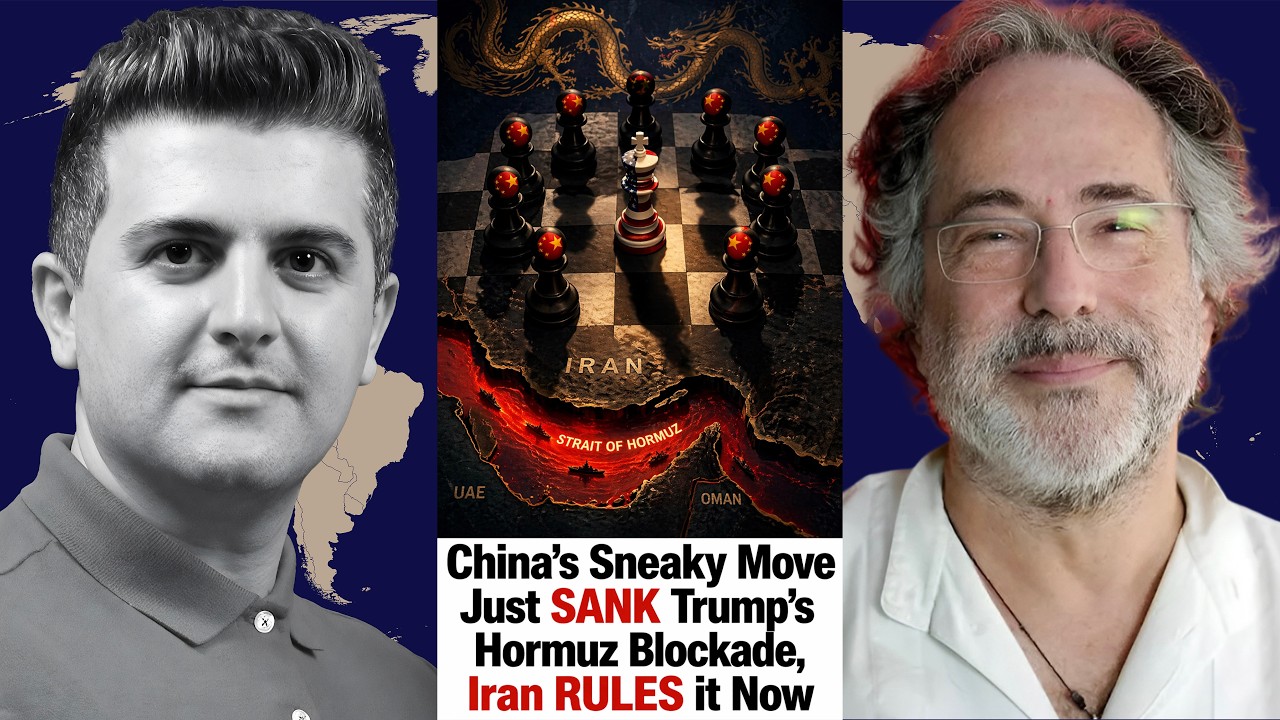
Pepe Escobar: “Total Failure”: Trump’s Blockade Just Backfired Disastrously
"Pepe Escobar argues that the US blockade against Iran, spearheaded by Donald Trump, has utterly failed and backfired, accelerating global economic chaos and challenging US geopolitical dominance."
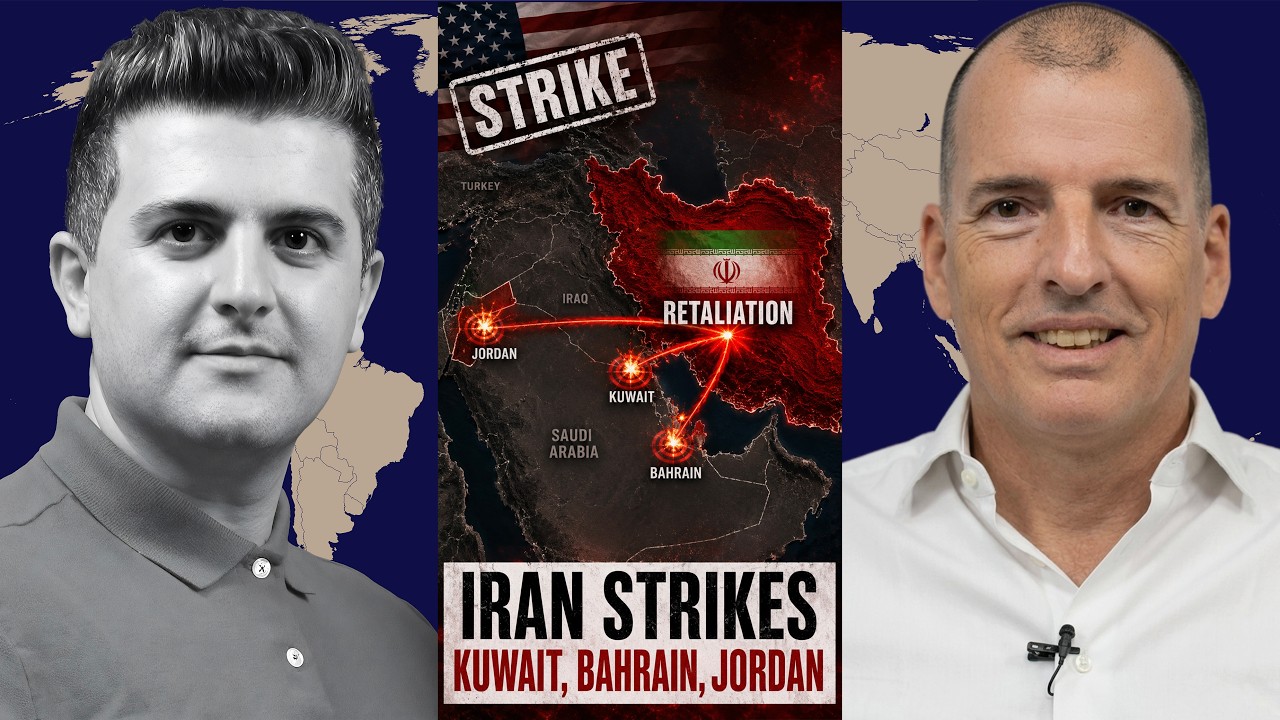
Alex Krainer: US STRIKES Iran – Iran RETALIATES Against Kuwait, Bahrain & Jordan!
"Amidst escalating US-Iran conflict and Iranian retaliation against regional US allies, this episode argues that US foreign policy is deeply controlled by an 'Anglo-Zionist conspiracy' led by the Rothschild banking dynasty, prioritizing Israeli interests over American ones."

LIVE: Trump HIDES FROM PUBLIC as US SOLDIER KILLED!!! 6/2/2026
"The host exposes alleged government cover-ups regarding military casualties, Trump's unexplained public absence, and questionable political appointments, arguing these reflect a 'regime of loser babies' and a failing foreign policy."

Patrick Henningsen: Hezbollah JUST Fired Back at Israel - Iran Vows to “Crush” All Attacks
"Patrick Henningsen argues that the US and Israel initiated an illegal war against Iran, driven by Trump's incompetence and Israeli influence, leading to an inevitable escalation with severe global economic repercussions."