Lindsey Graham: Iran is "HOLY WAR!" to Remake Middle East
YouTube · zPDS1k9lAq8
Quick Read
Summary
Takeaways
- ❖American officials and military commanders are increasingly framing the conflict with Iran in religious 'holy war' terms, mirroring rhetoric from Israeli and Iranian leaders.
- ❖Senator Lindsey Graham explicitly calls the conflict a 'religious war' that will 'set the course of the future of the Middle East for a thousand years.'
- ❖Speaker Mike Johnson describes Iran's religion as 'misguided' and Senator Cramer asserts a 'biblical responsibility' to Israel.
- ❖Reports indicate some military commanders tell troops President Trump was 'anointed by Jesus' to trigger Armageddon in Iran.
- ❖Trump's spiritual advisor, Paula White, delivered a prayer invoking 'strike and strike' for victory against enemies.
- ❖Pete Hegseth, described as 'Secretary of War' by the host, advocates for the 'miracle of the reestablishment of the temple on the Temple Mount,' a key tenet of Christian dispensationalism.
- ❖Dispensationalism interprets the modern nation of Israel as a direct fulfillment of scripture, with the rebuilding of the Third Temple ushering in the end times and Christ's return.
- ❖The Temple Institute in Jerusalem is actively preparing for the Third Temple's construction, including building artifacts to biblical specifications, which directly conflicts with the Dome of the Rock on the same site.
- ❖Donors to the Temple Institute have significant overlap with 'Trump world' and Republican party donors.
- ❖Pete Hegseth's 'American Crusade' ideology views the conflict as a necessary civilizational fight against Islam.
- ❖The assassination of the Ayatollah, a Shia religious leader, is seen as potentially creating a martyr figure and radicalizing Shia Muslims across the region, confirming their eschatological beliefs.
- ❖Extremist eschatologies, both Christian and Islamic, converge on the contested land of the Temple Mount, making the situation highly volatile and prone to rapid escalation.
Insights
1Religious Framing of US-Iran Conflict by Key Officials
Multiple high-profile American officials, including Senator Lindsey Graham, Speaker Mike Johnson, and Senator Kevin Cramer, have explicitly framed the ongoing conflict with Iran in religious terms. Graham called it a 'religious war' that would determine the Middle East's future for a thousand years. Johnson referred to Iran's 'misguided religion,' and Cramer cited a 'biblical responsibility' to Israel, influencing war powers resolutions.
Lindsey Graham: 'This is a religious war. Who wins it at the end of the day?' (); Mike Johnson: 'their misguided religion' (); Senator Kramer: 'We have a biblical responsibility to them' ()
2Military Commanders Linking Trump to Armageddon
Reports indicate that multiple US military commanders have told troops that President Trump was 'anointed by Jesus' to 'light the signal fire in Iran' to trigger Armageddon and mark Jesus's return to Earth. This suggests a direct infusion of Christian end-times prophecy into military command structures, raising concerns about the separation of church and state.
Report that 'military commanders, multiple of them are telling troops that President Trump has been anointed by Jesus to light the signal fire in Iran to Cara's Armageddon and mark his return to Earth.'
3Pete Hegseth's Advocacy for Third Temple Reconstruction
Pete Hegseth, described as 'Secretary of War' by the host, publicly expressed his hope for the 'miracle of the reestablishment of the temple on the Temple Mount.' This aligns with Christian dispensationalist beliefs that the Third Temple's rebuilding is a sign of Christ's imminent return and a key event in end-times prophecy. Hegseth also authored 'American Crusade,' advocating for a modern 'Crusades 2.0' against Islamists.
Pete Hegseth: 'there's no reason why the miracle of the reestablishment of the temple on the Temple Mount is not possible.' (); Host: 'He wrote a book in 2020 called American Crusade. Um in it he argued that quote Christian crusaders pushed back the Muslim hordes in the 12th century. American crusaders will need to muster the same courage against Islamists today.'
4The Temple Institute's Preparations for Third Temple
The Temple Institute in Jerusalem is a well-funded organization actively preparing for the rebuilding of the Third Temple. They have constructed artifacts, such as the Ark of the Covenant and Red Heifers, to exact biblical specifications. This initiative is supported by politically significant billionaires and is seen by some as a physical manifestation of end-times theology, directly challenging the existing Dome of the Rock on the Temple Mount.
Emily Jashinsky: 'the Temple Institute in Jerusalem that is preparing things like the Ark of the Covenant, uh, to exact biblical proportions, the Red Hefer to exact biblical proportions because they believe they want to reenter the temple.' (); 'It is funded by politically significant billionaires.' ()
5Assassination of Ayatollah as a Catalyst for Radicalization
The assassination of the Ayatollah, a Shia religious leader, is viewed as a counterproductive act that could transform him into a martyr figure. This event is likely to radicalize Shia Muslims in Iran and across the region, potentially confirming their eschatological beliefs about the Mahdi and the 12th Imam, and leading to increased support for groups like the IRGC.
Emily Jashinsky: 'you are not going to bomb away this theology that is now deeply ingrained by your own arguments in the IRGC... We've seen people weeping in the streets um over the death of the Ayatollah.' (); Host: 'my greatest fear is I won't get to die as a martyr. And he did right and now he did. And so now what?' ()
Key Concepts
Dispensationalism
A theological framework, particularly within evangelical Christianity, that divides history into distinct 'dispensations' or eras. A key tenet is the literal interpretation of biblical prophecies, often substituting 'Israel' in scripture for the modern political nation-state of Israel. This framework often includes the belief that the rebuilding of the Third Temple in Jerusalem is a prerequisite for the end times and the return of Christ, and that Jewish people will be protected and eventually 'ushered into the true church.'
Lessons
- Scrutinize the language used by political and military leaders regarding international conflicts, particularly for explicit religious framing, as it can indicate underlying ideological motivations that diverge from traditional geopolitical interests.
- Educate yourself on Christian dispensationalism and other eschatological beliefs to understand how they might influence policy decisions and public discourse surrounding conflicts in the Middle East.
- Recognize the potential for religious sites, like the Temple Mount, to become flashpoints for conflict when political actions or rhetoric are intertwined with deeply held religious prophecies and aspirations.
Quotes
"This is a religious war. Who wins it at the end of the day? To the radical Islamic terrorist who want to kill all the Jews because God told them to, who want to kill me because I'm an infidel, who want to purify Islam, uh, to reject moderation and make everybody a jihadist? This is a big deal. I'll deal with section 230. So what we're facing right now is a moment of decision that will set the course of the future of the Middle East for a thousand years."
"We have a biblical responsibility to them as well as an allied responsibility. Israel. We should never we should never sever that relationship."
"And there's no reason why the miracle of the reestablishment of the temple on the Temple Mount is not possible."
"If you're reading really specific things into the dispensations I mean my perspective on that is it's it's not prescribed in the gospels. It's not the way that Christ talked about the end times."
"The Temple Institute is a a really important aspect of all of this because it's this physical manifestation of the theology here."
Q&A
Recent Questions
Related Episodes

🚨 THEY F*CKED AROUND FOR THE LAST TIME 😭😭😭
"This episode unleashes a torrent of highly opinionated commentary on the US-Iran deal, Israel's role, and a scathing critique of 'leftist' policies and immigration, particularly highlighting the UK grooming gang report as evidence of Western societal decay."
BREAKING: Protests ERUPT In Iran Over IRGC Surrendering To Trump - Infighting Clashes In Tehran
"Iran is experiencing severe internal infighting and protests as hardline IRGC elements clash with government figures over a perceived 'surrender' to the US, while mainstream Western media misrepresents the situation."
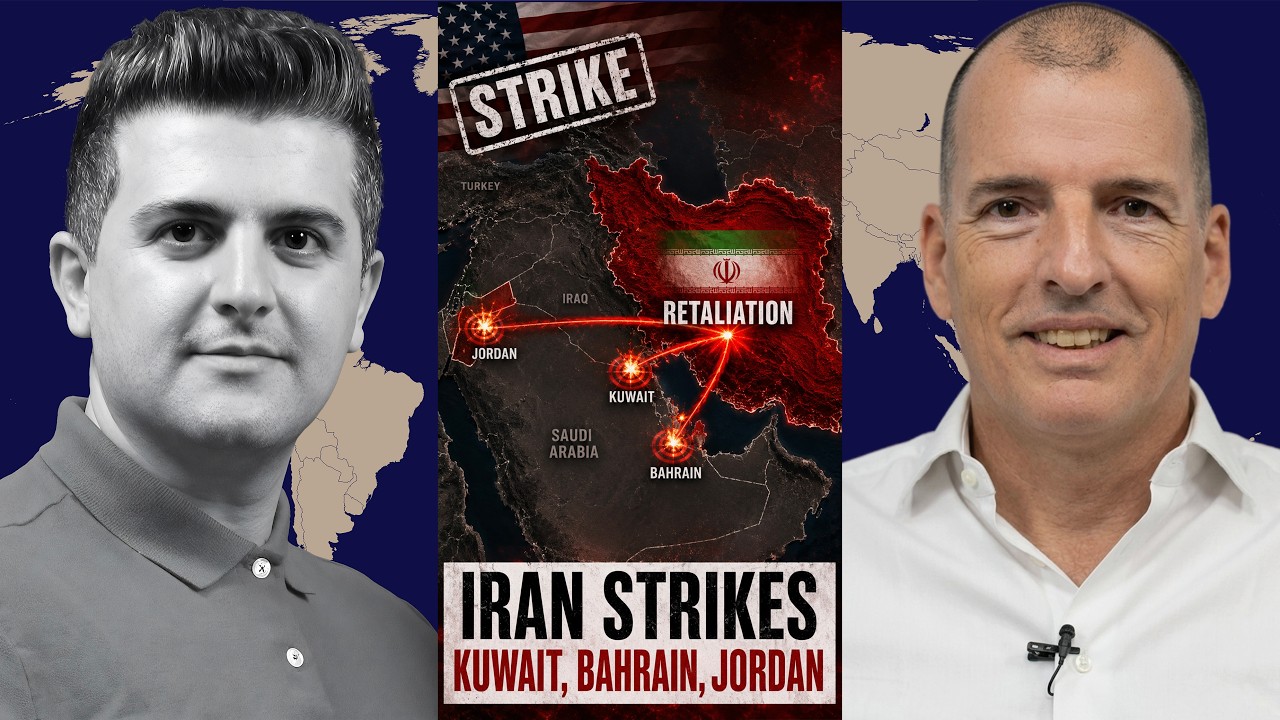
Alex Krainer: US STRIKES Iran – Iran RETALIATES Against Kuwait, Bahrain & Jordan!
"Amidst escalating US-Iran conflict and Iranian retaliation against regional US allies, this episode argues that US foreign policy is deeply controlled by an 'Anglo-Zionist conspiracy' led by the Rothschild banking dynasty, prioritizing Israeli interests over American ones."

Larry Johnson: Iran Missiles Rain Down on Northern Israel – Massive Strikes!
"Geopolitical analyst Larry Johnson details how Israel's recent strike on an 'empty building' in Beirut triggered direct Iranian missile retaliation, escalating regional tensions and jeopardizing a US-Iran peace deal brokered by Pakistan."