Anderson .Paak On Mariah Carey, Jeannie Mai, Nick Cannon, Bruno Mars, Andre 3000 & Kendrick Lamar
YouTube · zZRAvYVn-FU
Quick Read
Summary
Takeaways
- ❖Anderson .Paak made a bet with his mom to quit smoking if she quit Diet Coke, successfully stopping smoking since October.
- ❖He realized the importance of being present with his children during quarantine, leading to the inspiration for his movie 'K-Pops'.
- ❖Anderson .Paak believes artists should form a union to negotiate fair pay and retirement benefits in the streaming era, similar to actors' strikes.
- ❖He generates significant income from writing and producing his music, as well as from his dynamic live performances and DJing gigs.
- ❖Anderson .Paak emphasizes empowering trusted business partners to handle financial aspects, allowing artists to remain creatively free.
- ❖He learned the hard way about clearing samples, advising artists to handle business correctly upfront to avoid future financial repercussions.
- ❖Dr. Dre's consistent advice to .Paak is to 'do what you love' and not chase hype, which has been key to Dre's sustained success and wealth.
- ❖He views K-pop as a branch on the hip-hop family tree, acknowledging its influence but not necessarily its dominance over rap.
- ❖Anderson .Paak actively supports Ventura immigrant farmers and field workers, highlighting the importance of protecting those who contribute positively to society.
Insights
1The Imperative of Craft Mastery in the AI Era
Anderson .Paak stresses that in an era dominated by streaming and the rise of AI, the ability to physically play instruments or perform a craft without digital assistance will become increasingly valuable. He encourages artists to spend hours honing a tangible skill to differentiate themselves and maintain artistic integrity.
He states, "When you see someone in front of you pick up a pair of drumsticks and play drums in front of you, it does something to your body... it's gonna separate." He urges artists "to sit in a room and work on a craft, something that you can learn with your hands, something that you can do without any computer."
2Streaming's Impact on Music Value and Artist Compensation
.Paak critiques the current streaming model for devaluing music by removing the 'journey' of acquiring albums and for its unequal artist compensation. He advocates for artists to unite and demand better terms, drawing parallels to how actors addressed AI concerns.
He recalls the 'value' of buying CDs and knowing producers, stating, "that made music valuable and it made music like caviar." He notes that artists "willingly put our music out on streaming when it became a thing and weren't thinking about anything. Weren't thinking about the proper ways to get paid." He suggests artists should "come together and form some sort of union" like actors did.
3Balancing Career Ambition with Family Presence
Turning 40, .Paak reflects on the fleeting nature of childhood and the importance of being present for his kids. He realized during quarantine that his intense work schedule had distanced him from his children's interests, prompting a shift in his priorities to maximize quality family time.
He states, "You can't get a lot of the time back. So, my kids are still young and I'm obsessed with work. And when I could just stay still and hang with my kids and be present, that's really I think what I what I would want to do more of now that I'm 40." He discovered his son's interest in K-pop and YouTube during this period, inspiring his movie 'K-Pops'.
4Diversifying Revenue Streams Through Creative Exploration
.Paak details how his passion for music led to unexpected revenue streams beyond traditional performance, such as DJing. He emphasizes that being open to new creative ventures, even outside one's primary role, can unlock significant financial opportunities.
He recounts how DJing started as a casual hobby in Vegas and evolved into opening for Bruno Mars at major arenas, becoming "another revenue stream that I never would have thought of." He attributes this to "just wanting to do it" and being "uncomfortable and trying different things."
Bottom Line
The future value of live, tangible performance will increase as AI-generated content proliferates, creating a premium for authentic human artistry.
Artists who invest in mastering physical instruments or live performance skills will have a significant competitive advantage and higher earning potential.
Develop and promote live, unedited performance content. Create exclusive 'unplugged' experiences or educational programs focused on tangible musical skills.
The music industry's current streaming model is unsustainable for many artists, lacking fair compensation and retirement planning.
Artists need to collectively organize to demand better terms and establish industry-wide protections, similar to Hollywood unions.
Support initiatives for artist unions or collective bargaining. Explore alternative distribution and monetization models that offer better artist control and compensation.
Opportunities
Artist Union for Streaming Compensation & AI Rights
Establish a collective bargaining union for musicians to negotiate fair royalty rates from streaming platforms and establish clear guidelines and compensation for the use of artists' work in AI-generated music, including retirement plans for musicians.
Boutique Direct-to-Fan Music Experiences
Create exclusive, high-value music releases and experiences (e.g., limited edition vinyl, private concerts, interactive digital content) that bypass traditional streaming models, catering to dedicated fans willing to pay a premium for quality and direct artist support.
Hybrid Artist-Entrepreneurial Ventures
Artists should actively pursue and invest in non-music business ventures (e.g., restaurants, product lines, DJing services) that align with their brand and passions, creating diversified income streams and an 'exit' strategy from reliance on music royalties.
Lessons
- Cultivate a tangible skill: Dedicate time to mastering a musical instrument or other craft that doesn't rely on digital tools, enhancing your unique value.
- Prioritize family and relationships: Intentionally schedule and protect quality time with loved ones, recognizing its irreplaceable value over constant work.
- Diversify your income: Explore and develop multiple revenue streams beyond your primary profession, leveraging your skills and passions in new ways (e.g., DJing, entrepreneurship).
Building a Sustainable Multi-Faceted Artistic Career
Master a Core Craft: Spend countless hours honing a fundamental skill (e.g., playing an instrument, songwriting) that forms the bedrock of your artistic identity and offers tangible value.
Diversify Creatively: Explore adjacent creative fields (e.g., DJing, directing, acting) that leverage your existing talents but open new revenue streams and artistic expression.
Empower Business Partners: Delegate financial and administrative tasks to a trusted team, allowing you to maintain creative freedom while ensuring your business interests are protected.
Prioritize Personal Life: Consciously allocate time for family and self-care, recognizing that work-life balance is crucial for long-term well-being and creative inspiration.
Seek Mentorship & Collaboration: Learn from experienced individuals in your field and actively collaborate with other talented artists, fostering growth and expanding your network.
Notable Moments
Anderson .Paak's realization during quarantine about missing his children's growth and interests, leading to the creation of his movie 'K-Pops'.
This highlights a common struggle for ambitious professionals and underscores the unexpected benefits of forced pauses (like a pandemic) for personal reflection and family reconnection, which can also spark new creative projects.
The story of Andre 3000 taking multiple studio sessions without laying down a verse, only to send it months later from Italy, perfectly crafted.
This illustrates the extreme dedication to craft and the unique creative process of legendary artists, emphasizing that quality often requires patience and a non-linear approach, even when it incurs significant studio costs.
Anderson .Paak's experience almost getting booed off stage while opening for J. Cole, leading him to simplify his stage presence.
This demonstrates the importance of humility and adaptability in performance. Even successful artists face challenging audiences, and learning to adjust expectations and presentation can be crucial for connecting with a crowd.
Quotes
"You can't get a lot of the time back. So, my kids are still young and I'm obsessed with work. And when I could just stay still and hang with my kids and be present, that's really I think what I what I would want to do more of now that I'm 40 and I get 40 more years."
"I think Prince was very important because Prince knew his worth. And Prince didn't put his stuff out all willy-nilly. Didn't do YouTube stupid and do all that stuff. You couldn't get Prince to just do what you wanted to do, right?"
"Don't ask no money for me then. Don't ask me for [expletive]."
"People talk about how artists change when they start making money as a fame, but they don't ever talk about how people around them change."
"It's not about how long it take, man. is about, you know, what you actually do when you when you actually send it."
Q&A
Recent Questions
Related Episodes
If you have career regrets in 2026, watch this.
"Discover why 7 out of 10 people regret their career choices and how embracing curiosity, continuous learning, and strategic peer groups can future-proof your path against AI and burnout."
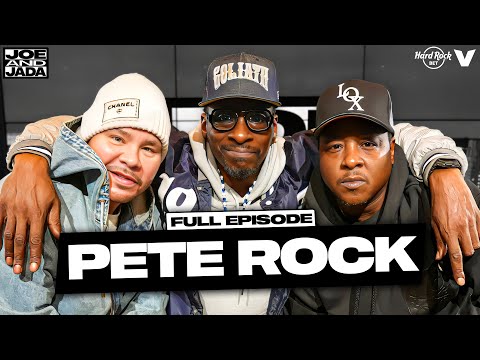
Pete Rock on CL Smooth split, Nas & 'Illmatic,' 50 Cent, GOAT hip hop producers | Fat Joe & Jadakiss
"Legendary producer Pete Rock unpacks the creative processes behind iconic tracks, the complexities of artist relationships, and the future of hip-hop, offering a rare glimpse into the industry's foundational moments."

French Montana & Max B on 'Coke Wave 3.5,' prison stories & "All The Way Up" | Fat Joe & Jadakiss
"Max B details his return to music after 17 years in prison, while French Montana and Fat Joe share candid stories about navigating the music industry, from independent success to global hits like 'Unforgettable' and 'All The Way Up'."

Hantavirus Fears. Black Men Suffering in Silence. Burnout and Screen Time Risks #SecondOpinion
"This episode delivers critical health insights on Hantavirus, men's mental health, women's burnout, and the developmental impact of screen time on children, offering actionable advice from medical experts."