
Fatty Liver Expert: Stop Eating These “Healthy” Foods - Dr David Unwin
YouTube · zc8Nh4TMB1s
Quick Read
Summary
Takeaways
- ❖Your waist circumference should be less than half your height; belly fat is a key indicator of metabolic risk.
- ❖Poorly controlled Type 2 Diabetes reduces life expectancy by 100 days per year, and a third of those with it don't know they have it.
- ❖High blood sugar rapidly damages the non-stick lining of arteries (glycocalyx) within six hours.
- ❖Insulin converts excess glucose into fat, initially in the belly and then the liver, leading to insulin resistance.
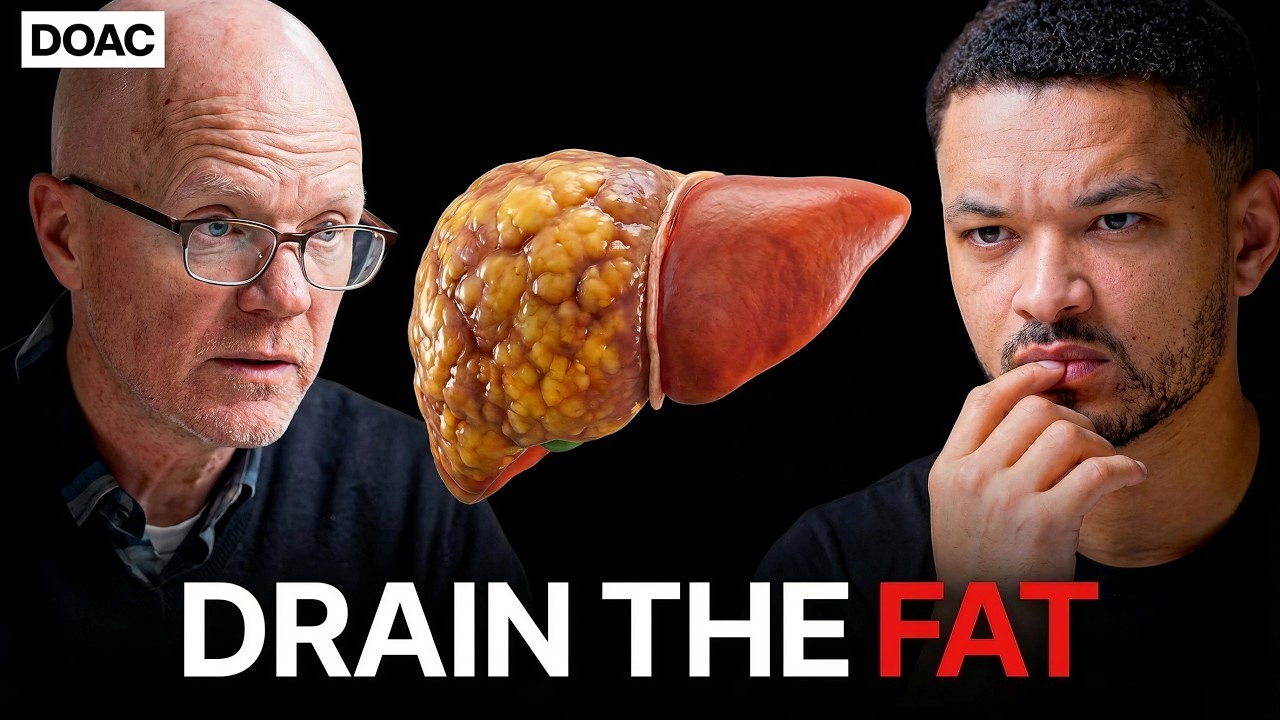
- ❖Fatty liver interferes with insulin's function, forcing the pancreas to produce more, eventually leading to its collapse and Type 2 Diabetes.
- ❖A low-carb diet can normalize blood sugar in 93% of pre-diabetics and 73% of early Type 2 Diabetics, with success rates decreasing over time.
- ❖The glycemic load, which considers portion size and nutrient density, is a better measure of a food's impact on blood sugar than the glycemic index.
- ❖Many common foods, including cornflakes (8 teaspoons), a large potato (9 teaspoons), 150g boiled white rice (10 teaspoons), and a ripe banana (6 teaspoons), contain significant sugar equivalents.
- ❖White chocolate is approximately 80% white sugar, making it highly addictive and detrimental.
- ❖The entire human blood system contains only about one teaspoon of sugar at a normal level, highlighting how easily dietary choices can overwhelm the body's regulation.
- ❖Ultra-processed food addiction affects about 14% of the population, leading intelligent individuals to make choices that harm their health, often secretly.
- ❖Diet is considered the second commonest cause of cancer after smoking, with sugary drinks and high sugar diets strongly linked to increased cancer risk and progression.
- ❖Health span (years lived in good health) is declining in the UK and US, with people spending up to 23 years at the end of their lives in poor health.
- ❖Every taxpayer in England pays an extra £7,000 annually due to the consequences of ultra-processed food, primarily from lost tax revenue due to illness.
Insights
1Hidden Sugar in 'Healthy' Staples Drives Metabolic Disease
Many commonly perceived healthy foods contain surprisingly high amounts of sugar equivalents, often exceeding that of a chocolate bar. For example, a bowl of cornflakes contains 8 teaspoons of sugar, a large potato 9 teaspoons, 150 grams of boiled white rice 10 teaspoons, and a ripe banana 6 teaspoons. This hidden sugar, once digested, spikes blood glucose, leading to insulin resistance and fatty liver disease.
Dr. Unwin's 'teaspoon of sugar equivalent' system, derived from glycemic load calculations, demonstrates these figures. He cites his clinical practice and the widespread adoption of these infographics globally.
2The Progression from Insulin Resistance to Type 2 Diabetes
Consuming more carbohydrates than the body needs for immediate energy causes insulin to convert the excess into fat, initially stored around the belly and then in the liver. This fatty liver interferes with insulin's effectiveness (insulin resistance), forcing the pancreas to produce even more insulin. Over time, the pancreas becomes overworked and also accumulates fat, leading to a collapse in its ability to produce sufficient insulin, culminating in Type 2 Diabetes.
Dr. Unwin's personal experience with a growing 'dad bod' and fatty liver, supported by visual aids of healthy vs. fatty livers, and referencing Professor Roy Taylor's work on the 'long silent scream from the liver'.
3Low-Carb Diet Effectively Reverses Pre-Diabetes and Early Type 2 Diabetes
Clinical data from Dr. Unwin's practice shows remarkable success rates in normalizing blood sugar through a low-carbohydrate diet. 93% of patients with pre-diabetes achieved normal blood sugar, and 73% of patients with early Type 2 Diabetes (diagnosed within 5 years) also achieved remission. However, the effectiveness significantly decreases with longer disease duration, dropping to 50% after five years.
Dr. Unwin's 13 years of patient data from his practice north of Liverpool, where he monitored hundreds of patients on a low-carb regimen.
4Ultra-Processed Food Addiction is a Significant and Underestimated Problem
Approximately 14% of the population experiences ultra-processed food addiction, characterized by intelligent individuals repeatedly consuming foods they know are harmful, often in secret. This addiction is comparable to substance abuse, leading to deceit, shame, and severe health consequences, making it incredibly difficult for individuals to control their eating habits without targeted support.
Dr. Unwin's wife, Jen, a clinical health psychologist, recognized her own ultra-processed food addiction. He shares a powerful patient story of a man with severe Type 2 Diabetes and knee problems who would eat bread from the bin, even after it was sprayed with detergent or bleach, highlighting the extreme nature of the addiction.
5Declining Health Span and Economic Burden of Poor Diet
Despite rising overall life expectancy, the 'health span' (years lived in good health) is actively declining in countries like the UK and US. In the UK, healthy life expectancy has fallen by roughly 2 years over the last decade, meaning people spend up to 23 years at the end of their lives in poor health. This poor metabolic health also imposes a massive economic cost; every taxpayer in England pays an extra £7,000 annually due to the consequences of ultra-processed food, largely from lost tax revenue due to illness and inability to work.
UK government figures, ONS and Health Foundation data (2024-2026), and US health span statistics, which show the largest health span to lifespan gap on Earth.
Bottom Line
The normalization of conditions like the 'dad bod' masks a serious metabolic health crisis, leading to widespread ignorance about underlying diseases like Type 2 Diabetes, which often go undiagnosed until advanced stages.
This societal acceptance prevents early intervention, allowing preventable diseases to progress and cause significant loss of life expectancy and quality of life.
Public health campaigns need to reframe 'normal' body types and educate on early signs of metabolic dysfunction, promoting proactive health management rather than reactive treatment.
The current medical system's incentive structures (e.g., doctors being paid for prescribing metformin) can inadvertently discourage lifestyle-based interventions, even when they are more effective.
This creates a systemic barrier to adopting and promoting preventative and reversal strategies for chronic diseases, perpetuating reliance on pharmaceuticals.
Healthcare systems should realign incentives to reward successful lifestyle interventions and disease remission, fostering a more holistic and patient-centered approach to chronic disease management.
The lack of fundamental nutrition education, even among highly successful and intelligent individuals, highlights a critical gap in public knowledge that is exploited by food marketing.
This widespread ignorance leads to poor dietary choices, contributing to the global health crisis and making individuals susceptible to misleading 'healthy' food claims.
Integrate comprehensive, practical nutrition education into school curricula and public health initiatives, focusing on macronutrients, glycemic load, and identifying hidden sugars, to empower informed food choices from a young age.
Opportunities
Affordable, Rapid Health Screening Centers
Establish accessible health screening centers (like Nico Health) that offer comprehensive body scans and blood tests with immediate results and actionable insights for a low cost. This democratizes health data and empowers individuals to understand and act on their health status quickly.
Personalized Continuous Glucose Monitoring (CGM) Platforms
Develop user-friendly platforms that integrate CGM data with personalized dietary advice and behavioral coaching. This allows individuals to experiment with different foods, see their real-time blood sugar responses, and receive tailored guidance to optimize their diet, especially for those with or at risk of insulin resistance.
AI-Powered Content Creation for Personal Branding
Create AI tools that analyze a user's social media history, tone, and best-performing posts to generate content ideas and drafts. This helps individuals overcome psychological barriers to posting and consistently build their personal brand, leveraging AI to streamline content creation.
Key Concepts
Teaspoon of Sugar Equivalent System
A simplified method to visualize the glycemic load of foods by converting their carbohydrate content into the equivalent number of 4-gram teaspoons of sugar. This helps people of all ages quickly understand the impact of their dietary choices on blood sugar, making complex nutritional information accessible and actionable.
GRIN Model for Behavior Change
A psychological framework for motivating health behavior change, developed by Dr. Unwin's wife, Jen. It involves identifying specific Goals (G) for a better future, recognizing personal Resources (R) and past successes, taking small Incremental (I) steps, and Noticing (N) and reflecting on positive changes to build momentum and self-esteem. This model emphasizes intrinsic motivation over external blame or policing.
Glucose Molecules Holding Hands
A metaphor to explain how starchy carbohydrates (like bread or rice) are essentially glucose molecules linked together. Digestion breaks these 'hands,' releasing free sugar (glucose) into the bloodstream, even if the food doesn't taste sweet. This helps people understand that all carbohydrates, not just overtly sweet foods, contribute to blood sugar levels.
Lessons
- Measure your waist circumference: Ensure it's less than half your height. Use a piece of string to check if the length of your height, folded in half, goes around the fattest part of your belly. This is a simple, free indicator of metabolic health.
- Prioritize protein and green vegetables in your meals: Base your diet on protein (chicken, eggs, etc.) and abundant green vegetables. Enhance flavor with healthy fats like full-fat mayo, butter, or olive oil, avoiding sugary sauces like barbecue sauce.
- Be vigilant about hidden sugars and carbohydrates: Read food labels carefully. Look at the total carbohydrate content, not just 'added sugar,' remembering that every 4 grams of carbohydrate is roughly equivalent to a teaspoon of sugar. Avoid 'Russian roulette food out of packets' and be suspicious of products with many ingredients or preservatives.
- Consider a Continuous Glucose Monitor (CGM): Use a CGM to understand how different foods affect your individual blood sugar levels in real-time. This personalized feedback can reveal hidden sugars and help you make informed dietary adjustments.
- Apply the GRIN model for behavior change: Define specific health Goals (G), identify your personal Resources (R) and past successes, take small Incremental (I) steps, and Notice (N) and reflect on the positive changes to build momentum and self-esteem. Be honest with yourself about any ultra-processed food addictions and seek gentle support from loved ones.
The GRIN Model for Sustainable Health Behavior Change
Define Your Goals (G): Clearly articulate your specific health goals and what a successful future looks like. Make it personal and detailed (e.g., 'I want to be able to run up stairs without getting out of breath like my dad, so I can enjoy activities with my family as I age').
Identify Your Resources (R): Reflect on your strengths, past successes, and available support. This includes your intelligence, determination, social networks (like a fitness pact), and any knowledge you've gained. Recognize that you already possess valuable internal and external resources.
Take Incremental Steps (I): Break down your goals into small, realistic, and achievable actions. Focus on consistency over perfection (e.g., 'I will exercise for at least 15 minutes every day' rather than 'I will go to the gym for an hour daily'). Reduce the size of success to maintain momentum.
Notice and Reflect (N): Pay attention to and acknowledge the positive changes and benefits you experience from your efforts. This includes emotional well-being, increased energy, improved self-esteem, and physical improvements. This positive feedback loop reinforces your new behaviors and motivation, making the changes sustainable.
Notable Moments
Dr. Unwin's epiphany with 'Mrs. Jones,' a patient who independently reversed her Type 2 Diabetes by cutting out bread and cereal, exposing the doctor's 25 years of flawed conventional advice.
This moment shattered Dr. Unwin's ingrained medical beliefs, leading him to question established guidelines and embark on a journey to understand and implement low-carb interventions, fundamentally changing his practice and impacting thousands of patients.
The patient addicted to bread, whose wife resorted to spraying detergent and then bleach on bread in the bin to prevent him from eating it, highlighting the extreme nature of ultra-processed food addiction.
This harrowing story vividly illustrates the powerful, often hidden, addictive potential of certain foods, demonstrating that for some, moderation is not possible, and abstinence, supported by tools like CGMs and GLP-1 drugs, is necessary for recovery.
The 'cow story,' where a farmer required magnesium supplements for his cows to prevent them from dying of 'staggers' due to magnesium-deficient grass, mirroring a patient's unexplained fitting due to magnesium deficiency.
This anecdote powerfully conveys the widespread issue of nutrient depletion in modern food systems (specifically magnesium deficiency) and its direct impact on health, both in animals and humans, emphasizing the potential need for supplementation even with a 'real food' diet.
Quotes
"Every year that you have poorly controlled Type 2 Diabetes, you're losing 100 days of life."
"Insulin, the hormone insulin produced by your pancreas gland, it pushes the sugar and it pushes it out of the bloodstream inside cells where it can be used for energy for you to run around. But what if you take in more carbohydrate than you need to run around? Well, then that sugar is turned to fat inside cells because it's safer for you to turn that sugar into fat than it is is to have it damaging your arteries."
"When you do my blood tests, you will find that my blood glucose is completely normal despite not taking your metformin. And she said, 'I'm wondering if you're actually qualified as a doctor because in the last 10 years, did you ever once tell me that bread was sugar or breakfast cereals were sugar?'"
"If you keep giving the same advice to people and it doesn't work, shouldn't I have questioned? But isn't that happening in society overall? How are we doing? How are we doing with health? How's it going? It's a disaster, isn't it? So we need to do something different."
"If you police somebody you love, the result is deceit."
"I'm not saying all cancer is linked to what we eat because that's not the case. But I'm I'm imagining like the worst diagnosis I could ever be given and the doctor telling me that my lifestyle choices contributed to that over the last 5, 10, 15 years. And in that moment, is there any sugary drink that is worth it?"
Q&A
Recent Questions
Related Episodes

Joe Rogan Experience #2450 - Tommy Wood
"Dr. Tommy Wood reveals how lifestyle choices, consistent mental and physical stimulation, and strategic recovery can prevent dementia, enhance cognitive function, and future-proof your brain at any age."
Insulin Expert: How To 'Drain' Your Liver of Fat (Do This!)
"A leading metabolic scientist explains how to leverage insulin and ketones to achieve effortless and sustainable weight loss, improve brain and heart health, and navigate common dietary myths."

Women’s Fitness Expert: What You NEED To Know About Dieting & Exercise | Dr. Stephanie Estima
"Dr. Stephanie Estima debunks common women's fitness myths, advocating for strength and muscle gain over the pursuit of skinny, and tailoring exercise and nutrition to female anatomy and hormonal needs."

Change Your Body at Any Age: The Diet & Exercise Plan For a Longer Life
"Dr. Rhonda Patrick reveals how just 10 minutes of daily vigorous exercise and a targeted nutrition strategy can dramatically extend lifespan and improve health, debunking common health myths."