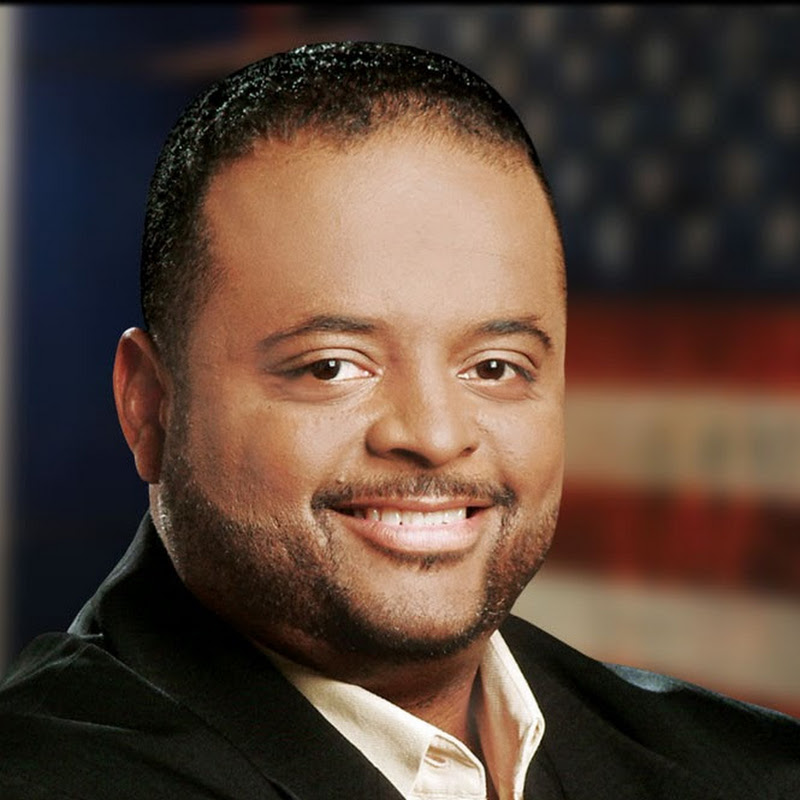
Capital Prep Middletown Townhall | #RolandMartinUnfiltered
YouTube · zrU0jwSKS1E
Quick Read
Summary
Takeaways
- ❖Capital Prep's Bridgeport campus is the #1 public high school in Connecticut for college preparation, serving predominantly Black and Latin students, despite being the lowest-funded.
- ❖Middletown's Black and Latino students have significantly lower ELA and Math proficiency rates and SAT scores, leading to vastly fewer college options compared to white students.
- ❖State Senator Matt Leser blocked $4.5 million in funding for a new Capital Prep Middletown school, an action attributed to influence from teachers' unions.
- ❖The state's actions are being challenged in a lawsuit, arguing a violation of charter school law which mandates the State Board of Education to determine funding priority based on merit.
- ❖Community and faith leaders are mobilizing to demand accountability from elected officials, emphasizing the need to leverage voting power to support educational choice and equity.
Insights
1Capital Prep's Proven Success and Efficiency
Capital Prep's Bridgeport campus is the number one public high school in Connecticut for college preparation, consistently sending 100% of its graduates to four-year colleges. Notably, it achieves this while being the lowest-funded high school in the state, receiving less than half the per-student funding of other districts like Bridgeport and Middletown. This success is attributed to replicating models from wealthy private schools, setting high expectations (college is assumed), and having dedicated 'illuminators' (teachers) who work longer hours, focusing on student outcomes over employee benefits.
For 21 years, we've sent 100% of our graduates on to four-year colleges every single year. We're also the lowest funded high school in the entire state. We get less than half of what they get and we smoke them. We looked at what the wealthy largely white private schools did. We literally replicated it down to its core. Not one child in that school was asked if they were going to college. It was assumed upon entry that they were going to college.
2Dire Educational Disparities in Middletown
Data reveals a severe academic apartheid in Middletown. Black and Latino students consistently underperform their white peers. The average achievement gap in ELA is 32 points for Black students and 28 points for Hispanic students, and in Math, it's 30 points and 27 points, respectively. This translates to significantly limited college options: white students average 621 college options based on SAT scores, while Black students have only 78 and Hispanic students 94, often in out-of-state institutions.
If you took the African-American children in Middletown and they were their own district, they'd be one of the lowest performing districts in the entire state of Connecticut. On average in ELA that's 32 points difference in terms of percent proficient percentage and in math it's 30%. White students have 621 college options, Hispanic college options 94, Black college options 78.
3Political Obstruction by State Senator Matt Leser and Teachers' Unions
Despite Capital Prep Middletown being ranked number one among six applicants and having widespread community support (over 500 people attended a town hall), State Senator Matt Leser, allegedly influenced by teachers' unions, removed $4.5 million allocated for the school from the state budget. This action is seen as illegal and punitive, directly undermining the will of the people and denying children access to a high-quality education.
We were out of six applicants, we were number one. State senator, who is deeply connected to the teachers union and the teachers union president, who's also a state senator, decided that they were going to take the money out of the budget for the school. That's an illegal act and that's why we're suing the state.
4Legal Basis of the Lawsuit Against the State
The lawsuit against the state is based on General Statute 10-66E of Connecticut's charter school law. This statute dictates that if multiple charter schools are approved and awaiting funding, the State Board of Education 'shall determine' which school is funded first, typically based on merit (highest score on the application). By allowing state legislators to remove funding for the top-ranked school, the State Board of Education is perceived to have broken the law.
The charter school law in Connecticut says that the state the general assembly may appropriate funds to the state board of education for the purposes of granting charter schools pursuant to section 10-66E. If in a fiscal year more than one charter school has been approved and is awaiting funding, then the state board of education shall determine which school is funded first. We won. We got the highest score.
5Call for Aggressive Community Mobilization and Political Accountability
Speakers emphasize that the fight for educational equity requires sustained and aggressive community mobilization. Faith leaders commit to using their pulpits to inform congregants and pressure politicians. The strategy involves demanding clear stances from all candidates on the Capital Prep issue, leveraging voting power to remove unsupportive officials, and engaging young adults and children in advocacy to force accountability.
We need to properly organize and mobilize our community to make it clear to those elected officials... that if you don't do right by us, then we will do what's necessary to take you out at the ballot box. If a person is unwilling to support this school, they cannot come to your church.
Bottom Line
The true measure of an 'ally' in politics is their action when their interests conflict with the community's demands, especially for marginalized groups. Many politicians claim to support civil rights but obstruct educational progress for Black and Latino children.
This highlights a critical disconnect between stated political values and actual policy decisions, suggesting that 'civil rights' can be selectively applied or performative if it doesn't challenge established power structures like teachers' unions.
Communities can expose this hypocrisy by forcing politicians to take clear, public stances on specific, impactful issues like school choice, using their electoral power to remove those who obstruct progress.
Educational 'apartheid' exists in seemingly progressive states like Connecticut, where the achievement gap between white and Black/Latino students is among the largest in the nation, despite perceptions of racial equality.
This challenges the narrative that racial educational disparities are confined to specific regions or are solely a result of underfunding, pointing instead to systemic issues and potentially intentional obstruction even in 'blue' states.
Advocates can leverage this data to dismantle complacent attitudes and rally broader support, including from white allies, by demonstrating that educational inequity is a statewide or national problem, not just a localized one.
The historical fervor for education among formerly enslaved African Americans, who often negotiated for schools on plantations, provides a powerful precedent for modern-day Black communities demanding control over their children's education.
This historical context reframes the current fight for charter schools as a continuation of a long-standing struggle for self-determination and educational liberation, rather than just a contemporary policy debate.
Community leaders can draw on this rich history to inspire and empower current generations, fostering a 'religious fervor' for education and political action, reminding them of the deep roots of their fight.
Opportunities
Replicable High-Performance, Low-Cost School Model
Capital Prep's model demonstrates that elite educational outcomes can be achieved with significantly lower per-student funding by replicating the core strategies of wealthy private schools (e.g., academic advisors, sports requirements, high expectations) and fostering a dedicated, mission-driven staff, rather than relying on high expenditure or small class sizes.
Independent Black-Owned Media Network for Community Mobilization
The Black Star Network exemplifies a business model where independent, black-owned media directly addresses community-specific issues, provides platforms for local voices, and mobilizes audiences for political action, without needing permission from mainstream corporate media. This model emphasizes direct audience support over corporate advertisers.
Lessons
- Mobilize community members, especially parents and young adults, to demand accountability from elected officials regarding educational policies and funding.
- Leverage voting power in primary and general elections to remove politicians who obstruct educational progress for children, regardless of their stated political alignment.
- Demand that all candidates for public office take a clear, public stance on supporting high-performing educational options like Capital Prep, making it a non-negotiable issue for community support.
Community Mobilization for Educational Equity
Gather and disseminate data on local educational disparities to inform and galvanize the community, emphasizing the long-term consequences of inaction.
Organize faith leaders and community organizations to use their platforms to advocate for specific educational policies and hold politicians accountable.
Demand public commitments from all political candidates on key educational issues, making support for proven, high-performing schools a prerequisite for community endorsement and votes.
Notable Moments
Dr. Steve Perry's personal story of growing up in Middletown's housing projects and overcoming remedial classes due to community support, inspiring him to create Capital Prep.
This personal narrative grounds the mission of Capital Prep in lived experience and highlights the transformative power of belief and opportunity for children from disadvantaged backgrounds.
The detailed presentation of educational data by Richard Begansky Jr., showing stark achievement gaps and limited college options for Black and Latino students in Middletown.
This data provides concrete evidence of the 'academic apartheid' and the dire need for intervention, counteracting vague claims and underscoring the urgency of the situation.
Roland Martin's direct challenge to State Senator Matt Leser's credibility, contrasting his public praise for a civil rights law with his alleged obstruction of educational advancement in his district.
This moment exposes potential political hypocrisy and emphasizes that true civil rights advocacy must include supporting tangible educational opportunities, not just symbolic gestures.
Quotes
"If it works, I support it. But if it doesn't work, then we should not be continuing doing the same thing over and over and over again."
"If you teach him to read, he will be of no use to us. You can't enslave a person who knows their humanity."
"The teachers union has zero interest in putting children first. They just don't have any. And they use children as shields in order to get more money for systems."
"I don't listen to what you say. I watch what you do."
"You still got to be twice as good. It's not enough for you to be the best. You got to be twice as good because somebody can come behind you and do dirt."
"If you are blocking the educational advancement of black and Latino children, you are no different than Jim Clark in Mississippi. You're no different than Bull Connor in Alabama. The only difference is you have a smile on your face."
Q&A
Recent Questions
Related Episodes

Colleges Cut DEI Ties. Supreme Court Blocks Trump Tariffs. Roy Cooper Senate Bid
"Roland Martin and guests detail the ongoing attacks on DEI initiatives in universities, the Supreme Court's ruling against Trump's tariffs, and the enduring legacy of Reverend Jesse Jackson Sr., emphasizing the need for Black community mobilization and economic empowerment."

SAVE Act Vote Threatens Voting Rights. Bondi Deflects on Epstein. Black Unemployment Still Higher
"This episode exposes Republican efforts to suppress votes via the SAVE Act, scrutinizes Attorney General Pam Bondi's evasive testimony on Epstein and DOJ corruption, and advocates for a strategic, localized voter mobilization strategy within Black communities."

NC Early Voting Push. Cancer Alley Win. NFL Shuts Out Black Coaches.Trump Nominee’s “White Identity”
"Roland Martin Unfiltered dissects systemic racism in politics, sports, and environmental justice, revealing how Black communities are fighting back against gerrymandering, corporate exploitation, and hiring discrimination."

LIVE: Trump SCANDAL ERUPTS on Capitol Hill…
"Donald Trump's alleged IRS settlement creates a $1.8 billion fund for January 6 rioters and grants his family audit immunity, while his extensive stock trading raises corruption concerns, and Maine Senate candidate Graham Platner outlines an unconventional, community-driven campaign against Susan Collins."