'Debate Me on IRANIAN TV!' Iran War Debate Feat Mohammad Marandi
YouTube · 0wdtljAyOi4
Quick Read
Summary
Takeaways
- ❖John Bolton argues that regime change in Iran is the only effective solution to its nuclear and terrorist threats, asserting the regime is at its weakest point since 1979.
- ❖Piers Morgan and Senator Mark Warner criticize the Trump administration's shifting justifications for the war and the apparent lack of a comprehensive plan for post-regime change stability, drawing parallels to the Iraq War.
- ❖Matt Tardio, a US Special Forces veteran, details the military effectiveness of US/Israeli strikes against Iranian infrastructure and IRGC capabilities, while acknowledging Iran's underground defenses.
- ❖Aaron Maté and Professor Mohammad Marandi contend that the US and Israel have fabricated pretexts for war, citing historical US interference in Iran and accusing them of illegal aggression and civilian casualties.
- ❖Emily Schrader defends US/Israeli actions as defensive measures against Iran's expansionist ideology and sponsorship of regional terror proxies like Hezbollah, Hamas, and the Houthis.
- ❖Senator Warner highlights the lack of congressional authorization for the conflict and expresses concern about potential US obligations if Iranian citizens rise up in response to regime change efforts.
- ❖Professor Marandi claims widespread public support for the Iranian regime and accuses Western media of propaganda, while Piers Morgan challenges him to publicly criticize his own government on air.
Insights
1Regime Change as the Sole Objective for US National Security
John Bolton asserts that Iran's nuclear and terrorist threats are inherent to its regime, making behavioral change impossible. He states that the objective of US actions, whether officially stated or not, is regime change, viewing the current Iranian regime as being at its weakest point since 1979 due to economic policies, youth discontent, women's protests, and ethnic group dissatisfaction. Bolton believes that degrading state power instruments will lead to a serious crisis and fragmentation at the top, allowing opposition elements to bring down the government.
Bolton: 'The only alternative is regime change, which is what the objective is, whether the White House says it or not.' () 'The regime is at the weakest point it's been since it took power in 1979.' ()
2Skepticism on War Objectives and Post-Conflict Planning
Piers Morgan and Senator Mark Warner repeatedly question the clarity and consistency of the US administration's war objectives, noting shifting justifications from nuclear weapons and ballistic missiles to naval capabilities and ultimately regime change. Both express significant concern about the absence of a concrete plan for the aftermath of regime change, drawing parallels to the chaotic outcomes of the Iraq War and the potential for widespread civil war in a country of 90 million people with diverse factions.
Morgan: 'Is the aim to bully the current regime into compliance? Or is it to change the regime altogether? ... All of those questions remain unanswered.' () Warner: 'If the president wants to make a war choice... he needs to come to the Congress and the American public and make a case. So far we've had three or four different cases made and I think most of the explanations have fallen short.' ()
3Military Assessment of US/Israeli Strikes and Iranian Defenses
Matt Tardio, a US Special Forces veteran, assesses the war as 'going pretty well' for the US and Israel based on low casualty numbers, high interception rates of Iranian missiles and drones, and the decimation of Iranian Navy assets and IRGC capabilities. He highlights Iran's strategic use of tunnels dug into mountainsides to store drones and ballistic missiles, making them difficult targets for conventional strikes.
Tardio: 'Vast majority of them are in fact getting shot down. Um, casualty numbers are extremely low... We're decimating a lot of infrastructure. We're taking out vast amounts of the IRGC and their their military capabilities.' () 'Iran's got tunnels just dug into these vast mountain sides... it's very hard to target those.' ()
4Critique of US War Pretexts and Historical Aggression
Aaron Maté and Professor Mohammad Marandi argue that the US administration's justifications for war are incoherent and based on lies, citing shifting explanations for an 'imminent threat' and alleged deception during diplomatic negotiations. They contextualize current events within a history of US aggression against Iran, including the 1953 coup and support for Saddam Hussein during the Iran-Iraq War. Marandi claims that the US and Israel are 'sinister regimes' engaged in an 'illegal war' and that the Iranian people are steadfast in supporting their government against foreign assault.
Maté: 'It's hard for people to buy into the case for war when it's such a transparent crime and the pretext is so incoherent. The Trump administration in recent days has given us so many different explanations.' () Marandi: 'The United States being a sinister regime uh it carried out an assault.' ()
5Iran as an Expansionist Terrorist State Justifying Defensive Actions
Emily Schrader asserts that Iran is a 'terrorist state' with an expansionist ideology, responsible for destabilizing the Middle East through proxies like Hezbollah, Hamas, and the Houthis, and for targeting US troops and engaging in assassination attempts on foreign soil. She argues that US and Israeli actions are defensive, adhere to international law (Article 51 of the UN Charter), and are a 'war of necessity' to counter Iran's clear and present danger, emphasizing that the 'status quo is not free' and is high-risk.
Schrader: 'This is not a democratic state. It's a terrorist state.' () 'That Islamic regime is responsible for more deaths of Arab Muslims than any other single entity or organization in the Middle East.' () 'Every action that Israel has taken has been in defense to the aggression and the attempt to eradicate the state of Israel, but also the entire West.' ()
6Congressional Opposition and Lack of Preparedness for Escalation
Senator Mark Warner states he will vote 'yes' on a war powers resolution to curb President Trump's use of force in Iran, emphasizing that US troops should only be put in harm's way for 'imminent threats to America,' which he believes did not exist. He criticizes the administration's failure to prepare American public opinion, Congress, and allies, and highlights the lack of a plan for evacuating hundreds of thousands of American citizens from the region, indicating a 'chaotic approach' to interconnected geopolitical issues.
Warner: 'I will vote yes. This is a war of choice... There was no imminent threat.' () 'Why hasn't the United States been better prepared to get our literally hundreds of thousands of American citizens out of the region?' ()
Lessons
- Critically evaluate official justifications for military action, recognizing that narratives can shift and may be contested by other sources and historical contexts.
- Seek out diverse perspectives from both proponents and critics of geopolitical interventions to form a more complete understanding of complex conflicts.
- Consider the long-term implications and potential for unintended consequences of military actions, especially regarding regime change, and question whether adequate post-conflict plans are in place.
- Recognize the role of historical events and grievances in shaping current international relations and the differing interpretations of 'aggression' versus 'defense'.
- Be aware of the challenges in verifying information from state-controlled media or highly partisan sources, particularly in conflict zones where propaganda is prevalent.
Notable Moments
Piers Morgan directly challenges Professor Mohammad Marandi to criticize the Iranian regime on live television, highlighting the perceived lack of free speech in Iran compared to Western democracies.
This exchange encapsulates the core ideological clash between the host's advocacy for free expression and the professor's defense of his government, exposing the stark differences in political freedoms and media environments between the West and Iran. It becomes a central point of contention in the debate, with Marandi refusing the challenge and accusing Morgan of being a 'coward' and a 'genocide supporter'.
Quotes
"The only alternative is regime change, which is what the objective is, whether the White House says it or not."
"Unless the revolutionary guard turn on the regime... This regime is going nowhere. It might have different people at the top, but the hydra remains intact."
"For me, the question is, who gets me first, the Iranians or Trump?"
"We're decimating a lot of infrastructure. We're taking out vast amounts of the IRGC and their their military capabilities. But the people also have to understand that Iran's got tunnels just dug into these vast mountain sides and they're storing a lot of their drones. They're storing a lot of their ballistic missiles. So when they're above ground, sure, we can attack them. But when they're dug into those mountain sides, you got to give credit where credit's due. They did a good job planning ahead. Um it's very hard to target those."
"It's hard for people to buy into the case for war when it's such a transparent crime and the pretext is so incoherent."
"This is not a democratic state. It's a terrorist state."
"This war is a moral abomination and there's no way to defend it."
"This is a war of choice... There was no imminent threat."
"My country is under air strikes from your criminal regime, your Epstein regime. My country my the people in my city are being slaughtered by your garbage regime. And you want me to see?"
"You put me on Iranian state television and let me say what I think about Iranian state television in the way that I let you come on my show and criticize my country and the United States and the West. Fair is fair, right, professor?"
Q&A
Recent Questions
Related Episodes

Patrick Henningsen: Hezbollah JUST Fired Back at Israel - Iran Vows to “Crush” All Attacks
"Patrick Henningsen argues that the US and Israel initiated an illegal war against Iran, driven by Trump's incompetence and Israeli influence, leading to an inevitable escalation with severe global economic repercussions."

Col. Jacques Baud: What a US Ground Invasion of Iran Would REALLY Look Like
"Colonel Jacques Baud dissects the strategic futility of a US ground invasion of Iran, arguing that current troop levels are insufficient and such an action would backfire, exposing US allies and potentially leading to Iran's nuclearization."
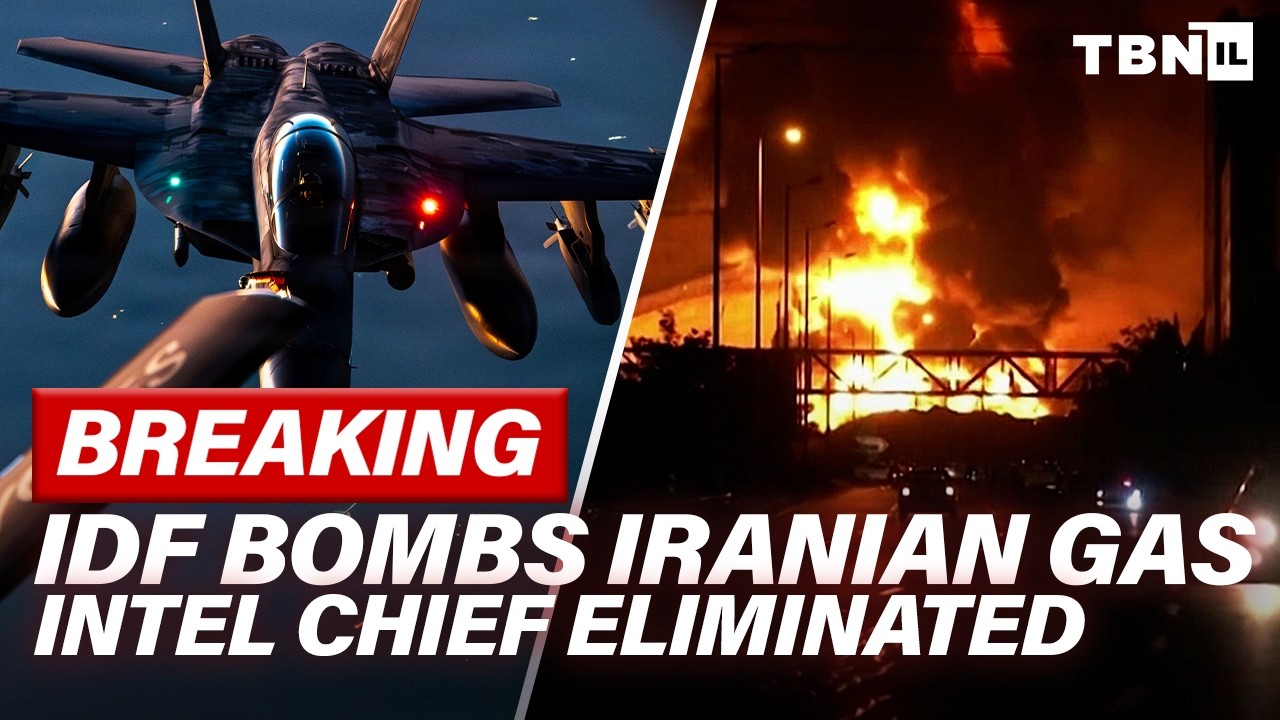
BREAKING: Israel BOMBS Major Iran Gas Site; Top Mullah ELIMINATED; Iran Vows VENGEACE | TBN Israel
"Israel and the United States have escalated their 'Roaring Lion War' against Iran, striking its largest gas facilities, eliminating key intelligence and military figures, and disrupting missile production, while Iran threatens a broader energy war in the Gulf."

Pentagon Prepares For EXTENDED War With Iran
"This episode dissects the geopolitical maneuvers surrounding potential US-Iran conflict, revealing strategic leaks, Netanyahu's diplomatic sabotage playbook, and the true intent behind economic sanctions."