
Nima R. Alkhorshid: URGENT: Iran’s RETALIATION Begins – Missiles Hit Jordan After US Attack on Iran
YouTube · 1VVIOruam7k
Quick Read
Summary
Takeaways
- ❖Iran launched missile and drone attacks on US military bases in Jordan, Bahrain, and Kuwait in retaliation for US strikes on Iranian territory.
- ❖The Strait of Hormuz is claimed to be "totally closed" by Iran, contradicting US reports and impacting global oil transit.
- ❖US attacks on Iran are framed as a response to Israeli pressure after Iran's successful counter-attacks against Israel.
- ❖The speaker alleges US diplomatic efforts with Iran are a "joke," manipulated for political and economic gain, particularly by Israeli interests.
- ❖The conflict is seen as depleting US and Israeli military stockpiles, especially air defense systems, making Israel "naked."
- ❖Global economic stability, particularly oil prices, is severely impacted by the escalating conflict and the closure of the Strait.
Insights
1US Attacks on Iran and Iranian Retaliation Strategy
The United States initiated attacks on Iranian targets in the Persian Gulf (Siri Island, Kashma Island, Bandar Abbas, Bandar Kangan) and near Tehran (Karaj). Iran responded by attacking US military installations in Jordan (Al Azraq air base, Muwafaq Salti air base), Bahrain, and Kuwait with missiles and unidentified drones, employing a similar strategy to previous nights.
The United States attack started attacking Iran... they started attacking sending missiles to Jordan together with drones then they started attacking Jordan after that after firing those missile to Jordan at Jordan then they started attacking Bahrain and quit basically the same strategy
2Strait of Hormuz Closure and Economic Impact
The speaker asserts that the Strait of Hormuz is "fully closed" by Iran, contradicting US CENTCOM statements. This closure is expected to drastically increase global oil prices, impacting countries like Japan and South Korea, who are allies of the US but suffer from the conflict.
Iran as an outcome of this war the American attack on Iran. They said that the straight of Hormos is fully closed and the closure is total closure of the straight of Horos... Standcom again came out and said that the straight is open... That's a huge lie... this rate is totally closed
3US Actions Driven by Israeli Pressure and Diplomatic Incompetence
The speaker argues that the US attack on Iran was orchestrated by Israel after Iran successfully retaliated against Israeli strikes, leaving Israel unable to respond adequately. Donald Trump's administration is characterized as diplomatically inept, making up pretexts for war (e.g., a fabricated Apache helicopter attack) and engaging in "comedy show" negotiations.
Iran hit Israel so hard that Israel couldn't respond the same way. So they needed the United States to get involved... Donald Trump all of a sudden out of the blue he tweeted that Iran has attacked one of our one of our apoch helicopters... They just made it up to attack Iran
4Depletion of US/Israeli Military Stockpiles
The speaker claims that the extensive use of missiles and interceptors in recent conflicts has severely depleted US and Israeli military stockpiles, particularly air defense systems like Patriot. This leaves Israel "naked" and unable to effectively defend itself, necessitating US intervention.
The stockpile of missiles, interceptors, radars are not there anymore. Israel is naked... Why did the United States not try to defend Israel to use air defense system? Because they're not there anymore. Radars are not there. Interceptors are not there. They don't have it anymore.
Bottom Line
The US administration's diplomatic efforts with Iran are led by unqualified individuals like Jared Kushner and Steve Mnuchin, who lack expertise in nuclear negotiations, making genuine progress impossible.
This suggests that US diplomatic overtures are performative or designed to fail, reinforcing Iran's distrust and escalating tensions rather than resolving them.
For other nations or non-state actors, this creates a vacuum for alternative mediation or direct engagement with Iran, potentially bypassing traditional US influence.
Iran's current strategy explicitly links any future negotiations with the US to an end to the war on all fronts, including in Lebanon and Palestine, not just between Iran and the US.
This indicates a broadened scope for any potential peace deal, making it significantly more complex and challenging for the US, which typically avoids linking these issues directly.
Regional powers or international bodies seeking comprehensive peace must address the wider Israeli-Palestinian and Lebanese conflicts as integral parts of any Iran-US resolution.
Lessons
- Monitor global oil markets closely, as the speaker's claim of a "totally closed" Strait of Hormuz could lead to significant price volatility and supply chain disruptions.
- Evaluate the reliability of official statements from conflicting parties (US CENTCOM vs. Iranian claims) by cross-referencing with independent intelligence and real-time shipping data for the Strait of Hormuz.
- Consider the potential for increased regional instability in the Middle East, as the speaker suggests a proxy war driven by external pressures and a depletion of military resources, which could lead to unpredictable escalations.
Notable Moments
US attempts to target Iran's Assaluyeh petrochemical plant with cruise missiles were reportedly intercepted by Iranian air defense systems.
This highlights Iran's defensive capabilities against advanced weaponry, suggesting that US strikes may not be as effective as intended.
The speaker claims the US fabricated the story of an Apache helicopter attack in the Strait of Hormuz to justify its strikes on Iran, similar to a previous alleged F-15 pilot rescue mission.
This suggests a pattern of creating pretexts for military action, undermining trust in official narratives and indicating potential strategic deception.
The speaker asserts that Hezbollah's use of silent, accurate drones against Israeli forces in southern Lebanon and northern Israel poses a "strategic problem" for Israel, for which they currently have no solution.
This indicates a significant shift in asymmetric warfare capabilities, challenging Israel's military superiority and potentially increasing casualties among its forces.
Quotes
"The straight of Hormos is fully closed and the closure is total closure of the straight of Horos nothing is going to get through the straight of Formos."
"Iran hit Israel so hard that Israel couldn't respond the same way. So they needed the United States to get involved."
"The guy is living in another universe. The the guy is not there anymore."
Q&A
Recent Questions
Related Episodes

Patrick Henningsen: Hezbollah JUST Fired Back at Israel - Iran Vows to “Crush” All Attacks
"Patrick Henningsen argues that the US and Israel initiated an illegal war against Iran, driven by Trump's incompetence and Israeli influence, leading to an inevitable escalation with severe global economic repercussions."

Alex Krainer: US STRIKES Iran – Iran RETALIATES Against Kuwait, Bahrain & Jordan!
"Amidst escalating US-Iran conflict and Iranian retaliation against regional US allies, this episode argues that US foreign policy is deeply controlled by an 'Anglo-Zionist conspiracy' led by the Rothschild banking dynasty, prioritizing Israeli interests over American ones."
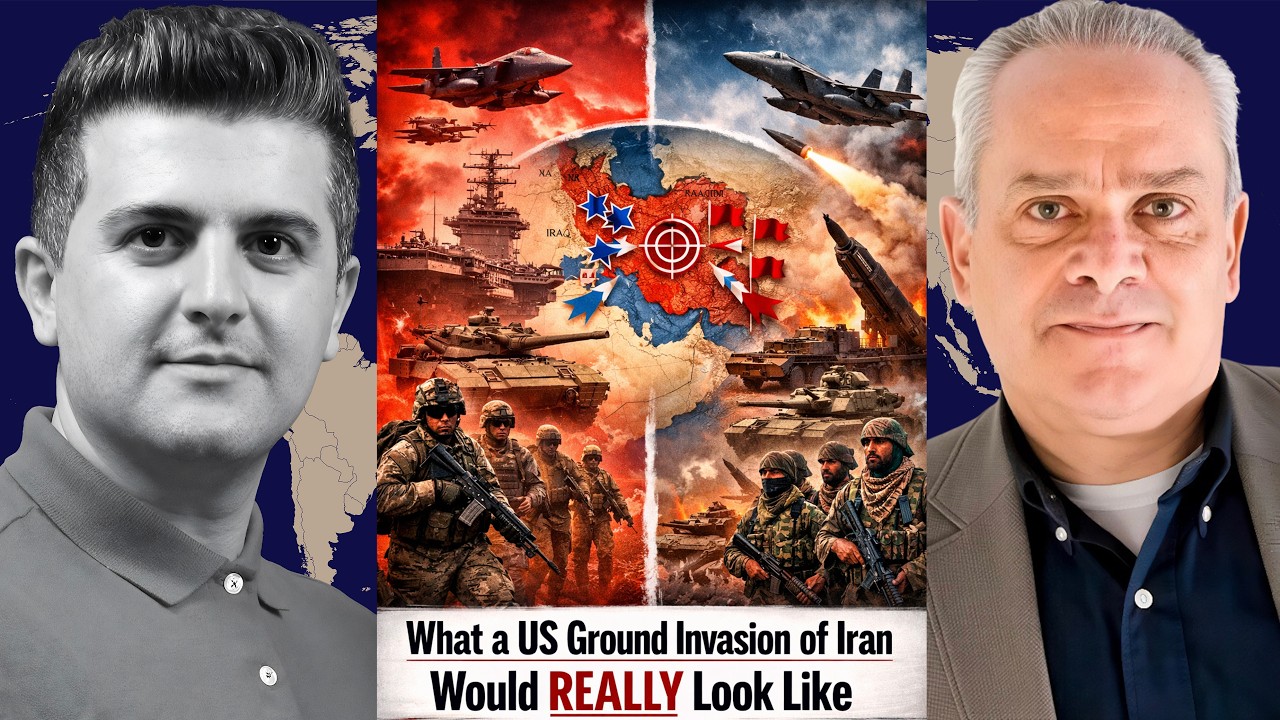
Col. Jacques Baud: What a US Ground Invasion of Iran Would REALLY Look Like
"Colonel Jacques Baud dissects the strategic futility of a US ground invasion of Iran, arguing that current troop levels are insufficient and such an action would backfire, exposing US allies and potentially leading to Iran's nuclearization."

Bibi DEMANDS Ground Troops As Marines Rushed to Iran
"Benjamin Netanyahu is pushing for US ground troops in Iran, framing air strikes as insufficient, while the US rushes Marines to the region and struggles to secure the Strait of Hormuz against surprisingly capable Iranian defenses."