"Israel Must Be Restrained!" Joe Kent on Trump & Iran War + Sleeper Cells Threat
YouTube · 35X5S5G_xxg
Quick Read
Summary
Takeaways
- ❖Joe Kent, former NCTC Director, resigned over his belief that Israel pressured the US into the Iran war without an imminent threat.
- ❖Kent argues Israel created an 'echo chamber' around Trump to push for regime change, moving the 'red line' from nuclear weapons to uranium enrichment capability.
- ❖The US southern border is a significant vulnerability, with an estimated 18,000 'special interest aliens' (some with terror ties) reportedly in the country.
- ❖Iran's primary strategic weapon is economic warfare via the Strait of Hormuz and its ability to disrupt global energy flows with cheap drones.
- ❖Iran possesses 4,000km range ballistic missiles, capable of reaching most of Europe and potentially the US East Coast if deployed from Venezuela.
- ❖External attacks on a country can paradoxically unite its populace behind the existing regime, hindering regime change efforts.
Insights
1US Intervention Driven by Israeli Pressure, Not Imminent Iranian Threat
Joe Kent, a former Director of the National Counterterrorism Center under Trump, stated his resignation was due to his belief that the US was 'forced' into the Iran war by Israel. He claims there was no imminent threat from Iran, but rather Israel's intention to attack and subsequent retaliation against US bases in the region, which would necessitate US involvement. Kent asserts that Israeli officials and media created an 'echo chamber' around President Trump, pushing for a 'clear path to victory' through regime change.
Kent's resignation statement and his direct testimony. Marco Rubio's public statement (later 'reigned back') about America launching a preemptive attack because Israel indicated they would attack Iran. Kent's observation that Israel had previously tried to instigate US intervention under Obama and Biden, who refused, leading Israel to back down.
2Shift in 'Red Line' and Regime Change Objective
Kent details how Israel cleverly moved the 'red line' for US intervention. Initially, Trump's concern was Iran possessing a nuclear weapon, which Iran had a fatwa against. However, Israel shifted the focus to Iran's desire to continue uranium enrichment, creating a new 'conundrum.' This evolved into a regime change objective, despite the war not being presented as such initially.
Kent's account of Israeli officials lobbying Trump, particularly in January when economic sanctions were effective, claiming a strike would lead to the regime's fall. Rob Smith highlights the initial lack of a stated regime change goal for the war.
3Iran's Economic Warfare and Ballistic Missile Capabilities as Primary Threats
Security analysts emphasize that Iran's most potent weapons are economic disruption and long-range missiles, not necessarily conventional military might. Iran can leverage its control over the Strait of Hormuz to cripple global energy supplies and has demonstrated the ability to attack critical infrastructure with cheap drones. Its 4,000-kilometer range ballistic missiles pose a direct threat to Europe and potentially the US East Coast if deployed from locations like Venezuela.
Robert Baer (former CIA) states Iran has the 'world's economy on its knees' by controlling Hormuz and can 'swarm Saudi oil facilities' with cheap drones. Yosi Koopera (former IDF General) mentions the launch of two 4,000km missiles targeting Diego Garcia, covering 'most of Europe.' Jorge Ventura notes the IRGC was selling weapons to Maduro in Venezuela.
4Significant Threat from Iranian Sleeper Cells in the US
The US faces a substantial and underestimated threat from Iranian sleeper cells and 'special interest aliens' who have entered the country, particularly via the southern border. Many of these individuals destroy their identification, making tracking difficult, and some have documented ties to terrorist groups. The US is deemed 'unprepared' for this threat.
Jorge Ventura (independent journalist) reports 1,500 Iranian nationals apprehended at the border between 2021-2024, with at least half paroled. He cites security sources estimating 'at least 18,000 special interest aliens' (high security risk, some with terror ties) are in the US. Robert Baer confirms Iran has cells in the US and mentions the assassination of Hariri being partly coordinated in New Jersey.
Bottom Line
External military attacks on a country, even against an unpopular regime, can paradoxically strengthen public support for that regime, hindering regime change efforts.
This phenomenon suggests that military intervention aimed at regime change without significant internal popular uprising risks backfiring, potentially solidifying the target regime's power by fostering nationalistic unity against a common external enemy.
Policymakers should prioritize intelligence on internal dissent and potential for popular uprising over purely military-centric strategies when considering regime change, and explore non-military levers that don't inadvertently rally support for the target government.
The 'real war' with Iran is not conventional military engagement but an economic one, centered around controlling strategic chokepoints like the Strait of Hormuz and disrupting global energy supplies.
While the US focuses on military strikes, Iran's asymmetric capabilities (cheap drones, control of shipping lanes) allow it to inflict severe global economic damage, potentially bringing the 'world's economy to its knees' without direct military confrontation.
Develop robust strategies for protecting global shipping lanes and critical energy infrastructure from low-cost, high-impact asymmetric attacks. Invest in intelligence and diplomatic efforts to counter economic warfare tactics rather than solely focusing on military superiority.
The US is critically unprepared for the threat posed by 'special interest aliens' and potential sleeper cells entering through its southern border, many of whom destroy their identification and have high security risks.
This vulnerability creates a significant domestic security risk, as individuals with potential ties to terrorism could be operating within the US undetected, posing a threat that current law enforcement and border security measures are not equipped to handle.
Implement urgent, enhanced vetting and tracking protocols for all individuals entering the US, especially from high-risk regions. Invest in advanced biometric identification technologies and cross-agency intelligence sharing to identify and neutralize potential threats before they materialize.
Lessons
- Challenge official narratives regarding military interventions by seeking diverse perspectives, especially from former officials with direct experience.
- Advocate for a re-evaluation of US foreign policy in the Middle East, particularly regarding the influence of allied nations on military decisions.
- Support increased scrutiny and resources for border security and intelligence agencies to address the threat of 'special interest aliens' and potential sleeper cells.
- Recognize that economic warfare and asymmetric threats (like drones and missile capabilities) can be more impactful than conventional military force in modern conflicts.
- Demand transparency and clear objectives from political leaders before committing to military engagements, especially those involving potential regime change.
Quotes
"No negotiations with the Iranians will be successful until the Israelis are restrained."
"The only imminent threat was of Israel attacking Iran and then Iran retaliating against our bases in the region..."
"What we're waiting for and hasn't occurred yet is a fatwa from the Grand Ayatollah, which will be very public... a call to all 12 Rashia Muslims to attack American targets."
"According to my security sources, there's at least 18,000 special interest aliens in the United States."
"We cannot have Israel in the driver's seat of our foreign policy as it's been in the Middle East for for my entire lifetime."
Q&A
Recent Questions
Related Episodes
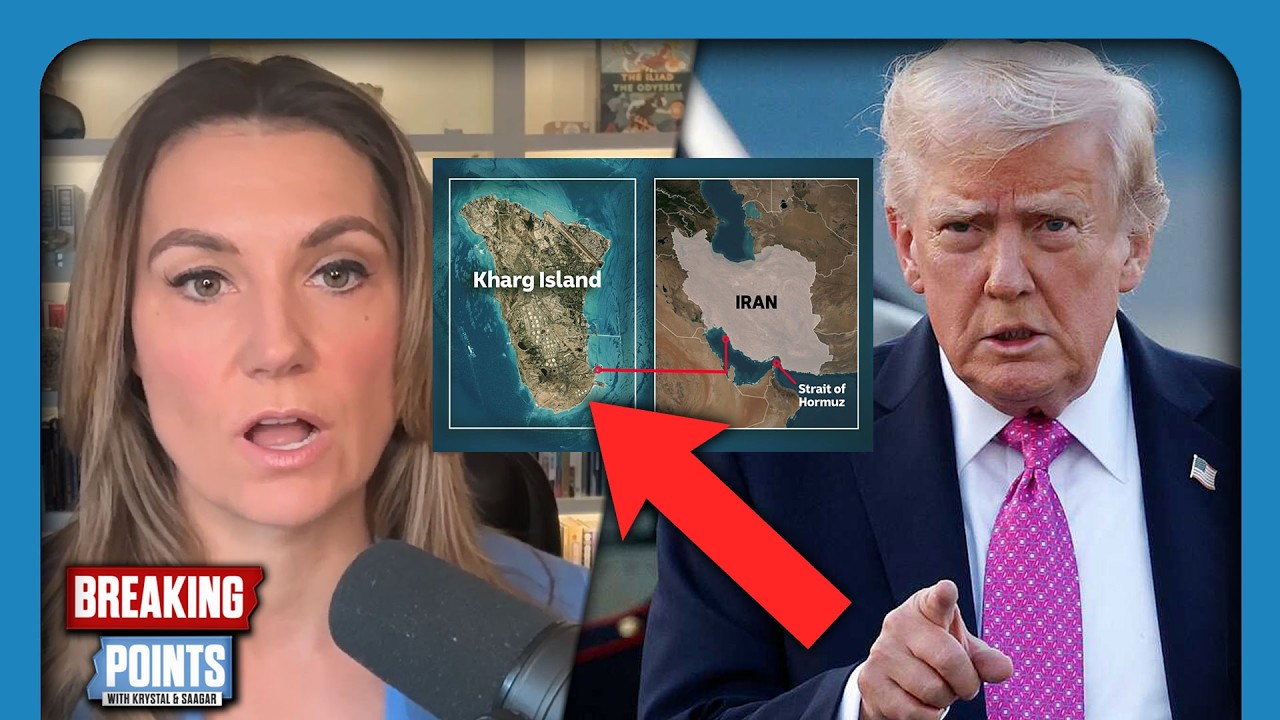
BREAKING: TRUMP ATTACKS OIL ISLAND, MARINES CALLED IN, 5 US PLANES HIT
"The US-Iran conflict escalates with a Trump-ordered strike on Iran's Karg Island, triggering Iranian retaliation against UAE oil facilities and US military assets, while the US deploys Marines and Israel plans a ground invasion of Lebanon."

'Debate Me on IRANIAN TV!' Iran War Debate Feat Mohammad Marandi
"A fiery debate dissects the US-Iran conflict, with former US officials and journalists clashing over the justifications for war, the goal of regime change, and the historical context of US-Iranian relations, culminating in a direct challenge to an Iranian professor to criticize his own regime on air."
BREAKING: Israel Preemptive Strike on Iran - Explosions in Tehran LIVE! | | TBN Israel
"Israel and the United States launched a coordinated preemptive strike against Iran, targeting regime and military assets, triggering immediate Iranian missile retaliation against Israel and US bases in the region."
The REAL Story About The War From INSIDE IRAN! – Jimmy Interviews Prof. Marandi
"Professor Marandi, an Iranian academic, details how Iran emerged stronger from recent conflicts, now controlling the Strait of Hormuz and possessing a credible deterrent against its adversaries, despite facing economic siege and Western-backed regional proxies."