
Col. Larry Wilkerson: Israel’s Grand Strategy Is Coming Apart – Here’s Why It Matters
YouTube · 3oGkrjCzzYI
Quick Read
Summary
Takeaways
- ❖Israel's military actions in Gaza and Lebanon are failing to achieve strategic objectives and are generating widespread international condemnation.
- ❖Iran has gained significant geopolitical leverage through control of the Strait of Hormuz, integration into a powerful Eurasian landmass economic bloc, and a likely nuclear deterrent.
- ❖The US administration is perceived as lacking a coherent strategy in the Middle East, resorting to "rope-a-dope" tactics to manage conflicts without resolution.
- ❖Depleted global oil reserves and market manipulation are setting the stage for imminent and severe oil price shocks, potentially reaching $150-200 per barrel.
- ❖The long-term viability of Israel as an exclusive Jewish state in the Levant is questioned, with a prediction of its eventual collapse or transformation into an inclusive, democratic state.
Insights
1Iran's Three "Nuclear Weapons" Reshaping Regional Power
Colonel Wilkerson highlights a historian's perspective that Iran now effectively wields three "nuclear weapons" against the US and Israel. First, its control over the geographically fixed and globally essential Strait of Hormuz. Second, its integration into a vast, powerful landmass economic structure with Russia, China, and Central Asia, which is increasingly viable due to land routes, reducing dependence on vulnerable maritime trade. Third, Iran's likely possession of an actual nuclear weapon, either from Pakistan or indigenously developed, serving as a critical deterrent against Israel's existing nuclear arsenal.
Discussion of the Strait of Hormuz, the Russian-Chinese-Central Asian landmass, and the likelihood of Iran possessing a nuclear weapon for deterrence.
2Israel's Strategic Failure and International Isolation
Wilkerson argues that Israel's grand strategy, potentially aiming for a "greater Israel," is failing. Its military actions in Gaza, Lebanon, and the West Bank are not achieving objectives, instead resulting in civilian casualties and widespread international condemnation. The global stage is turning against Israel, with even Europeans discussing sanctions on West Bank settlers. This increasing isolation jeopardizes Israel's long-term viability as an exclusive Jewish enclave in the Levant.
BB is showing characteristically that he is more interested in staying out of jail... he is still killing people in Gaza... in Lebanon... in the West Bank in East Jerusalem... 60 to 70% against them. Even the Europeans are now finally talking about sanctions on West Bank settlers.
3Impending Global Oil Price Shocks
The current low oil prices are misleading, driven by market manipulation and oil futures rather than actual supply and demand. Strategic oil reserves globally, including in the US and Japan, have been heavily drawn down. Experts warn that within weeks, inventory levels will be critically low, leading to severe oil price shocks, potentially pushing prices to $150-200 a barrel and US gas prices to $6-7 a gallon. This will have profound economic consequences, particularly for the American public who are not expecting such a drastic increase.
Robert Kagan's quote about oil futures vs. actual prices, depletion of strategic reserves, and warnings from Exxon executives.
Bottom Line
The US military's increasing reliance on Israeli airfields due to a lack of alternative regional bases is making US assets vulnerable to Iranian missile strikes.
This co-location of forces creates a "trigger point for a much bigger, wider war," where Iranian precision strikes on US aircraft or facilities in Israel could escalate the conflict beyond current tit-for-tat exchanges.
For Iran, this presents an opportunity to directly challenge US military presence and deter US support for Israel by demonstrating the cost of such entanglement. For the US, it highlights the urgent need to diversify its regional basing strategy and de-escalate tensions.
Key Concepts
Mackinder's Heartland Theory (adapted)
The traditional geopolitical theory of land power versus sea power is evolving. Iran, as a major component of a Russian-Chinese-Central Asian landmass, is leveraging land routes and economic structures, reducing reliance on vulnerable maritime routes. This shift challenges the historical dominance of maritime states (like the US and its allies) and creates a powerful, relatively peaceful land-based economic bloc.
Lessons
- Monitor global oil inventory levels and strategic petroleum reserves, as their depletion is a key indicator of impending price shocks.
- Analyze the evolving geopolitical landscape in the Middle East through the lens of land-based power projection (Iran, Russia, China) versus traditional maritime dominance, as this shift impacts trade routes and alliances.
- Assess the domestic political implications of US foreign policy in the Middle East, particularly how public opinion on conflicts like the Israel-Gaza war could influence upcoming elections and legislative actions.
Notable Moments
Discussion of Israeli Minister Ben-Gvir's call for kidnapping Lebanese women and children to break Hezbollah morale.
This highlights the extreme and potentially genocidal rhetoric from within the Israeli government, which Wilkerson believes will eventually lead to figures like Ben-Gvir facing the International Criminal Court.
Quotes
"Israel is the problem in the region. Not only because of its slaughtering methodologies, but also because it is the only state with a nuclear weapon that is poised against the rest of the region."
"The more they tell us that they are just short of a victory in diplomacy, the more the American people are going to realize they're lying through their teeth."
"The oil prices we're looking at are oil futures. And I'll tell you one thing that Donald Trump has been an absolute genius at, and he gets an A+ for it, is manipulating the market and manipulating market expectations."
Q&A
Recent Questions
Related Episodes

Patrick Henningsen: Hezbollah JUST Fired Back at Israel - Iran Vows to “Crush” All Attacks
"Patrick Henningsen argues that the US and Israel initiated an illegal war against Iran, driven by Trump's incompetence and Israeli influence, leading to an inevitable escalation with severe global economic repercussions."
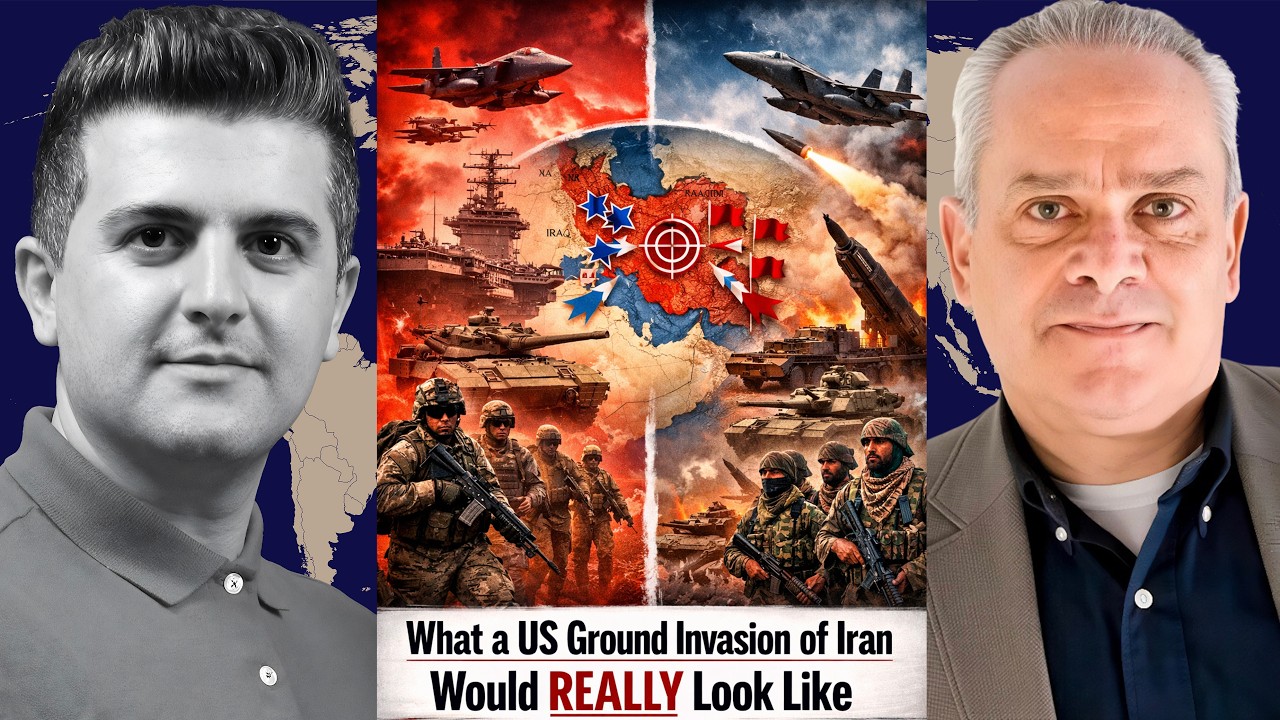
Col. Jacques Baud: What a US Ground Invasion of Iran Would REALLY Look Like
"Colonel Jacques Baud dissects the strategic futility of a US ground invasion of Iran, arguing that current troop levels are insufficient and such an action would backfire, exposing US allies and potentially leading to Iran's nuclearization."
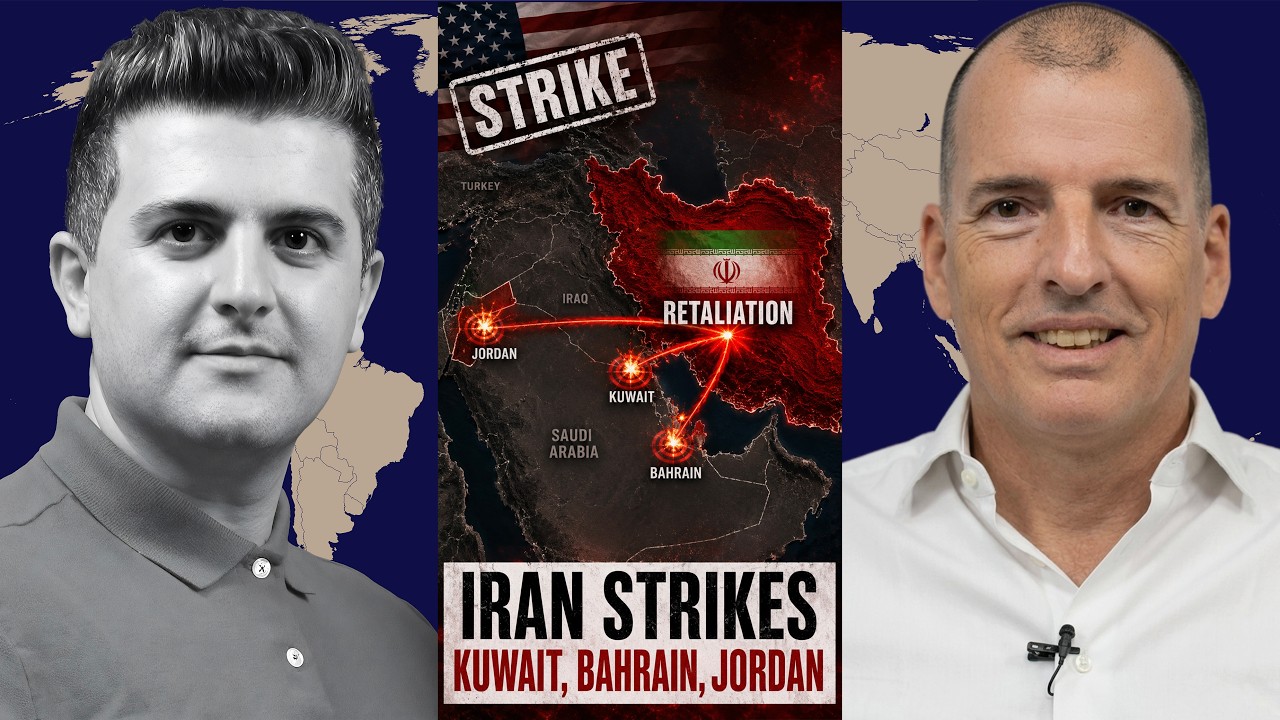
Alex Krainer: US STRIKES Iran – Iran RETALIATES Against Kuwait, Bahrain & Jordan!
"Amidst escalating US-Iran conflict and Iranian retaliation against regional US allies, this episode argues that US foreign policy is deeply controlled by an 'Anglo-Zionist conspiracy' led by the Rothschild banking dynasty, prioritizing Israeli interests over American ones."

Bibi DEMANDS Ground Troops As Marines Rushed to Iran
"Benjamin Netanyahu is pushing for US ground troops in Iran, framing air strikes as insufficient, while the US rushes Marines to the region and struggles to secure the Strait of Hormuz against surprisingly capable Iranian defenses."