
Science at Warp Speed: StarTalk Live! @ The Novo Theatre
YouTube · 51s7zXrL-4c
Quick Read
Summary
Takeaways
- ❖The universe communicates through more than just electromagnetic light, including neutrinos, gravitational waves, and cosmic rays.
- ❖Antimatter is a real phenomenon with immense energy potential, but current production costs make it impractical for energy generation.
- ❖Theoretical concepts like warp drives and higher dimensions are mathematically plausible but face insurmountable energy and manipulation challenges with current technology.
- ❖Science fiction serves as a powerful inspiration for real-world innovation, driving the development of technologies like flip phones and medical diagnostic tools.
Insights
1Expanding the Universe's Observational Windows
Beyond visible light, scientists use various forms of electromagnetic radiation (infrared, microwaves, radio, UV, gamma, X-rays) to observe the cosmos. Additionally, new 'windows' to the universe include neutrinos (neutral particles, 100 trillion passing through us per second, detected in Antarctic ice), gravitational waves (ripples in spacetime from extreme events like black hole collisions, detected by LIGO), and cosmic rays (charged particles whose origins are still largely unknown). These diverse detection methods provide unique information about phenomena invisible to traditional telescopes.
William Herschel's discovery of infrared light (), David Saltzburg's work with neutrinos in Antarctica (), Aaron McDonald's explanation of gravitational waves and LIGO's detection (, ).
2The Enigma of Dark Matter and its Sci-Fi Portrayal
Dark matter accounts for 85% of the universe's gravitational effects but does not emit or reflect light, making it 'invisible matter.' While particle physicists hypothesize it's an undiscovered particle, it could also be primordial black holes. Gravitational wave detectors may offer future clues. The concept was first observed by Fritz Zwicky in the 1930s and further mapped by Vera Rubin, who found dark matter in our own galaxy. Star Trek Discovery honored Rubin by naming a dark matter nebula after her.
David Saltzburg's explanation of dark matter detection methods (), Aaron McDonald's historical context of Zwicky and Rubin's discoveries (), and the 'Veruban Nebula' in Star Trek Discovery ().
3Antimatter: Real Science with Fictional Applications
Antimatter, predicted by Paul Dirac in the 1930s, is a real phenomenon where particles have opposite charges (e.g., electron and positron). When matter and antimatter meet, they annihilate, converting 100% of their mass into pure energy (E=MC²). This makes it an ideal, highly efficient fuel source in science fiction, like Star Trek's warp drives. However, producing even a gram of antimatter is astronomically expensive (quadrillions of dollars) and requires containment in 'magnetic bottles' to prevent annihilation, making large-scale use currently impossible.
David Saltzburg's explanation of Dirac's prediction and matter-antimatter annihilation (, ), Aaron McDonald's discussion of Star Trek's use of antimatter (), and the cost/containment challenges (, ).
4Warp Drives and the Alcubierre Metric: Theoretical Possibility vs. Practical Impossibility
Warp drives, as depicted in Star Trek, propose that while a ship cannot exceed the speed of light *through* spacetime, spacetime itself can be warped around the ship, allowing for faster-than-light travel. The Alcubierre drive is a theoretical concept where the math checks out, suggesting spacetime could be manipulated. However, initial calculations indicated it would require an amount of energy equivalent to 'all energy ever existed.' While refined calculations reduced this to the mass equivalent of a semi-truck, the practical challenges of obtaining, holding, and manipulating such immense energy remain insurmountable with current technology.
Aaron McDonald's explanation of warp drive mechanics () and the Alcubierre drive's theoretical basis and energy requirements ().
5Higher Dimensions and the Multiverse: Beyond Our Four-Dimensional Reality
Our reality is understood as four-dimensional (three spatial, one temporal). Particle physicists explore theories of additional, 'extra dimensions,' which would be very small and thus unobservable. Initial theories suggested 26 dimensions, reduced to 10 with the unproven concept of 'supersymmetry.' The multiverse concept, often seen in sci-fi (e.g., Star Trek's mirror universe, Marvel), suggests parallel universes. These could involve minor variations (like goatees) or entirely different laws of physics, with infinite variations existing if the multiverse is truly infinite.
Neil deGrasse Tyson's explanation of four-dimensional reality (), David Saltzburg's discussion of extra dimensions and supersymmetry (), and the panel's take on the multiverse in sci-fi ().
6Science Fiction as a Catalyst for Real-World Innovation and Societal Reflection
Science fiction serves as a powerful inspiration for technological advancement and societal commentary. Examples include Motorola's flip phone being inspired by Star Trek's communicator and the X-Prize for a real-world medical 'tricorder.' Star Trek, in particular, is lauded for its morality tales and progressive representation (e.g., Lieutenant Uhura's position in the chain of command, Worf's quantum fissure episode exploring multiverses). The debate on how much science to sacrifice for a good story often concludes that story and character come first, with science acting as a foundational resource.
Neil deGrasse Tyson's anecdote about the Motorola flip phone () and automatic doors (), the X-Prize for the medical tricorder (), Sashir Zeda's comments on representation in The Jetsons (), and the panel's discussion on balancing science and storytelling ().
Bottom Line
The theoretical possibility of communicating via dark matter could revolutionize interstellar communication, bypassing limitations of electromagnetic signals.
Current communication methods are limited by light speed and interference. Dark matter interaction, if harnessed, could provide an entirely new, potentially faster and less obstructed medium for transmitting information across vast cosmic distances.
Research and development into novel particle interactions for communication, moving beyond electromagnetic spectrum limitations, could unlock unprecedented capabilities for deep space exploration and interspecies contact.
The development of advanced 3D printing and food science, including identifying specific protein structures, suggests a future where 'replicator' technology (like in Star Trek) could produce food on demand.
This technology could address global food scarcity, reduce the environmental impact of traditional agriculture (e.g., cattle farming), and enable sustainable living in resource-constrained environments, including space.
Investment in molecular gastronomy, bio-printing, and advanced material science for food synthesis could lead to replicator-like devices, offering solutions to food security and sustainability challenges on Earth and beyond.
Key Concepts
Science as a Frontier
Science is the only field of human inquiry where it's acceptable to say 'I don't know,' indicating that researchers are at the very edge of knowledge, constantly pushing boundaries and seeking answers to fundamental questions about the universe.
Causality Principle
The fundamental principle that a cause must always precede its effect. Theoretical particles like tachons, if they existed, would violate causality, leading to paradoxes where effects could occur before their causes, making a coherent universe difficult to conceptualize.
Symmetry Breaking
In physics, symmetry breaking occurs when a system's state exhibits less symmetry than the underlying laws governing it. This concept helps explain phenomena like magnets, where fundamental laws have no preferred direction, but the magnet itself chooses a specific orientation.
Lessons
- Recognize the deep scientific foundations often embedded in popular science fiction narratives, using them as a gateway to understanding complex physics concepts.
- Support scientific inquiry into 'unknowns' like dark matter and higher dimensions, understanding that breakthroughs in these areas could redefine our understanding of the universe.
- Consider the ethical and practical implications of theoretical technologies (e.g., transporters, warp drives) as a thought experiment, fostering critical thinking about future scientific advancements.
- Advocate for diverse representation in science fiction, acknowledging its power to inspire and include all individuals in the vision of a scientific future.
Notable Moments
Sashir Zeda's observation about the lack of diversity in The Jetsons, highlighting how sci-fi's portrayal of the future can impact feelings of belonging.
This moment underscores the social impact of science fiction, revealing how representation (or lack thereof) can shape perceptions of who belongs in a technologically advanced future, and the importance of inclusive storytelling.
Neil deGrasse Tyson's self-deprecating humor about his 'least believable' future prediction: automatic doors, contrasting it with warp drives and photon torpedoes.
This humorous anecdote illustrates the unpredictable nature of technological progress and the difficulty even for scientists to foresee everyday innovations, emphasizing that sometimes the simplest advancements are the hardest to predict.
The revelation that Earth's magnetic north pole is actually a south magnetic pole, and vice-versa, and that the poles are overdue to flip.
This fact is a surprising piece of scientific trivia that challenges common understanding and highlights the dynamic, sometimes counter-intuitive, nature of planetary physics, with potential implications for future navigation and technology.
Quotes
"In every experiment he did, the control thermometer was hotter than all the other colors. And he then he put it somewhere like in his backyard and it went to a normal temperature. And he concluded there must be some extra light coming from the sun that you can't see that's below the red. He called it light unfit for vision. The boy discovered infrared light in that experiment."
"Einstein was like, 'It's there, but it's so tiny, no one will ever detect it.' And scientists went, 'Challenge accepted.' And a hundred years after his prediction, we detected the motion of spacetime in our universe."
"Science is like the only branch of human inquiry where you can stand flat-footed and say, 'I don't know.'"
"If you were a scientist, you might had a cameo, too."
"I always felt like my my job was not to be the science police. My job was to be a resource to the people that were actually telling the story."
"Does life imitate science fiction? Or does science fiction imitate life? Or maybe we are needlessly turning that into a binary question. And perhaps as we go forward, it is the interplay of the two that'll shape the future of civilization."
Q&A
Recent Questions
Related Episodes

Mindscape Ask Me Anything, Sean Carroll | June 2026
"Sean Carroll fields a diverse range of listener questions, from the hypothetical Pope Leo XIV's stance on AI to the intricacies of quantum cyclic universes, the philosophy of free will, and the future of science and society."
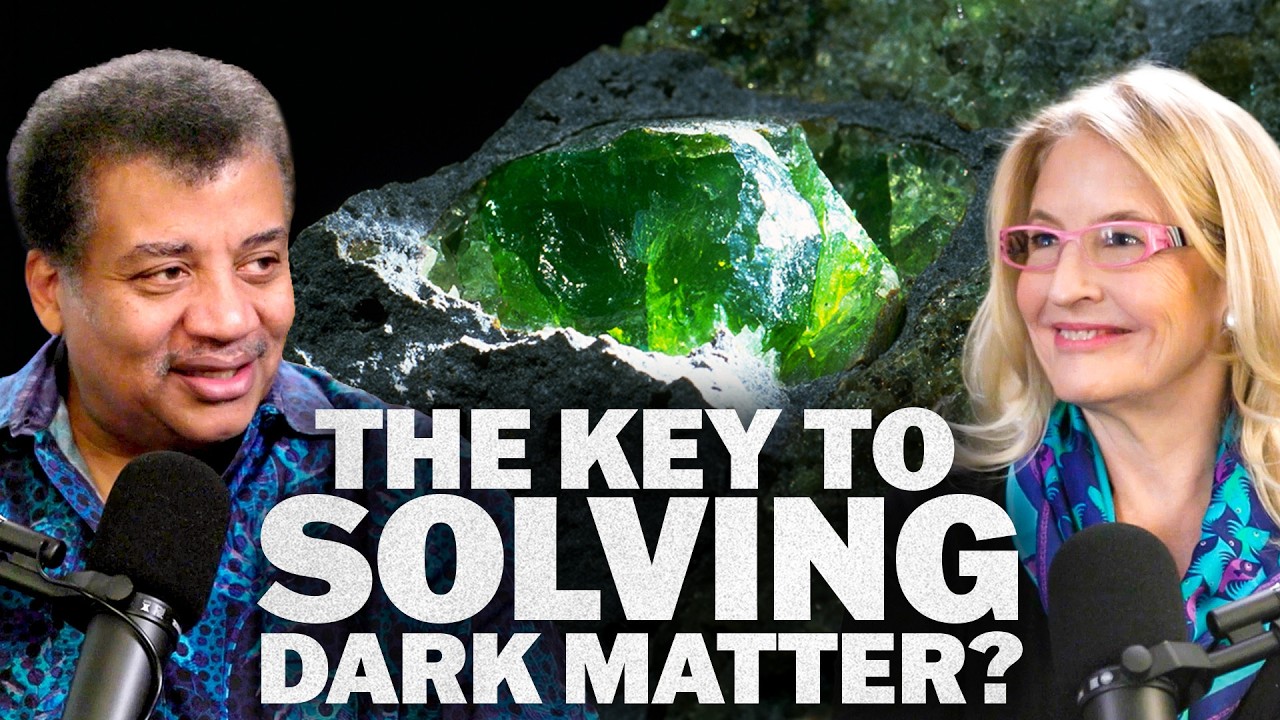
How We’re Trying to Detect Dark Matter Particles, with Katherine Freese
"Theoretical physicist Katherine Freese reveals cutting-edge methods for detecting dark matter, from billion-year-old rocks to 'dark stars' observed by the James Webb Telescope, and challenges prevailing theories on dark energy."
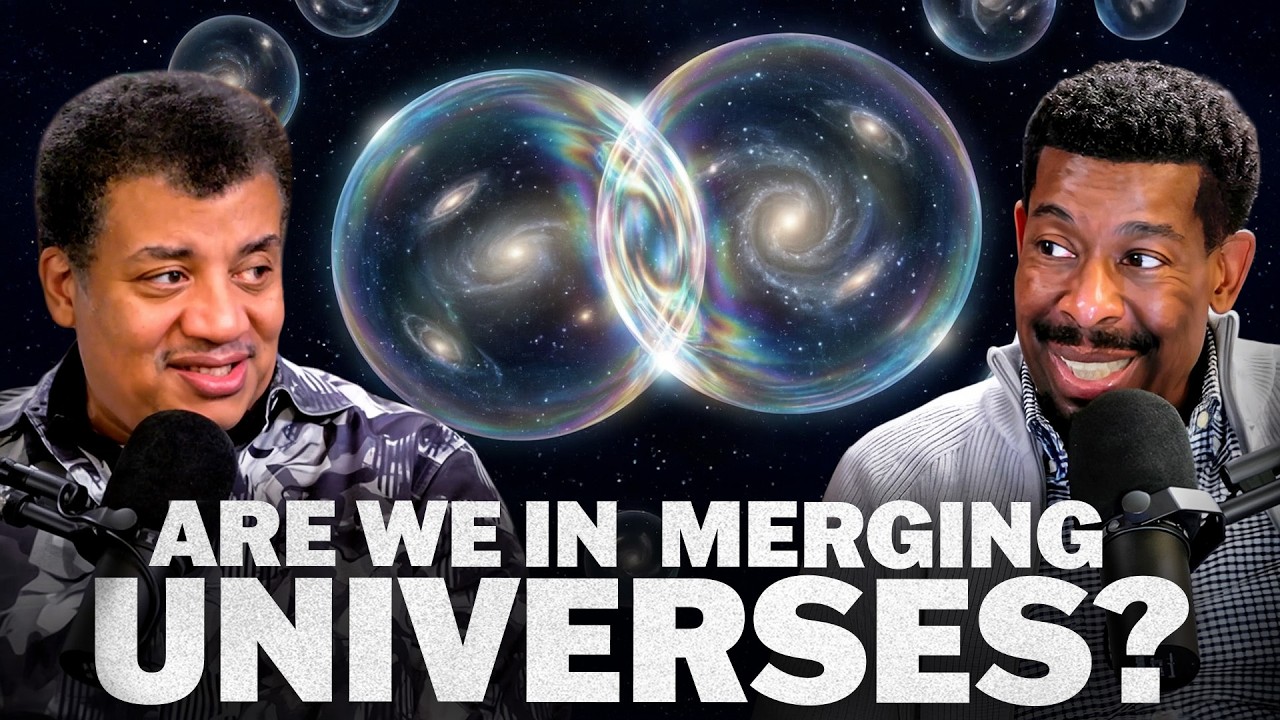
Alcubierre Drives, Antimatter Multiverses & More! | Cosmic Queries #103
"Neil deGrasse Tyson and Chuck Nice tackle listener questions ranging from the feasibility of reviving the sun with nukes to the physics of black holes, warp drives, and the multiverse."
THE BIG BANG THEORY (2007) Season 1 Epsiodes 1x5, 1x6, 1x7, & 1x8 Reaction! | First Time Watch!
"CinePals hosts Chris and Stef Spina react with laughter and surprise to the social awkwardness, unexpected romantic developments, and cultural clashes in early episodes of The Big Bang Theory, particularly Sheldon's unique humor and Leonard's romantic pursuits."