
‘IT’S IMPERIALISM!’: Graham Platner EVISCERATES Trump’s WARMONGERING
YouTube · 7-jHPogAJOU
Quick Read
Summary
Takeaways
- ❖Senator Susan Collins' vote to require congressional approval for Venezuelan hostilities was a calculated political move, not a change in conviction, driven by constituent pressure.
- ❖US foreign policy has become openly imperialistic, with the Trump administration explicitly stating intentions to 'steal the oil' from Venezuela, abandoning pretenses of democracy promotion.
- ❖Congress has abdicated its war-making powers for decades, allowing presidents to wage wars without proper oversight, leading to a 'moral collapse' among the political elite.
- ❖The US healthcare system is profit-driven to the extent that essential treatments like IVF are vastly more expensive than in countries with public healthcare, forcing Americans to seek care abroad.
- ❖The argument 'how will you pay for it?' for public services like healthcare is a fallacy, as trillions are 'magicked' for wars and corporate subsidies without question.
- ❖A new political dynamic is emerging where voters, including Republicans and independents, are uniting against the 'system itself' and the political establishment, rather than along traditional left-right lines.
Insights
1US Foreign Policy as Overt Imperialism
The US approach to Venezuela, particularly under the Trump administration, is characterized as 'brazen imperialism.' Unlike past interventions that used pretexts like democracy or fighting tyranny, the current rhetoric openly states the intention to 'steal the oil' and impose will through military force for resource extraction. This shift removes the ability to 'hypocrisy shame' leaders, as they are explicit about their motives.
The guest notes Rubio's dismissal of Iraq/Libya comparisons and the public sentiment that 'Trump stealing Venezuela oil is somehow going to directly benefit them.' The core argument is that 'they don't even try to pretend like there's some other noble ideal' () and are 'just announcing to our own population and to the world. We are doing it because we can and we want to and we're going to come in and steal your stuff whenever and however we want to.' ()
2Congressional Abdication of War Powers
For decades, Congress has failed to exercise its constitutional role in war-making, allowing presidents to initiate military actions without proper approval. This abdication has enabled a continuous cycle of 'illegal wars' and interventions, contributing to a 'moral collapse' within the political establishment. The process has been inverted, where Congress must actively block hostilities rather than approve them.
The host states, 'there is no deeper conversation about the need to legitimately pull war powers back into the hands of Congress' (). The guest adds, 'Congress has abdicated its role in war making' (). The host also points out, 'You're supposed to get war powers to approve the action in the first place. So, they like flipped the burden of proof' ().
3The Profit-Driven Failure of US Healthcare: The IVF Example
The American healthcare system, built primarily around profit, treats patients as sources of revenue rather than human beings in need of service. This leads to exorbitant costs for essential treatments, forcing individuals to seek care in other countries where healthcare is treated as a public good.
Graham Platner details his personal experience with IVF: a single clinic in New England charged $25,000 for the procedure alone, plus thousands for medications, and a $500 non-refundable fee for a 15-minute intake call. In contrast, a Norwegian clinic offered the entire process, including travel and accommodation, for 'a quarter to a third of what it would have cost if we'd done it here' (), with medications costing 'no money' and a free, hour-long consultation with the surgeon. He concludes, 'this is what you get when you got a health care system that's built primarily around profit.' ()
4The 'How Will You Pay For It?' Fallacy
The argument that public services like universal healthcare or infrastructure are unaffordable is a political tactic used to prevent investment in society. This argument is exposed as fallacious by the simultaneous 'magic' of trillions of dollars for military spending, corporate subsidies, and foreign wars without any corresponding tax increases or public debate about funding.
The host questions, 'when you're not sending $40 billion to Argentina and $38 billion to Israel... It's amazing the things you can afford for your own people' (). The guest adds, 'A $1.5 trillion defense budget that is where they can't account for 63% of it and they failed eight audits in a row' (). He further elaborates, 'when we fought those wars nobody's taxes went up... we just magic the money out of nowhere' (), but for social investment, 'suddenly everybody's pockets gets turned out and we're all standing around wondering how we paid for it.' ()
Bottom Line
The brazenness of current US imperialism, openly stating resource extraction as a motive, paradoxically offers 'welcome clarity' by removing the need to expose hypocrisy.
This shift makes it harder for critics to 'hypocrisy shame' the government, as the pretense of noble ideals has been dropped. It forces a more direct confrontation with the reality of power and resource control.
This clarity can potentially galvanize a broader, more unified anti-imperialist movement, as the motives are no longer obscured by humanitarian rhetoric, making the 'enemy' clearer.
A significant portion of the political establishment is 'incapable of understanding' the current moment, being too entrenched in transactional, performative politics.
This suggests that reform efforts aimed at convincing existing politicians are largely futile. Their 'emotional constitution' and lack of core beliefs make them unable to adapt to or genuinely address systemic crises.
This reinforces the need for 'revolution' and grassroots movement building to replace the existing political apparatus with new leadership that genuinely understands and responds to public needs.
Key Concepts
Up-Down Dynamic vs. Left-Right Dynamic
This model describes a shift in political alignment where the primary division is between working/middle-class people and the political/corporate establishment ('up-down'), rather than traditional ideological lines of conservative vs. liberal or Republican vs. Democrat ('left-right'). The guest argues this 'up-down' dynamic is gaining traction and offers a path to political change.
Moral Collapse of the Aristocracy
This concept posits that the political and economic elite in the US have lost their moral compass, prioritizing self-interest, corporate profits, and power over ethical governance and the well-being of the populace. This is evidenced by the willingness to wage wars for resources and maintain a predatory healthcare system.
Lessons
- Challenge the 'how will you pay for it?' narrative for public services by pointing to the trillions spent on military, corporate subsidies, and foreign interventions without similar funding questions.
- Support political candidates and movements that prioritize grassroots organizing, reject corporate money, and frame politics as 'working people vs. the system' rather than traditional partisan divisions.
- Educate yourself and others on the true costs and motivations behind US foreign policy, recognizing when 'democracy promotion' is a pretext for resource extraction and imperialistic aims.
Building a Grassroots 'People vs. Establishment' Political Movement
Reject corporate PAC money and Bayak money; rely solely on donations from individuals and ideologically aligned labor unions to maintain independence.
Build a robust ground game and field operation, prioritizing paying organizers and opening offices to foster genuine community engagement and power building.
Articulate a clear 'up-down' political dynamic, framing issues as 'working people, middle-class people versus the system itself' and the political establishment, which resonates across partisan lines.
Focus on material conditions and policies that benefit everyday Americans (e.g., universal healthcare, breaking corporate monopolies), even if some voters initially disagree on 'core issues,' as long as they oppose the corrupt system.
Recognize that persuasion may not work for a small, entrenched 'cult' segment of the population; instead, focus on engaging and mobilizing the majority who are fed up with the status quo to win power and implement beneficial systems for all.
Notable Moments
Senator Susan Collins' vote flip on the Venezuela war powers resolution, moving from opposing to supporting a measure that would require congressional approval for hostilities.
This moment is framed as evidence that even 'craven political animals' like Collins respond to constituent pressure, indicating that public anger and frustration over foreign wars can influence political outcomes across the spectrum.
Graham Platner's personal story of seeking IVF treatment in Norway due to the prohibitive costs and bureaucratic hurdles in the US.
This anecdote provides a concrete, relatable example of the failures of the profit-driven US healthcare system and starkly contrasts it with a system that treats healthcare as a public good, highlighting the economic burden on American families.
Quotes
"We've been killing people in the Caribbean illegally since September for Christ's sake."
"The only time it's moral and ethical to do war is if there's like threat of imminent attack against us."
"They don't even try to pretend like there's some other noble ideal. And I think that brazenness... is actually meaningful that we're just announcing to our own population and to the world. We are doing it because we can and we want to and we're going to come in and steal your stuff whenever and however we want to."
"There's a genuine moral collapse among the aristocracy in the US."
"There is an up-down dynamic now that is that existing in a way that I don't remember... it is about working people, middle class people versus the system itself, versus the political establishment."
"The way that we pay for it is by prioritizing it and not prioritizing all the nonsense we already pay for."
Q&A
Recent Questions
Related Episodes

Sen. Kaine Forces Vote on Iran War Powers Resolution
"Senator Tim Kaine details his persistent, decade-long fight to compel Congress to vote on acts of war, specifically highlighting his current War Powers Resolution concerning Iran and the historical reluctance of legislators to take a definitive stance on military engagements."

Will Venezuela Be Trump's Vietnam?
"An expert breaks down three perilous pathways for Venezuela under potential US intervention, from a 'Panamanian model' to a 'Libyan-style civil war,' and the broader geopolitical fallout for Latin America."

Iran Deal Skepticism. Whoopi Vs Vance. Potomac Park Invasion. Racist Hurls Slurs At Black Boy.
"This episode dissects multiple instances of alleged anti-Black policies and racial injustice, from the Trump administration's legal challenges to reparations and the Iran deal, to police brutality and the erasure of Black history."
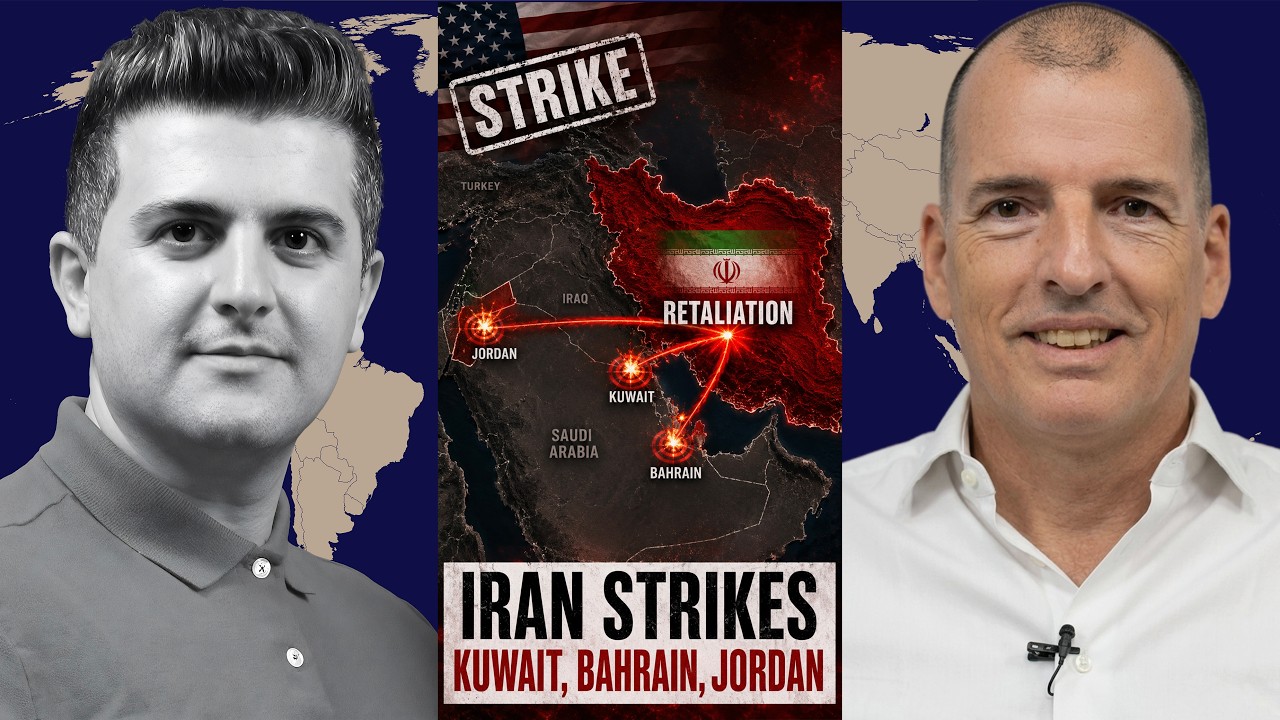
Alex Krainer: US STRIKES Iran – Iran RETALIATES Against Kuwait, Bahrain & Jordan!
"Amidst escalating US-Iran conflict and Iranian retaliation against regional US allies, this episode argues that US foreign policy is deeply controlled by an 'Anglo-Zionist conspiracy' led by the Rothschild banking dynasty, prioritizing Israeli interests over American ones."