
How much of what ICE is doing is illegal?
YouTube · 7bH56rNJqM8
Quick Read
Summary
Takeaways
- ❖An ICE officer shot and killed Renee Nicole Good, leading to widespread protests and condemnation.
- ❖DHS Secretary Christy Nome called Good a 'domestic terrorist,' and VP JD Vance advocated for 'absolute immunity' for ICE agents.
- ❖The Justice Department is investigating Good's widow, Rebecca Good, instead of the ICE officer, prompting six career prosecutors to resign.
- ❖Trump threatened to invoke the Insurrection Act, which would allow federal military deployment for law enforcement, bypassing the Posse Comitatus Act.
- ❖Historically, the Insurrection Act was used with state consent, unlike the current situation in Minnesota where state officials are trying to deescalate.
- ❖States, businesses, and individuals may have standing to sue to prevent the Insurrection Act's invocation.
- ❖ICE agents have been reported using banned chokeholds, which could be persuasive evidence in civil suits, but qualified immunity remains a significant hurdle.
- ❖Business owners can restrict ICE entry without judicial warrants and refuse service to agents.
- ❖Congressional oversight of ICE detention centers is crucial but is being resisted by the administration, which has even prosecuted a representative for attempting inspection.
- ❖Local police can prosecute federal officers for state law violations, but officers often claim they were acting within federal duties.
- ❖The Supreme Court's Bivens doctrine severely limits the ability to sue federal officers for constitutional rights violations, unlike Section 1983 for state officers.
- ❖A 'Renee Good Civil Rights Act' has been proposed to amend Section 1983 to cover federal officers.
- ❖Trump's appellate judicial appointees have overwhelmingly ruled in his favor, indicating a shifting judicial landscape that favors executive power.
- ❖The administration is engaged in a 'multi-front war' against trans people, targeting inclusive policies in sports, healthcare, and education.
- ❖There is a perceived normalization of state violence and dehumanization against anyone who opposes the administration's agenda.
Insights
1Administration's Politicized Response to ICE Shooting
Following the fatal shooting of Renee Nicole Good by an ICE officer, the administration immediately framed Good as a 'domestic terrorist' and pushed for absolute immunity for ICE agents. The Justice Department then initiated an investigation into Good's widow, Rebecca Good, instead of the ICE officer, leading to the resignation of six career prosecutors, including a Trump appointee. This response is seen as a deliberate attempt to dehumanize victims and use federal power for political ends, undermining the integrity of the justice system.
DHS Secretary Christy Nome declared Good a domestic terrorist. Vice President JD Vance said ICE agents should have absolute immunity. The Justice Department is pushing to investigate Good's widow instead of the ICE officer, resulting in the resignation of six career prosecutors, including acting US attorney Joseph Thompson. (, , , )
2Legal Challenges to Invoking the Insurrection Act
Trump's threat to invoke the Insurrection Act to deploy federal military for law enforcement in Minnesota is legally contentious. The Act provides an exception to the Posse Comitatus Act, which generally prohibits military involvement in domestic law enforcement. Historically, the Insurrection Act has been used rarely and typically at the request of state officials. In Minnesota, state and local law enforcement are actively trying to deescalate, not facilitate violence, making the legal basis for invocation weak. Entities like the State of Minnesota, businesses, and individuals harmed by federal actions could have standing to challenge such a move in court.
The Insurrection Act provides an exception to the Posse Comitatus Act, which generally forbids the federal military from ordinary law enforcement (). The most significant precedent for its use comes from the Civil Rights era, when state officers were facilitating private violence, or as in the LA riots, at the request of state officials (, ). Minnesota officials are trying to deescalate, and there are zero circumstances suggesting the state is near the prerequisites for invocation (). The State of Minnesota, businesses, and individual citizens could have standing to sue ().
3Severe Limitations on Suing Federal Officers for Rights Violations
Unlike state and local officers who can be sued under Section 1983 for constitutional violations, suing federal officers is severely restricted. The Supreme Court's Bivens doctrine, which previously allowed such suits, has been drastically narrowed. This means that unless a case is 'on all fours' with one of the three prior recognized Bivens causes of action, victims of federal officer misconduct often have no legal remedy for damages, creating a significant accountability gap. This issue could be fixed by Congress passing a law, such as a 'Renee Good Civil Rights Act,' to extend Section 1983 to federal officers.
Congress has not passed a law similar to Section 1983 that allows suing federal officers for constitutional rights violations (). The Supreme Court's Bivens doctrine, which previously filled this gap, has been 'absolutely horrifying' and 'hates Bivens,' limiting it to cases exactly like the three prior recognized actions (, ). This leaves victims of unprecedented federal constitutional violations without remedy (). Congress could amend Section 1983 to apply to federal officers, which would fix the problem ().
4Erosion of Judicial Oversight and Institutional Integrity
While federal trial courts have generally tried to hold the administration accountable, the Supreme Court has steadily narrowed their power, and the administration has appointed increasingly extreme judges to lower federal courts. This, coupled with the politicization of the Justice Department, such as the FBI excluding state police from investigations and pursuing politically motivated prosecutions, undermines public confidence in the judicial system and federal law enforcement. The administration's actions suggest a disregard for institutional norms and a belief that they will maintain power indefinitely.
The Supreme Court has steadily narrowed the power of district courts to issue nationwide injunctions (). The administration has appointed 'even more extreme' nominees, like Emil Bet, who allegedly said 'F*** you to the courts' and attended a Trump rally as a judge (, ). The FBI's exclusion of state police from investigations is 'very unusual' and undermines cooperation and expertise (, ). The politicization of DOJ undermines public confidence in cases, even meritorious ones ().
Key Concepts
Insurrection Act
A federal law that provides an exception to the Posse Comitatus Act, allowing the President to deploy the federal military for domestic law enforcement in specific circumstances, typically when state and local authorities are unable or unwilling to suppress an insurrection or enforce federal law.
Posse Comitatus Act
A federal law that generally prohibits the use of the U.S. military for domestic law enforcement purposes, aiming to prevent the federal government from deploying troops to arrest civilians or engage in ordinary policing.
Bivens Doctrine
A Supreme Court precedent (Bivens v. Six Unknown Named Agents) that, in limited circumstances, allows individuals to sue federal officers for damages when their constitutional rights are violated, even without a specific statute authorizing such a suit. However, the current Supreme Court has severely narrowed its application, making it difficult to apply to new factual scenarios.
Qualified Immunity
A legal doctrine that protects government officials from liability in civil lawsuits unless their conduct violates clearly established statutory or constitutional rights, and there is no question that a reasonable officer would have known their conduct was unlawful. This often makes it difficult to sue officers for misconduct.
Section 1983
A federal statute (42 U.S.C. § 1983) that allows individuals to sue state and local government officials for civil rights violations. There is no direct federal equivalent for suing federal officers, which the Bivens doctrine attempted to address.
Lessons
- Record ICE agents: Use camera phones to document federal agents' actions during protests or operations, as this footage can serve as evidence in future criminal or civil cases and for public accountability (12:53).
- Contact political representatives: Call state, local, and federal representatives to express concerns about ICE practices and advocate for legislative changes, such as limiting ICE funding, conducting hearings, or passing laws to restrict their actions (14:34, 15:01).
- Advocate for a 'Bivens fix' and qualified immunity reform: Specifically ask representatives to pass legislation that would allow individuals to sue federal officers for constitutional rights violations (e.g., a 'Renee Good Civil Rights Act') and to abolish qualified immunity for ICE agents (1:02:14, 1:02:17).
- Support community safety nets: Engage in community efforts like neighborhood patrols, delivering food, or helping with errands to support and protect vulnerable individuals targeted by federal enforcement actions (15:03).
- Business owners can refuse entry: If you own a business, post signs or verbally refuse entry to ICE officers who do not possess a judicial warrant, as this can slow down or prevent aggressive raids (17:42, 18:21).
- Business owners can refuse service: Refuse service to ICE officers to make their presence more unpleasant and potentially deter them from frequenting certain locations (18:32).
Quotes
"The significant upshot of the Insurrection Act is it provides an exception to what's known as the Posse Comitatus Act. Um that is the law that generally forbids the federal military from engaging in ordinary law enforcement."
"What that memo concluded is the Insurrection Act is really designed to allow the president to deploy the military when state and local officers are affirmatively engaged in or facilitating the private violence that the president is concerned with."
"I guess I just want to emphasize the power of the camera phone because in the short term, you know, it is possible that those cameras could provide evidence in state criminal cases, you know, against officers or in civil litigation against them."
"Yes, that's certainly going to be helpful persuasive evidence in the event you can actually get a court to hear the merits of your claim. Um, that is also potentially helpful in defeating a defense of qualified immunity."
"So, congressional oversight and, you know, Congress actually exercising oversight powers, whether that is limiting funding, conducting hearings, and whatnot. Those are all possibilities."
"So, I guess it's not that surprising after you have the Supreme Court tell Donald Trump, you can use your federal law enforcement power to target anyone you want for any reason that he would go ahead and do that."
"Congress has not passed a similar law that allows you to sue federal officers for violating your constitutional rights."
"This is one of those rare circumstances where Congress can easily fix something the Supreme Court has f***ed up. All they need to do is just pass a law, amend 1983, and say applies to federal officers, too, and that fixes the problem."
Q&A
Recent Questions
Related Episodes
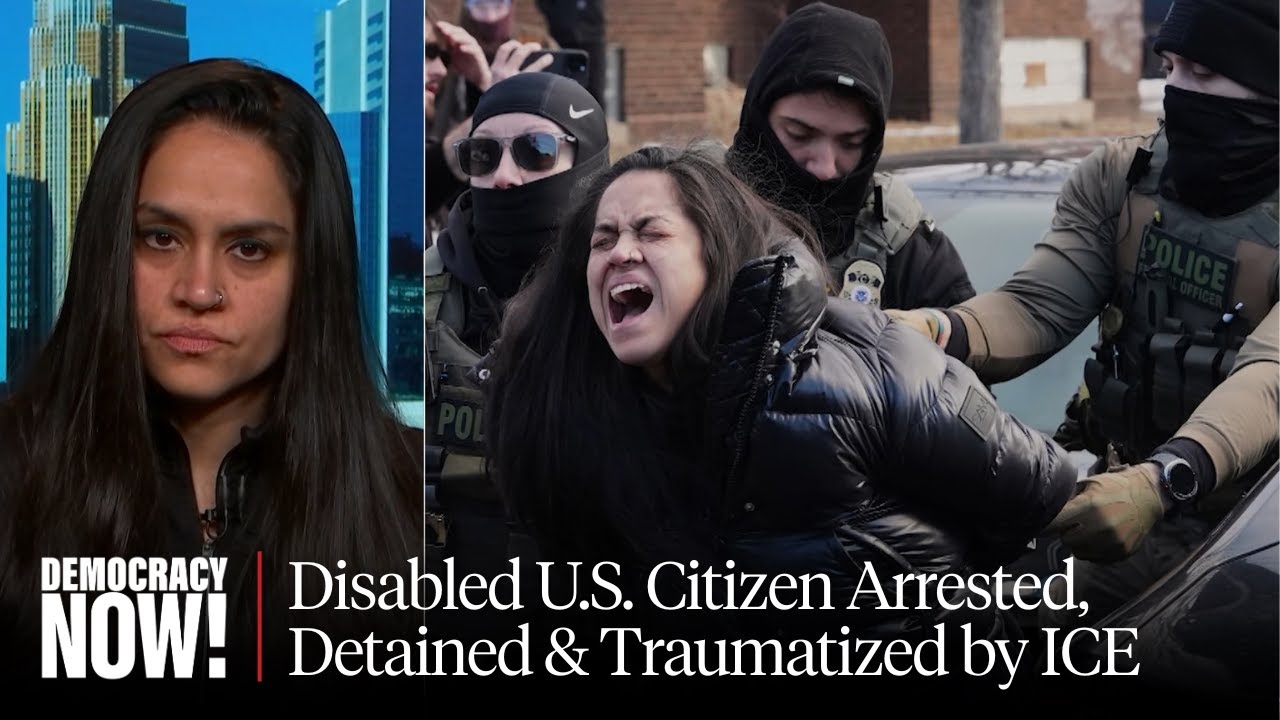
Meet Aliya Rahman, Disabled U.S. Citizen Assaulted, Jailed & Traumatized by ICE in Minneapolis
"A disabled U.S. citizen recounts her violent arrest and detention by ICE agents, exposing systemic abuses, lack of medical care, and the legal challenges victims face when seeking accountability from federal officers."

FBI Special Agent issues SHOCK TAKEDOWN of ICE
"Former FBI Special Agent Tony Box condemns ICE's actions in Minnesota, labeling the killings of Renee Good and Alex Prey as murder and criticizing the agency's inadequate training and leadership."

Judge REJECTS DESPERATE Democrat STUNT As Trump Threatens To INVOKE Insurrection Act In Minneapolis!
"A Minnesota judge rejected a Democratic lawsuit to block ICE operations, while former President Trump threatened to invoke the Insurrection Act in Minneapolis amid escalating protests against federal immigration enforcement, sparking debate on state vs. federal authority and de-escalation tactics."

LIVE: Trump’s REAL MOTIVE for WAR REVEALED by Nat Sec Expert | The Weekend Show
"A national security expert and former senior government official details how Trump initiated a war with Iran without a clear plan, driven by personal narrative and external influences, leading to global instability and exposing a 'gutting of competency' within US federal agencies."