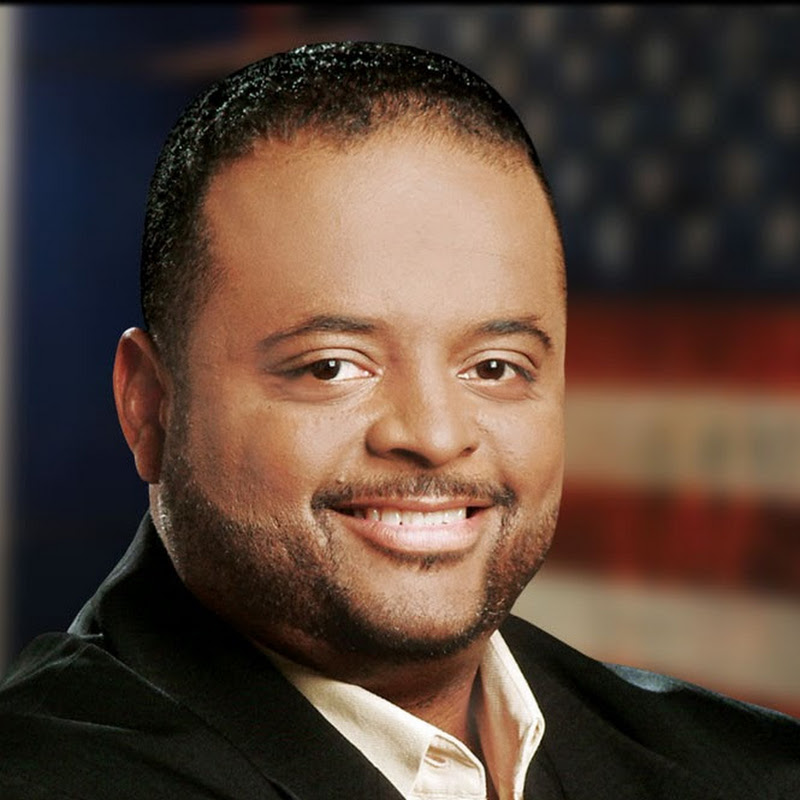
Louisiana Postpones Election. Roland Moderates Black men's Mental Health Forum in Shreveport.!a
YouTube · 7rLDSbI6gl8
Quick Read
Summary
Takeaways
- ❖Louisiana's congressional primaries were postponed after a Supreme Court ruling invalidated a newly created majority-Black congressional district, sparking confusion and anger among voters.
- ❖The Supreme Court's decision is framed as the 'end of the project of the Roberts Court to slowly piece by piece take apart the Voting Rights Act,' particularly Section 2.
- ❖The ruling threatens to empower state legislators across the South to redraw maps that could erase majority-Black districts and reduce Black political representation.
- ❖A community forum in Shreveport, Louisiana, addressed Black men's mental health and domestic violence following a tragic murder-suicide where a father killed several children and injured their mother.
- ❖Experts at the forum stressed the importance of culturally competent mental health services, as many Black men distrust or find existing therapy irrelevant to their experiences of race and oppression.
- ❖Community leaders highlighted the need for sustained infrastructure, funding, and political pressure to implement long-term solutions for domestic violence and mental health, rather than relying on short-term reactions to tragedies.
- ❖Roland Martin emphasized that political engagement and voting are direct methods for allocating resources to schools and community programs addressing mental health and violence.
- ❖The importance of collecting data on attendees at community meetings was stressed as a fundamental step for effective organization and mobilization.
- ❖Youth engagement in addressing community issues should move beyond one-time events to creating sustained, organized entities that build from micro-level initiatives.
Bottom Line
Gary Chambers advocates for using economic leverage, suggesting organizations like the NBA and Essence Festival should reconsider operations in states like Louisiana that actively suppress Black voting rights.
This approach proposes a direct economic consequence for political actions that undermine minority representation, potentially forcing state governments to reconsider discriminatory policies due to financial pressure.
Activists and organizations can explore coordinated economic boycotts or conditional investments as a powerful tool to influence state-level political decisions beyond traditional lobbying or litigation.
Opportunities
Culturally Competent Mental Health Training & Service Network
Develop and scale a network of mental health professionals specifically trained in culturally competent therapy for Black men, addressing issues like racial trauma, systemic oppression, and gender-specific coping mechanisms. This would include training programs for existing therapists and a directory of culturally informed practitioners.
Community Resource Assessment & Mobilization Platform
Create a platform or service that conducts comprehensive community resource assessments, identifying existing organizations (nonprofits, churches, fraternities, etc.) in specific 'lanes' (e.g., anti-violence, economic development, mental health). This platform would then facilitate data collection, organization, and mobilization of these groups to address community needs with a 'micro to macro' approach.
Youth-Led Community Organizing Incubator
Establish an incubator program for young social media influencers and advocates to transition from 'fans' to 'followers' by teaching them how to build and sustain local organizing entities. This would involve training in data collection, community mapping, event planning, and converting online reach into tangible, local action groups focused on specific issues like domestic violence prevention or mental health awareness.
Lessons
- **Organize and Mobilize Locally**: Identify existing community organizations (churches, fraternities, nonprofits) in your area and actively engage with them to address specific issues like voting rights or mental health. Don't wait for external leadership; build from within your community.
- **Demand Culturally Competent Services**: Advocate for mental health services and community programs that are specifically designed and delivered with an understanding of the cultural experiences and unique challenges faced by Black individuals, particularly Black men.
- **Exert Political Pressure**: Understand that voting and political engagement directly influence resource allocation. Pressure elected officials at all levels (school board, city council, state legislature) to fund programs addressing mental health, domestic violence, and voting rights, and be prepared to hold them accountable at the ballot box.
- **Collect Data and Build Networks**: When attending community meetings or events, ensure contact information (name, email, phone, area of interest) is collected to create a database for ongoing communication, organization, and mobilization. This is crucial for sustained impact.
- **Focus on Micro-to-Macro Growth**: Start with small, local initiatives and systematically expand. Instead of aiming for immediate widespread impact, build robust local groups and then replicate success, converting 'fans' into active 'followers' or organizers.
Building Community Power: From Local Engagement to Systemic Change
**Identify Your Lane & Assess Resources**: Conduct a community resource assessment to map out existing organizations (churches, nonprofits, fraternities, etc.) focused on specific issues (e.g., anti-violence, economic development, mental health). Understand what capacity already exists.
**Gather & Organize Your People**: At every community meeting or event, collect detailed contact information (name, email, phone, area of interest). Use this data to build a robust database of engaged individuals. Set clear goals for growth, e.g., 'each person brings one new person to the next meeting.'
**Develop Community-Driven Agendas**: Work with professionals and community members to identify specific needs and gaps (e.g., lack of culturally competent therapists in schools). Formulate concrete, data-backed proposals for solutions.
**Pressure Elected Officials for Resources**: Present your community-driven agenda to school boards, city councils, state representatives, and the governor. Frame requests in terms of public dollars and the consequences of inaction (e.g., high domestic homicide rates). Be prepared to mobilize voters to support or oppose officials based on their responsiveness.
**Build Sustained Infrastructure**: Move beyond one-time events. Create ongoing programs and initiatives within community-controlled spaces (churches, rec centers) if institutional access is limited. Focus on long-term engagement, training, and support for all age groups, including peer-to-peer mentorship and culturally relevant education.
**Ignore the Haters and Keep Building**: Anticipate resistance and negativity from those who do not wish to participate or see progress. Focus energy on the engaged individuals and the work at hand, drawing inspiration from historical examples of building despite opposition.
Notable Moments
The Supreme Court's ruling invalidated a majority-Black congressional district in Louisiana, leading to the postponement of congressional primaries and widespread confusion, with early voting already underway and absentee ballots cast.
This decision is presented as a severe blow to the Voting Rights Act, threatening to diminish Black political representation not only in Louisiana but potentially across the entire South, and highlights the aggressive tactics used to suppress minority votes.
A community forum in Shreveport was convened to address Black men's mental health and domestic violence, prompted by a recent tragic murder-suicide in the community.
This event underscores the urgent need for open dialogue and structured interventions for mental health within the Black community, particularly concerning men, and aims to move beyond reactive responses to proactive, sustained solutions for domestic violence.
Dr. Kevin Washington discussed how his employment as a VA psychologist was terminated for using the term 'cultural trauma' in his work with veterans, despite having a caseload of over 50 men and women.
This incident highlights systemic resistance to culturally competent mental health approaches even within institutions, underscoring the challenge of providing relevant support to Black communities when their specific experiences are dismissed or penalized.
Quotes
"This started out as a case about Louisiana and an additional congressional seat and then what the subsequent ruling that we received yesterday. What it means is that black voters and and all minorities, which include women of every race and ethnicity as well, um have lo, you know, like could lose the ability to elect a candidate of choice at every level of government."
"This is really the end of the project of the Roberts Court to slowly piece by piece take apart the Voting Rights Act, which was key to actually providing black voters in the South um the opportunity to elect candidates of choice."
"If Jeff wants to fight, we need to give it to him. And so I would encourage members of the CBC, I would encourage uh the the black entertainers, the black uh sports folks, everybody who gives a damn to start making your way to the Louisiana legislature."
"If men are committing 96% of domestic violence cases, at some point, we're going to have to talk about what is going on with men."
"All mental health is not good mental health if it does not fit the population."
"One of the greatest mistakes that we make as black people. We call meetings, we gather, we have no idea who's in the room, we have the event, and they leave and then no one knows who showed up."
Q&A
Recent Questions
Related Episodes
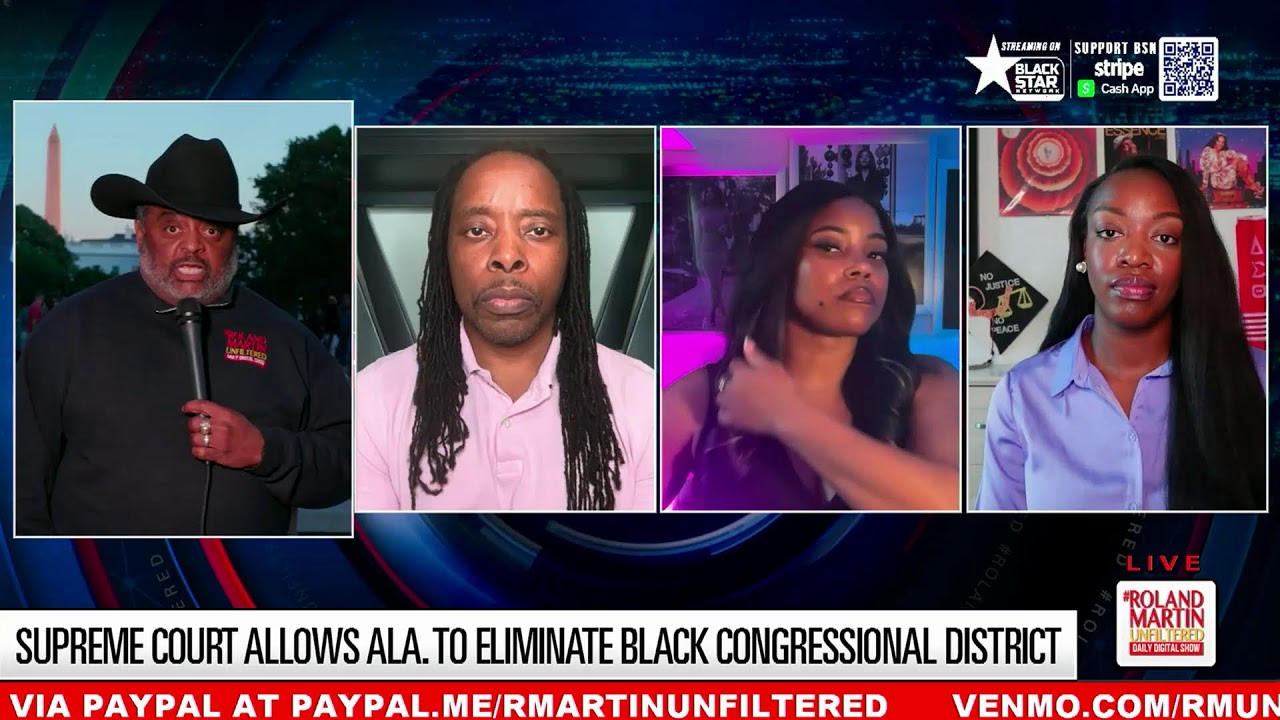
Moral Monday at BLM Plaza. Cleo Fields Sounds Alarm on Louisiana & Gary Chambers Pushes Turnout
"Activists and faith leaders gathered at Moral Monday to denounce 'policy violence' in various forms, from war and budget cuts to voter suppression and healthcare denial, urging sustained mobilization against a 'hijacked' democracy."

All Roads Lead To the South: Nat’l Day Of Action For Voting Rights | Mass Rally | Montgomery, AL
"A mass rally in Montgomery, Alabama, ignites 'Freedom Summer 2026' to combat the Supreme Court's decimation of Black political power and demand unprecedented voter mobilization across the South."

The Immortal Jim Crow. 'Goon Squad' Defamation Suit. Google Race Discrimination Case. #TheBreakdown
"This episode exposes the enduring grip of systemic racism through a Mississippi defamation suit, Google's racial discrimination settlement, and a deep dive into how Jim Crow's legacy still shapes Black America today."

Mamá me golpeaba, busqué a papá y él me trajo a la cárcel | Yahana #Penitencia 196 #México
"Yahana recounts her harrowing journey from a childhood marred by domestic violence and parental abandonment to drug addiction and eventual incarceration, directly caused by her father's actions."