
Col. Jacques Baud: BREAKING: Starmer Steps Down Effective Immediately — Iran & US Agree to New Terms
YouTube · 8f61k163LgQ
Quick Read
Summary
Takeaways
- ❖European leadership suffers from systemic incompetence, promoting young, inexperienced 'apparatchiks' who prioritize narratives over rational thinking.
- ❖The UK has seen seven Prime Ministers in a decade, and France faces increasing debt and discontent, reflecting widespread European instability.
- ❖Foreign policy, such as aid to Ukraine, often overrides critical domestic and social issues in European nations.
- ❖Western democracies' short electoral cycles (4-5 years) prevent long-term strategic planning, unlike countries with longer-tenured leaders (e.g., Russia, China, India).
- ❖The European External Action Service (EAS) is criticized as an ineffective institution with 5,000 staff, yet zero diplomatic output in major conflicts.
- ❖The US-Iran Memorandum of Understanding (MOU) is inherently flawed because Israel, a key party to the conflict, was excluded from negotiations.
- ❖The US dangerously overestimates its ability to influence Israel, which views the US as a tool for its own foreign policy, not a respected partner.
- ❖Israel's conditions for peace with Lebanon (Hezbollah withdrawal, dismantling infrastructure, Israeli freedom of movement) are deemed 'arrogant' and violate international law.
- ❖Hezbollah is characterized as a legitimate resistance movement defending Lebanese territory, not a terrorist organization, and its weapons are justified by Israel's continued occupation.
- ❖Israel systematically refuses to implement its part of ceasefire deals, leading to recurring crises and a 'paranoid' state that thrives on confrontation.
- ❖Recent polls showing 92% of Israelis believe Iran 'won the war' could paradoxically lead to more aggressive Israeli actions, not acceptance of defeat.
Insights
1Systemic Incompetence in European Leadership
European political systems are producing young, inexperienced leaders who are 'apparatchiks' (party animals) lacking real-world or political experience. This leads to emotion-driven decisions, a focus on narratives over facts, and a prioritization of foreign policy over critical domestic issues, resulting in systemic instability and poor governance across the continent.
The UK saw seven Prime Ministers in about 10 years; Macron's France faces increasing debt and discontent; Germany's railways are a 'joke'; the EU's External Action Service (EAS) with 5,000 people has 'zero output' in diplomatic scenes.
2West's Shift from Strategic to Tactical Thinking
Western democracies, constrained by short electoral cycles (typically 4-5 years), have lost the ability to envision and execute long-term strategic projects. Leaders are expected to provide immediate responses, leading to tactical, day-by-day decision-making that deconstructs previous governments' efforts, wastes resources, and prevents sustained vision, unlike nations with longer-tenured leadership like China, Russia, or India.
European capitals feature monuments built over centuries, reflecting past long-term vision, but today's leaders are 'people who tweet' expecting responses 'within minutes.' Macron's €60 million AI investment is contrasted with US AI companies spending that 'every month or every day.'
3Decline of Western Diplomatic Influence in the Middle East
The European Union's diplomatic efforts are largely ineffective, and the US overestimates its ability to influence key regional actors like Israel. This has led to a shift in the 'center of gravity' for diplomacy towards Middle Eastern and Eurasian powers (Oman, Qatar, Pakistan, China, India, Russia), which are now mediating critical dialogues.
The EU's EAS has 'zero output' in negotiations for Palestine, Ukraine, or Iran. Switzerland, traditionally a mediator, was bypassed by Oman, Qatar, and Pakistan in US-Iran talks. Major discussions on Ukraine and Russia happened in Jeddah, Istanbul, and Riyadh, not Europe.
4Israel's Disregard for International Law and US Influence
Israel consistently disregards international law and views the US not as a respected partner, but as a 'tool' for its own foreign policy objectives. The US, in turn, overestimates its influence over Israel, leading to flawed diplomatic initiatives like the US-Iran MOU, which excluded Israel to avoid sabotage but then faced non-compliance.
Israel's presence in occupied Palestinian territories is illegal per the International Court of Justice, yet Western countries fail to enforce compliance. Israel's conditions for peace with Lebanon are 'arrogant' and demand freedom of movement in sovereign Lebanese territory. JD Vance's comments about US weapons for Israel highlight the US's misperception of leverage.
5Hezbollah as a Legitimate Resistance Movement
Hezbollah's primary purpose is to resist Israeli occupation of Lebanese territory, not to attack Israel or overthrow its government. Its infrastructure is defensive, and its existence is tied to Israel's continued occupation and attacks on Lebanon, making it a legitimate resistance force within the framework of Lebanese national agreement.
Hezbollah has no claims over Israeli territory, only Lebanese. Its infrastructure is for defense, similar to Swiss WWII tunnels. The Taif Agreement of 1989 allows Hezbollah to keep weapons as long as the Israeli threat exists, supplementing the Lebanese army.
6Israel's 'Wounded' State and Escalation Risk
Despite polls showing a majority of Israelis believe Iran 'won the war,' this perception does not translate to acceptance but rather a desire for revenge and increased aggression. This 'fanatical' and 'wounded' state makes dealing with Israel extremely dangerous, raising the risk of more dramatic developments if the US cannot exert control.
92.1% of Israelis believe Iran won, but Israeli ministers like Ben-Gvir and Katz advocate for continued bombing and no compromise. This suggests a reaction of heightened aggression rather than strategic re-evaluation.
Bottom Line
The 'system' in Europe actively promotes incompetent leaders who are young, inexperienced, and driven by emotions and narratives rather than facts, creating a self-perpetuating cycle of instability.
This suggests that the problem is not just individual leaders but a fundamental flaw in how Western political systems select and empower leadership, leading to a predictable decline in governance quality.
Identify and advocate for systemic reforms in political selection processes that prioritize experience, strategic thinking, and a fact-based approach over charisma or party loyalty.
The US dangerously overestimates its ability to influence its allies, particularly Israel, which perceives the US as a 'tool' for its own foreign policy rather than a partner to be respected or followed.
This misperception leads to ineffective diplomatic strategies, as US-brokered agreements (like the Iran MOU) are inherently unstable without Israel's direct commitment and genuine buy-in, undermining US credibility.
Policymakers should re-evaluate the true nature of their influence and leverage with allies, potentially shifting towards more direct and less accommodating approaches to ensure compliance with international norms and shared objectives.
A high percentage of Israelis believing Iran 'won the war' is not a sign of acceptance or a shift towards de-escalation, but rather a potential trigger for more aggressive, 'revenge-driven' actions, exacerbating regional instability.
This 'wounded animal' psychology suggests that perceived defeat could lead to irrational and dangerous escalations, making the current geopolitical phase extremely perilous.
International diplomacy needs to anticipate and mitigate this 'revenge' dynamic, potentially through stronger, multi-party guarantees and enforcement mechanisms that prevent unilateral escalations, rather than relying on perceived defeat to bring about peace.
Key Concepts
Tactical vs. Strategic Thinking
The contrast between short-term, day-to-day, emotion-driven decision-making (tactical) prevalent in the West, versus long-term, visionary planning (strategic) seen in countries like China and Russia. The former leads to instability and deconstruction of previous efforts, while the latter allows for sustained development and resource allocation over decades.
Systemic Incompetence
A political system that inherently promotes inexperienced individuals ('apparatchiks') who lack real-world and political experience, leading to poor governance and decisions based on narratives rather than facts. This cycle perpetuates instability and erodes public trust.
Influence Misperception
The tendency of a powerful nation (e.g., the US) to overestimate its control or influence over its allies (e.g., Israel), leading to flawed diplomatic strategies and agreements that fail to account for the ally's independent interests and actions.
Lessons
- Critically evaluate political leaders based on their strategic vision and real-world experience, rather than just their party affiliation or media narratives.
- Advocate for governance reforms that encourage long-term planning and reduce the impact of short-term electoral cycles on critical national projects.
- Recognize the diminishing influence of traditional Western diplomatic bodies and seek out alternative, more effective mediators in global conflicts, particularly in the Middle East.
Notable Moments
Discussion of the EU's External Action Service (EAS) having 5,000 people with 'zero output' in major diplomatic efforts.
Highlights the perceived bureaucratic bloat and ineffectiveness of a key EU foreign policy institution, underscoring the broader critique of European leadership.
The host's initial framing of Switzerland as potentially regaining importance in diplomacy, immediately corrected by Baud who attributes Swiss involvement in US-Iran talks to geographical convenience, not diplomatic prowess.
This exchange directly challenges a common perception and provides a specific, grounded explanation for Switzerland's role, emphasizing the shift in diplomatic centers of gravity away from traditional European players.
The detailed breakdown of Israel's three conditions for peace with Lebanon, followed by Baud's immediate characterization of them as 'arrogant' and contrary to international law.
This provides concrete examples of Israel's demands and Baud's strong, critical analysis of their legality and implications, reinforcing the narrative of Israeli exceptionalism and disregard for international norms.
Quotes
"Foreign policy tends to override the domestic policy. You spend more money providing weapon to Ukraine rather than solving domestic and social issue within the country."
"Everything we decide in Europe is based on narratives, not on rational thinking. That's the reason why everything fails."
"Strategy is not the addition of tactics. That's very important to understand. Strategy is more than the addition of tactics."
"Israel doesn't follow the US because they have a high respect from the US... They just see the US as a tool of the Israeli foreign policy. Period."
"Israel has just to comply with international law, not attacking others and not consider the whole world as an enemy. This paranoid situation of Israel has created a state that seems to exist only through confrontation with others."
Q&A
Recent Questions
Related Episodes

Patrick Henningsen: Hezbollah JUST Fired Back at Israel - Iran Vows to “Crush” All Attacks
"Patrick Henningsen argues that the US and Israel initiated an illegal war against Iran, driven by Trump's incompetence and Israeli influence, leading to an inevitable escalation with severe global economic repercussions."
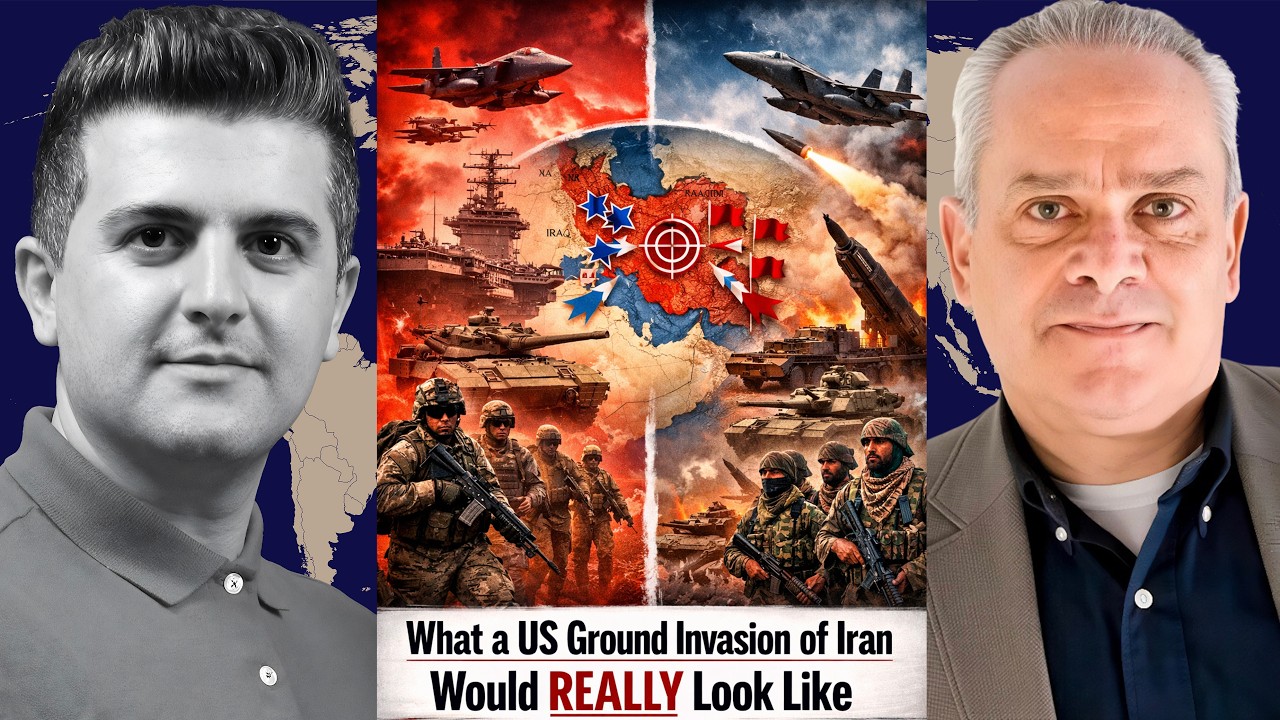
Col. Jacques Baud: What a US Ground Invasion of Iran Would REALLY Look Like
"Colonel Jacques Baud dissects the strategic futility of a US ground invasion of Iran, arguing that current troop levels are insufficient and such an action would backfire, exposing US allies and potentially leading to Iran's nuclearization."

Col. Jacques Baud: The World Is Entering a Lawless Era
"Colonel Jacques Baud details his personal experience with arbitrary EU sanctions and argues that the world has shifted from a law-based international order to a dangerous, rules-based system dictated by powerful actors, exemplified by US actions in Venezuela and the EU's 'teenager decision-making'."

BREAKING: Iran Threatens To END Talks; U.S. Vows Retaliation; Hezbollah Collapsing? | TBN Israel
"Iran is leveraging Hezbollah and the Strait of Hormuz to manipulate US negotiations, while Israel asserts its right to dismantle Hezbollah's eroding but still dangerous infrastructure in Lebanon, independent of international talks."