Quick Read
Summary
Takeaways
- ❖Air power alone has never successfully toppled a regime in over a hundred years; it consistently leads to 'lashback' effects.
- ❖Iran is employing a sophisticated 'parallel attack' strategy, learned from US military doctrine, to strike multiple nodes simultaneously and create system-level shock.
- ❖President Trump has lost control of the escalation, with Iran and other regional/global actors increasingly driving the conflict's direction.
- ❖The conflict presents multi-dimensional risks: energy shock (Strait of Hormuz), horizontal escalation, global infrastructure vulnerability, military/economic strain, and strategic distraction.
- ❖The next dangerous phase involves the dispersal of Iran's 1,000 pounds of 60% enriched uranium, which could be used for radiological weapons.
- ❖Iran is a strategic actor, not irrational, and its nuclear ambitions are likely to follow a North Korea-like pattern of multiple test detonations to establish deterrence.
- ❖Israel's security is worsening as a result of the conflict, despite any perceived short-term gains from degrading Iran's capabilities.
- ❖The current situation mirrors Lyndon Johnson's loss of control in Vietnam, characterized by a 'victory narrative' clashing with 'escalation reality' and a futile 'search for the breaking point'.
Insights
1Air Power's Ineffectiveness for Regime Change and the 'Lashback' Effect
Professor Pap states that using air power alone to topple regimes has 'never worked in over a hundred years.' Instead, it consistently produces a 'lashback effect' that attackers are unprepared for due to overconfidence, leading to uncontrolled escalation.
Pap's study of every US bombing campaign since World War I; current Iran conflict showing expansion of targets.
2Iran's Strategic Use of 'Parallel Attack' Doctrine
Iran is employing a sophisticated 'horizontal escalation' strategy, termed 'parallel attack' (a concept developed by the US Air Force in the 1990s), using precision drones to hit multiple nodes in the enemy's system simultaneously. This aims to create maximum system shock, widening the conflict beyond initial military targets to economic and banking interests.
Iran declaring US/Israeli economic/banking interests as targets; host noting shift from military to civilian infrastructure targets.
3Loss of Escalation Control by the Attacker
The illusion that the attacker controls escalation is false. Once an 'escalation trap' is triggered, the initial attacker (e.g., President Trump) becomes just one actor among many, losing control to the adversary (Iran) and the broader system shock. Other actors like Israel, Russia, and Gulf States gain influence, making de-escalation extremely difficult.
Trump's statements about ending the war are ignored as prices rise; Pap's argument that Trump needs to get Iran, Israel, and Russia to 'call this thing off'.
4Multi-Dimensional Risks of the Escalation
The unfolding disaster is multi-dimensional, with intersecting risks that overload decision-makers. These include energy shock (disruption of Strait of Hormuz oil flow), horizontal escalation, global infrastructure vulnerability, military and economic strain, and strategic distraction.
Pap's slideshow outlining five key risks; explanation of how these 'threads' intersect and overwhelm.
5The Looming Threat of Iran's Enriched Uranium Dispersal
The next level of escalation involves the dispersal of Iran's 1,000 pounds of 60% enriched uranium. This material, which was not destroyed in previous bombings, can be used for radiological weapons (e.g., sprinkled on drone cones) and is sufficient for 10-16 bombs, posing a significant and immediate danger.
Satellite photography of likely dispersal; Trump's own recent mention of this dispersal; briefings on Capitol Hill.
6Iran's Strategic Nuclear Ambitions Mirror North Korea
Iran is not an irrational actor; its behavior has been highly strategic for 25 years. If it pursues nuclear weapons, it will likely follow North Korea's pattern: aiming for multiple bombs (5-6) and conducting several atmospheric tests on its own territory to establish deterrence, rather than immediately using a single weapon.
Pap's assessment of Iran's strategic behavior (B+ to A grade); comparison to North Korea's 60+ nuclear weapons and testing strategy.
7Israel's Security Deterioration Despite Perceived Interests
Despite Israel's stated interests and the perceived degradation of Iran's capabilities, its actual security is worsening. The dispersal of nuclear material, for instance, poses a direct danger to Tel Aviv, and current military options are not guaranteed to protect Israel.
Pap's distinction between Israel's stated interests and actual security interests; the specific example of dispersed nuclear material threatening Tel Aviv.
8The 'LBJ Trap': Loss of Control in Vietnam Parallel
The current situation for President Trump mirrors Lyndon Johnson's experience in Vietnam, where Johnson lost control of the conflict. Both leaders were 'mesmerized by the illusion of control of escalation' and engaged in a 'search for the breaking point' of the adversary, leading to disastrous, uncontrolled outcomes.
Pap explicitly calling it the 'LBJ trap'; comparison of Trump's rhetoric ('When will Iran reach the breaking point?') to LBJ's.
Bottom Line
Iran has learned and adapted US military doctrine, specifically the 'parallel attack' concept developed in the 1990s, to effectively counter and inflict system shock on its adversaries.
This indicates that US military superiority and doctrinal innovation can be turned against it by sophisticated state actors, making future conflicts more complex and unpredictable.
Develop new counter-doctrines and defense strategies that anticipate adversaries' adaptation of advanced military concepts, focusing on resilience against simultaneous, multi-node attacks.
The 'soft underbelly' of US power, which adversaries exploit, is its domestic politics, particularly around election cycles.
Adversaries can time escalations or significant events (e.g., nuclear tests) around US midterms or presidential elections to maximize political disruption and leverage internal divisions.
Strengthen national unity and political resilience against external manipulation during critical electoral periods, and develop bipartisan strategies for foreign policy that are less susceptible to short-term political opportunism.
Key Concepts
Escalation Trap
A phenomenon where an attacker, overconfident in air power's ability to achieve quick, decisive victory and regime change, triggers unforeseen 'lashback' effects and loses control of the conflict, leading to multi-dimensional, uncontrolled escalation by multiple actors.
Parallel Attack
A military doctrine, originally developed by the US Air Force, which involves striking multiple critical nodes within an enemy's system simultaneously to produce maximum system shock and paralysis, rather than sequential attacks.
Victory Narrative vs. Escalation Reality
The disconnect between a leader's public pronouncements of imminent victory and control over a conflict, and the actual, complex, and often uncontrolled reality of escalating events driven by multiple actors and systemic forces.
Lessons
- Recognize that air power alone is insufficient for regime change and often leads to uncontrolled escalation; prioritize diplomatic and non-military solutions.
- Develop comprehensive strategies that account for multi-dimensional risks (energy, infrastructure, economic, military) and the potential for adversaries to adapt advanced military doctrines.
- Challenge the 'illusion of control' in conflicts by acknowledging the agency of multiple actors and preparing for worst-case scenarios, rather than relying on overconfident predictions of quick victory.
Notable Moments
The host's observation that the war is entering its 13th day, with Iran expanding targets from military to economic/banking sectors, confirming Pap's escalation theory.
This real-time event validates Professor Pap's 'escalation trap' framework and the 'lashback' effect, demonstrating its immediate relevance to the unfolding conflict.
Professor Pap's assertion that the current Iran conflict could become 'the most disastrous air campaign in history,' surpassing even Bill Clinton's 1999 Kosovo campaign.
This highlights the extreme severity and potential global impact of the current escalation, framing it as a potentially unprecedented disaster in modern warfare.
Quotes
"When states try to use air power alone to topple regimes, it has never, and I'm choosing my words carefully, never worked in over a hundred years."
"We're effectively seeing two precision air campaigns collide for the first time in history."
"We've lost control of escalation. You see, one of the things I'm trying to explain in these writings is that there's the illusion the attacker has control."
"This is what I call the victory narrative, but it's meeting escalation reality."
"Trump's bombing of Foraux did not contain the nuclear problem in Iran. It triggered the dispersal of nuclear material."
"Trump is looking like Lynden Johnson in Vietnam where he just lost control."
Q&A
Recent Questions
Related Episodes

"A Deal With BARBARIANS!" Scott Horton FIERY Debate On Iran War & Trump | With John Bolton
"This fiery debate dissects the US-Israel strategy towards Iran, featuring John Bolton's call for regime change and Scott Horton's scathing critique of US foreign policy and Israel's actions."

'Debate Me on IRANIAN TV!' Iran War Debate Feat Mohammad Marandi
"A fiery debate dissects the US-Iran conflict, with former US officials and journalists clashing over the justifications for war, the goal of regime change, and the historical context of US-Iranian relations, culminating in a direct challenge to an Iranian professor to criticize his own regime on air."
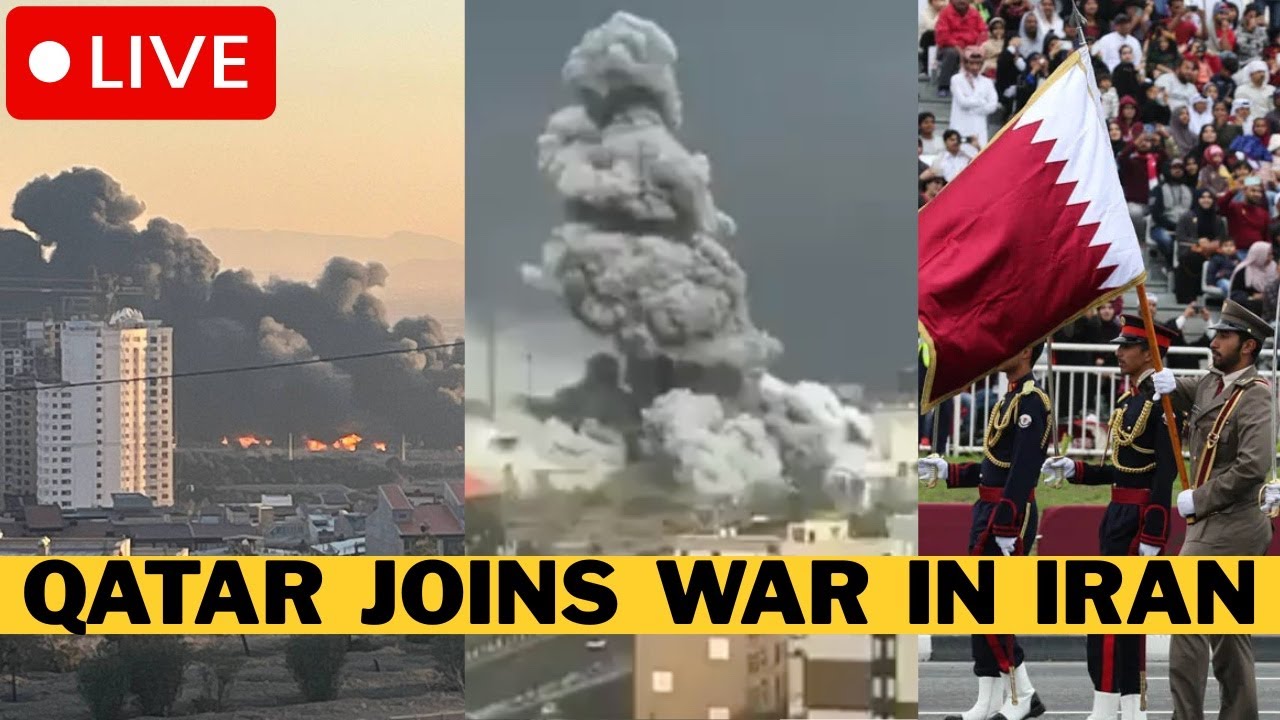
🚨 BREAKING: Qatar Launch WAR In Iran - IRGC Running Out Of Missile Launchers - LIVE Coverage
"Amidst escalating conflict, Qatar and Pakistan have aligned with Saudi Arabia against Iran, while the US and Israel execute 'Operation Epic Fury' to dismantle the IRGC's military and leadership, leading to widespread destruction of Iranian strategic sites."

Will Venezuela Be Trump's Vietnam?
"An expert breaks down three perilous pathways for Venezuela under potential US intervention, from a 'Panamanian model' to a 'Libyan-style civil war,' and the broader geopolitical fallout for Latin America."