BREAKING: U.S.-Iran Talks Hit DEAD END; Iran Threatens To RAIN DOWN Missiles On Israel | TBN Israel
YouTube · 9iK14B1wYTI
Quick Read
Summary
Takeaways
- ❖Iran's negotiations with the U.S. in Oman reached a dead end, with Iran refusing to halt uranium enrichment.
- ❖Iran displayed banners in Tehran threatening a 'reign of missiles' on central Israeli cities like Tel Aviv, Jaffa, and Herzliya.
- ❖Iran's Foreign Minister laughed at U.S. demands for 'zero enrichment' and stated Iran's 'atomic bomb' is its ability to say no to great powers.
- ❖Iran is actively rebuilding its ballistic missile arsenal with Chinese assistance, aiming for production capacity of hundreds of missiles per month.
- ❖Israel's Prime Minister Netanyahu visited Washington to urge President Trump to insist on zero enrichment, missile range limits, and a slow release of sanctions relief.
- ❖Analysts speculated Netanyahu's meeting with Trump might finalize plans for a joint U.S.-Israel military strike on Iran.
- ❖Hamas continues to rebuild its capabilities in Gaza, taxing humanitarian aid trucks (15% on ~$100k value per truck) and using children to collect unexploded ordnance.
- ❖Hezbollah is undergoing a significant internal reorganization, centralizing power under Naim Kasim and shifting from religious to political branding to lower its profile.
Insights
1Iran's Escalating Missile Threat and Nuclear Stance
Iran explicitly threatened Israel with a 'reign of missiles' on central cities, displaying maps and target lists in Tehran. Concurrently, its Foreign Minister publicly mocked U.S. demands for 'zero enrichment' and declared Iran's 'atomic bomb' to be its ability to defy great powers. Iran is rebuilding its ballistic missile arsenal with Chinese aid, aiming for hundreds of missiles per month, which could overwhelm Israel's defensive systems through sheer volume, despite individual unit quality.
Iranian leaders declared they would not give up uranium enrichment even if it means war (). A new threat came from Iran in the form of an image of Tel Aviv and a declaration of a 'reign of missiles' on Israel (). Foreign Minister Arashi revealed the U.S. condition for stopping escalation and laughed at President Trump (). Iran is rebuilding its ballistic missile arsenal with assistance from China, with production capacity potentially reaching hundreds of missiles per month (, , ).
2U.S.-Iran Negotiations Collapse and Israel's Intervention
Negotiations in Oman reached a dead end, with the U.S. pushing for a broader agreement (including missile restrictions and proxy support) and Iran insisting on only discussing nuclear issues, while rejecting American demands. Israeli Prime Minister Netanyahu visited Washington to persuade President Trump to insist on a comprehensive deal, fearing a narrow agreement would allow Iran to continue its missile program and support for regional proxies. Speculation arose that this meeting could finalize plans for a joint military strike.
Negotiations in Oman reached a dead end (). The latest round of talks in Oman ended without a breakthrough; Americans pushed for a broader agreement, Iranians insisted on only nuclear issues (). Netanyahu was headed to Washington for an emergency meeting with President Trump (). Israeli officials worried about an agreement that would not include Iran's missile arsenal and support for terrorist proxies (). Some analysts speculated the meeting was meant to finalize plans for a devastating joint military strike on Iran ().
3Hamas's Resilient Rebuilding and Exploitation of Aid
Despite IDF operations, Hamas continues efforts to rebuild its military capabilities. IDF intelligence confirms Hamas struggles to access fresh weapons but acquires new supplies via drone smuggling from Egypt and by paying desperate Palestinian children and teenagers to collect unexploded ordnance for IEDs. Critically, Hamas collects a 15% tax on humanitarian aid trucks entering Gaza, generating significant income (estimated at $100,000 per truckload) to rehabilitate its capabilities.
IDF intelligence confirms that Hamas continues trying to rebuild, having trouble accessing fresh supplies (). They acquire supplies via drone smuggling and by paying children to collect unexploded ordnance (). Hamas collects 15% tax on every truckload of aid, with goods valued at about half a million shekels ().
4Hezbollah's Strategic Reorganization Amidst IDF Pressure
Following significant losses in the conflict with Israel, Hezbollah announced a dramatic change in direction, undergoing a reorganization. Secretary General Naim Kasim is centralizing power, subordinating institutions, and shifting the organization's branding from a militia to a political party. This includes prompting political figures, removing senior religious officials, and unifying propaganda efforts to lower its international profile and adapt to disarmament pressure.
Hezbollah in Lebanon is tired of getting hit by the IDF, and a dramatic change of direction has been announced by Naim Kasim (). Hezbollah is undergoing a reorganization, concentrating authority in the hands of the current secretary general, prompting political figures and removing senior religious officials (). Secretary General Naim Kasim is concentrating power and subordinating the institutions to the general sectarian (). Hezbollah is trying to lower its profile, reduce international friction and adapt itself to the growing pressure for disarmament ().
Lessons
- Monitor official statements and intelligence reports regarding Iran's ballistic missile production rates and arsenal size, as significant growth could trigger a military response.
- Pay attention to the outcomes of high-level diplomatic meetings, particularly those involving U.S. and Israeli leaders, for indications of shifts towards military action or new negotiation frameworks.
- Understand the financial mechanisms sustaining regional terrorist groups like Hamas, specifically how humanitarian aid flows are exploited for rearmament and operational funding.
Notable Moments
Iran's Foreign Minister Arashi laughed at President Trump's demand for 'zero enrichment' in front of reporters, sending a clear message of defiance.
This public display of contempt underscores Iran's firm refusal to concede on its nuclear program and its willingness to escalate tensions, indicating a low probability of diplomatic resolution on U.S. terms.
Iran displayed large banners in Tehran's Palestine Square depicting a map of central Israel with the caption 'facing a reign of missiles' and a list of target cities for the 'first day' of an American attack.
This is a direct, public, and specific psychological warfare tactic or an organized preparation, signaling Iran's intent to retaliate massively against Israel if attacked, and demonstrating its perceived capability to overwhelm Israeli defenses.
White House envoys Steve Witkov and Jared Kushner visited the USS Abraham Lincoln aircraft carrier, with publicized photographs, sending a message that the military option against Iran remains on the table.
This military show of force directly after stalled negotiations serves as a clear signal to Iran that diplomatic failure could lead to military action, reinforcing the credibility of U.S. threats.
Quotes
"Our atomic bomb is the ability to say no to the great powers."
Q&A
Recent Questions
Related Episodes

Larry Johnson & Col. Wilkerson: 4 US Warships Tried to Enter Strait of Hormuz – Then Iran Launched
"A critical analysis reveals escalating US-Iran military confrontations in the Strait of Hormuz, a stark disconnect in diplomatic rhetoric, and a significant geopolitical realignment in the Middle East away from US influence."
Palestinian Evangelical Analyst REACTS To U.S-Israeli War In Iran!
"The Young Turks dissect the US-Israeli war in Iran, alleging it's driven by Israeli expansionist goals, fueled by US political and media subservience, and resulting in devastating civilian casualties and economic fallout, while a Palestinian Christian analyst details the brutal realities of Israeli occupation and humiliation."

Col. Jacques Baud: Middle East on Fire — Is This the Start of Something Bigger?
"Colonel Jacques Baud dissects the escalating conflict between the US, Israel, and Iran, arguing that Western misunderstanding of Iranian culture and strategic duplicity have forced Iran into a position of necessary escalation, ultimately degrading the West's own strategic posture."
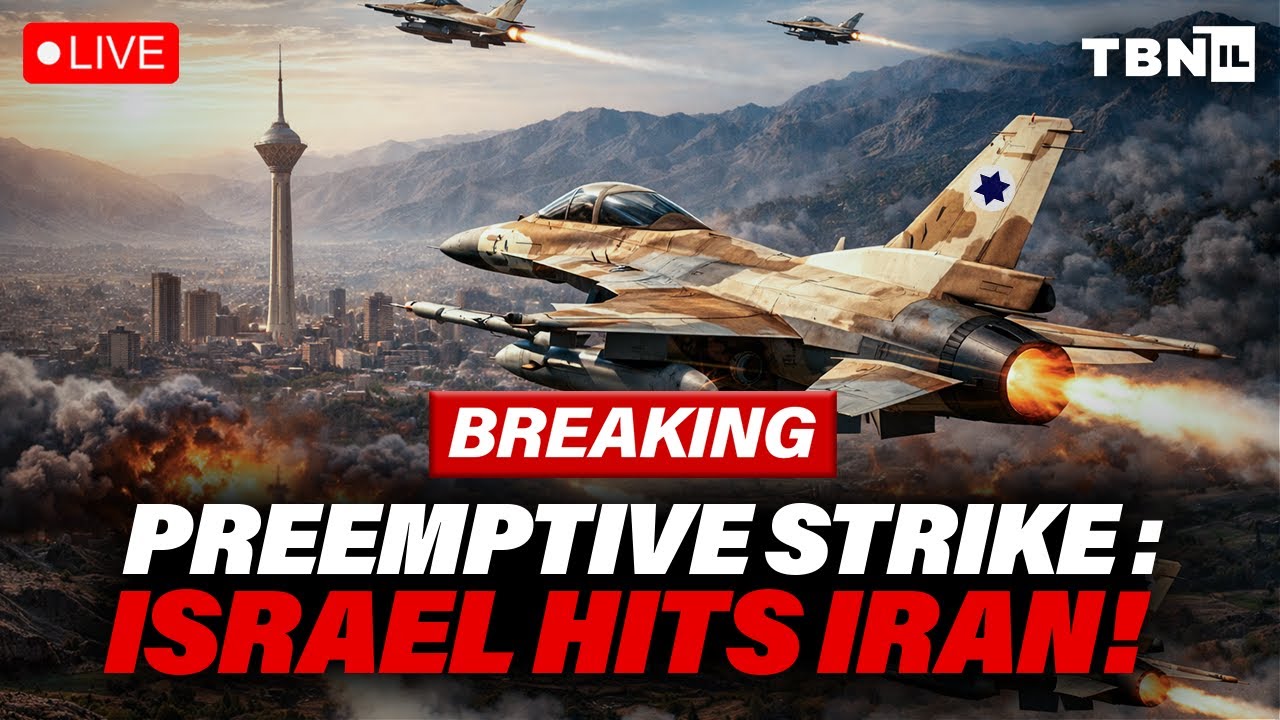
BREAKING: Israel Preemptive Strike on Iran - Explosions in Tehran LIVE! | | TBN Israel
"Israel and the United States launched a coordinated preemptive strike against Iran, targeting regime and military assets, triggering immediate Iranian missile retaliation against Israel and US bases in the region."