
Larry Johnson: Iran and the U.S. Are Trading Blows— The MoU Already DEAD
YouTube · AE7_ShEimQg
Quick Read
Summary
Takeaways
- ❖US-Iran negotiations in Qatar are at an impasse, with Iran refusing direct talks and the US conditioning frozen asset release on nuclear discussions.
- ❖Iran is asserting its sole control over managing the Strait of Hormuz, with or without Omani cooperation.
- ❖Europe faces a severe energy crisis, with gas stocks at a 15-year low, exacerbated by the conflict in Ukraine and Middle East instability.
- ❖Israel's aggressive posture against multiple regional adversaries (Syria, Turkey, Lebanon, Iran, Hezbollah, Hamas) is driven by 'arrogance and hubris' and is unsustainable without robust US support.
- ❖The US military has drawn down its forces and capabilities in the Middle East, limiting its ability to project significant power.
- ❖Saudi Arabia has a defense pact with Iran and is reportedly preparing to confront UAE-backed rebel elements in Yemen, not the Houthis.
- ❖Lebanon's political structure is unstable and its army is incapable of fighting Hezbollah, which is a more formidable ground force than the IDF.
- ❖Donald Trump's administration is reportedly distancing itself from Israel due to declining popularity, recognizing the limits of enabling Israeli dominance.
- ❖Israel lacks any significant regional allies willing to support it unconditionally.
- ❖The US's broader strategy of confronting Russia, Iran, and ultimately China is deemed unsustainable due to military limitations and lack of leverage.
Insights
1US-Iran Negotiations Stalled Over Frozen Assets and Nuclear Program
Despite US representatives traveling to Qatar, Iran's Foreign Ministry stated there would be no direct negotiations with the American side. Iran's delegation is in Qatar to follow up on the implementation of a Memorandum of Understanding (MoU) related to frozen assets, specifically $6 billion. The US, however, is conditioning the release of these funds on discussions about Iran's nuclear program, a linkage Iran rejects as a 'second step' not the first.
Iranian foreign ministry stated 'in the coming days there will be no negotiations... at any level with American side' and the US trip is 'unrelated to Iranian delegation trip' which is 'to follow up the implementation of the memorandum of understanding.' The US is demanding nuclear talks before releasing money. (, , )
2Iran Asserts Control Over Strait of Hormuz Management
Under paragraph 5 of the MoU, Iran is explicitly in charge of making arrangements for the safe passage of commercial vessels through the Strait of Hormuz. Iran's Foreign Ministry indicated that if Oman is unwilling to participate in a joint mechanism for fees and services, Iran will manage the Strait independently, reinforcing its sovereignty over the critical waterway.
Larry Johnson states, 'it says very clearly under paragraph 5 of the MoU that Iran will make arrangements using its best efforts for the safe passage of commercial vessels. So essentially Iran's in charge.' Iranian foreign ministry stated, 'If Omani is not interested in a joint mechanism for fees and services, we will simply manage this rate of form ourselves.' (, )
3US Military Capabilities in Middle East are Diminishing
The US military has significantly drawn down its forces and operational tempo in the region following the signing of the MoU. Crisis Action Teams (CATs) that monitored regional events 24/7 were stood down, indicating a reduced capacity for extensive military operations. This limits the US's ability to project force or enforce threats against regional actors.
Larry Johnson notes, 'the US military across Central Command stood up 24/7 watch teams... They did that every day up until about two weeks ago. And once once Trump signed this... everybody started... exiting, said, 'Oh, okay. It's over. we don't have to... run 24/7 ops anymore for the military.' (, )
4Israel's Arrogance and Limited Military Effectiveness
Israel is perceived as exhibiting 'arrogance and hubris' by attempting to confront numerous regional adversaries simultaneously (Syrians, Turks, Lebanese, Iran, Hezbollah, Hamas). Despite its air power, Israel's ground forces are considered ineffective due to being largely a reserve force, poor leadership, and reluctance to engage in dangerous urban tunnel warfare, as evidenced by its struggles against Hamas.
Larry Johnson states, 'this is Israel's arrogance and hubris getting it into trouble where they imagine they can fight everybody.' He adds, 'how have the Israelis done as a ground force where they've had every advantage over Hamas for two and a half years? ... They're not very effective.' (, )
5Emerging Regional Security Architecture Challenges US Influence
A new security framework is forming in the Middle East, with Turkey and Saudi Arabia emerging as key players alongside Iran. Iran has a defense pact with Saudi Arabia, and Pakistan is actively mediating to foster cooperation among regional states. This realignment suggests a move away from US-centric security arrangements and a potential for regional powers to resolve issues independently.
Larry Johnson identifies Turkey and Saudi Arabia as 'most important player[s] beside Iran' in a regional security architecture. He mentions Iran has a 'defense packed in place with the Saudis' and Pakistan is 'trying to get everybody in the boat.' (, , )
Bottom Line
Saudi Arabia is reportedly preparing military action against UAE-backed rebel elements in Yemen, not the Houthis, indicating a significant internal rift within the Gulf Cooperation Council that is often misreported by Western media.
This suggests a deeper, more complex geopolitical struggle within the Gulf states, where traditional allies like Saudi Arabia and UAE are now direct adversaries in proxy conflicts. This internal conflict could destabilize the region further and complicate any broader US-led security initiatives.
Analysts and policymakers should focus on the nuanced power struggles between Gulf states, rather than solely on the Iran-Saudi rivalry, to understand the true drivers of regional instability and potential future flashpoints.
The US 'pivot to China' strategy is likely to fail due to the US's demonstrated military limitations in confronting regional powers like Iran, making a direct confrontation with China militarily unfeasible.
This implies that the US's grand strategy of global dominance is overstretched and unrealistic. It suggests a future where the US will be forced to negotiate with rising powers like China from a position of less strength, rather than confrontation.
Companies and governments should prepare for a multipolar world order, where US military and economic leverage is significantly reduced, and direct engagement/negotiation with China and other regional powers becomes the primary mode of interaction.
Egypt's President Sisi is vulnerable to a coup due to corruption and his perceived alignment with Israeli interests regarding natural gas, indicating potential for significant political upheaval in a key Arab state.
A change in Egyptian leadership could dramatically alter regional alliances and dynamics, potentially shifting Egypt away from its current pro-Western stance and impacting energy deals in the Eastern Mediterranean. This could further destabilize the Middle East and North Africa.
Businesses and investors in the region should monitor political stability in Egypt closely, as a leadership change could present both risks and new opportunities depending on the incoming regime's foreign policy and economic orientation.
Quotes
"We're winning militarily. It's almost won militarily, I would say. Uh and it's really very simple. It's the denuclearization of Iran. We don't want them to have a nuclear weapon, and they're not going to have a nuclear weapon. They've agreed to that in all fairness."
"This is Israel's arrogance and hubris getting it into trouble where they imagine they can fight everybody. We can fight the Syrians. We can fight the Turks. We can fight the Lebanese. We can fight Iran. We can fight Hezbollah. We can fight Hamas. you know, they're fighting everybody but their mother-in-law."
"Look, the endgame when we say peace, it's an illusion. There's never been peace. There will probably never be peace because everybody's fighting for legitimacy. So people say, well, they're fighting over borders and boundaries. It's not what they're fighting over. A border or boundary is the currency of a negotiation. The end result is somebody wants dominance which means somebody has to submit in that part of the world. Submit there's no Arabic word for submit. They they can't wrap their h head around submit."
"How have the Israelis done as a ground force where they've had every advantage over Hamas for two and a half years? You can answer your own question. They're not very effective."
Q&A
Recent Questions
Related Episodes
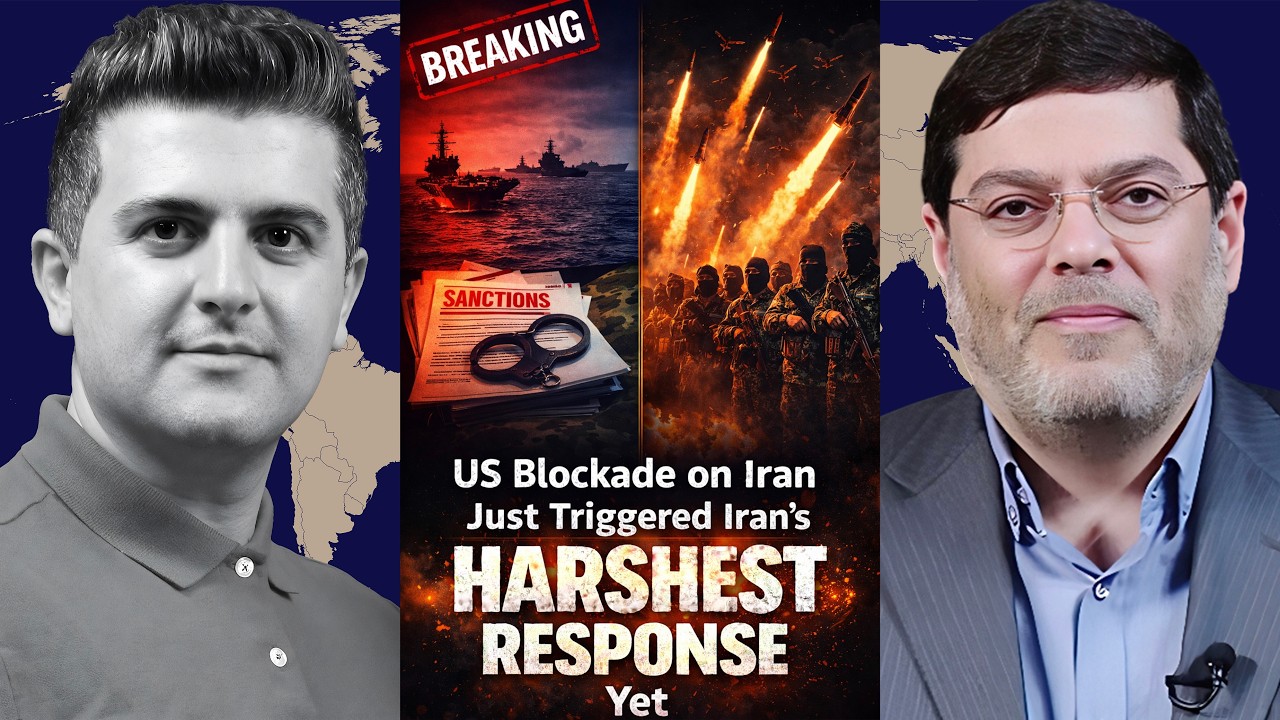
Seyed M. Marandi: US Blockade on Iran Just Triggered Iran’s HARSHEST Response Yet
"An Iranian professor details how US demands and an imposed blockade triggered Iran's harshest response, exposing American strategic missteps and the vulnerability of Gulf Arab states."
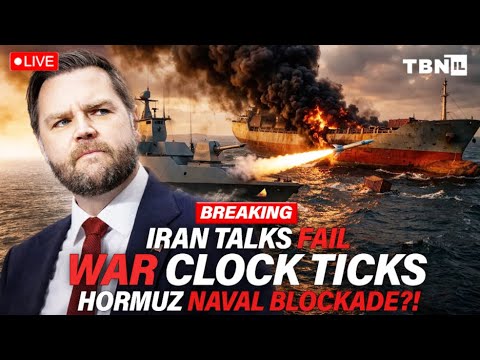
BREAKING: U.S.-Iran Talks COLLAPSE; Hormuz Standoff Deepens; Hezbollah Fire | TBN Israel
"US-Iran negotiations in Islamabad collapsed over the nuclear issue and control of the Strait of Hormuz, leading to heightened tensions and a potential US naval blockade strategy."

Trump BEGS For HUMILIATING CEASEFIRE With Iran
"As US-Iran tensions escalate, the hosts dissect Trump's contradictory public statements on a potential ceasefire, expose the dubious nature of peace proposals, and reveal critical military and political developments that signal a deepening conflict."

Col. Jacques Baud: Middle East on Fire — Is This the Start of Something Bigger?
"Colonel Jacques Baud dissects the escalating conflict between the US, Israel, and Iran, arguing that Western misunderstanding of Iranian culture and strategic duplicity have forced Iran into a position of necessary escalation, ultimately degrading the West's own strategic posture."